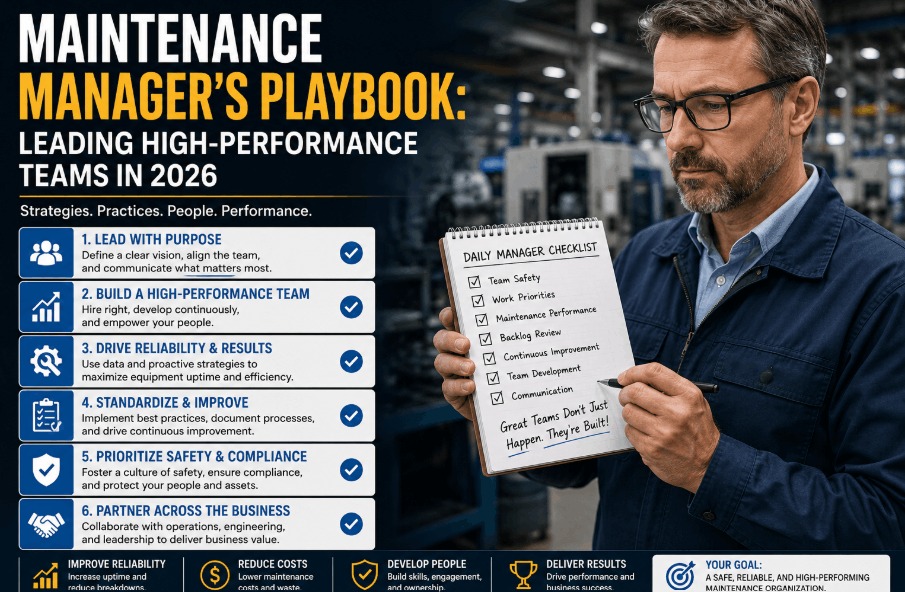
Maintenance managers in 2026 face a convergence of pressures that no previous generation of plant leaders has navigated simultaneously — aging infrastructure, widening skilled trades gaps, real-time production demands, and digital transformation mandates from the boardroom. The facilities that outperform their peers share one common trait: maintenance leadership that operates from data, not instinct. Sign Up Free to give your maintenance team the operational visibility and workflow structure that high-performance departments run on.
Build a High-Performance Maintenance Team with OxMaint
OxMaint gives maintenance managers the KPI dashboards, PM scheduling, technician workflows, and backlog visibility to lead their teams with confidence — from day one.
What High-Performance Maintenance Management Looks Like in 2026
The maintenance manager's role has expanded far beyond scheduling PMs and closing work orders. Today's plant maintenance leaders are expected to translate asset health data into capital investment decisions, justify headcount through productivity metrics, and deliver uptime guarantees that directly impact production revenue. Book a Demo to see how OxMaint's maintenance management platform supports every dimension of plant leadership — from technician scheduling to executive KPI reporting. The gap between high-performing and average maintenance departments is no longer a skill gap — it's a data gap. Managers who have real-time visibility into backlog size, technician utilization, MTTR, and PM compliance consistently outperform those relying on tribal knowledge and end-of-month spreadsheets.
Core Responsibilities of the Modern Maintenance Manager
Work Order Governance
Owning the full work order lifecycle — from request intake and priority triage through technician assignment, parts procurement, and completion verification. High-performing managers close work orders with documented root causes, not just task status.
PM Program Ownership
Building and continuously refining preventive maintenance schedules based on actual asset failure data, not vendor-default intervals. PM compliance above 85% is the threshold that separates proactive from reactive maintenance cultures.
Team Performance Management
Setting measurable productivity targets for each technician, tracking wrench time versus travel and administrative time, and using data to identify coaching opportunities before performance gaps compound into staffing problems.
Asset Reliability Stewardship
Monitoring equipment health trends, tracking MTBF and MTTR per asset, and building the case for capital replacement or condition-based maintenance investment before reactive failures force the conversation.
Budget Accountability
Translating maintenance spend into business outcomes — cost per work order, maintenance cost as a percentage of asset replacement value, and deferred maintenance backlog liability — so leadership can make informed capital allocation decisions.
Compliance and Safety Oversight
Ensuring that safety-critical maintenance — lockout/tagout procedures, pressure relief inspections, electrical insulation checks — is never deferred, fully documented, and always audit-ready for OSHA and insurance reviews.
The 7 KPIs Every Maintenance Manager Must Track in 2026
Maintenance managers who track the right KPIs make better decisions faster. Sign Up Free to access OxMaint's real-time maintenance KPI dashboard without building a single spreadsheet formula.
| KPI | What It Measures | Target Benchmark | Risk If Ignored |
|---|---|---|---|
| PM Compliance Rate | % of scheduled PMs completed on time | ≥ 85% | Rising reactive backlog |
| Mean Time to Repair (MTTR) | Average repair duration per failure event | Asset-specific baseline | Hidden inefficiency costs |
| Planned vs. Reactive Ratio | Split between scheduled and emergency work | 70/30 or better | Chronic firefighting culture |
| Wrench Time | % of shift spent on direct maintenance tasks | ≥ 55% | Understaffing perception issues |
| Backlog Size (weeks) | Total open work orders vs. team capacity | 2–4 weeks | Deferred maintenance compounding |
| Work Order Completion Rate | % of work orders closed within target window | ≥ 90% | Accountability gaps, repeat failures |
| Cost per Work Order | Total maintenance spend ÷ closed work orders | Trending down YoY | Budget justification weakness |
Leading Technician Teams: Retention, Motivation, and Performance
Give Technicians Mobile Work Order Access
Technicians who spend 20+ minutes per shift hunting down paper work orders or waiting at shared terminals are less productive and less engaged. Mobile CMMS access puts job details, asset history, parts lists, and safety procedures in the technician's hands at the point of work — eliminating friction that quietly drives turnover.
Recognize Completion Data, Not Just Effort
High-retention maintenance teams have managers who celebrate measurable outcomes — closed work orders, zero repeat failures, PM compliance streaks — not just visible busyness. OxMaint's technician productivity reports make individual contribution visible and objectively recognizable.
Reduce Administrative Burden with Automation
Technicians who spend their day doing skilled work stay longer than those buried in paperwork. Automated PM triggers, digital work order sign-off, and pre-populated asset data from a CMMS restore the hands-on work ratio that skilled trades professionals value.
Create Clear Development Pathways
Technicians who see a structured path from entry-level PM work through advanced predictive maintenance roles stay significantly longer. Use CMMS task assignment data to identify skill gaps, target cross-training, and build a promotion case that retains institutional knowledge.
Shift Team Culture from Reactive to Proactive
Technicians burn out in reactive environments where every shift is a crisis. Book a Demo to see how OxMaint's PM scheduling and backlog prioritization tools help maintenance managers build a structured, proactive work culture that retains top performers and reduces fatigue-driven turnover.
CMMS Adoption: Getting Your Team to Actually Use the System
The most common CMMS failure mode is not technology — it is adoption. Managers who deploy a CMMS without a change management plan routinely see 40–60% of work orders continue on paper within 90 days. Sign Up Free to see how OxMaint's mobile-first interface and intuitive work order flow achieves faster technician adoption than traditional CMMS platforms. Successful CMMS rollouts share three traits: mobile accessibility that removes friction at the work site, visible performance feedback that makes the system personally valuable to technicians, and management discipline that routes all work requests through the system from day one — no exceptions.
Foundation: Work Order Discipline
Every request, PM, and corrective task enters the CMMS. No exceptions. This single rule creates the data foundation that makes every future improvement possible.
Visibility: KPI Dashboard Activation
After 30 days of clean data, activate PM compliance, MTTR, and backlog tracking. Use weekly team reviews to connect individual actions to department performance.
Optimization: Predictive PM Refinement
Use 90 days of failure history to refine PM intervals, eliminate unnecessary tasks, and build asset-specific schedules that match actual wear patterns — not vendor defaults.
Maintenance Manager vs. Maintenance Supervisor: Role Clarity for 2026
Lead Your Maintenance Team with Real-Time Data
OxMaint gives maintenance managers live KPI dashboards, automated PM scheduling, mobile technician workflows, and backlog cost tracking — everything needed to lead a high-performance team in 2026.
Frequently Asked Questions: Maintenance Manager Playbook 2026
What are the most important skills for a maintenance manager in 2026?
Data literacy, CMMS proficiency, and cross-functional communication top the list. Managers who can translate maintenance KPIs into financial language for operations and finance leadership consistently get better resource allocation and team support.
How do I reduce reactive maintenance on my team?
Start by auditing your PM compliance rate. Facilities below 75% PM compliance are structurally reactive. Building MTBF-based PM schedules in a CMMS and enforcing completion discipline typically shifts the planned-to-reactive ratio within 60–90 days.
What KPIs should maintenance managers report to plant leadership?
Focus on PM compliance rate, planned-to-reactive ratio, deferred maintenance backlog value, and cost per work order. These four metrics translate maintenance performance into financial impact language that resonates with plant managers and CFOs.
How does a CMMS help with technician retention?
CMMS tools reduce administrative friction, give technicians mobile access to job details and asset history, and shift daily work from chaotic reactive firefighting to structured planned execution — the type of work environment that retains skilled trades professionals.
How do I build the business case for CMMS investment as a maintenance manager?
Quantify your current reactive maintenance premium (typically 4–5x planned repair cost), your deferred backlog value, and one full year of unplanned downtime revenue loss. These three numbers typically produce a CMMS ROI payback period under 6 months.
What is a realistic PM compliance target for a manufacturing maintenance team?
85% is the industry benchmark that separates proactive from reactive maintenance cultures. Facilities consistently above 90% PM compliance show measurably lower emergency repair costs, longer asset service life, and higher technician retention than peer facilities below this threshold.
Ready to Run a High-Performance Maintenance Department?
OxMaint gives maintenance managers the tools to lead with data — PM scheduling, real-time KPI dashboards, technician mobile workflows, and backlog management built for plant operations in 2026.

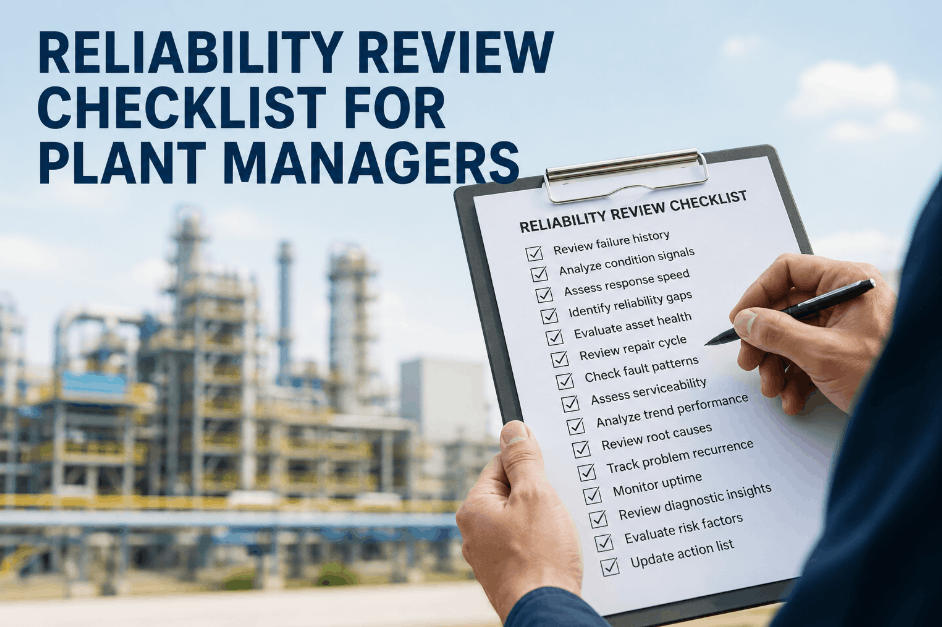

![maintenance-cost-tracking-template-for-plant-managers-[free-excel-2026]](./manage-post-2k26/uploads/maintenance-cost-tracking-template-for-plant-managers-[free-excel-2026].png)