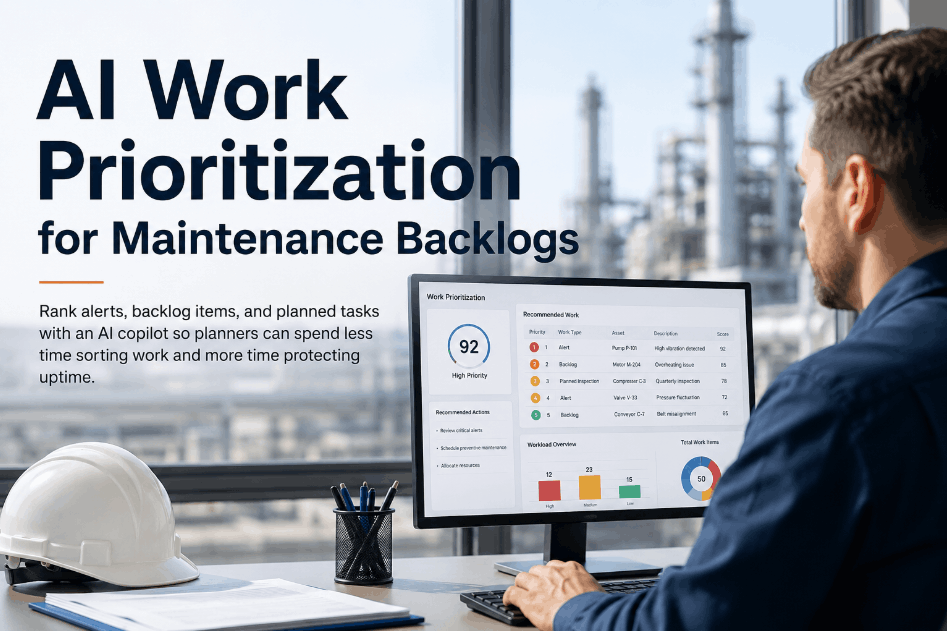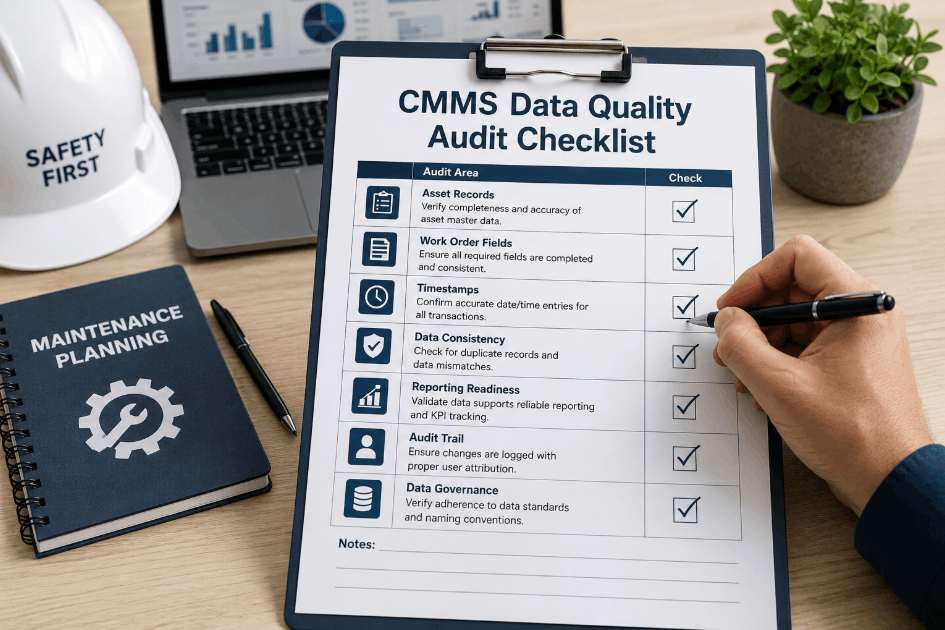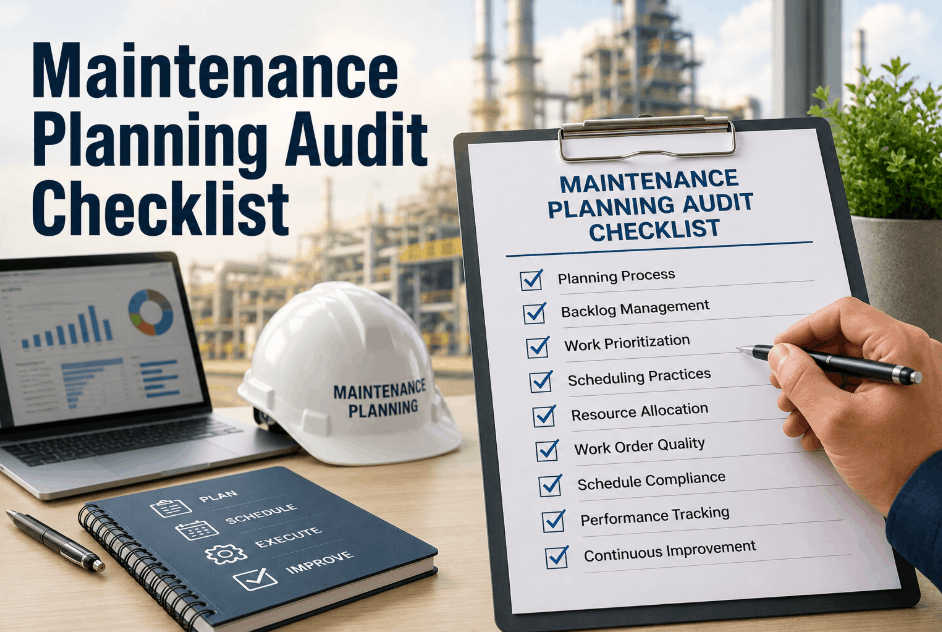
Maintenance planning quality is the single greatest determinant of whether field execution delivers reliable outcomes or produces rework, delays, and schedule shortfalls. When backlog health deteriorates, work orders are planned without complete job scopes, and scheduling habits drift from priority-based decisions to reactive firefighting, execution teams absorb the cost in wasted turns and missed windows. The root causes are predictable: incomplete job plans, backlog lists with no priority discipline, and schedulers working from intuition rather than resource and parts confirmation. This checklist helps maintenance managers, planners, and operations leaders audit planning quality, validate backlog management practices, and confirm that scheduling habits support field execution rather than undermining it. Oxmaint's Sign Up Free platform gives planning teams digital work order management, backlog analytics, and schedule compliance tracking — so planning gaps are identified before they become execution problems on the floor. From job plan completeness to schedule adherence review, poor planning discipline is one of the most correctable sources of maintenance execution loss. Book a Demo to see how Oxmaint's planning and scheduling tools strengthen maintenance execution without adding administrative overhead. Use this checklist before your next maintenance planning review or backlog reduction initiative to confirm that planning quality is not concealing execution capacity from your maintenance schedule.
1. Job Plan Quality & Work Order Completeness
You cannot improve field execution from incomplete job plans. Before auditing backlog or schedule, confirm that work orders contain the information technicians need to execute without returning for clarification or missing materials.
2. Backlog Health & Priority Discipline
A backlog without priority discipline is a list, not a planning tool. Before reviewing schedule compliance, confirm that the backlog reflects current asset criticality and that age distribution does not indicate priority decisions are being deferred.
3. Scheduling Habits & Resource Allocation Discipline
Schedule quality depends as much on scheduling discipline as it does on job plan completeness. If schedulers are committing more work than available resource capacity can execute, schedule compliance will remain low regardless of planning quality improvements.
4. Planner Performance & Work Management Process Discipline
Planning quality is a process output, not a talent question. If planning workflows do not enforce job plan standards before release, individual planner performance will vary regardless of skill level — and execution teams will absorb the inconsistency.
5. Planning Audit Findings & Continuous Improvement Actions
Planning quality improvement requires a structured follow-up cadence. Without formal action tracking after an audit, findings become observations rather than changes — and the planning gaps identified in the audit resurface in the next review cycle unchanged.