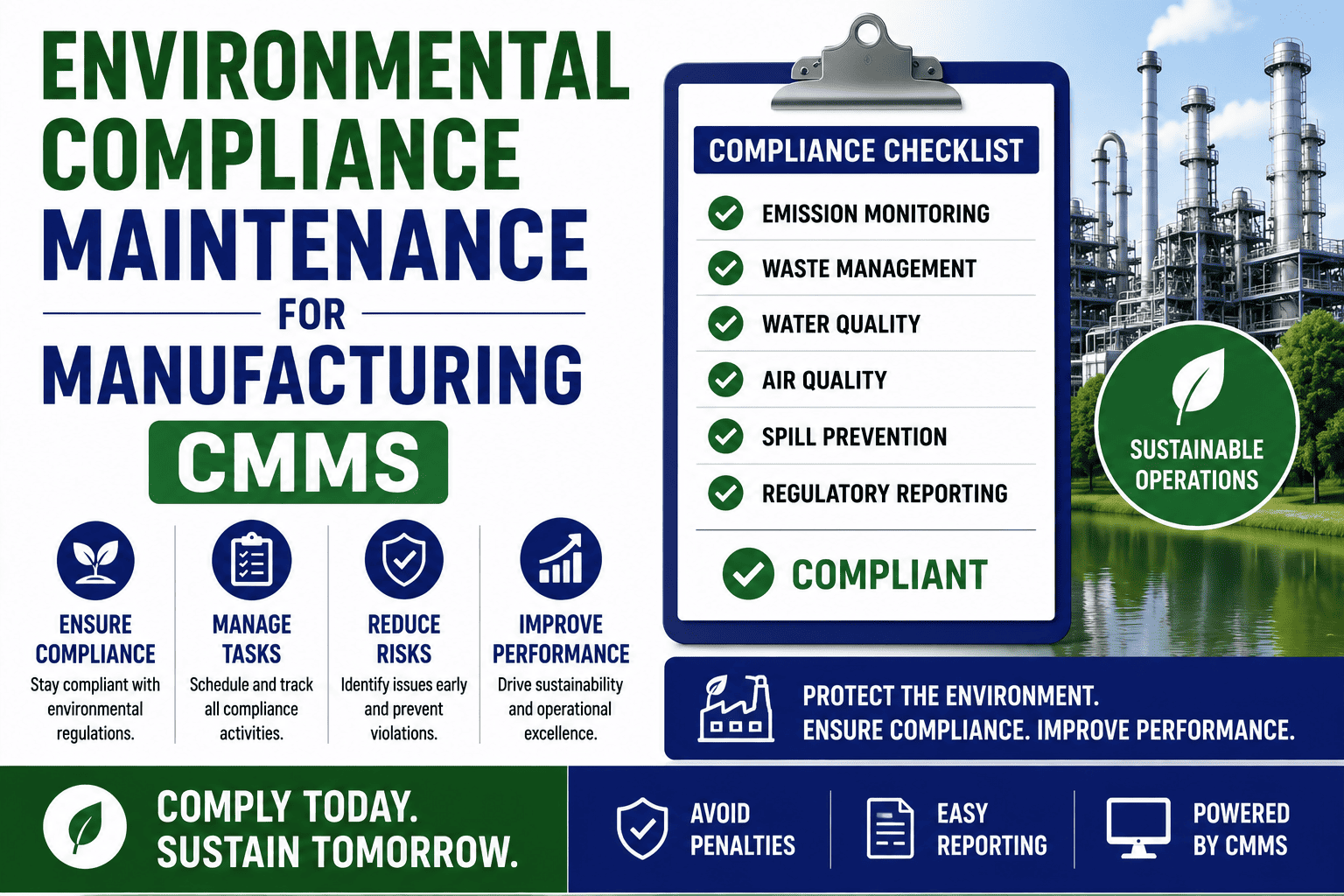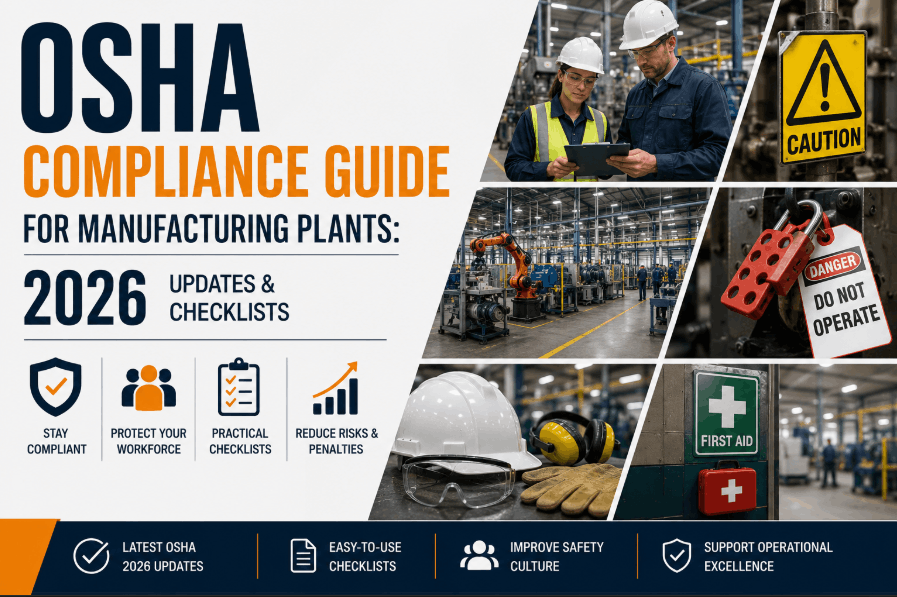
Most manufacturing compliance programmes run on audit-driven panic cycles. Documentation assembled in the two weeks before the ISO auditor arrives. Safety training records pulled from three different spreadsheets when OSHA requests them. Environmental permits tracked in filing cabinets rather than systems that send renewal reminders. The result is predictable — compliance that costs more than it should, creates more stress than necessary, and delivers less protection than required. Deloitte's 2024 manufacturing compliance study found that plants using integrated compliance management systems spend 35-40% less time on audit preparation, experience 60% fewer non-conformances, and maintain continuous compliance at 25% lower cost than those managing EHS, ISO, and safety requirements in disconnected systems. The difference is not the regulations themselves but whether compliance evidence is collected automatically as work happens, accessible when auditors request it, and flagged before deadlines expire. OxMaint's compliance management system tracks safety training, environmental permits, ISO documentation, equipment certifications, and regulatory inspections in one platform — no pre-audit scrambling, no missing records, no expired certifications discovered during external audits.
Manufacturing Compliance · 2025
Manufacturing Compliance 101: EHS, ISO, and Safety Standards Explained
Navigate Environmental, Health, Safety, and Quality Regulations Confidently
The 3 Pillars of Manufacturing Compliance
1
EHS Regulations
Environmental permits, hazardous material handling, air quality monitoring, waste disposal documentation, and emission reporting — regulatory requirements enforced by EPA, state agencies, and local authorities with penalties for non-compliance.
2
ISO Standards
ISO 9001 quality management, ISO 14001 environmental systems, ISO 45001 occupational health and safety, and ISO 50001 energy management — voluntary certification standards that customers increasingly require from suppliers.
3
Safety Standards
OSHA workplace safety requirements, lockout-tagout procedures, personal protective equipment standards, machine guarding regulations, and incident reporting — compliance obligations with both regulatory and liability implications.
EHS Compliance — Environmental, Health, and Safety Regulations
Environmental Permits
Air quality permits for emissions, wastewater discharge permits, stormwater management plans, and hazardous waste generator permits. Each permit carries specific monitoring, reporting, and renewal requirements with penalties for lapses ranging from $10,000 to $70,000 per day of violation.
Action Required: Permit renewal tracking 90 days before expiration, continuous monitoring documentation, annual reporting submission.
Chemical Management
Safety Data Sheet maintenance for all chemicals on-site, hazard communication programme implementation, chemical inventory tracking, and spill response procedures. OSHA Hazard Communication Standard requires SDS accessibility for all employees within their work shift.
Action Required: SDS updates when chemical suppliers change, annual hazcom training, chemical inventory audits quarterly.
Waste Management
Hazardous waste characterisation, manifesting for off-site disposal, generator status determination, and waste minimisation documentation. EPA regulations require hazardous waste shipping manifests retained for minimum 3 years with copies submitted to state authorities.
Action Required: Waste profile updates annually, manifest recordkeeping, biennial hazardous waste reports for large generators.
Emissions Monitoring
Continuous emissions monitoring systems for regulated pollutants, quarterly emissions calculations, annual emissions inventory reporting, and compliance demonstration documentation. Title V facilities face enhanced monitoring and reporting requirements.
Action Required: CEMS calibration quarterly, emissions calculations submitted within 60 days of quarter end, annual inventory by March 31.
ISO Standards — Quality, Environmental, and Safety Management Systems
ISO 9001
Quality Management Systems
The foundational quality standard covering customer requirements, process control, corrective action systems, and continuous improvement. Required by most major manufacturers for supplier qualification. Certification involves documented procedures, internal audits every 6 months, management review annually, and external surveillance audits yearly with recertification every 3 years.
Key Evidence: Process documentation, internal audit records, corrective action logs, management review minutes, customer complaint tracking.
ISO 14001
Environmental Management Systems
Environmental performance framework addressing emissions, waste, energy use, and regulatory compliance. Increasingly requested by customers with corporate sustainability commitments. Requires environmental aspects register, legal compliance tracking, environmental objectives with measurable targets, and operational controls for significant environmental impacts.
Key Evidence: Environmental aspects register, legal requirement tracking, environmental objectives documentation, operational control procedures.
ISO 45001
Occupational Health & Safety
Worker safety and health risk management standard replacing OHSAS 18001. Demonstrates commitment to safe working conditions and systematic hazard identification. Requires hazard assessment for all activities, hierarchy of controls implementation, worker consultation processes, and incident investigation with root cause analysis.
Key Evidence: Hazard assessments, risk control measures, incident investigation reports, safety training records, worker consultation documentation.
ISO Certification Audit Cycle
Year 1
Initial Certification Audit
Stage 1: Documentation review, Stage 2: On-site assessment
Year 2
Surveillance Audit 1
Focused review of selected processes and corrective actions
Year 3
Surveillance Audit 2
Continued monitoring of system effectiveness
Year 4
Recertification Audit
Full system reassessment, 3-year cycle restarts
OSHA Safety Compliance — Workplace Safety Requirements
Lockout-Tagout (29 CFR 1910.147)
Energy control procedures for equipment servicing, authorised employee training annually, periodic inspections of energy control procedures at least annually, and lockout device standardisation. LOTO violations consistently rank among OSHA's top 10 cited standards with penalties up to $15,625 per violation.
Hazard Communication (29 CFR 1910.1200)
Written hazcom programme, SDS accessibility for all chemicals, container labelling in accordance with GHS, and employee training on chemical hazards at hire and when new hazards introduced. The most frequently cited OSHA standard in manufacturing with average penalties $8,000-$12,000 per citation.
Powered Industrial Trucks (29 CFR 1910.178)
Operator training and certification before operation, evaluation every 3 years minimum, refresher training when unsafe operation observed, and daily pre-use inspection documentation. Forklift-related incidents cause 85 fatalities and 34,900 serious injuries annually in US manufacturing.
Personal Protective Equipment (29 CFR 1910.132)
Hazard assessment for all work areas, appropriate PPE selection and provision at no cost to employees, training on PPE use and limitations, and certification that hazard assessment was performed. Employers must pay for all required PPE except non-specialty safety-toe footwear and prescription safety eyewear.
Machine Guarding (29 CFR 1910.212)
Point of operation guards on all machinery, barrier guards preventing access to hazardous moving parts, interlock systems preventing operation when guards open, and guard inspection documentation. Amputations from unguarded machinery result in average penalties $18,000-$25,000 per violation.
How Software Simplifies Compliance Management
Manual Tracking Challenge
Automated System Solution
Training expiration dates tracked in spreadsheets — expired certifications discovered during audits
Automatic renewal reminders 60 days before expiration — expired training flagged before audit season
Corrective actions documented in emails and notebooks — auditors request evidence that cannot be located
Corrective action register with photo evidence, completion verification, and effectiveness review tracking
Equipment inspection records filed in binders — finding specific inspection for specific date requires manual search
Digital inspection records searchable by equipment, date, inspector, and finding — audit evidence produced in 30 seconds
Environmental permit renewals tracked on wall calendar — renewal deadlines missed when responsible person on vacation
Permit tracking system sends reminders to multiple stakeholders 90, 60, and 30 days before expiration
Safety incident investigations documented in Word files saved to personal drives — historical data not analysable for trends
Incident database with root cause categorisation enabling Pareto analysis of injury causes across all incidents
Frequently Asked Questions
What is the difference between regulatory compliance and ISO certification?
Regulatory compliance is mandatory — OSHA, EPA, and other agencies enforce legal requirements with penalties for violations. ISO certification is voluntary — companies pursue it for competitive advantage, customer requirements, or operational improvement. Both require documented systems and regular audits.
How long does ISO 9001 certification typically take?
6-12 months for most manufacturers depending on existing documentation maturity. The process includes gap assessment, procedure development, internal audits, management review, and two-stage external audit. Plants with established quality systems certify faster than those building systems from scratch.
What are the most frequently cited OSHA violations in manufacturing?
Hazard communication, lockout-tagout, powered industrial trucks, machine guarding, and fall protection consistently rank among the top 5. These violations account for over 60% of manufacturing citations and represent areas where compliance systems deliver immediate risk reduction.
Can OxMaint help with both ISO audits and OSHA compliance?
Yes. OxMaint stores all compliance evidence in one system — training records for OSHA, corrective actions for ISO, equipment certifications for both. When auditors request documentation, you produce it from one platform rather than assembling from multiple sources.
How much does non-compliance typically cost manufacturers?
Direct penalties range from $5,000-$70,000 per violation depending on severity and agency. Indirect costs include production shutdowns during investigations, customer contract loss from failed audits, increased insurance premiums, and management time responding to enforcement actions often exceeding direct penalties by 3-5x.
Manufacturing Compliance — OxMaint
Turn Compliance From Audit-Driven Crisis Into Continuous System Operation
OxMaint tracks safety training, environmental permits, equipment certifications, ISO documentation, and inspection records in one platform — maintaining audit-ready compliance evidence automatically as work happens, not assembled frantically when auditors schedule visits.