Compressed air is easy to take for granted: a compressor runs somewhere, and tools, cylinders and valves just work. Then pressure sags on the far line, a dryer stops keeping up, a compressor trips on high temperature, and a hiss behind a machine turns out to have been there for months. Air systems fail by degrees, and most of the signs are audible, visible or measurable long before production notices. OxMaint AI keeps every compressor, dryer, filter and leak in one maintenance record, with scheduled PM and work orders behind each.
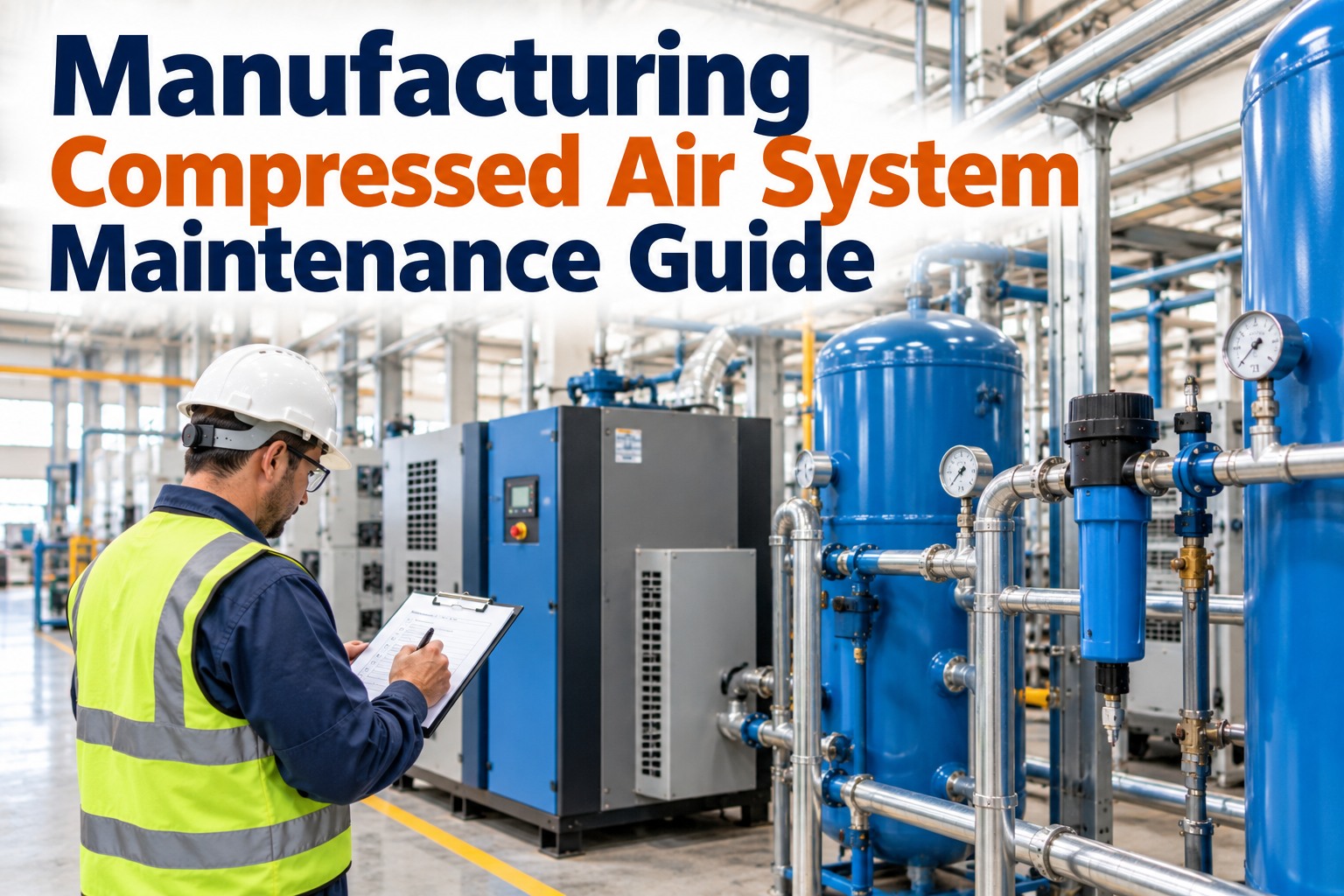
Manufacturing Compressed Air System Maintenance Guide
Walk the air from intake to point of use, know what to check at each stage, and make sure every finding turns into action. OxMaint AI connects the workflow in one platform: inspections and leak reports raise issues, issues become work orders, and condition data feeds preventive and predictive maintenance.
Automated PM scheduling and better visibility of every air-system asset.
Follow the Air: Seven Stages, Seven Checks
Maintenance is easier when you follow the air's path. Each stage has its own typical failure and its own quick check. Always depressurize and isolate before working on any part of the system. Start free and register each stage as an asset.
Five Silent Drains on Your Air System
Most air-system waste isn't dramatic. It's small problems that run all day. Book a demo to see how recurring issues are tracked.
The Hiss Behind the Machine Has Been There for Months.
Leaks get heard by everyone and logged by no one. With OxMaint AI, anyone can report a leak by scanning the asset or tapping the mobile app, and it becomes a tracked work order with a location and a close-out.
Leak Management: Find, Tag, Fix, Verify
A leak program is a loop. Ultrasonic detectors or a careful listening survey find leaks, tags mark them, and work orders close them. Start free and run the loop.
Preventive Maintenance by Component
Follow the manufacturer's maintenance schedule for each unit, and adjust for operating hours, environment and history. Book a demo to load your compressor PMs.
| Component | Typical tasks | Trigger |
|---|---|---|
| Compressor | Oil and filter changes, separator, belts, cooler cleaning, safety checks | Running hours + calendar |
| Intake filter | Inspect and replace | Condition + calendar |
| Dryer | Drain check, cooling surfaces, desiccant or refrigerant checks | Calendar + dew point trend |
| Line filters | Element replacement | Pressure drop + calendar |
| Condensate drains | Test and clean | Calendar |
| Receiver & safety valves | Drain, inspect, test per site rules | Calendar + regulation |
| Piping & hoses | Leak survey, visual inspection, replace worn hoses | Calendar |
Condition Signals Worth Trending
Logging these in one place makes changes visible and lets alerts raise a work order before a trip or shutdown. Start free and trend them per asset.
Frequently Asked Questions
Keep the Air Working So the Line Can.
Know every asset in the air system, schedule its PM, and give every leak and alarm an owner. One platform from compressor to point of use.