A heat treat furnace running two degrees off spec doesn't set off an alarm it just quietly produces parts that fail a hardness test three days later, after they've already moved downstream. Heat treatment is one of the few manufacturing processes where the equipment's condition and the part's quality are almost the same question: a drifting thermocouple, a dead zone in furnace uniformity, or a quench tank losing its cooling rate doesn't look like a maintenance problem until it shows up as a metallurgical one. This guide walks through how to build a maintenance program for heat treatment equipment — furnaces, thermocouples, atmosphere systems and quench tanks — around condition monitoring and early failure detection, using OXMAINT AI, the AI-powered CMMS that keeps every reading, survey and calibration tied to the exact piece of equipment it came from.
Manufacturing Heat Treatment Equipment Maintenance Guide
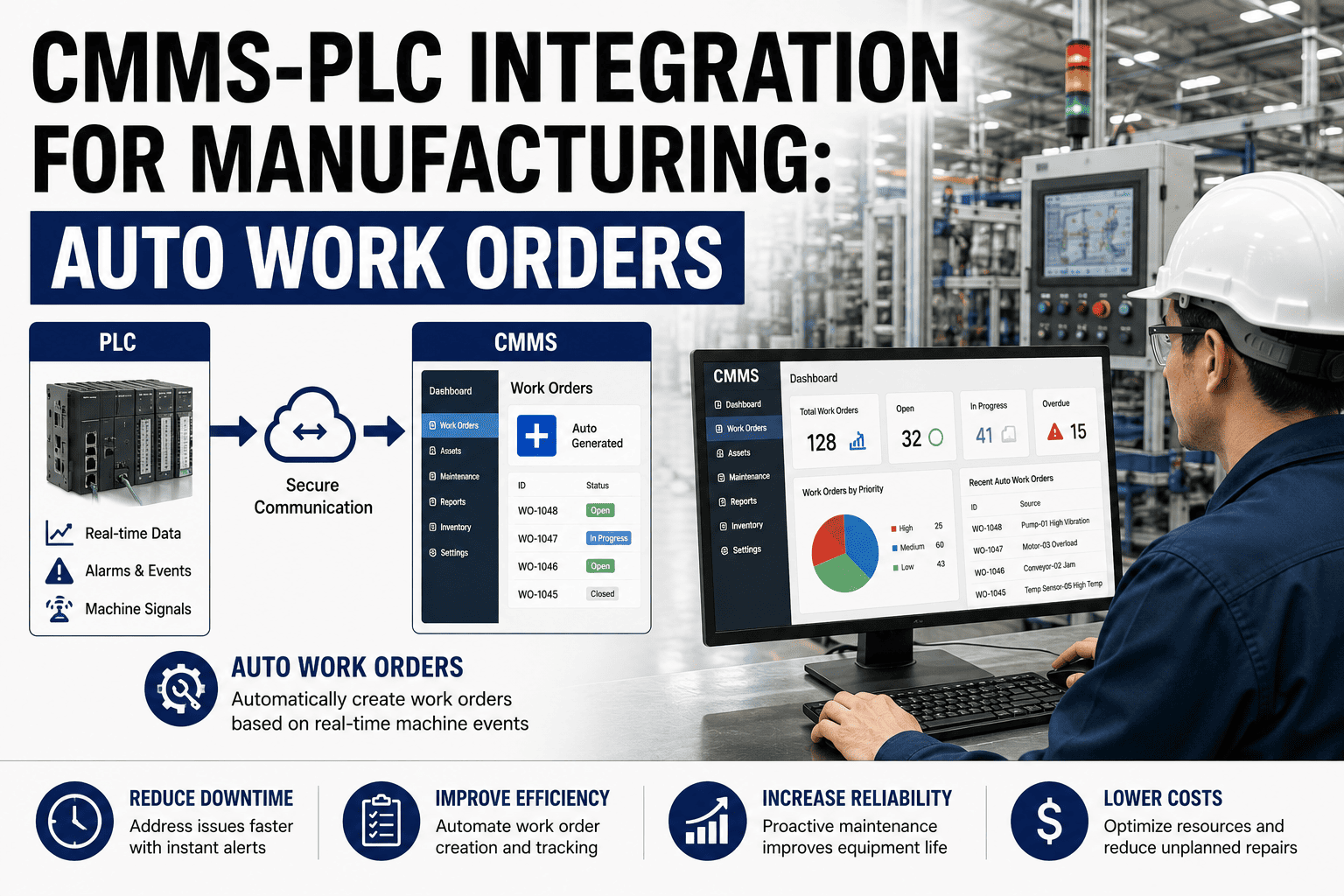
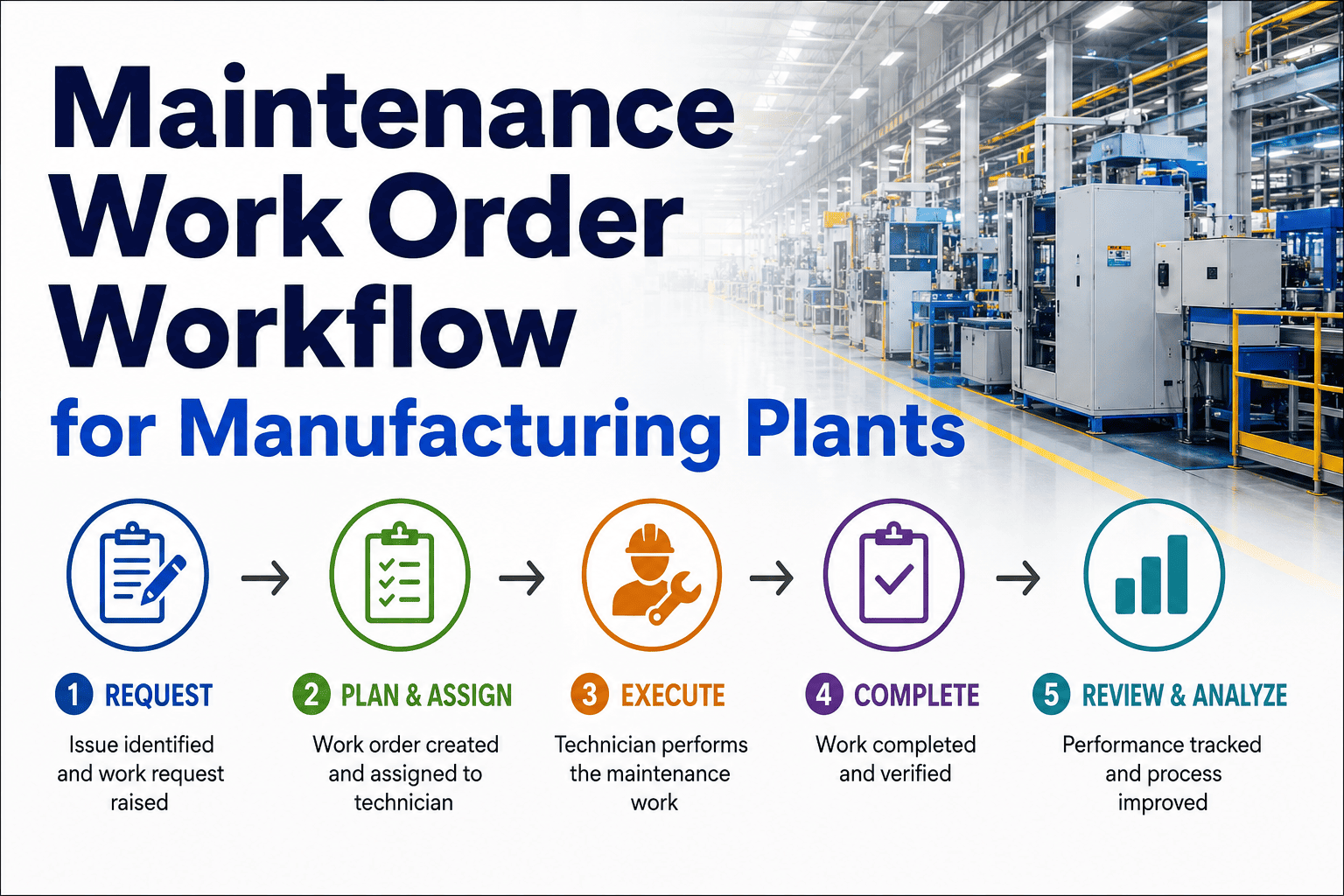
In heat treatment, a maintenance gap and a quality escape are often the same event, seen from two different departments. OXMAINT AI closes that gap: temperature uniformity surveys, thermocouple calibration checks, atmosphere readings and quench tank condition all get logged against the exact piece of equipment, a result outside the range you've set opens a defect automatically, and that defect converts into a work order before the next production run — not after a part fails inspection.
Why a Maintenance Gap Here Looks Like a Quality Problem
A bearing failure announces itself with noise. A furnace running slightly out of uniformity, or a thermocouple that's drifted a few degrees off true, doesn't announce anything — the furnace still runs, the cycle still completes, and the part still comes out looking normal. The first sign is often a hardness test failure, a customer return, or a scrapped batch, well after the equipment issue that caused it. Start free and start tracking your own equipment condition in OXMAINT AI.
- Uniformity surveys filed as a pass/fail report, not trended over time
- Thermocouple calibration checked on a fixed calendar, not watched for drift between checks
- Atmosphere readings logged separately from the furnace's maintenance record
- Quench tank cooling rate assumed steady unless someone happens to test it
- A quality escape traced back to the equipment only after the fact, if at all
- Uniformity surveys logged per zone, trended against the furnace's own history
- Thermocouple readings compared to their last calibration, flagging drift early
- Atmosphere data sitting on the same record as the furnace's maintenance history
- Quench tank readings logged and trended, not assumed
- An equipment issue flagged and corrected before it reaches a finished part
The Four Systems That Actually Determine Part Quality
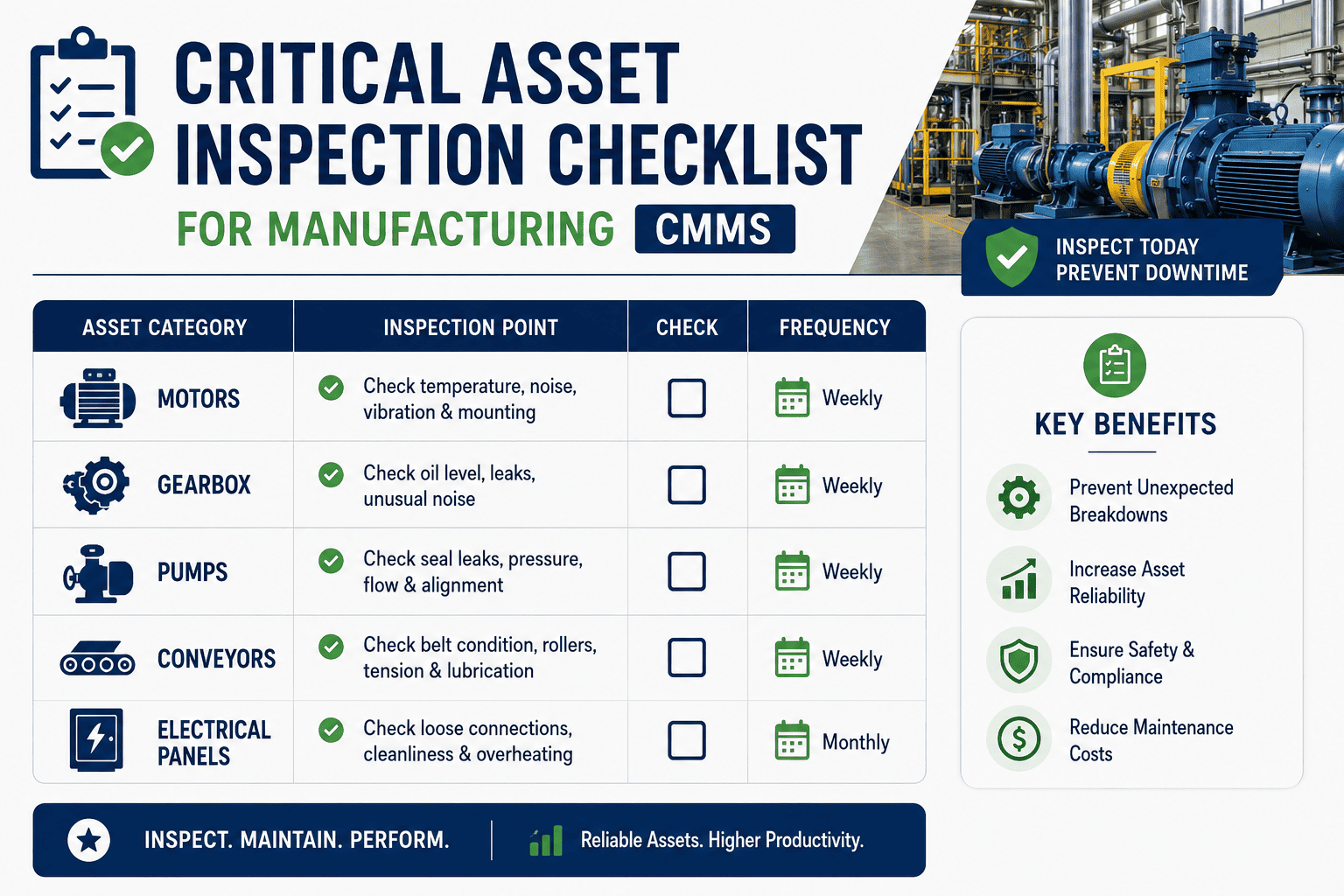
Heat treatment quality depends on more than the furnace itself. OXMAINT AI tracks all four of these against the same asset record, so a technician reviewing one can see the others from the same screen. Book a demo to see all four systems tracked on one furnace.
What Each System's Drift Actually Signals
Different equipment issues point toward different quality risks. This is a general reference — your own process specification and quality team set the actual acceptance criteria for each check. Sign up free and set your own thresholds in OXMAINT AI.
| System | Common drift | Typical quality risk |
|---|---|---|
| Furnace uniformity | One or more zones running outside spec range | Inconsistent hardness or microstructure across a load |
| Thermocouples | Reading drifts from the true temperature over time | Parts processed at the wrong actual temperature, undetected |
| Atmosphere | Carbon potential or dew point outside target range | Surface hardness or case depth issues, decarburization |
| Quench tank | Slower cooling rate than the process calls for | Insufficient hardness, inconsistent results within a load |
The Part That Fails Inspection Didn't Fail on Its Own.
In heat treatment, a scrapped batch is very often an equipment condition problem wearing a quality-department hat. OXMAINT AI tracks the equipment side of that story, so the drift gets caught before it reaches a finished part.
One Drifting Reading, Start to Close
Here's how a single flagged reading actually moves through OXMAINT AI. Book a demo to see this on your own heat treat line.
Reactive Checks vs. Trended Condition Monitoring
| What matters | Reactive / calendar-only checks | Trended in OXMAINT AI |
|---|---|---|
| When drift gets caught | At the next scheduled check, or after a failed part | As soon as the trend breaks pattern |
| Uniformity survey data | Filed as a pass/fail report | Trended zone by zone over time |
| Link between equipment and quality issue | Rarely traced back | Same asset record connects both |
| Atmosphere and furnace data | Different systems, reviewed separately | Same asset record, reviewed together |
| Audit or customer review readiness | Reassembled from separate logs and reports | Already organized by asset and date |
Frequently Asked Questions
Give Every Furnace One Record — Temperature, Thermocouples, Atmosphere and Quench.
Track every reading against the exact equipment it came from, catch a drift while it's still just a number on a chart, and turn it into a corrective work order before it reaches a finished part.