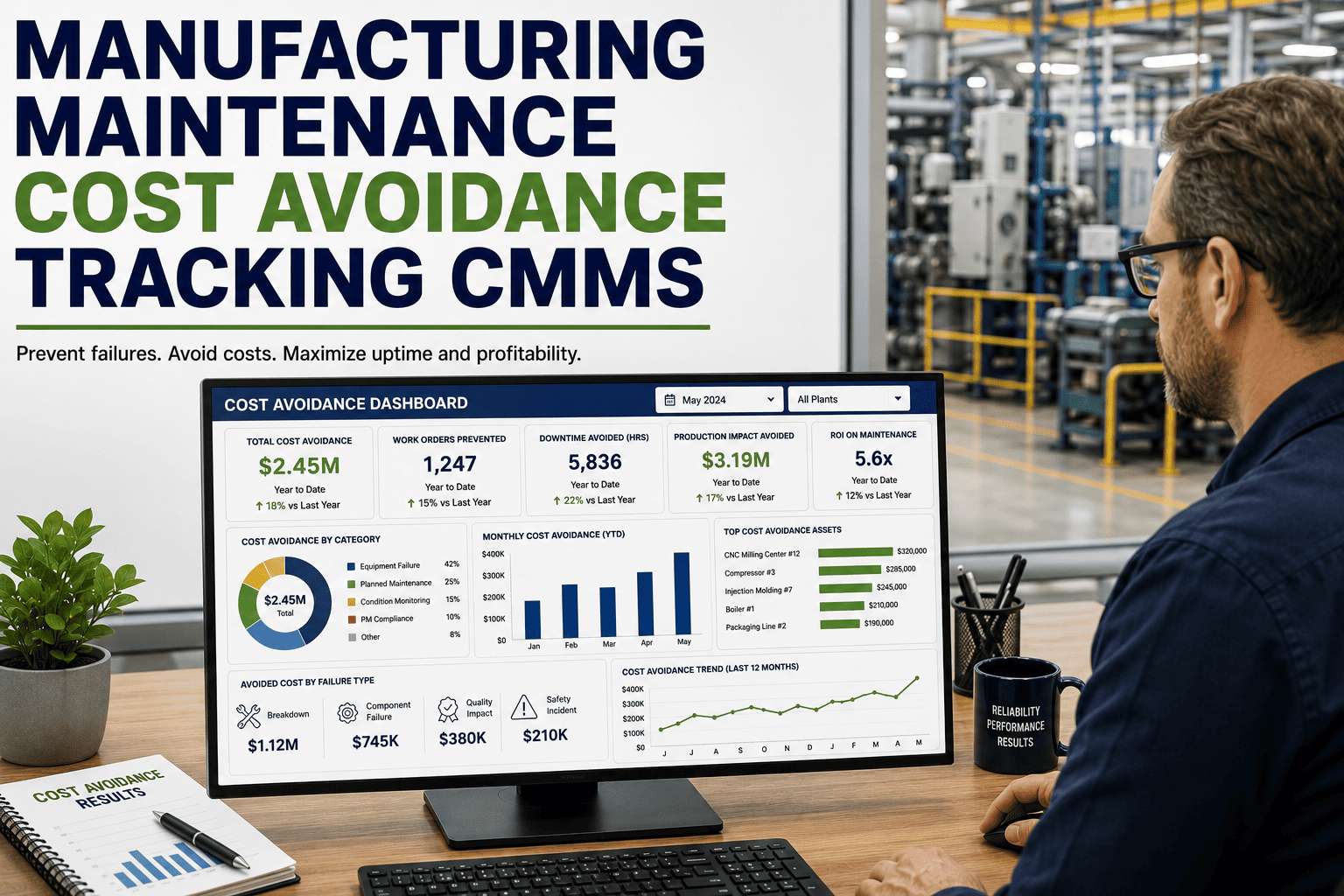
Maintenance cost avoidance in manufacturing is the measurable financial value your reliability team creates when a preventive task, predictive alert, or work-order intervention stops a failure before it triggers unplanned downtime, scrap, or emergency repair spend. For most plants, avoiding a single catastrophic bearing seizure on a critical extruder or conveyor can save $15,000–$120,000 in lost production alone, yet finance teams reject roughly 60% of those savings at year-end because the CMMS was never configured to capture and report them with defensible calculations. This guide walks through what qualifies as plant cost avoidance, the avoidance-cost formula, CMMS field configuration, and executive reporting so your maintenance ROI tracking survives auditor scrutiny — and shows how an AI-powered platform like OxMaint turns every closed work order into an auditable savings record. You can explore the full workflow yourself when you Start Free Trial, or book a guided tour below.
How much downtime did your team prevent this quarter — and can you prove it to finance?
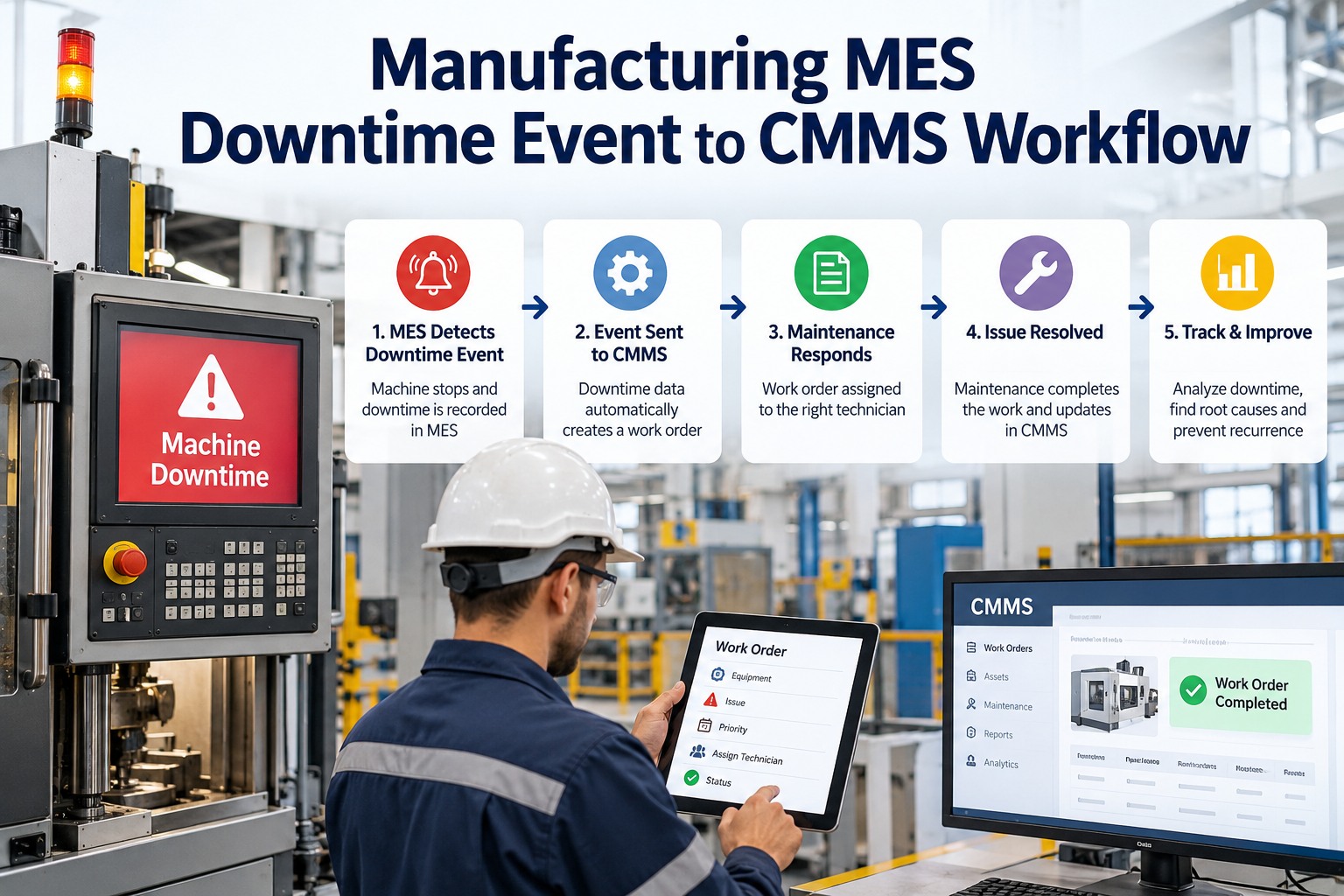
Most manufacturing plants generate real maintenance savings every week but never quantify them. A CMMS that automatically calculates avoided failure cost on every PM and corrective work order turns invisible reliability gains into a running total your CFO can sign off on.
What Qualifies as Maintenance Cost Avoidance in a Plant?
Not every completed work order represents avoidance. To survive finance review, a CMMS cost avoidance entry must tie a specific maintenance action to a failure that was prevented or mitigated — with a defensible dollar figure attached. The four streams below cover 90%+ of plant maintenance savings your team can legitimately claim.
Prevented Unplanned Downtime
A PM, inspection, or condition-monitoring alert catches a defect (worn bearing, misalignment, contamination) before equipment fails mid-shift. Avoided cost = estimated downtime hours × production loss per hour + emergency labor premium.
Avoided Emergency Repair Spend
Planned repair during a scheduled window costs 40–60% less than the same repair performed reactively — no expedited parts freight, overtime call-ins, or contractor surcharges. The delta is claimable avoidance.
Scrap & Rework Prevention
When a calibration check or predictive vibration alert prevents a 4-hour quality drift on a filling line, it avoids thousands in scrap material and customer chargebacks. Track the defect rate delta against historical baselines.
Asset Life Extension
Documented lubrication, alignment, and filter programs that push a $45,000 gearbox from a 7-year to a 10-year service life generate deferred capex. Divide avoided replacement cost across the extended service months.
Maintenance Cost Avoidance Calculation: The Defensible Formula
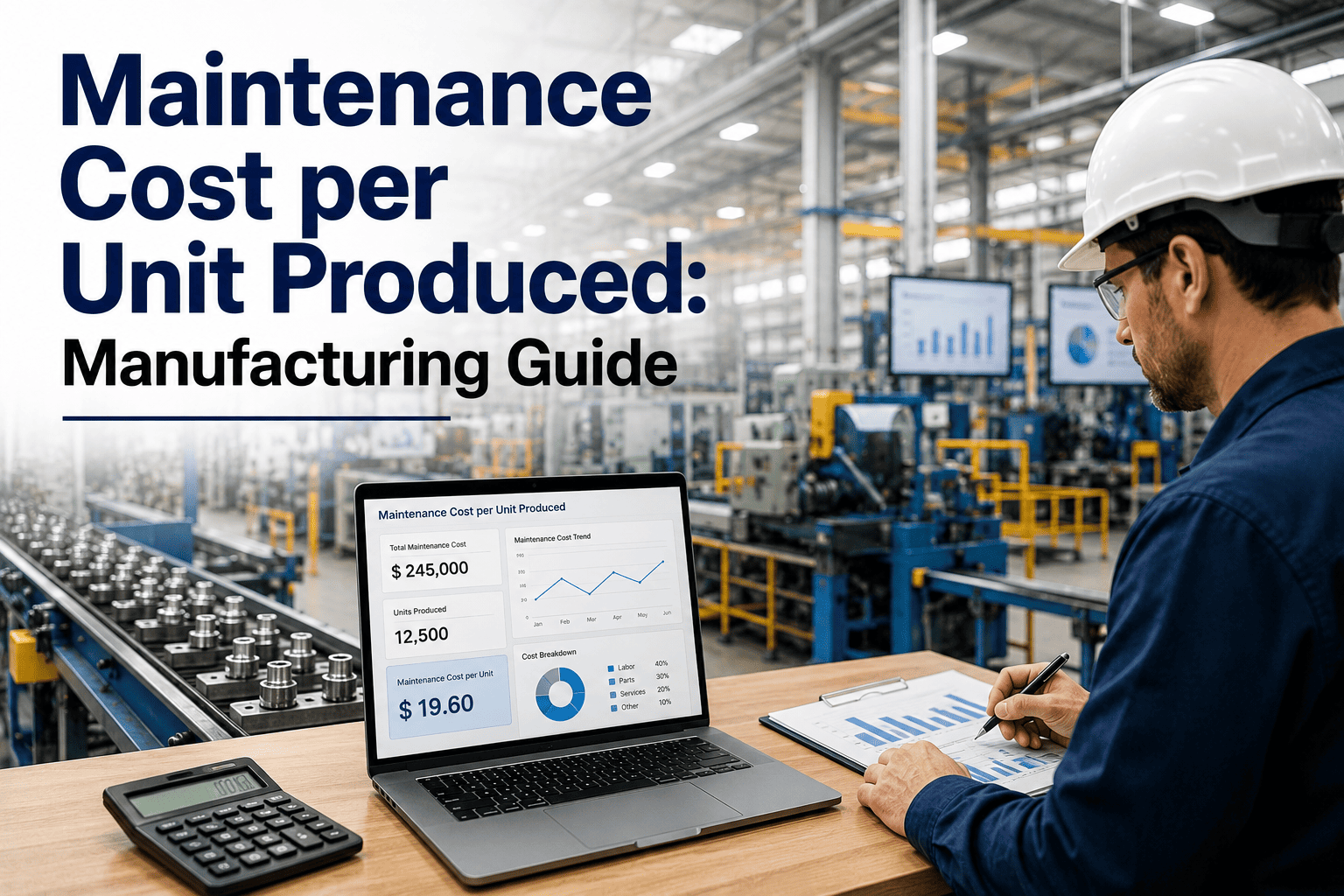
Finance rejects vague claims. Your CMMS savings report needs a repeatable formula applied consistently across every qualifying work order. The industry-standard model multiplies the probability of failure by the estimated failure impact, then subtracts the actual maintenance cost incurred.
180-Asset Food Processing Plant · Extruder Motor Bearing
A vibration sensor on a 75-kW extruder motor flags an outer-race defect trend. The reliability team schedules a bearing swap during the Saturday sanitation window. Historical data shows 85% of unchecked bearings at this stage seize within 10 days, and a seized bearing means 14 hours of unplanned downtime on a line producing $3,200/hr of product — plus $2,800 in expedited parts and overtime.
That single work order contributes $39,040 to the plant's running cost avoidance total. Over a year, a 180-asset plant typically logs 60–140 qualifying events — translating to $800K–$1.4M in documented maintenance savings.
How to Configure Your CMMS to Track Cost Avoidance Automatically
The reason most plants can't report maintenance savings is that their CMMS work-order form has no fields for failure probability, estimated downtime, or production loss rate. Below are the five fields you must add — and how OxMaint pre-configures them out of the box.
| CMMS Field | Input Type | How It Feeds the Avoidance Calculation | OxMaint Default |
|---|---|---|---|
| Avoidance Event Flag | Checkbox on WO close-out | Triggers the savings calculation workflow; filters reportable events from routine work | Enabled, with mandatory justification note |
| Failure Probability | Dropdown (0.25 / 0.50 / 0.75 / 0.85 / 0.95) | Becomes Pfail in the formula; tied to inspection severity or sensor threshold | Auto-suggested from AI failure-mode history |
| Estimated Downtime Hours | Numeric entry | Multiplied by asset's production-loss-per-hour rate to calculate impact | Pulled from asset criticality profile |
| Production Loss Rate ($/hr) | Currency, stored on asset record | Set per asset or asset class; updated annually with finance sign-off | Configurable per asset; batch-import supported |
| Avoidance Category | Dropdown (Downtime / Emergency Repair / Scrap / Asset Life) | Enables categorized savings roll-ups in executive dashboards | Pre-loaded with 4 standard categories |
Building a Maintenance ROI Report That Survives Year-End Finance Review
A CMMS savings report fails audit when it aggregates guesses. The fix is a three-layer reporting model: technician-entered estimates at the work-order level, automated calculation at the asset level, and a finance-validated production-loss rate at the plant level. This is the structure OxMaint's analytics engine generates out of the box.
"Before OxMaint, we knew we were preventing failures but couldn't prove the dollar value. Now every closed PM with an avoidance flag auto-calculates the saved cost. Finance accepted 96% of our Q3 savings report — $840K that went straight to the reliability team's capex budget."
How OxMaint Automates Maintenance Cost Avoidance Tracking
OxMaint is an AI-powered CMMS and EAM platform built for maintenance and reliability teams that need to prove ROI — not just manage work orders. Every capability below maps directly to a step in the avoidance-tracking workflow, so savings are captured at the moment a technician closes a work order, not retroactively estimated weeks later.
AI-Suggested Failure Probability
When a technician flags an avoidance event, OxMaint's AI engine auto-suggests a Pfail value based on the asset's failure-mode history, sensor data, and the defect severity observed — eliminating guesswork and strengthening audit defensibility.
Real-Time Savings Dashboard
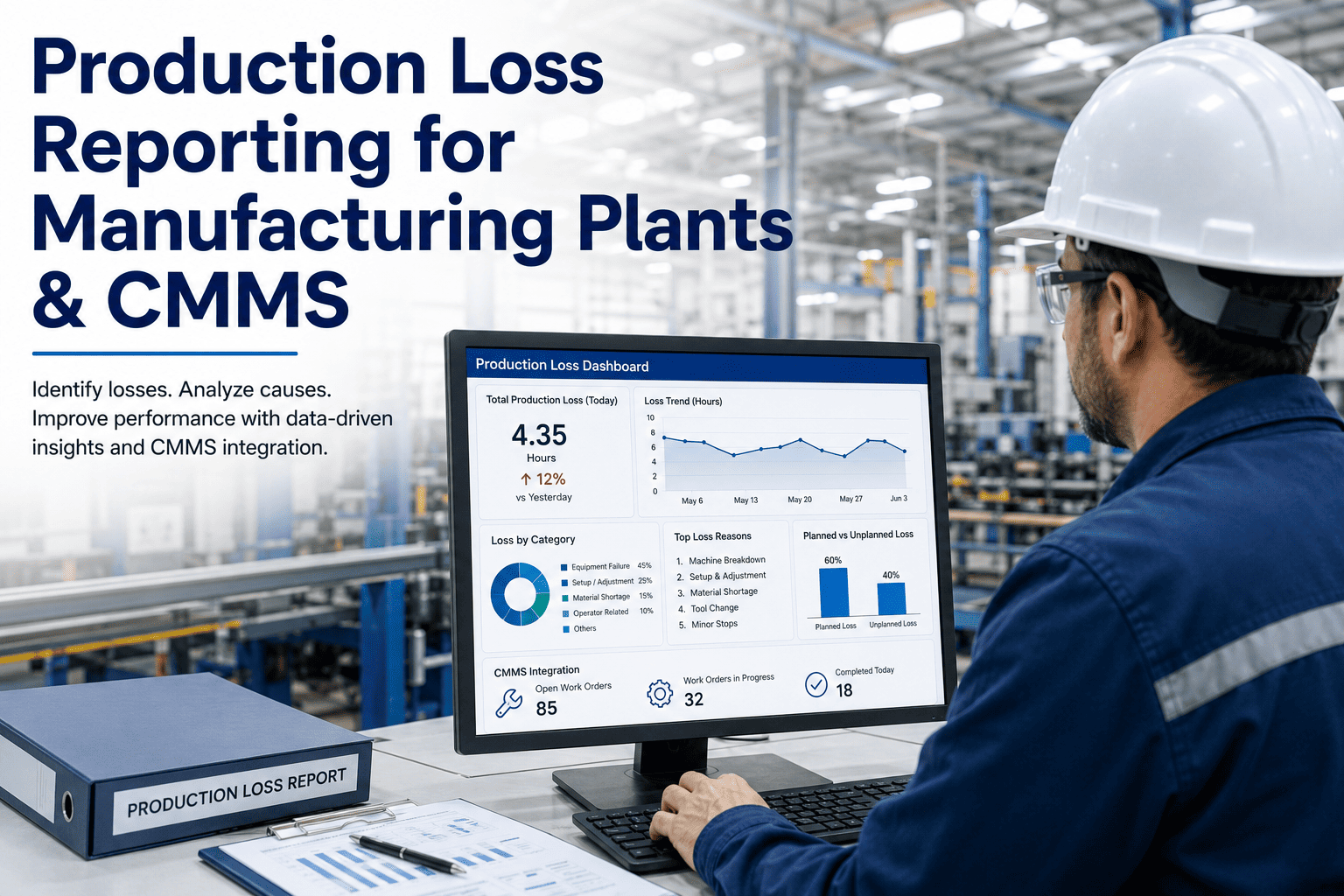
A live CMMS cost avoidance dashboard rolls up every qualifying work order into a running annual total — filterable by asset, category, department, or month. Export a finance-ready report in one click with full work-order-level traceability.
Predictive Alerts That Create Avoidable Events
OxMaint's predictive maintenance engine analyzes vibration, temperature, and oil-analysis trends to flag developing failures weeks before they trigger downtime — each alert creates a work order pre-tagged as a cost avoidance opportunity.
Asset Criticality & Production-Loss Profiles
Every asset in OxMaint carries a criticality score and a finance-validated production-loss-per-hour rate. When downtime is avoided, the system multiplies the correct rate automatically — no manual lookup, no stale spreadsheets.
See OxMaint calculate your plant's avoided costs — live on your assets
Book a 30-minute demo and we'll walk you through the avoidance-tracking workflow on a sample asset hierarchy, show you the savings dashboard, and map it to your current PM program.
Maintenance Cost Avoidance Tracking — Your Questions Answered
What is maintenance cost avoidance in manufacturing?
Maintenance cost avoidance is the quantified financial value of preventing a failure that would have caused unplanned downtime, emergency repair spend, scrap, or premature asset replacement. Unlike hard savings (which reduce next year's budget), avoidance represents costs the plant did not incur — calculated using the formula (Probability of Failure × Impact of Failure) − Actual Repair Cost. A CMMS like OxMaint automates this calculation on every qualifying work order so the total is defensible at year-end.
How does a CMMS track maintenance savings and cost avoidance?
A CMMS tracks savings by adding specific fields to the work-order close-out form: an avoidance-event flag, failure probability, estimated downtime hours, production-loss rate, and avoidance category. When a technician flags a PM or corrective work order as preventing a failure, the system automatically applies the avoided-cost formula and rolls the result into a running dashboard total. You can see this in action by booking a demo at calendly.com/oxmaintapp/30min.
What is the formula for calculating maintenance cost avoidance?
The standard formula is: Avoided Cost = (Pfail × Impactfailure) − Costactual repair. Pfail is the documented probability the failure would have occurred (0.0–1.0), Impactfailure is the total cost had the failure happened (downtime hours × production loss per hour + emergency labor + expedited parts + scrap), and Costactual repair is what you spent on the planned intervention. OxMaint auto-suggests the Pfail value using AI based on the asset's failure history.
Why does finance reject maintenance savings reports?
Finance rejects savings reports when the underlying calculations lack documentation — no recorded failure probability, no validated production-loss rate, no link between the work order and the specific failure prevented, or no distinction between hard savings and cost avoidance. A CMMS cost avoidance report that includes work-order-level traceability, standardized probability tiers, and CFO-approved loss rates per asset typically achieves 90%+ acceptance. OxMaint's dashboard exports every claim with full work-order evidence attached.
How much can a manufacturing plant save with CMMS-tracked cost avoidance?
A typical 180–250 asset manufacturing plant documents $800,000–$1.4 million in annual maintenance cost avoidance once CMMS tracking is properly configured — representing a 3–4× ROI multiple on total maintenance spend. The largest contributors are prevented unplanned downtime (60–70% of the total), avoided emergency repair premiums (15–20%), and scrap/rework prevention (10–15%). You can calculate your plant's potential by starting a free trial at app.oxmaint.ai.
Start proving your maintenance team's value in dollars — not just completed work orders
Every PM your team completes this week prevented a failure. OxMaint makes sure that value is calculated, reported, and defended — so your reliability program gets the budget it deserves.
Free 14-day trial · No credit card