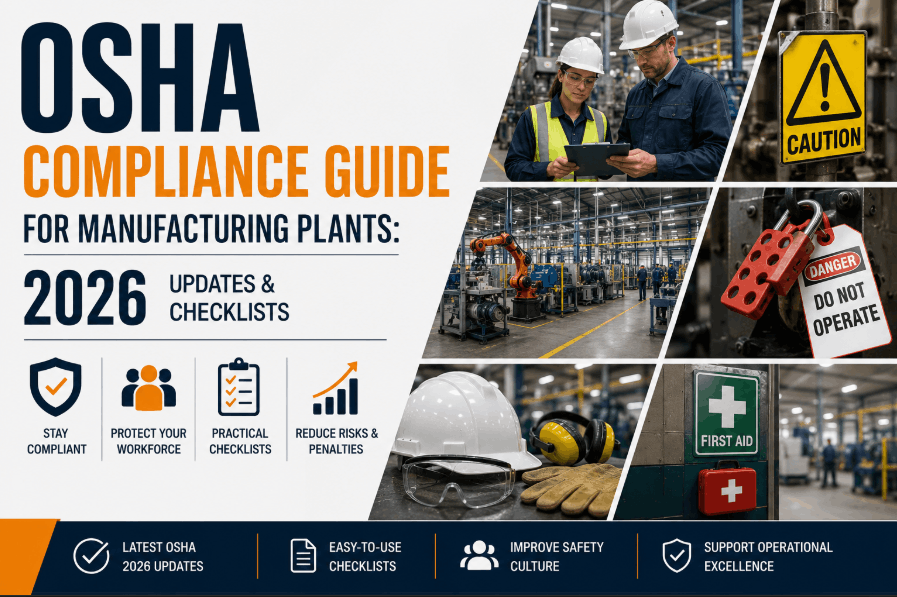
Manufacturing plants operate under a web of regulatory requirements that can feel overwhelming—ISO quality standards, OSHA safety mandates, EPA environmental rules, and dozens of industry-specific regulations all demanding attention simultaneously. Falling out of compliance doesn't just mean fines; it means production shutdowns, legal liability, and reputational damage that can take years to recover from. The plants that thrive are those that treat compliance not as a burden, but as an operational advantage built into every process and workflow. Schedule a consultation to discover how Oxmaint helps manufacturing plants streamline compliance across ISO, OSHA, and EPA requirements from a single platform.
Why Compliance Management Matters in Manufacturing
Regulatory non-compliance costs U.S. manufacturers billions annually in penalties, remediation, and lost productivity. Beyond the financial impact, compliance failures create safety hazards for workers, environmental risks for communities, and quality issues that erode customer trust. A structured compliance management approach transforms these risks into a competitive differentiator.
$14.8B
Annual cost of regulatory non-compliance for U.S. manufacturers
72%
Of plant shutdowns linked to preventable compliance gaps
3.2x
Higher audit pass rate with digital compliance tracking
Stop managing compliance with spreadsheets and paper trails. Oxmaint centralizes ISO, OSHA, and EPA compliance tracking in one platform with automated alerts and audit-ready documentation.
Manufacturing compliance rests on three regulatory frameworks that overlap and interact. Understanding how ISO quality standards, OSHA safety requirements, and EPA environmental regulations connect is critical for building an efficient compliance program that satisfies all three without duplicating effort.
Core Regulatory FrameworksHow ISO, OSHA, and EPA requirements interconnect
ISO
Quality Management
ISO 9001 · ISO 14001 · ISO 45001
Establishes systematic processes for quality control, environmental management, and occupational health. Certification requires documented procedures, internal audits, and continuous improvement evidence.
Document ControlProcess AuditsCAPA Tracking
OSHA
Workplace Safety
29 CFR 1910 · PSM · LOTO · HazCom
Mandates safe working conditions through equipment standards, hazard communication, personal protective equipment, and process safety management. Violations carry penalties up to $156,259 per willful violation.
Regulates air emissions, water discharge, hazardous waste handling, and chemical storage. Requires permits, monitoring, reporting, and emergency response planning for manufacturing operations.
Each regulatory body has specific documentation, inspection, and reporting requirements that manufacturing plants must satisfy. Missing even one requirement during an audit can trigger citations, corrective action mandates, or certification loss. Here is what each framework demands from your plant operations.
Key Compliance Requirements Matrix
Requirement Area
ISO 9001/14001/45001
OSHA (29 CFR 1910)
EPA (CAA/CWA/RCRA)
Documentation
Quality manual, procedures, work instructions, records
RCRA handler training, spill response, TRI reporting
Reporting
Management review, KPI tracking, nonconformance
OSHA 300 log, incident reports within 24hrs
Annual emissions, discharge monitoring, Tier II
Record Retention
Minimum 3 years (varies by clause)
5-30 years depending on record type
3-5 years minimum, some records permanent
Requirements vary by industry sector, plant size, and specific operations. Always verify current regulations with your compliance officer or legal counsel.
Never miss a compliance deadline again. Oxmaint automates inspection schedules, training reminders, and reporting deadlines across all regulatory frameworks.
An effective compliance program is not built overnight—it requires a phased approach that starts with understanding your current gaps, establishing systems and processes, training your workforce, and then continuously improving. Here is the proven roadmap that leading manufacturers follow to achieve and maintain multi-regulation compliance.
Compliance Program Implementation RoadmapFrom gap analysis to continuous compliance
01
Regulatory Gap Assessment
Identify every applicable regulation for your plant operations, map current compliance status against each requirement, and prioritize gaps by risk severity. This assessment becomes your compliance baseline and audit preparation starting point.
02
Documentation and Process Design
Create standard operating procedures, inspection checklists, training curricula, and reporting templates that satisfy requirements across ISO, OSHA, and EPA simultaneously. Integrated documentation eliminates redundancy and reduces the burden on plant teams.
03
Digital System Deployment
Implement a centralized compliance management platform that tracks inspections, manages work orders, stores documentation, and generates audit reports automatically. Sign up for Oxmaint to digitize your compliance workflows and eliminate paper-based tracking.
04
Training and Culture Building
Train every team member on their compliance responsibilities with role-specific programs. Build a culture where compliance is everyone's job—not just the EHS department's—through regular communication, recognition, and accountability.
05
Continuous Monitoring and Improvement
Run internal audits on a scheduled cycle, track corrective actions to closure, analyze trends in nonconformances, and update procedures as regulations evolve. Continuous improvement is both an ISO requirement and the key to staying ahead of regulators.
Audit Preparation Strategies
Whether facing an ISO certification audit, an OSHA inspection, or an EPA compliance review, preparation is what separates a smooth audit from a costly citation. Plants that maintain audit-readiness as a daily practice—rather than scrambling before scheduled audits—consistently achieve better outcomes and lower compliance costs.
Audit-Ready Checklist by Regulation
ISO Certification Audit
OSHA Inspection
EPA Compliance Review
Worried about your next audit? Our compliance specialists will review your current processes and show you how Oxmaint keeps your plant audit-ready 365 days a year.
Plants still relying on binders, spreadsheets, and email reminders for compliance management face exponentially higher audit risk and operational overhead compared to those using purpose-built digital platforms. The difference in outcomes is measurable and significant.
Compliance Management Approach Comparison
40-60hrsAudit prep time with manual tracking
4-8hrsAudit prep time with Oxmaint
Old Way
Paper checklists and binder-based records
Better Way
Automated inspection tracking with mobile access
Old Way
Calendar reminders for deadlines and inspections
Better Way
Intelligent scheduling with escalation alerts
Old Way
Reactive response after audit findings
Better Way
Proactive compliance monitoring and gap detection
Old Way
No real-time visibility into compliance status
Better Way
Real-time dashboards across all regulations
Old Way
Hours spent compiling audit documentation
Better Way
One-click audit report generation
Simplify Multi-Regulation Compliance with Oxmaint
Oxmaint brings ISO, OSHA, and EPA compliance management into one platform—automating inspections, tracking corrective actions, managing training records, and generating audit-ready reports so your team spends less time on paperwork and more time on operations.
Even well-intentioned compliance programs fail when plants fall into predictable traps. Understanding these common pitfalls—and implementing proven countermeasures—can save your plant from costly citations and audit failures.
Top Compliance Pitfalls and Solutions
Common Pitfall
Regulatory Risk
Prevention Strategy
Outdated SOPs and procedures
ISO nonconformance, OSHA citations for inadequate programs
Automated document review cycles with version control and approval workflows
Integrated platform linking quality, safety, and environmental records
Eliminate compliance blind spots at your plant. Get full visibility into every inspection, training record, and corrective action across ISO, OSHA, and EPA requirements.
Earning ISO certification or passing an initial OSHA/EPA inspection is only the beginning. Maintaining compliance year after year requires disciplined processes, regular self-assessment, and a management system that adapts as regulations evolve and your operations change.
Annual Compliance Maintenance Cycle
Q1
Regulatory Review
Review regulatory updates, assess new requirements, update compliance matrix, and adjust procedures for any changes to ISO standards, OSHA rules, or EPA regulations.
Q2
Internal Audits
Conduct comprehensive internal audits across all three regulatory frameworks. Document findings, assign corrective actions, and verify closure of previous audit items.
Q3
Training Refresh
Deliver annual refresher training for safety programs, environmental procedures, and quality systems. Update training records and verify competency for all regulated roles.
Q4
Management Review
Present compliance performance to leadership, review KPI trends, set improvement targets for the coming year, and allocate resources for compliance program enhancements.
The best compliance programs don't treat ISO, OSHA, and EPA as separate obligations. They build one integrated management system that satisfies all three—reducing documentation effort by 40% while improving audit outcomes across the board.
Achieve Continuous Compliance Across Every Regulation
Your plant shouldn't need separate systems for quality, safety, and environmental compliance. Oxmaint unifies inspection scheduling, work order management, training tracking, and audit documentation into one platform—keeping your plant compliant, audit-ready, and focused on production rather than paperwork.
How does Oxmaint help with ISO 9001 certification maintenance?
Oxmaint provides automated document control, internal audit scheduling, CAPA tracking, and management review reporting—all core ISO 9001 requirements. The platform maintains audit trails for every compliance activity, making surveillance audits straightforward. Book a demo to see ISO compliance workflows in action.
Can Oxmaint track both OSHA safety inspections and EPA environmental monitoring?
Yes. Oxmaint handles multi-regulation compliance from a single platform. You can configure inspection checklists for OSHA safety walkthroughs, LOTO verifications, EPA emissions monitoring, waste tracking, and more—all with automated scheduling, mobile completion, and centralized reporting.
What size manufacturing plant benefits most from digital compliance management?
Plants of all sizes benefit, but the ROI is especially clear for facilities with 50 or more employees, multiple regulatory requirements, or those preparing for ISO certification. Even smaller plants find value in eliminating missed inspections and maintaining organized records. Sign up for a free account to explore how Oxmaint fits your operation.
How long does it take to implement a digital compliance program with Oxmaint?
Most plants are up and running within 2-4 weeks. The implementation includes configuring inspection templates, importing asset data, setting up compliance schedules, and training your team. Our onboarding specialists guide you through every step to ensure a smooth transition from paper-based processes.
Does Oxmaint generate reports for regulatory submissions?
Oxmaint generates comprehensive compliance reports with full audit trails, including inspection completion rates, corrective action status, training compliance percentages, and trend analysis. These reports satisfy documentation requirements for ISO surveillance audits, OSHA record-keeping, and EPA reporting obligations. Schedule a consultation to review reporting capabilities for your specific regulatory needs.

![monthly-manufacturing-plant-safety-audit-checklist-[osha---iso-45001]](./manage-post-2k26/uploads/monthly-manufacturing-plant-safety-audit-checklist-[osha---iso-45001].png)