Manufacturing Plant Compressed Air System Maintenance Guide
By oxmaint on February 11, 2026
Compressed air powers over 70% of manufacturing processes, yet it remains one of the most overlooked and wasteful utilities on the plant floor. Electricity alone accounts for more than 75% of a compressor's total lifecycle cost, and poorly maintained systems across the United States waste an estimated $3.2 billion in energy every year. The good news: a structured maintenance program can cut your compressed air energy costs by 20-30% while dramatically reducing unplanned downtime. Schedule a free consultation to learn how Oxmaint helps manufacturing plants take control of compressed air maintenance and energy efficiency.
The Hidden Energy Drain on Your Plant Floor
Most plant managers know compressed air is expensive, but few realize just how much money escapes through neglected maintenance. Compressed air typically consumes 10% of a facility's total electricity, and the U.S. Department of Energy estimates that up to 50% of that energy is wasted through leaks, artificial demand, and inefficient operation. Here is what that waste looks like in real numbers.
$3.2B
wasted annually across U.S. manufacturing from inefficient compressed air systems
75%+
of a compressor's lifecycle cost is electricity alone
8:1
ratio of electricity input to useful air energy delivered
Energy Reality Check
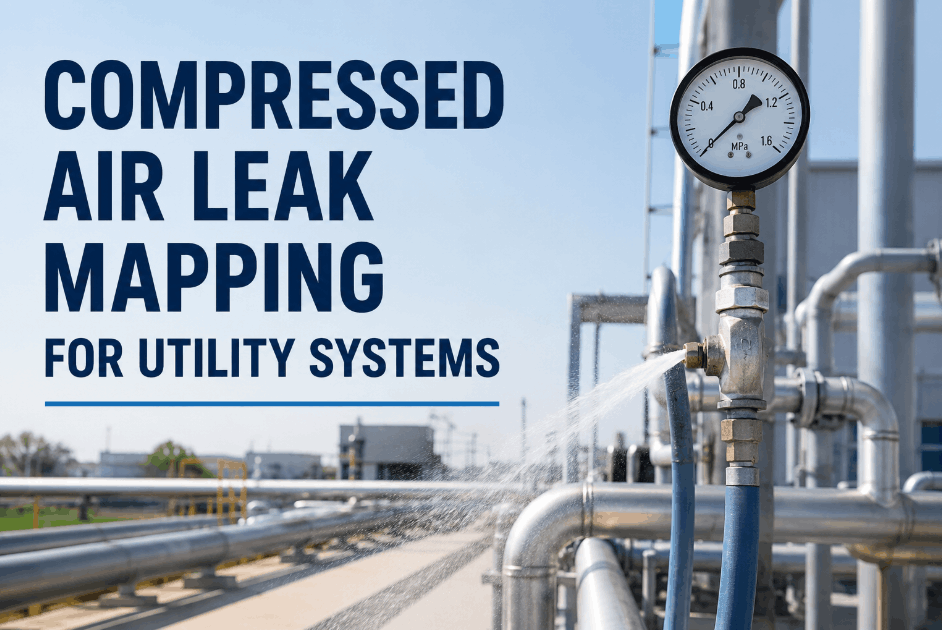
A single 1/4-inch leak at 100 PSI costs approximately $3,500 per year in wasted electricity. Most plants have dozens of active leaks at any given time, silently bleeding thousands from the operating budget every month.
Stop losing money to invisible air leaks. Oxmaint automates leak tracking from detection through repair verification.
Before diving into maintenance tasks, it helps to understand the five major zones of a compressed air system. Each zone has distinct failure modes, energy impacts, and maintenance requirements. Neglect in any one zone cascades through the entire system.
Five Zones of Your Compressed Air System
Z1
Intake & Filtration
Ambient air enters through intake filters that remove dust and debris. Clogged intake filters increase pressure drop and force the compressor to work harder, wasting 1-3% energy for every 2 PSI of unnecessary restriction.
Z2
Compression & Cooling
Air is compressed to operating pressure and cooled through aftercoolers and intercoolers. Oil degradation, worn valves, and fouled cooler fins reduce efficiency. Up to 90% of compression energy converts to recoverable heat.
Z3
Treatment & Drying
Dryers, separators, and coalescing filters remove moisture, oil, and particulates to meet air quality standards. Failing dryers introduce moisture that avoids corroding piping, damages tools, and ruins product quality.
Z4
Storage & Distribution
Receiver tanks buffer demand spikes while distribution piping delivers air to production areas. Undersized piping, poor layouts, and corroded lines create pressure drops that force compressors to run at higher setpoints.
Z5
Point of Use
FRLs, quick couplings, pneumatic tools, and actuators are where the air does productive work. This is also where most leaks develop, accounting for up to 30% of total compressor output in unmaintained systems.
Your Compressed Air Maintenance Roadmap
A tiered maintenance schedule ensures every component gets attention at the right frequency. Daily walkthroughs catch developing problems, while quarterly and annual services address deeper wear. Sign up for Oxmaint to automate these schedules with recurring work orders assigned to the right technicians at the right time.
Preventive Maintenance Frequency Guide
Daily
Check compressor oil level and color
Verify condensate drains are functioning
Monitor discharge pressure and temperature
Listen for unusual noise or vibration
Log operating hours and load percentage
10 minutes per compressor
Weekly
Clean or replace intake air filters
Test safety relief valves
Inspect belt tension and alignment
Check dryer dewpoint readings
Inspect visible hose connections
30 minutes per unit
Monthly
Ultrasonic leak detection survey
Replace coalescing and particulate filters
Clean aftercooler and intercooler fins
Check motor amp draw vs. nameplate
Test and service auto-drain traps
2-4 hours plant-wide
Quarterly / Annual
Change compressor oil and oil filters
Vibration analysis on motors and air-ends
Calibrate pressure switches and transducers
Full piping pressure drop audit
Comprehensive system energy audit
1-2 days full service
Never miss a PM again. Oxmaint creates automated work orders for every maintenance tier and sends mobile notifications to your technicians when tasks are due.
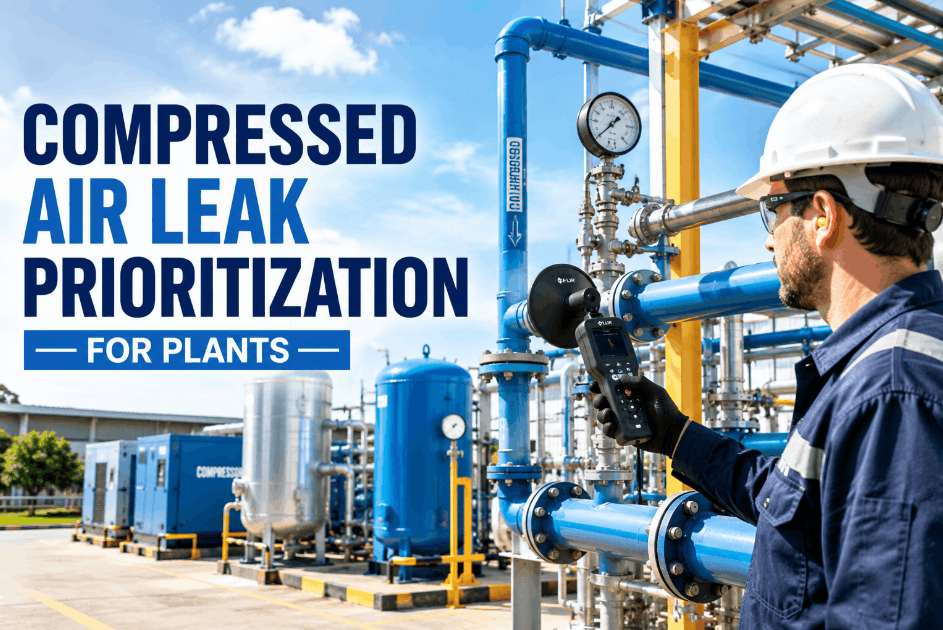
Leak repair is universally recognized as the single highest-ROI maintenance activity for compressed air systems. The U.S. Department of Energy confirms that leaks typically waste 20-30% of compressor output in plants without an active leak management program. A structured detect-tag-repair-verify process turns this waste into immediate savings.
Leak Management Workflow
Detect
Ultrasonic leak detectors identify leaks invisible to the naked eye at fittings, couplings, valves, FRLs, houses, and thread connections throughout the distribution network.
Tag & Log
Each leak is physically tagged, photographed, sized, and logged into the CMMS with location, estimated CFM loss, and cost impact for prioritized repair scheduling.
Repair
Work orders are assigned to technicians with parts, tools, and instructions. Repairs range from tightening fittings to replacing worn couplings, valves, or degraded hose sections.
Verify
Repaired locations are re-scanned to confirm the fix. Tags are removed, work orders closed, and savings documented for reporting to management.
Where Energy Savings Really Come From
Every maintenance activity contributes to overall compressed air efficiency, but the impact varies significantly. Understanding the savings potential of each activity helps schedule a demo with maintenance teams and build a strong business case for their compressed air program.
Energy Savings Potential by Maintenance Activity
Leak Detection & Repair
20-30% air loss recovered
Pressure Optimization
1% saved per 2 PSI reduced
VFD Compressor Tuning
15-35% on partial loads
Heat Recovery Systems
Up to 90% of heat reusable
Filter & Dryer Maintenance
1-3% per pressure drop eliminated
Condensate Drain Repair
Eliminates continuous air bleed
Combined savings from all activities typically reduce total compressed air energy costs by 25-35% in the first year.
Ready to see these savings in your plant? Oxmaint tracks every maintenance activity, every repair, and every dollar saved.
Spreadsheet-based maintenance tracking works until it doesn't. Missed PMs, lost leak tags, inconsistent records, and zero visibility for management are the inevitable results. A CMMS built for manufacturing plants changes the game entirely.
Without a CMMSWith Oxmaint CMMS
PM schedules tracked on paper or spreadsheets
Automated recurring work orders with mobile notifications
Leak surveys skipped during busy production weeks
Leak surveys scheduled and tracked with photo verification
No historical data on compressor performance trends
Complete maintenance history for every compressor asset
Spare parts discovered missing at repair time
Parts inventory with automatic low-stock alerts
Management has no visibility into maintenance status
Real-time dashboards showing PM compliance and costs
Plant Results After Implementing Structured Maintenance
The numbers tell the story. Manufacturing plants that implement a disciplined compressed air maintenance program with CMMS support see measurable improvement across every key metric within the first 12 months.
30%
Lower Energy Costs
Reduction in compressed air electricity spend through leak repair, pressure optimization, and scheduled servicing
70%
Fewer Breakdowns
Reduction in unplanned compressor failures by catching wear, oil degradation, and component fatigue before failure
40%
Longer Equipment Life
Extended compressor and component service life through timely oil changes, filter replacements, and cooling maintenance
6 mo
Fast Payback
Average time for the maintenance program to pay for itself through energy savings and avoided emergency repairs
Join hundreds of plants already saving with Oxmaint. Create your free account and start building your compressed air maintenance program today.
Common Compressed Air Problems and How to Fix Them
Every maintenance team encounters recurring compressed air issues. Knowing the root causes and proven fixes saves diagnostic time and prevents repeat failures. Here are the problems we see most frequently across manufacturing plants.
Problem
Pressure Drops at Point of Use
Root causes: Undersized piping, clogged filters, excessive fittings, long hose runs, corroded distribution lines
Fix: Audit the piping layout, replace clogged filters on schedule, upsize headers where needed, add secondary receivers near high-demand equipment, and eliminate unnecessary fittings and reducers
Problem
Moisture in the Air Lines
Root causes: Failed or undersized dryer, malfunctioning drain traps, saturated desiccant, aftercooler not removing enough moisture before the dryer
Fix: Service dryers on schedule, replace desiccant or check refrigerant levels, repair automatic drains, install proper moisture separators before the dryer, and add drip legs at low points in the piping
Problem
Compressor Overheating
Root causes: Dirty cooler fins, low oil level, degraded oil, poor ventilation, high ambient temperature in the compressor room
Fix: Clean coolers on schedule, maintain proper oil levels and change intervals, ensure adequate ventilation and exhaust ducting, and consider heat recovery to redirect waste heat out of the compressor room
Problem
Excessive Energy Consumption
Root causes: Leaks throughout the system, compressors running at higher pressure than needed, units running unloaded for extended periods, artificial demand from oversized piping pressure
Fix: Implement a monthly leak detection program, reduce system pressure to the minimum required plus a small margin, add VFD compressors for variable loads, and install flow controllers to eliminate artificial demand
In energy-intensive manufacturing, compressed air is often your most expensive utility per unit of useful work delivered. Yet most plants manage it with monthly meter readings and gut instinct. A structured maintenance program doesn't just save energy — it stabilizes pressure, improves product quality, and extends equipment life across the entire plant.
— Compressed Air Best Practices, Industry Guide
Take the First Step Toward Compressed Air Excellence
Your compressors are running right now — are they running efficiently? Oxmaint gives your maintenance team automated PM scheduling, leak tracking workflows, compressor health dashboards, and spare parts management, all from one platform built for the manufacturing plant floor. Stop guessing and start optimizing.
How often should we perform ultrasonic leak surveys?
Monthly surveys are recommended as the industry standard for manufacturing plants. Plants in high-leak-rate environments such as foundries, automotive assembly, and packaging operations may benefit from bi-weekly scanning. The key is consistency — Sign up for- scheduling recurring surveys in your CMMS ensures they never get deprioritized during busy production periods.
What is the single biggest waste of energy in a compressed air system?
Leaks account for the largest share of wasted energy in most plants, typically 20-30% of total compressor output. Running compressors at unnecessarily high pressure is the second largest contributor — every 2 PSI above actual demand wastes approximately 1% of total energy. A combination of leak repair and pressure optimization delivers the fastest ROI.
Can Oxmaint manage maintenance for different compressor brands?
Yes. Oxmaint is completely brand-agnostic and works with any compressed air equipment — Atlas Copco, Ingersoll Rand, Kaeser, Sullair, Sullivan-Palatek, or any other manufacturer. You can configure custom PM intervals, attach OEM manuals, log brand-specific parts, and track warranty information for every asset. Book a demo to see multi-brand compressor management in action.
How quickly can we get started with Oxmaint?
Most plants are fully operational within a week. You can add compressor assets, configure PM schedules, and assign work orders on day one. Oxmaint's mobile app lets technicians start completing and documenting work immediately — no lengthy implementation, no consultants, no specialized training required.
What return on investment should we expect from a maintenance program?
Manufacturing plants typically see 25-35% reduction in compressed air energy costs within the first 12 months. The maintenance program itself usually pays for itself within 6 months through energy savings and avoided emergency repairs. The larger your compressed air system, the faster and greater the financial return.