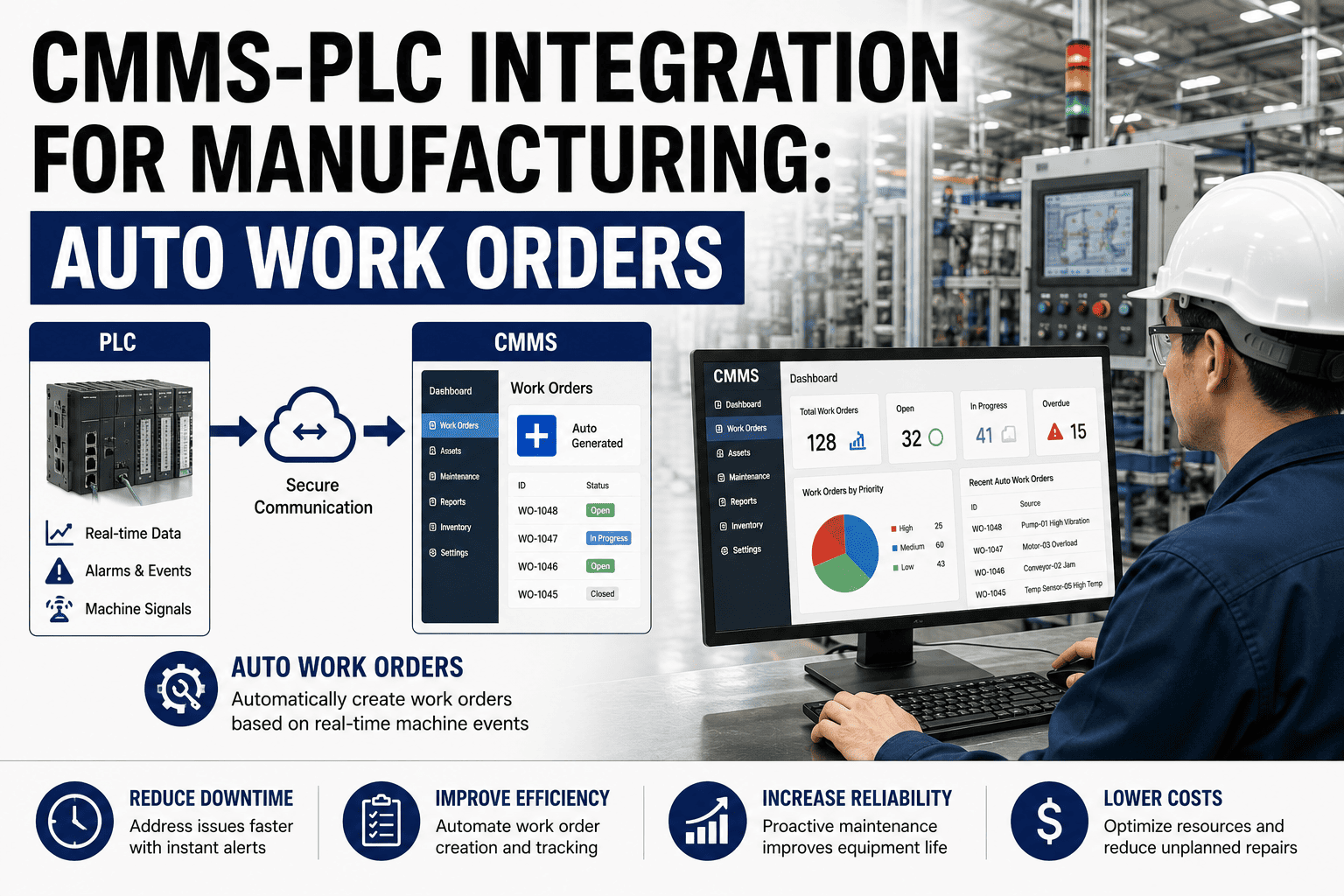
A bearing takes ten minutes to replace and ninety to reach. The gearbox sits behind a guard rail, the lubrication point faces the wall, and the hoist can't get a lift over the top of the machine. Layout decisions made years ago quietly set how long every future repair takes, and how likely a PM task is to be skipped because it is awkward. OxMaint AI helps you record those access problems against each asset, turn them into work orders, and plan maintenance around them.
Manufacturing Plant Layout and Maintenance Accessibility Guide
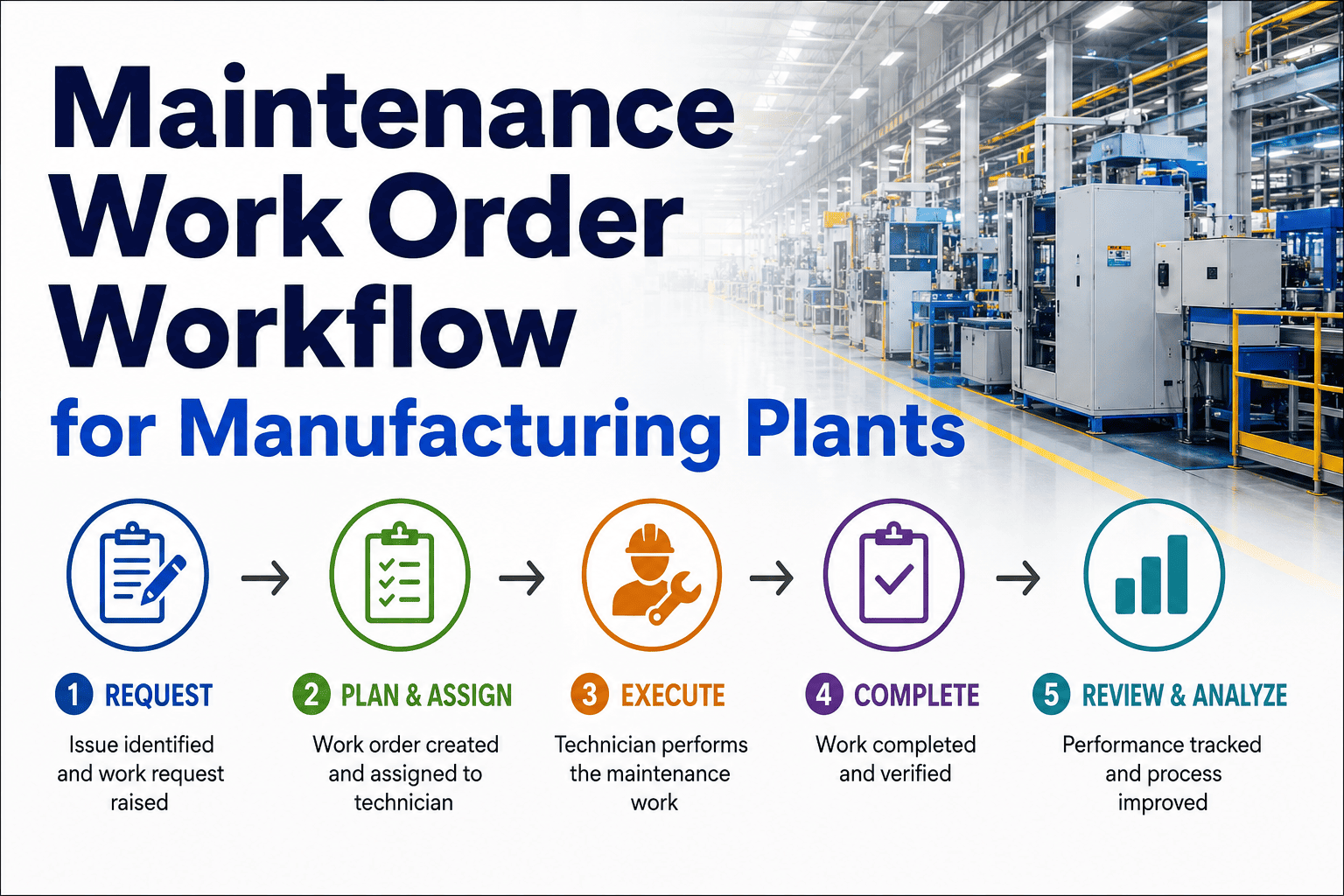
Hard-to-reach equipment is maintained late, or not at all. Audit access, fix the worst offenders, and keep the findings visible. OxMaint AI connects the workflow in one platform: inspections and technician reports raise access issues, issues become work orders, and the history feeds preventive and predictive maintenance planning.
Better asset visibility, including how hard each asset is to service.
The Cost of "Hard to Reach"
Poor access doesn't show up as a line item. It shows up as longer repairs, skipped PM tasks, workarounds and safety exposure. Start free and capture access notes on each asset.
The Plant Map: Where Access Matters Most
Think of the floor as zones, each with its own access needs. Use the map to see where to look first. Book a demo to see zone-based asset hierarchies.
Access Audit: Six Questions per Asset
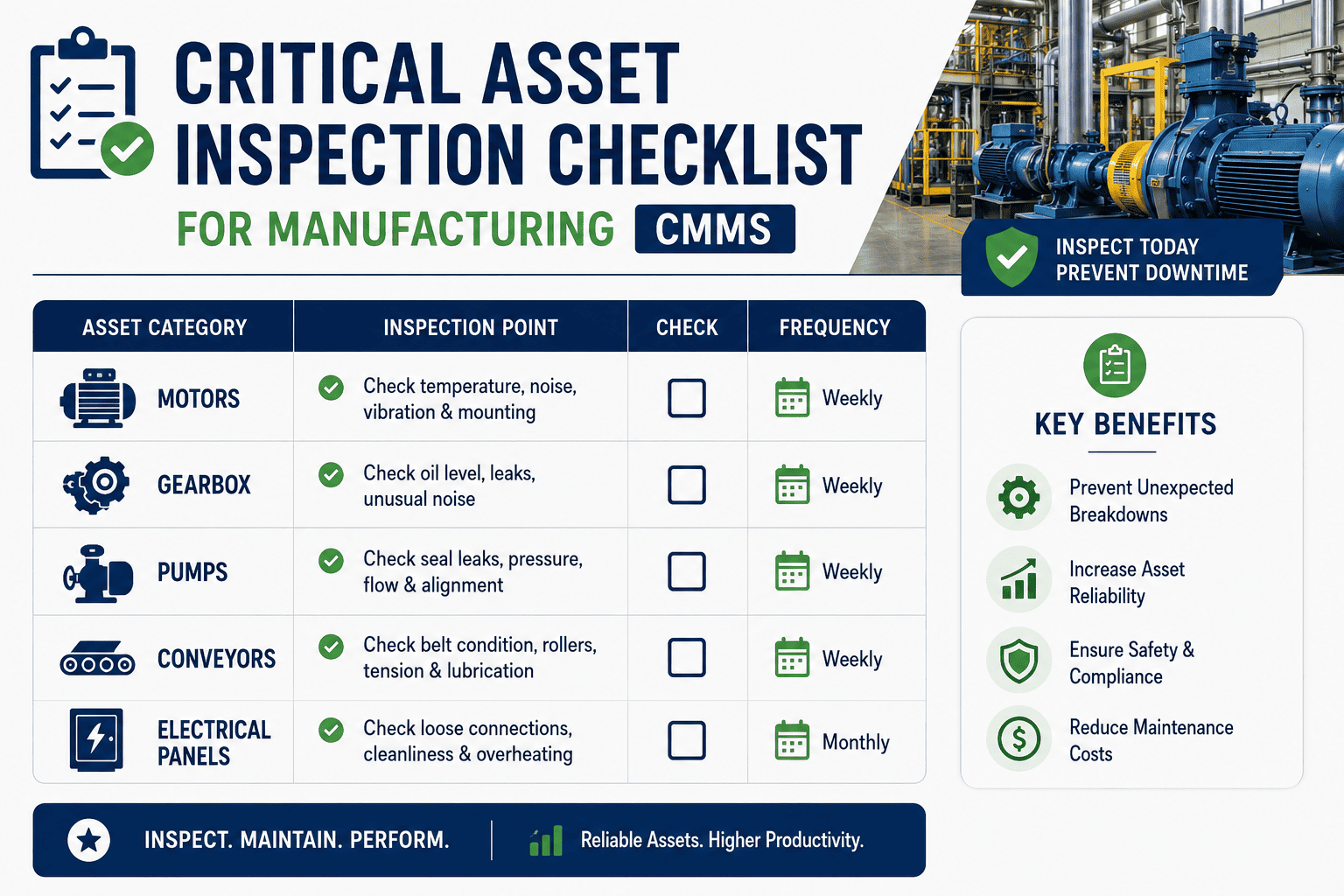
Score each critical asset on six questions. Low scores become work orders; the pattern shows where layout is hurting you. Start free and run the audit on mobile.
| Question | Good | Poor |
|---|---|---|
| Can a technician reach every PM point safely? | Yes, from the floor or fixed platform | Needs improvised access |
| Is there room to remove major components? | Clear path and lifting point | Neighbouring equipment must move |
| Are lubrication and inspection points visible and labelled? | Marked, on the accessible side | Hidden or behind guards |
| Can the asset be isolated and locked out easily? | Clear, labelled isolation points | Hard to find or confirm |
| Can spares and tools reach it? | Aisle and hoist access | Carried by hand over obstacles |
| Can sensors and gauges be read without effort? | Readable from a safe position | Needs a ladder or shutdown |
If Technicians Dread a Task, It Won't Get Done on Time.
OxMaint AI keeps each asset's access notes, PM tasks and repair history together, so planners can allow the right time, tools and people for jobs that are hard to reach.
Which Fixes First? The Impact-Effort Grid
You can't redesign the plant overnight. Sort fixes by how much they help and how hard they are to do. Book a demo to prioritise from real work-order data.
Design Principles for New Layouts and Upgrades
Always check clearances and access requirements against your equipment manufacturer's guidance and the safety rules that apply to your site. Start free and keep each asset's requirements on record.
Frequently Asked Questions
Make Every Asset Easy to Maintain.
Layout shapes maintenance for decades. Capture access problems where they happen, turn them into work orders, and plan PM around what each asset really needs.