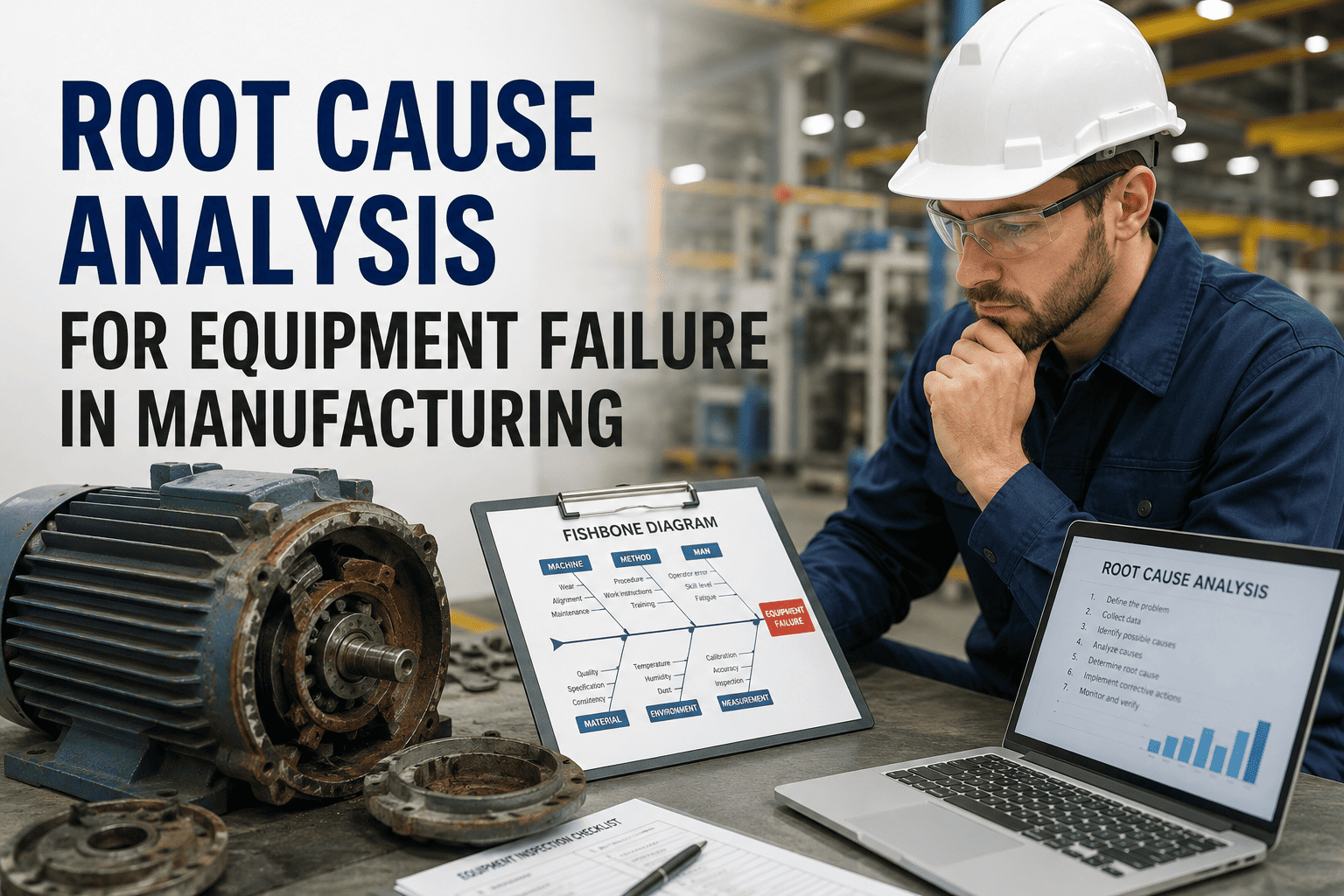
Picture this: Your critical pump fails again for the third time this year. Each failure costs $60,000 in repairs plus production downtime. Your team replaces seals, bearings, and impellers—but the failures keep coming back. Sound familiar?
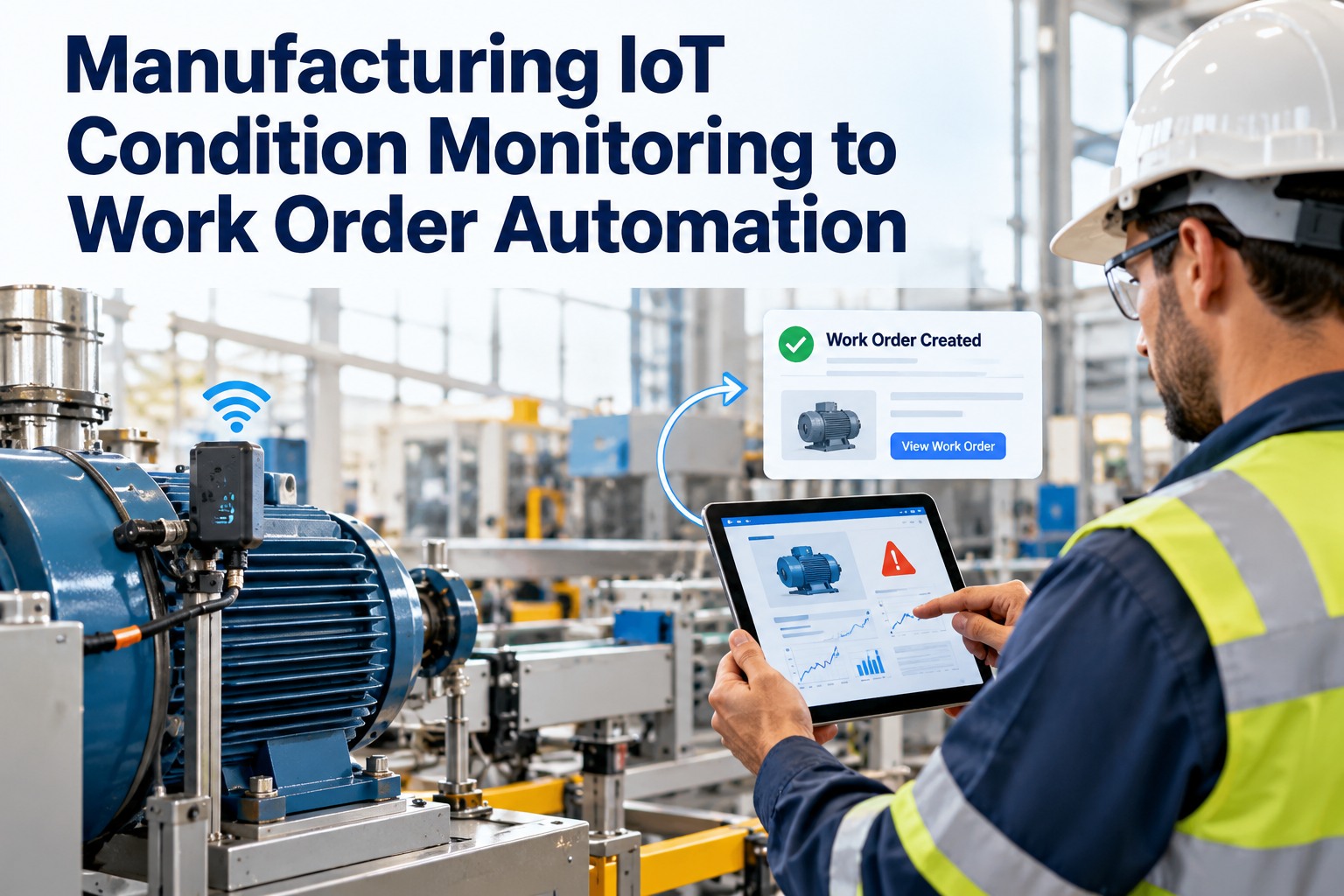
Here's the problem: Traditional troubleshooting treats symptoms, not causes. You fix what broke, but never discover why it broke. Meanwhile, AI-powered root cause analysis with Oxmaint CMMS changes everything. It monitors your equipment 24/7, detects problems 45-90 days before failure, and reveals the hidden patterns causing your recurring headaches.
This isn't theory. Process facilities using AI root cause analysis achieve 65-80% fewer emergency breakdowns, identify problems months before operators notice anything wrong, and save $2-6 million annually through prevented failures and production losses. The best part? Implementation takes just 90 days to start seeing results.
Tired of the same equipment failures happening over and over?
AI-powered root cause analysis reveals why failures happen and prevents them before they cost you money. See how 200+ facilities eliminated recurring problems.
Why Traditional Root Cause Analysis Fails (And What Works Instead)
Let's be honest: most maintenance teams already do root cause analysis. So why do the same problems keep happening?
The Traditional Approach Falls Short:
When equipment fails, technicians investigate after the damage is done. They examine the wreckage, interview operators, and make educated guesses. The process takes days or weeks. Even worse, it usually requires 3-4 failure cycles before patterns become clear enough to identify the real root cause.
Meanwhile, production is down. Costs are mounting. And everyone's frustrated because "we already fixed this last month."
What Makes AI Root Cause Analysis Different:
AI doesn't wait for failures to analyze wreckage. Instead, it continuously monitors your equipment through IoT sensors measuring vibration, temperature, pressure, power consumption, and flow rates. Machine learning algorithms establish what "normal" looks like for each asset, then detect subtle changes that signal developing problems.
The breakthrough? AI spots patterns invisible to human observation. It correlates data across multiple parameters and multiple assets, revealing systemic relationships. When your cooling tower efficiency drops, AI immediately connects it to rising compressor temperatures, chiller power spikes, and product quality issues downstream—exposing the single root cause affecting multiple systems. Start your free trial with Oxmaint CMMS to experience this intelligent correlation firsthand.
The 4 Biggest Equipment Problems AI Root Cause Analysis Solves
Critical Issues That Cost You Money Every Day
1. Recurring Failures You Can't Figure Out
You fix the same equipment repeatedly but failures keep coming back. Different symptoms, same asset. Your team is frustrated and costs are escalating.
AI Solution: Monitors equipment across multiple failure cycles, identifies common patterns between incidents, and reveals the underlying condition causing repeated problems. Typical result: 70-85% reduction in repeat failures within 6 months.
2. Cascade Failures Across Multiple Assets
One piece of equipment has a problem, then suddenly three more assets in different areas start acting up. Seems random until AI shows you the connections.
AI Solution: Correlates data across interconnected systems revealing how upstream problems cascade downstream. Example: Cooling system degradation simultaneously affects chillers, compressors, heat exchangers, and product quality—single root cause, multiple symptoms.
3. Slow Performance Degradation
Equipment gradually gets worse over months. Operators adapt to declining performance until sudden catastrophic failure forces emergency shutdown.
AI Solution: Detects 5-10% efficiency losses immediately, trending degradation to predict failure timing. Enables planned intervention 45-90 days early during scheduled maintenance windows—eliminating emergency repairs and production losses.
How AI Root Cause Analysis Actually Works (Simple Explanation)
Forget complicated technical jargon. Here's how AI root cause analysis works in practical terms your team will understand:
The 5-Step Process
Install Smart Sensors on Critical Equipment
Deploy IoT sensors on your most important assets—pumps, motors, compressors, heat exchangers. These sensors continuously measure vibration, temperature, pressure, power consumption, and other key parameters.
What to expect: Typical installation covers 25-40 critical assets with 80-150 sensors total. Installation takes 2-3 weeks without production disruption. Sensors wireless, making setup straightforward.
AI Learns Your Equipment's Normal Behavior
For 3-4 weeks, AI algorithms monitor equipment under various operating conditions—startup, steady state, different production rates, load changes. The system learns what "healthy" looks like for each asset.
What to expect: No action required during learning phase. AI establishes baselines automatically. Example: Normal pump operation = 42-44 kW power, 3.2 mm/s vibration, 165°F bearing temperature at 1,200 GPM flow.
Early Warning Alerts When Problems Develop
AI detects when equipment behavior deviates from baseline—often 6-12 weeks before operators notice performance changes. System generates alerts with diagnostic context and failure probability.
What to expect: Alerts include: affected equipment, observed changes, probable failure mode, predicted timeline, recommended actions. Example: "Pump #7 vibration increased 35%, bearing temperature up 12°F—probable bearing wear—predicted failure 52 days."
Mobile Inspections Validate AI Findings
Technicians use mobile apps with AI-guided checklists to validate alerts. Barcode scanning confirms correct equipment, photos document conditions, measurements verify AI predictions.
What to expect: Structured workflow eliminates guesswork. App guides inspectors to specific areas requiring attention. Average diagnostic time reduced 60-70% vs. unguided troubleshooting.
Fix Problems Before Failures Happen
System generates work orders with complete context—equipment history, probable root cause, recommended corrective actions, parts requirements. Schedule repairs during planned maintenance windows instead of emergency shutdowns.
What to expect: Shift from reactive firefighting to planned maintenance. Track before/after performance validating repairs worked. Prevent future occurrences through root cause elimination.
Mobile Inspections: The Secret to Making AI Work
Here's something important: AI generates insights, but mobile inspections turn insights into results. Think of AI as your early warning system and mobile apps as your execution engine.
3 Ways Mobile Apps Accelerate Root Cause Analysis
Guided Diagnostics (No Guesswork)
AI alerts trigger mobile checklists customized to suspected failure modes. Instead of wondering "what should I check?" technicians follow structured workflows ensuring comprehensive investigations. Oxmaint's mobile app delivers these intelligent workflows right to your team's smartphones.
Practical benefit: New technicians perform diagnostics as effectively as 20-year veterans. Consistency improves across all shifts. Nothing gets missed.
- Conditional logic presents relevant questions based on equipment type and AI hypothesis
- Mandatory photo documentation creates visual records for analysis
- Barcode/QR scanning confirms inspections at correct equipment
- Integrated measurement tools (vibration meters, thermal cameras) sync data automatically
Complete Audit Trails (Automatic Compliance)
Every inspection, measurement, and corrective action creates timestamped records with photos, location verification, and technician credentials. Regulatory compliance becomes automatic.
Practical benefit: Eliminate compliance headaches. When auditors ask "prove you inspected this vessel per ASME requirements," pull up complete records instantly—photos, dates, inspector signatures, everything.
- Automated compliance logging for PSM, OSHA, EPA requirements
- Photo evidence linked to specific equipment and dates
- Digital signatures for critical procedures
- Records preserved automatically per regulatory retention requirements
Real-Time Collaboration (No More Delays)
Field findings immediately visible to engineers, planners, and managers. Critical discoveries trigger instant notifications. Resources deployed same-day instead of waiting for paperwork.
Practical benefit: Technician discovers severe corrosion during routine inspection. Photos upload instantly. Engineering reviews within 20 minutes. Emergency work order issued. Part ordered. Repair scheduled—all same day. Paper-based process would take 3-5 days.
- Real-time status updates visible across organization
- Photo/video sharing for remote expert consultation
- Priority escalation for critical findings
- Resource reallocation based on actual field conditions
What Results Can You Actually Expect? (Real Numbers)
Let's talk specifics. What return on investment should you expect from AI-powered root cause analysis? Here are real-world results from manufacturing and process facilities:
Typical 12-Month Results
- Before AI: 20-30 emergency failures annually
- After AI: 5-10 emergency failures annually
- Improvement: 65-75% reduction
- Savings: $800K-$1.8M (prevented repairs + avoided downtime)
- Before AI: 8-12 unplanned shutdowns
- After AI: 2-3 unplanned shutdowns
- Improvement: 75-80% reduction
- Savings: $2.5M-$4.5M (preserved production)
- Before AI: Troubleshooting averages 6-8 hours per failure
- After AI: Troubleshooting averages 2-3 hours per failure
- Improvement: 60-70% time reduction
- Savings: $85K-$150K (labor productivity)
- Before AI: Catastrophic failures cause premature replacement
- After AI: Early intervention extends asset life 30-40%
- Improvement: Avoid premature capital expenses
- Savings: $600K-$1.2M annually (amortized)
- Oxmaint CMMS platform with AI analytics: $95,000
- IoT sensors (80-150 units for critical assets): $120,000 - $180,000
- Mobile devices and software licenses: $25,000
- Training and integration: $35,000
Ready to eliminate your recurring equipment failures?
Join 200+ manufacturing facilities using AI-powered root cause analysis to prevent failures before they happen. See real results in 90 days.
Your 90-Day Implementation Roadmap
Getting started is straightforward. Here's the proven 90-day approach that delivers quick wins while building toward enterprise-wide deployment:
Week 1-2: Identify Your Biggest Problems
- Review failure history: which assets break down most frequently?
- Calculate costs: repairs, downtime, production losses per asset
- Select 20-30 pilot assets representing highest impact opportunities
- Set baseline metrics: current breakdown frequency, costs, downtime
Week 3-4: Deploy Foundation
- Implement Oxmaint CMMS with equipment records and history
- Install IoT sensors on pilot equipment (80-120 sensors typical)
- Configure mobile apps with asset barcodes and inspection checklists
- Train core team (3-5 people) on system operation
Week 5-6: Activate AI Detection
- AI completes baseline learning period
- Activate anomaly detection algorithms
- Generate first AI alerts on equipment showing degradation
- Conduct validation inspections using mobile workflows
Week 7-8: First Interventions
- Execute corrective actions on 3-5 assets flagged by AI
- Measure before/after performance validating predictions
- Document findings and lessons learned
- Train broader maintenance team (15-20 people)
Week 9-10: Measure Results
- Calculate pilot ROI: prevented failures, production losses avoided
- Verify AI accuracy: true positives vs. false alarms
- Document root causes discovered and corrective actions
- Gather team feedback on processes and tools
Week 11-12: Scale Strategy
- Develop enterprise rollout plan for remaining 200-400 assets
- Present results to executive leadership with business case
- Secure budget approval for facility-wide expansion
- Plan deployment phases (typically 6-12 months total)
Common Questions (Honest Answers)
Good question. Traditional vibration monitoring provides valuable data but has three limitations:
1. Single-parameter blind spots: Vibration monitoring catches mechanical issues (bearings, misalignment) but misses 40-50% of failure modes like fouling, corrosion, cavitation, control problems, and thermal degradation. AI monitoring adds temperature, pressure, power, and flow—revealing the complete picture.
2. Manual analysis bottleneck: Vibration data requires specialists to interpret FFT spectra—time-consuming and expertise-dependent. AI analyzes patterns automatically in real-time without specialist review, enabling early action.
3. Isolated asset view: Vibration programs examine individual assets. AI correlates multiple equipment revealing how upstream problems cascade downstream (cooling system degradation affects compressor affects dryer affects product quality).
Bottom line: Adding AI to existing vibration data achieves additional 35-50% failure prevention vs. vibration-only programs.
This is a valid concern. Poor implementations do generate alarm fatigue. Here's how properly configured systems avoid this:
Smart baseline learning: AI monitors equipment 4-8 weeks under various conditions establishing "normal" with statistical confidence intervals. Alerts trigger only when degradation exceeds natural variability.
Multi-parameter confirmation: System requires correlation across multiple sensors before alerting. Example: bearing problem confirmed when vibration increases AND temperature rises AND power consumption increases. Single parameter excursion insufficient.
Continuous improvement: Technicians validate every alert (true positive, false positive, missed detection). System learns, improving accuracy over time. Expect initial 20-25% false positive rate declining to 10-15% after 6 months.
Real-world experience: Facilities implementing validation protocols maintain 85-90% alert accuracy—technicians trust and act on warnings.
Let's break down real costs for a typical mid-size facility:
Initial Investment:
- Oxmaint CMMS software: $85,000 - $110,000
- IoT sensors (100-150 units): $140,000 - $190,000
- Mobile devices/licenses: $20,000 - $30,000
- Training and integration: $30,000 - $45,000
- Total: $275,000 - $375,000
Ongoing Annual Costs:
- Software subscription: $28,000 - $38,000
- Sensor maintenance/replacements: $8,000 - $12,000
- Cellular/connectivity: $4,000 - $6,000
- Total: $40,000 - $56,000/year
With typical first-year savings of $4-7 million, payback happens in 3-8 weeks. After that, it's essentially pure profit to your bottom line. Sign up for Oxmaint to get a customized pricing quote based on your facility size.
Great question—sustainability is critical. Here's how successful facilities maintain momentum:
1. Automated workflows: AI alerts automatically generate work orders preventing "analyze but forget" syndrome. Tasks assigned, tracked, escalated if overdue—execution happens systematically.
2. Executive visibility: Monthly KPI reports to management: breakdowns prevented, production preserved, costs saved, ROI achieved. Leadership visibility maintains organizational priority.
3. Continuous improvement meetings: Quarterly failure reviews examining root causes, corrective action effectiveness, emerging patterns. Team learning prevents recurrence.
4. Cultural integration: Transition from "pilot project" to "standard practice"—embed condition-based thinking into PM programs, shutdown planning, and capital decisions.
Programs failing sustainability lack systematic processes converting insights to actions. Technology alone isn't enough—you need operational discipline.
Ready to Stop Your Recurring Equipment Failures?
You've seen the problem: traditional root cause analysis reacts to failures after damage is done, takes weeks to deliver answers, and requires multiple failure cycles before patterns emerge. Meanwhile, costs keep mounting and the same problems keep happening.
You've seen the solution: AI-powered root cause analysis monitors equipment continuously, detects degradation 45-90 days early, reveals hidden patterns and systemic relationships, and enables planned intervention before failures occur. Real facilities achieve 65-80% fewer emergencies, prevent $4-7 million in annual losses, and get results within 90 days.
The question is: how long will you keep accepting recurring failures as inevitable?
Here's what happens next:
Your Next Steps
Step 1: Free Consultation (30 Minutes)
Schedule a call with our reliability engineering team. We'll review your specific failure patterns, equipment challenges, and operational constraints. No sales pressure—just honest assessment of whether AI root cause analysis fits your situation.
Step 2: Customized Pilot Proposal
We'll develop a pilot program targeting your highest-impact equipment. Includes: equipment selection criteria, sensor deployment plan, success metrics, expected timeline, and projected ROI based on your actual failure history.
Step 3: 90-Day Pilot Program
Deploy AI monitoring on 20-30 critical assets. Demonstrate prevented failures with quantified savings. Build team confidence. Create expansion roadmap. Low risk, high reward approach proving value before enterprise commitment.
Stop recurring equipment failures. Start preventing them.
Join 200+ manufacturing facilities using Oxmaint's AI-powered root cause analysis to eliminate repeat failures, prevent production losses, and deliver measurable ROI. Get started in 90 days.
Oxmaint CMMS — AI-Powered Maintenance Management for Manufacturing & Process Industries
Trusted by 200+ facilities worldwide | 98% customer satisfaction | Average ROI: 1,100%+