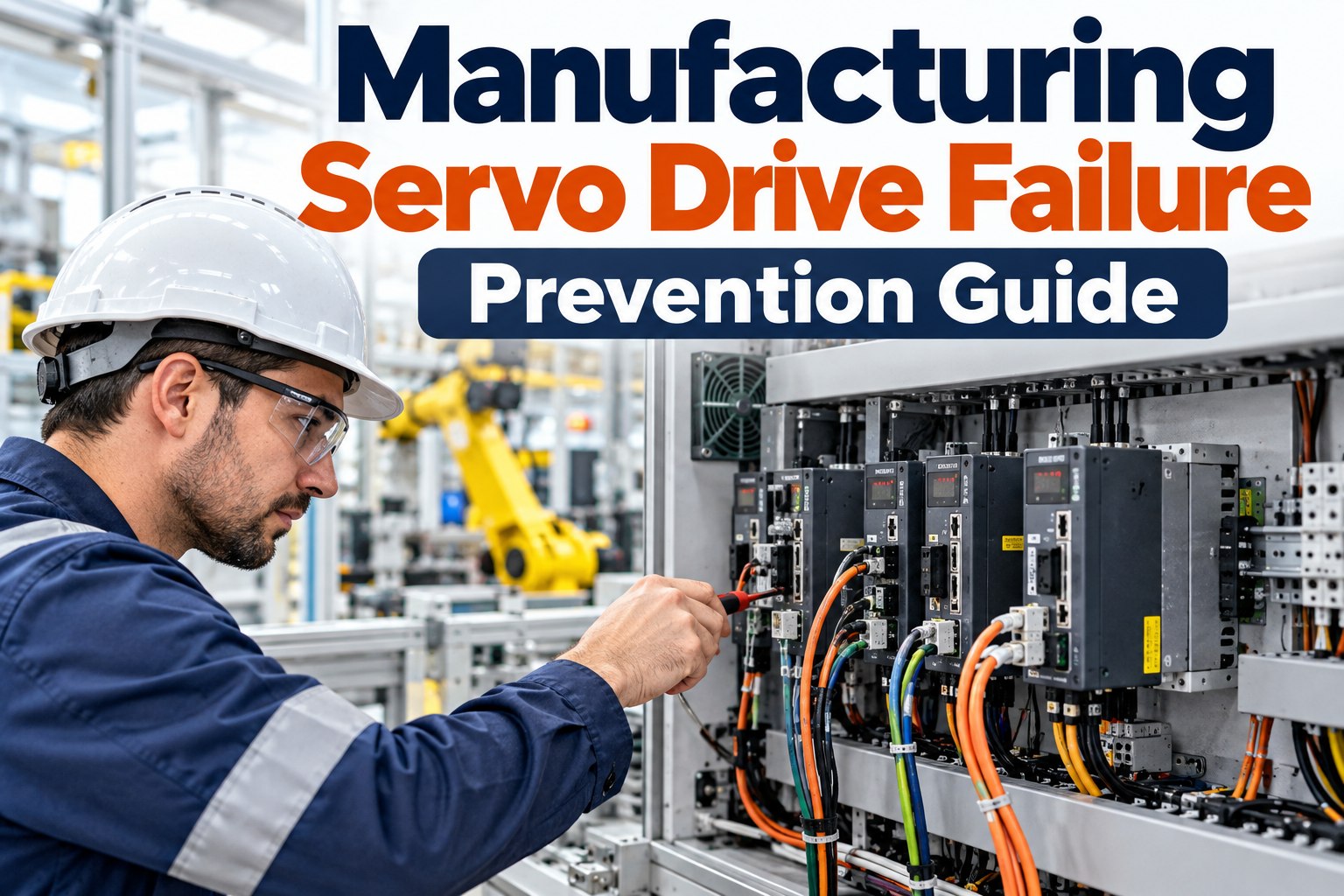
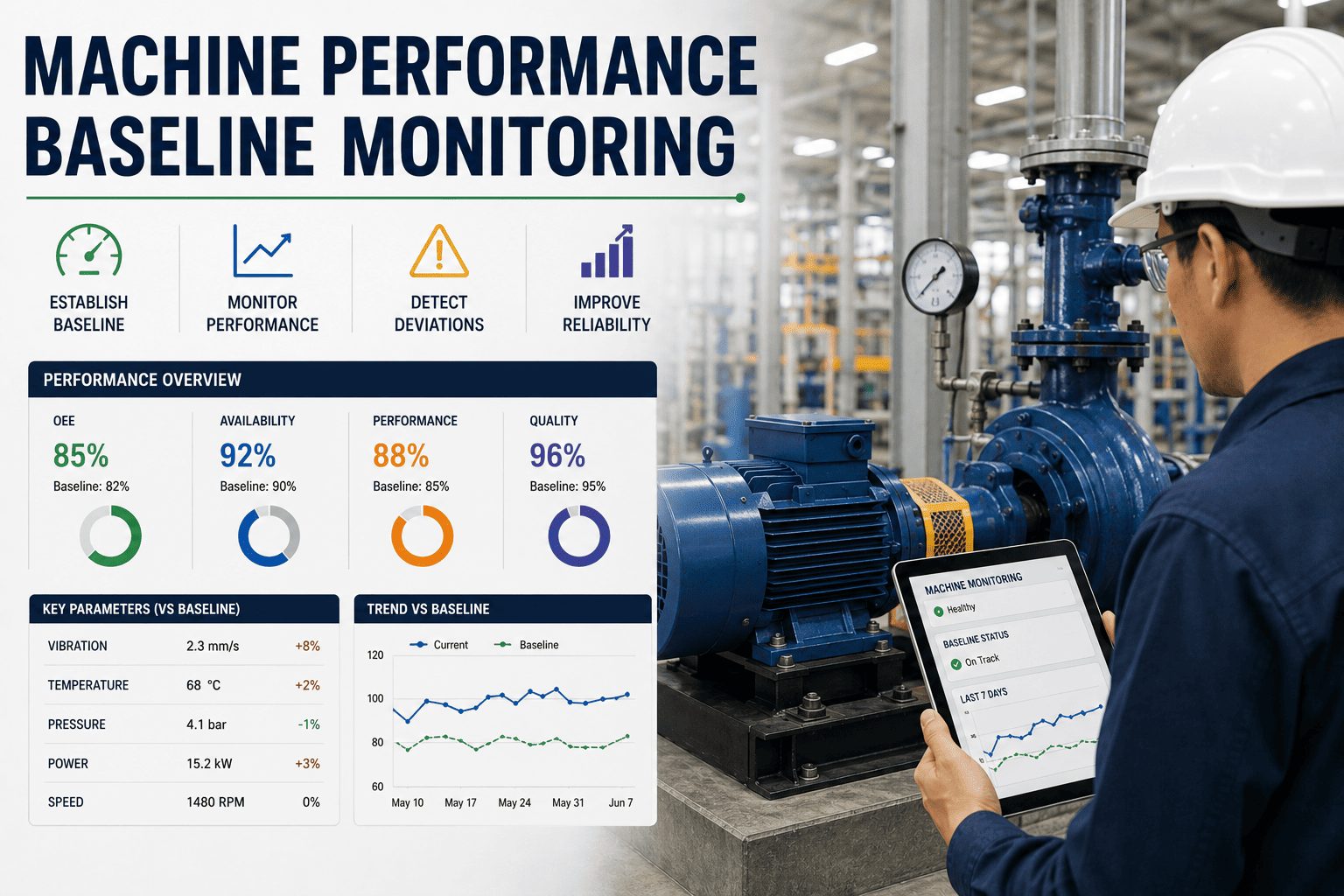
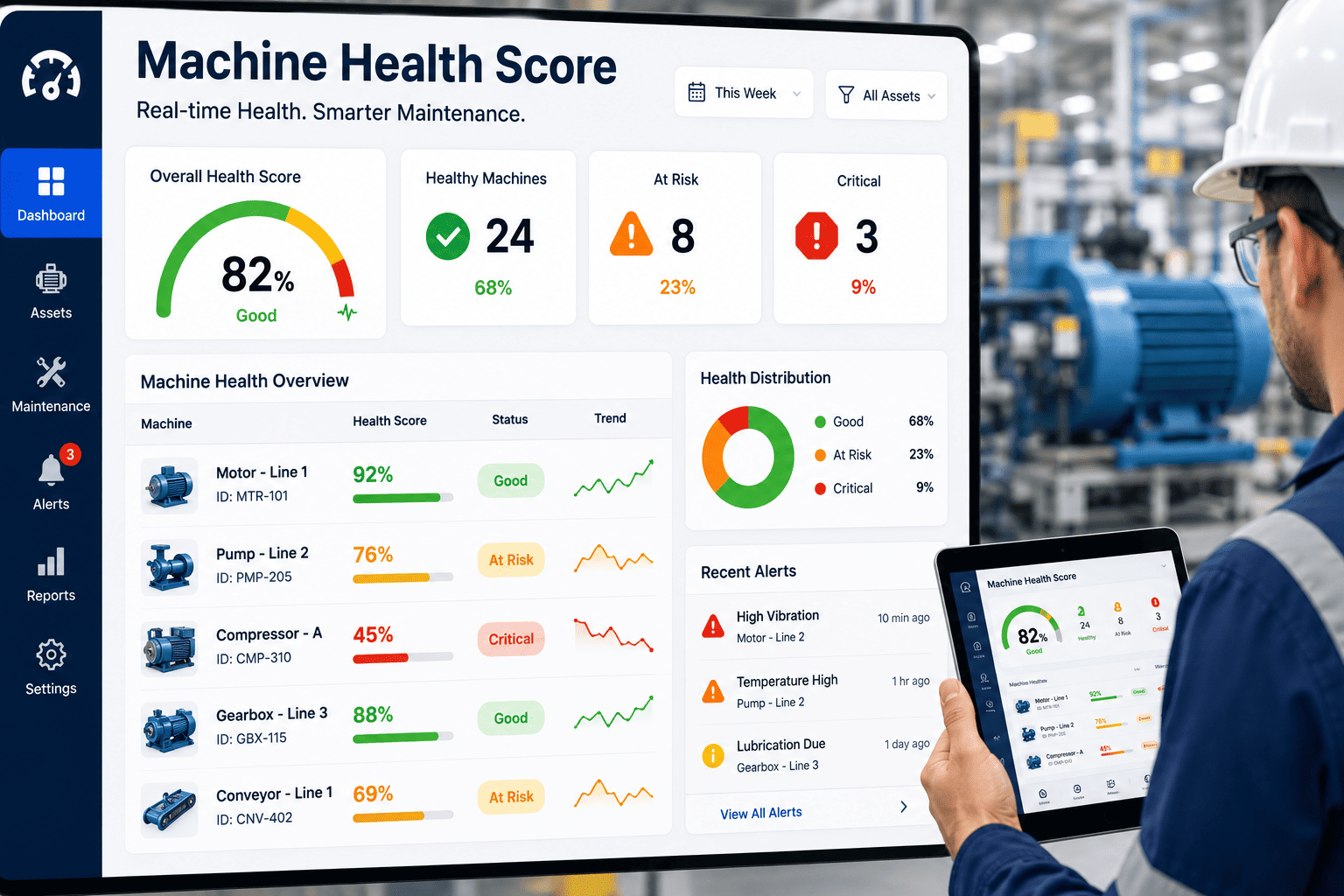
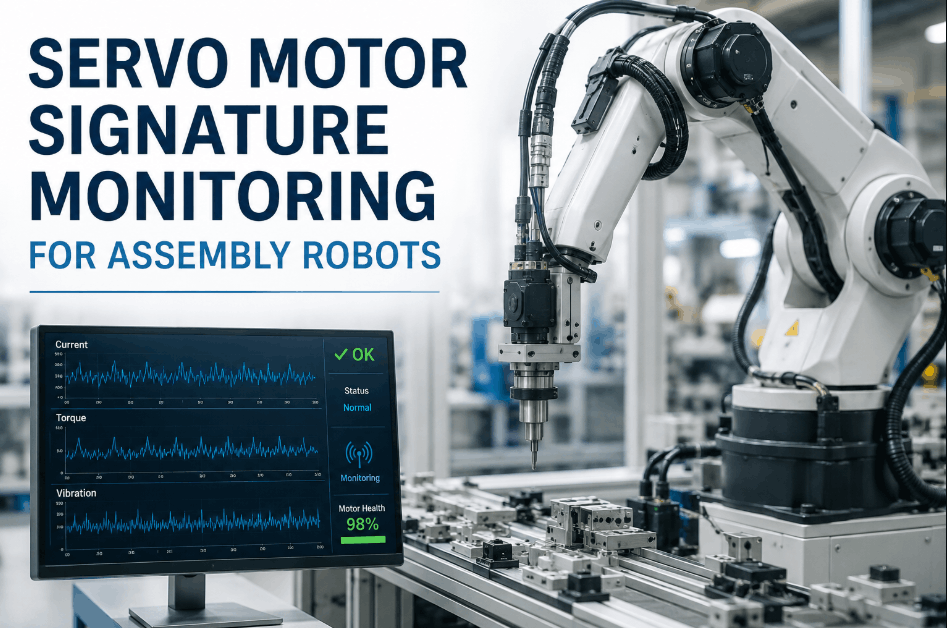
Servo drives rarely fail without leaving a trail in their current, torque, and vibration signatures — but in assembly cells running multiple axes per station, that signal volume is far more than any manual review can keep up with, so wear is usually diagnosed only after the line has already stopped. Oxmaint connects directly to PLCs and IoT sensors monitoring servo drives, capturing signature data continuously and scoring each drive's condition against its own historical baseline. Sign Up Free to start capturing servo drive signatures across your assembly cells today. When a drive's signature starts drifting from baseline, Oxmaint's predictive models flag it weeks ahead and route a proactive work order to the right technician, rather than waiting for the cell to stop. Book a Demo to see signature monitoring set up against your specific assembly cell layout.
Catch Servo Drive Wear in the Signature — Before the Cell Stops
Oxmaint compares current, torque, and vibration signals from every servo drive against its own baseline, flagging early-stage wear before it turns into an assembly cell interruption.
Why Servo Drive Faults Still Stop Assembly Cells Without Warning
Servo drive signal data is often available at the PLC level, but rarely reviewed continuously enough to catch wear before it becomes a line stoppage. Book a Demo to walk through what your servo drive signal data could reveal with continuous monitoring.
6 Ways Oxmaint Monitors Servo Drive Signatures in Assembly Cells
Oxmaint captures current, torque, and vibration data continuously per drive, scores condition against baseline, and routes proactive work before a cell stops. Sign Up Free to connect your first servo drive signal feed in Oxmaint.
- PLC and IoT sensor integration streams drive signal data continuously
- Current, torque, and vibration captured per axis per cell
- Readings stored against the specific servo drive asset record
- A baseline signature built per drive from its own run history
- Predictive models score current condition against historical baseline
- Signature deviation translated into a health risk score per drive
- Score trends retained for comparison over time
- Early-stage wear flagged before any performance loss is visible
- Declining signature scores generate proactive work orders
- Alerts issued weeks ahead of likely failure where data supports it
- Alerts ranked by risk into the maintenance planner's queue
- Scheduled maintenance proposed in place of reactive stoppage
- Flagged deviations create work orders tied to the specific drive and cell
- Parts reserved automatically for known failure modes
- Technician assigned by certification and proximity to the cell
- Resolution and retest results logged against the original alert
- Recurring signature anomalies surfaced across multiple cells
- AI-generated shift summaries highlight repeating alert patterns
- Repeated failure modes flagged for root-cause review
- History retained per drive model across the production floor
- Signature trends and health scores exportable by cell, line, or plant
- Drive replacement history retained for budgeting reference
- Reports support reliability reviews and capital planning
- Documented evidence available for replacement justification
Servo Drive Monitoring Priorities by Assembly Environment
Monitoring priorities shift depending on cell layout, axis count, and production tempo. The table below maps assembly environment to the signature monitoring focus that matters most.
| Assembly Environment | Primary Drive Risk | Key Monitoring Focus | Oxmaint Priority | Audience |
|---|---|---|---|---|
| Automotive Assembly Cells | High-cycle torque wear | Baseline signature scoring | Predictive Intelligence | Reliability Engineer |
| Electronics & SMT Lines | Precision drift on micro-axes | Continuous current and vibration capture | Condition Monitoring | Process Engineer |
| Packaging Automation Cells | Repeating drive failure modes | Cross-cell pattern recognition | AI Analytics | Maintenance Manager |
| Robotics-Heavy Cells | Unplanned drive stoppage risk | Predictive alerting ahead of failure | Predictive Maintenance | Automation Lead |
| Multi-Cell Production Floors | Replacement budget visibility | Exportable health reporting | Analytics & Reporting | Plant Director |
Keep Assembly Cells Moving With Fewer Surprise Stops
Oxmaint connects continuous signal capture, AI health scoring, predictive alerts, and automated work orders into one workflow for servo drive monitoring.
Frequently Asked Questions — Servo Drive Signature Monitoring
Give Every Servo Drive a Baseline Signature It Can Be Measured Against
Continuous signal capture. AI health scoring. Predictive failure alerts. Automated work orders. One platform for monitoring servo drive condition across every assembly cell.