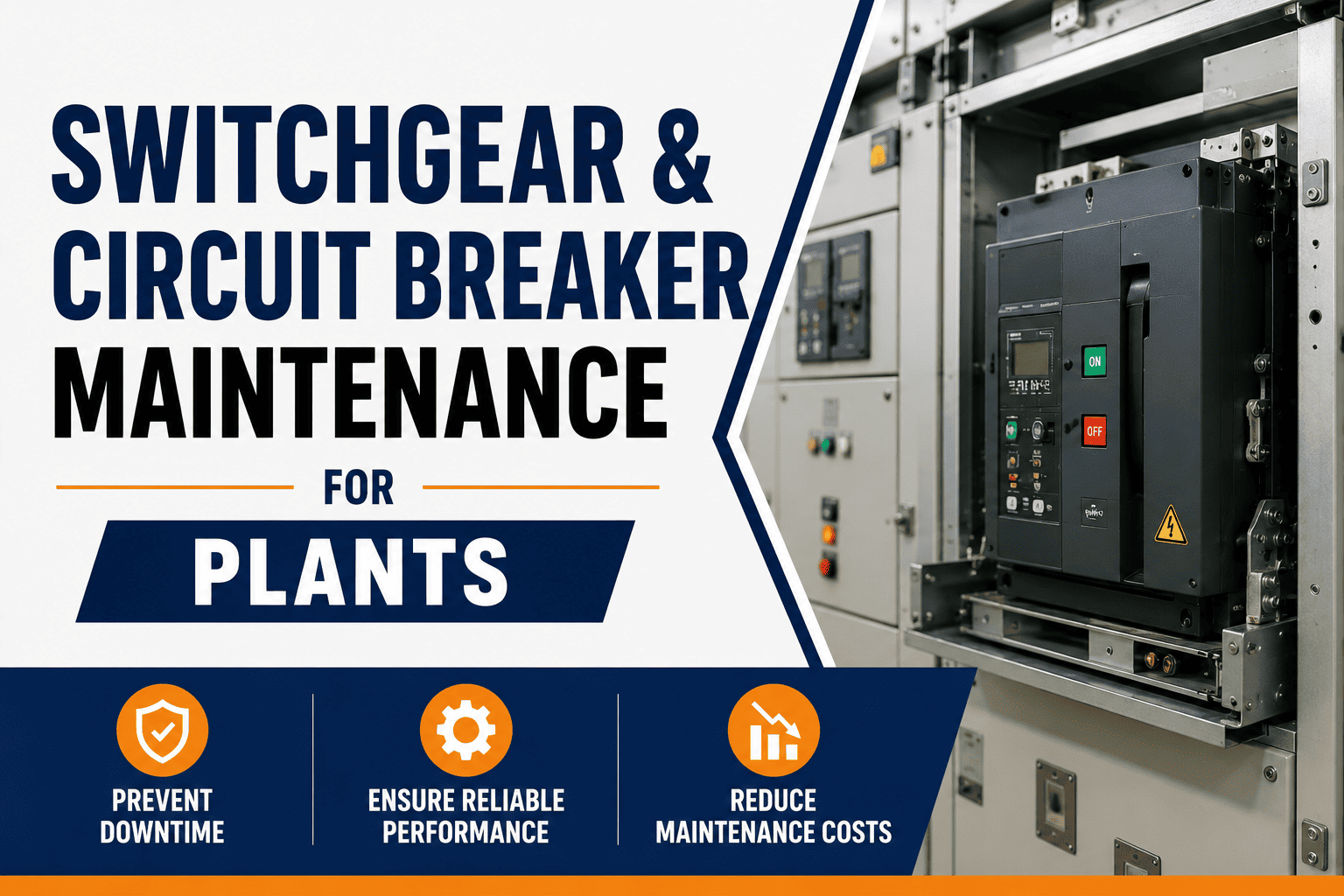
Switchgear and circuit breakers are the silent guardians of your manufacturing plant's electrical infrastructure — until they fail to trip during a fault, and the consequences become catastrophic. Effective switchgear maintenance for manufacturing plants spans contact resistance testing, insulation resistance checks, arc chute inspections, and disciplined breaker exercise routines aligned with NFPA 70B standards. This guide walks maintenance and reliability teams through LV and MV inspection intervals, circuit breaker PM schedules, and how a CMMS like OxMaint transforms electrical maintenance from reactive firefighting into a predictable, compliance-ready program. Ready to digitize your electrical maintenance records? Start Free Trial and see how quickly you can build a defensible audit trail.
SWITCHGEAR MAINTENANCE GUIDE
What happens when a breaker fails to trip during a 50,000-amp fault?
An unmaintained circuit breaker in a manufacturing plant is a ticking liability. Arc-flash incidents from failed switchgear cost U.S. industry over $1.5 billion annually in direct damage, lost production, and litigation — most traceable to missed preventive maintenance on equipment that ran fine for years, right up until it didn't.
SWITCHGEAR INSPECTION BY VOLTAGE CLASS
How often should manufacturing switchgear be inspected?
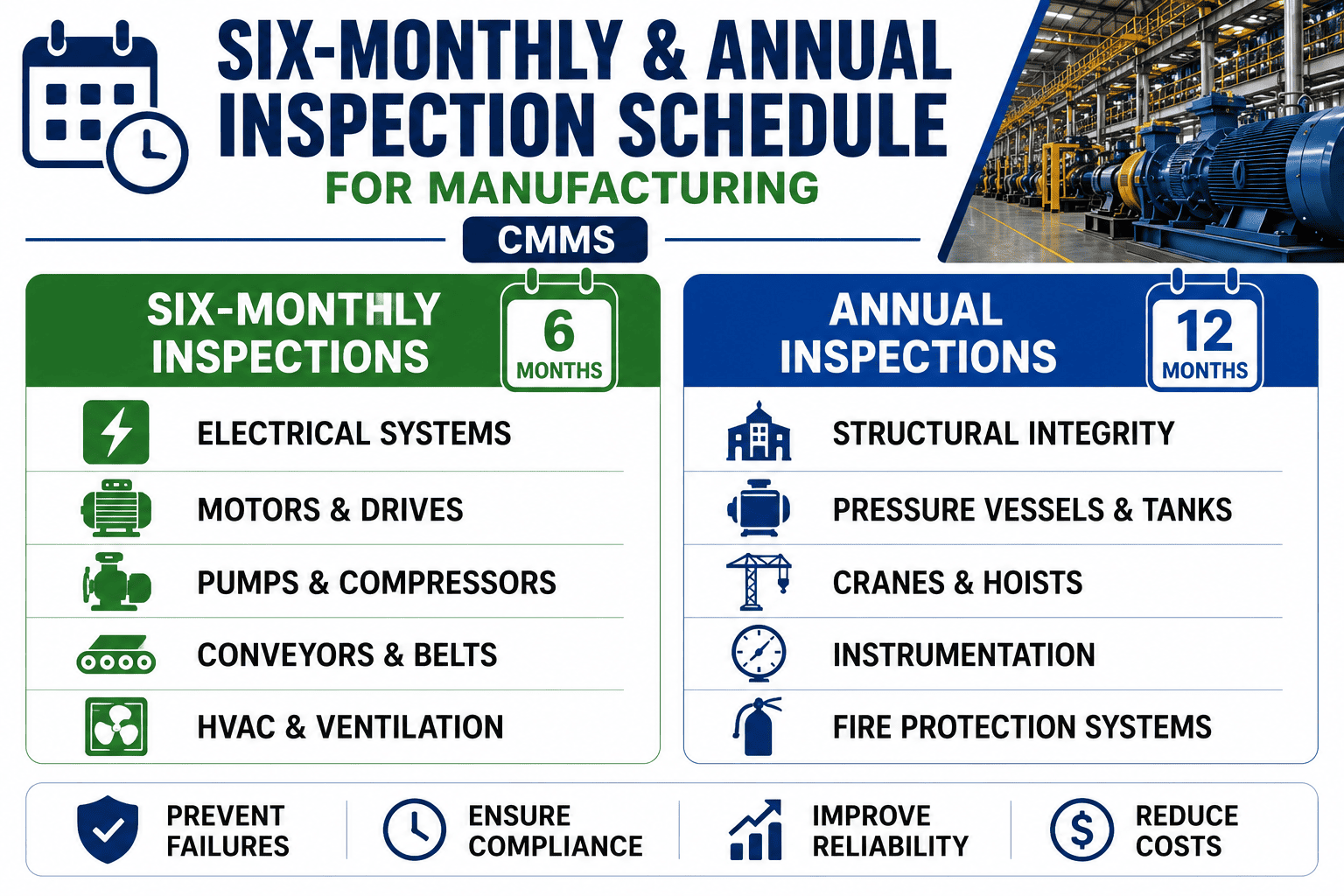
NFPA 70B recommends inspection intervals that scale with voltage class and operating conditions. A 480 V low-voltage switchgear assembly in a clean, climate-controlled electrical room typically warrants a visual inspection every 6 months and a comprehensive PM every 12 months. Medium-voltage gear (2.3 kV–15 kV) demands tighter cadences — quarterly visual inspections and semi-annual electrical testing — because fault energy and thermal stress scale with voltage.
LV Switchgear ≤ 600 V
- Visual & thermographic inspection — every 6 months
- Breaker exercise (open/close no-load) — annually
- Contact resistance & insulation resistance test — annually
- arc chute inspection & cleaning — annually
- Bolted connections torque audit — every 3 years
MV Switchgear 2.3–15 kV
- Visual & thermographic inspection — quarterly
- Breaker exercise & timing test — every 6 months
- Contact resistance (DLRO) — every 6 months
- Insulation resistance & power factor — annually
- Vacuum bottle integrity / SF6 gas test — annually
Harsh / High-Cycle Duty
- Monthly thermography on heavily loaded gear
- Breaker exercise every 3 months (high cycle count)
- Accelerated PM after 5 fault interruptions
- Ambient dust / moisture filter check — quarterly
- Annual partial-discharge survey on MV assemblies
CIRCUIT BREAKER PM SCHEDULE
The 6-step circuit breaker PM schedule for manufacturing plants
A defensible circuit breaker PM schedule follows a predictable annual arc — from isolation and cleaning through electrical testing, lubrication, and documentation. Skip any step and you lose both the protective value and the compliance trail. Here is the sequence a CMMS should trigger automatically.
Isolate, lock out, and visually inspect
De-energize the breaker rack, apply LOTO, and inspect for tracking marks, discoloration, pitting on contacts, and signs of arcing on insulators. Document baseline photos in the CMMS asset record for year-over-year trending.
Clean arc chutes and insulation surfaces
Vacuum and wipe arc chutes, phase barriers, and bushings with approved solvent. A contaminated arc chute can sustain a flashover at 60% of rated withstand — cleaning alone restores margin.
Measure contact resistance (DLRO)
Inject 100 A DC and measure voltage drop across each pole. A reading exceeding the manufacturer's baseline by more than 50% signals eroded or oxidized contacts that need replacement before the next fault cycle.
Test insulation resistance
Apply 1,000 V megger phase-to-ground and phase-to-phase. Minimum acceptable insulation resistance for LV switchgear is 100 MΩ; for MV gear, use the 1 MΩ-per-kV rule. Trend readings over time — a 30% drop between cycles warns of moisture or contamination.
Exercise the breaker and lubricate mechanisms
Open and close the breaker 5 times under no load to exercise the trip mechanism and spread lubricant. Re-grease pivot points per OEM spec — a sticking trip bar is the #1 root cause of breakers that fail to clear faults.
Document results and trend in the CMMS
Record every reading, photo, and consumable in the asset's CMMS history. This is your NFPA 70B compliance proof — and the trending data feeds predictive maintenance alerts when values drift toward action thresholds.
SWITCHGEAR TESTING BENCHMARKS
What test results tell you — and when to act
Each electrical test produces a number. Without pass/fail thresholds those numbers are just noise. The table below maps the four core switchgear tests to their acceptable ranges, warning bands, and corrective actions — the exact logic OxMaint uses to auto-flag at-risk assets.
| Test | Good Range | Warning Band | Action Required |
|---|---|---|---|
| Contact Resistance (DLRO) | < 100 µΩ above OEM baseline | 50–100% above baseline | Clean or replace contacts; re-test |
| Insulation Resistance (1 kV) | > 100 MΩ (LV) / 1 MΩ per kV (MV) | 50–100 MΩ (LV) | Dry, clean, re-test; investigate moisture |
| Primary Injection Trip Test | Trips within ±10% of pickup setting | ±10–20% deviation | Recalibrate trip unit or replace sensor |
| Thermography (loaded) | < 10 °C rise over similar component | 10–40 °C rise | Torque connections; schedule outage repair |
REAL-WORLD SCENARIO
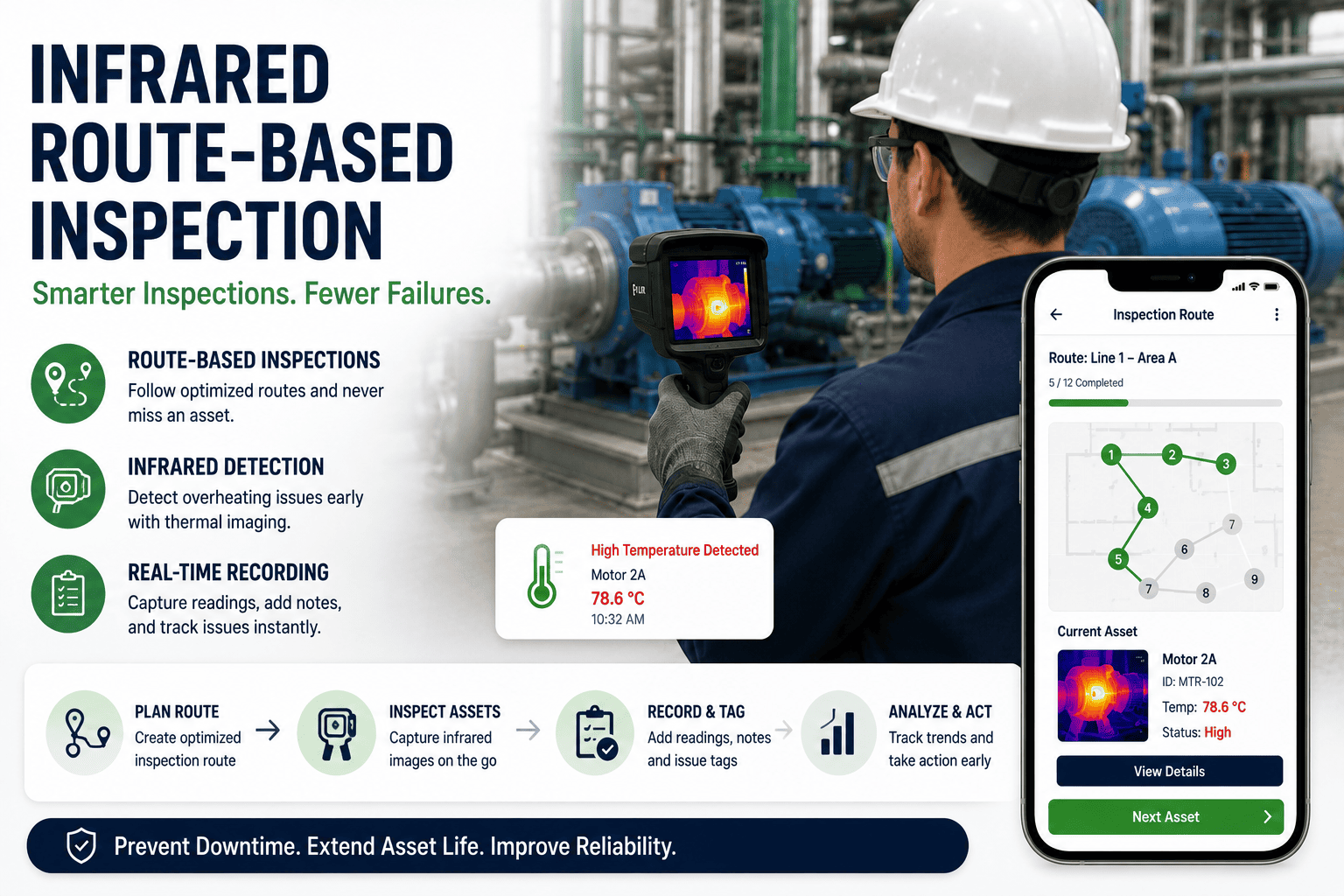
A 180-asset food-processing plant in the Midwest tracked thermography findings in spreadsheets for years — until a 480 V main breaker developed a 38 °C hotspot that went unnoticed between manual audits. The resulting arc-flash event caused $340,000 in equipment damage and 22 hours of line downtime. After deploying OxMaint, the same plant schedules quarterly thermographic inspections as auto-generated work orders, uploads IR images directly to each asset record, and receives AI-driven alerts when thermal trends cross the 15 °C warning band — cutting unplanned electrical downtime by 40% in the first year.
STOP REACTING TO ELECTRICAL FAILURES
See OxMaint configure your switchgear PM schedule in 30 minutes
Book a live demo and we'll load your breaker inventory, set NFPA 70B inspection intervals, and show you automated work-order generation on your own assets.
CMMS SWITCHGEAR MAINTENANCE
How OxMaint configures your switchgear CMMS for NFPA 70B compliance
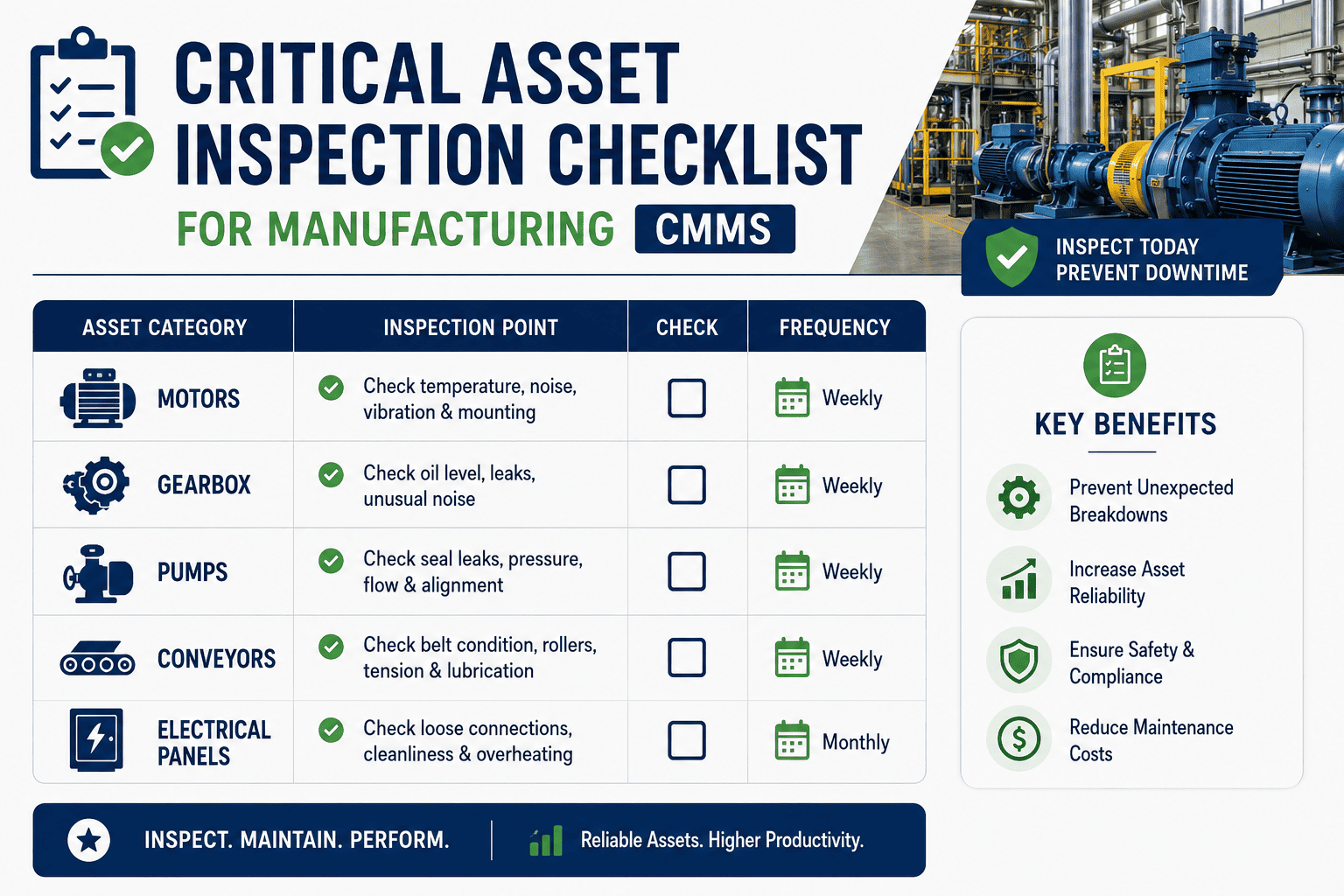
A spreadsheet can store a PM date. A CMMS built for electrical maintenance enforces the schedule, captures the readings, trends the data, and produces an audit-ready record on demand. Here's what OxMaint brings to switchgear and circuit breaker maintenance specifically.
Automated PM scheduling by voltage class
Tag each asset as LV or MV and OxMaint auto-generates the correct NFPA 70B inspection cadence — quarterly thermography for MV gear, annual DLRO for LV breakers — with zero manual calendar work.
Cuts missed PM cycles by 90%+
Trending & predictive alerts
Every DLRO, megger, and thermography reading feeds OxMaint's AI trend engine. When contact resistance rises 40% from baseline or a thermal hotspot crosses 15 °C, the platform auto-creates a corrective work order before failure.
Predicts breaker failures 2–4 weeks early
Audit-ready compliance records
Every work order captures technician, timestamp, test readings, photos, and parts consumed — locked in an immutable history per asset. Hand an auditor a complete NFPA 70B record in two clicks instead of two days.
Cuts audit prep time by 80%
Spare-parts inventory for breakers
Track contact tips, arc chutes, trip units, and operating coils by part number and minimum stock. OxMaint auto-reorders when a PM consumes a consumable — so the parts bin is never empty when a breaker is racked out.
Eliminates 95% of parts-stockout delays
SWITCHGEAR MAINTENANCE FAQ
Common questions about switchgear and circuit breaker maintenance
Maintenance leaders evaluating a CMMS for electrical maintenance typically ask these questions before committing. Here are direct, practical answers.
How often should circuit breakers be exercised in a manufacturing plant?
NFPA 70B recommends exercising (open/close under no load) low-voltage power circuit breakers at least once per year and medium-voltage breakers every six months. Breakers that sit idle for years develop sticky trip mechanisms and oxidized contacts — the leading cause of failure-to-trip events. OxMaint auto-generates breaker-exercise work orders on the correct cadence per voltage class, so no breaker is forgotten.
What is the difference between switchgear inspection and switchgear maintenance?
Inspection is non-invasive — visual checks, thermography, and breaker exercise performed while gear is energized or lightly de-energized. Maintenance (PM) is invasive: full de-energization, LOTO, cleaning, contact resistance testing, insulation resistance testing, torque audits, and lubrication. Inspection catches problems early; PM restores equipment margin. Both must be scheduled and documented in a CMMS for compliance.
Can a CMMS really improve NFPA 70B compliance for electrical maintenance?
Yes — dramatically. NFPA 70B requires documented evidence of inspection intervals, test results, and corrective actions. A CMMS like OxMaint enforces the schedule automatically, captures every reading and photo in an immutable asset history, and produces audit-ready reports on demand. To see how it works on your breaker inventory, Book a Demo and we'll configure a live PM template in 30 minutes.
What contact resistance reading indicates a bad circuit breaker?
There is no universal number — the benchmark is the OEM's factory baseline for that specific breaker model. As a rule of thumb, a DLRO reading more than 50% above the baseline indicates worn or oxidized contacts; more than 100% above baseline means the breaker should be removed from service and contacts replaced or refinished. Trend readings over time in your CMMS so you catch the drift before it becomes a failure.
How long does it take to switch from spreadsheets to OxMaint for switchgear PM?
Most plants import their breaker inventory and PM schedules in under a day using OxMaint's CSV template or direct integration. Once assets are loaded, PM templates are cloned across similar equipment, inspection intervals auto-generate, and the first round of work orders can be dispatched within hours. You can Start Free Trial today and be running scheduled PMs by the end of the week — no credit card required for the 14-day trial.
YOUR BREAKERS DESERVE BETTER THAN A SPREADSHEET
Build a defensible switchgear maintenance program this week
Join the maintenance teams using OxMaint to automate NFPA 70B-aligned PM schedules, trend electrical test data with AI, and eliminate the compliance gaps that lead to arc-flash events.
Free 14-day trial · No credit card required