Thermal imaging patrols for rotating equipment fail when hotspot findings have nowhere to land — no asset record, no severity baseline, no work order pathway. Most reliability teams capture infrared images during route-based inspections, flag temperature anomalies, and then spend days converting findings into actionable maintenance tasks through disconnected spreadsheets and email chains. By the time work reaches the technician, load conditions have shifted and the thermal context is gone. Reliability teams that Sign Up Free on Oxmaint can map thermal patrol routes to rotating equipment asset records, attach infrared findings to specific motors and bearings, and generate condition-triggered work orders from hotspot severity classifications before failure clusters develop. Plant engineers planning thermal imaging patrol programs can Book a Demo to see how Oxmaint connects inspection findings to maintenance execution in a single workflow.
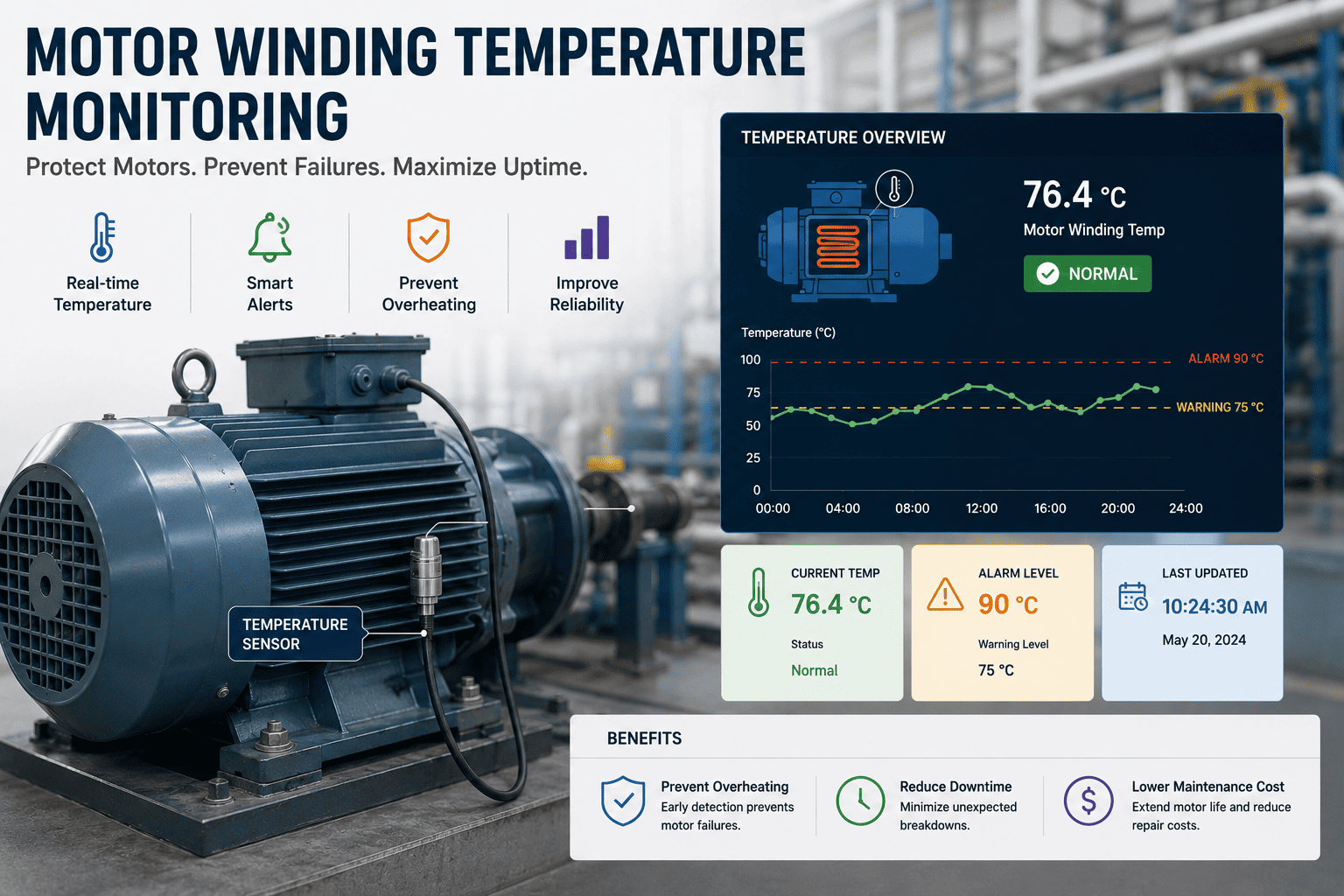
Oxmaint maps thermal patrol routes to rotating equipment assets, captures hotspot severity against motor health baselines, and generates work orders automatically before temperature anomalies escalate.
7 Rules That Define Effective Thermal Imaging Patrol Planning for Rotating Equipment
Thermal imaging patrol value is determined before the camera is ever switched on — by how patrol routes are structured, how load conditions are documented, and how findings connect to asset health records and work order execution. Reliability engineers that Sign Up Free on Oxmaint can configure inspection routes against their rotating equipment hierarchy, define temperature rise thresholds per asset class, and link hotspot findings directly to the work order dispatch system.
Thermal patrol frequency should scale with asset criticality — motors driving continuous production processes need higher patrol frequency than standby or non-critical equipment. Routes built on criticality tiers ensure inspection effort is concentrated where motor health matters most to operations.
Thermal readings without load context are diagnostically incomplete. A motor running at 40% load will show very different thermal signatures than the same motor at full load. Patrol procedures must capture operating load at the time of each thermal image to make temperature rise comparison valid across inspection cycles.
Hotspot severity can only be assessed against a known-good baseline for that motor type, frame size, and load point. Reliability teams without established thermal baselines are measuring absolute temperature instead of temperature rise — which produces inconsistent severity classifications and alert fatigue.
NETA and IEEE standards for motor thermal inspection classify severity by temperature rise above ambient, not by the absolute reading. Patrol procedures that record only surface temperature without ambient reference produce severity ratings that vary with environmental conditions rather than reflecting actual insulation or bearing degradation.
A hotspot at the drive-end bearing housing has different diagnostic meaning than the same temperature rise at the motor terminal box. Patrol findings must record the exact hotspot location — bearing housing, stator winding, connection point — to distinguish mechanical degradation from electrical fault signatures.
Bearing faults that generate both thermal and vibration signatures are significantly more advanced than those showing only one signal. Patrol workflows that combine thermal imaging findings with vibration data from the same asset allow severity staging to reflect multi-signal fault progression rather than single-sensor readings.
The gap between thermal finding and maintenance action is where patrol value is most commonly lost. Patrol workflows that route severity-classified findings directly into work order creation — with full asset context and hotspot images attached — eliminate the manual transcription step that delays intervention after critical findings.
Thermal Imaging Severity Matrix: Temperature Rise, Failure Mode, and Recommended Action for Rotating Equipment
Consistent severity classification across thermal patrol findings requires a shared reference matrix tied to asset type and temperature rise thresholds. Use this matrix to standardize how your reliability team converts hotspot findings into prioritized work orders. Facilities running ad-hoc thermal inspection programs without structured work order integration are encouraged to Book a Demo to see how Oxmaint's inspection and CMMS layer connects patrol findings to maintenance execution.
| Temperature Rise Above Ambient | Hotspot Location | Likely Failure Mode | Recommended Action | Priority |
|---|---|---|---|---|
| > 40°C rise | Drive-end bearing housing | Advanced bearing degradation | Immediate planned shutdown and bearing replacement | Critical |
| > 35°C rise | Motor terminal box | Electrical connection fault | Priority work order — connection inspection and torque check | Critical |
| 20–40°C rise | Stator housing | Winding insulation degradation | Schedule insulation resistance test within 2 weeks | Important |
| 15–30°C rise | Non-drive-end bearing | Lubrication deficiency or early wear | Lubrication check and vibration cross-reference | Important |
| 10–20°C rise | Drive coupling / belt drive | Misalignment or belt slip | Alignment check scheduled in next PM cycle | Monitor |
| < 10°C rise | Any location | Within normal operating range | Log and compare at next patrol — no immediate action | Routine |
How Reliability Teams Deploy Structured Thermal Patrol Programs Without Dedicated Thermography Staff
Structured thermal patrol execution does not require a certified thermography team on payroll. Oxmaint gives reliability engineers the inspection route builder, asset hierarchy, and work order execution layer to standardize thermal patrol workflows, attach image-based findings to specific motors, and route severity-classified hotspots into maintenance dispatch automatically. Facilities can Sign Up Free and begin configuring thermal patrol routes against their rotating equipment asset list from the first session. Teams looking for guidance on integrating infrared inspection into a broader predictive maintenance program can Book a Demo to see how the inspection-to-work-order workflow operates in live plant environments.
- Thermal patrol routes configured against the Oxmaint rotating equipment asset hierarchy by criticality tier
- Inspection checklists capture temperature rise, ambient conditions, load state, and hotspot location per asset
- Infrared findings with severity classification routed directly to work order creation without manual handoff
- Thermal finding history attached to each motor record for trend analysis and repeat-fault identification
- Cross-reference alerts link thermal findings to open vibration or lubrication condition flags on the same asset
- Patrol completion dashboards show coverage by route, shift, and area with outstanding finding status
- No thermography specialist on staff? Standardized severity checklists guide technicians through consistent classification
- Findings lost between inspection and work order? Direct inspection-to-dispatch routing eliminates the handoff gap
- No thermal baseline records? Asset-level finding history builds the baseline automatically over patrol cycles
- Multiple plants with different patrol standards? Multi-site route templates enforce consistent classification across facilities
- Compliance requirements? Timestamped inspection records and finding histories support reliability audit documentation
- Mixed equipment types? Asset class-specific severity thresholds configure per motor frame and duty type
Thermal Imaging Patrol ROI: What Structured Motor Health Monitoring Delivers for Plant Operations
Per-user SaaS pricing with no thermography lab infrastructure. Most facilities configure thermal patrol routes and severity threshold rules within 30 days using Oxmaint's no-code inspection builder.
Thermal imaging detects bearing degradation, insulation failure, and electrical faults 4–12 weeks before functional failure. Structured patrol programs convert those detection windows into scheduled interventions rather than emergency replacements.
Motor failures in rotating equipment clusters — fans, pumps, compressors serving the same process — can cascade within hours of the first failure. Structured thermal patrol breaks the failure cluster pattern by catching degradation signals before the first motor trips.
Severity-classified thermal findings direct technician effort to motors showing actual degradation signals rather than treating all rotating equipment on the same calendar interval — improving labour productivity and extending PM intervals on confirmed healthy assets.
Bearing failures that progress to shaft damage and winding failures require complete motor replacement. Thermal detection at the early bearing degradation stage enables bearing replacement only — avoiding the 5–15x cost differential of full motor replacement after a run-to-failure event.
Documented thermal patrol records demonstrating proactive motor health monitoring support property insurance requirements, machinery breakdown coverage terms, and electrical safety compliance audits — reducing premium risk and demonstrating operational discipline.
Oxmaint gives reliability teams asset-mapped patrol routes, hotspot severity workflows, and automatic work order dispatch — go live in 30 days without dedicated thermography staff.
Thermal Imaging Patrol Planning for Rotating Equipment — Questions Reliability Teams Ask
Patrol frequency should scale with asset criticality. Tier 1 rotating equipment driving continuous production typically warrants monthly or quarterly thermal imaging patrols, while non-critical standby assets may be appropriate for semi-annual coverage depending on operational risk tolerance.
Temperature rises exceeding 35–40°C above ambient at bearing housings or terminal connections are generally classified as requiring immediate planned intervention. NETA standards provide asset class-specific severity thresholds, but the reference baseline for the specific motor under load is essential for consistent classification.
Oxmaint provides inspection route configuration against the asset hierarchy, mobile-first thermal finding capture with severity classification, direct routing of classified findings to work order creation, and patrol finding history attached to each motor's maintenance record for trend analysis.
Bearing faults generating both thermal and vibration signatures indicate more advanced degradation than single-signal findings. Multi-signal cross-referencing allows reliability teams to stage fault severity more accurately and prioritize intervention timing based on the combined condition picture rather than either sensor alone.
Yes. Oxmaint's multi-site asset hierarchy supports patrol route configuration, finding history, and work order dispatch across multiple plants simultaneously — allowing reliability leaders to compare thermal coverage completeness and outstanding finding status across the full site portfolio.
Oxmaint gives reliability teams asset-mapped patrol routes, severity classification workflows, and automatic maintenance dispatch — no dedicated thermography specialist required.