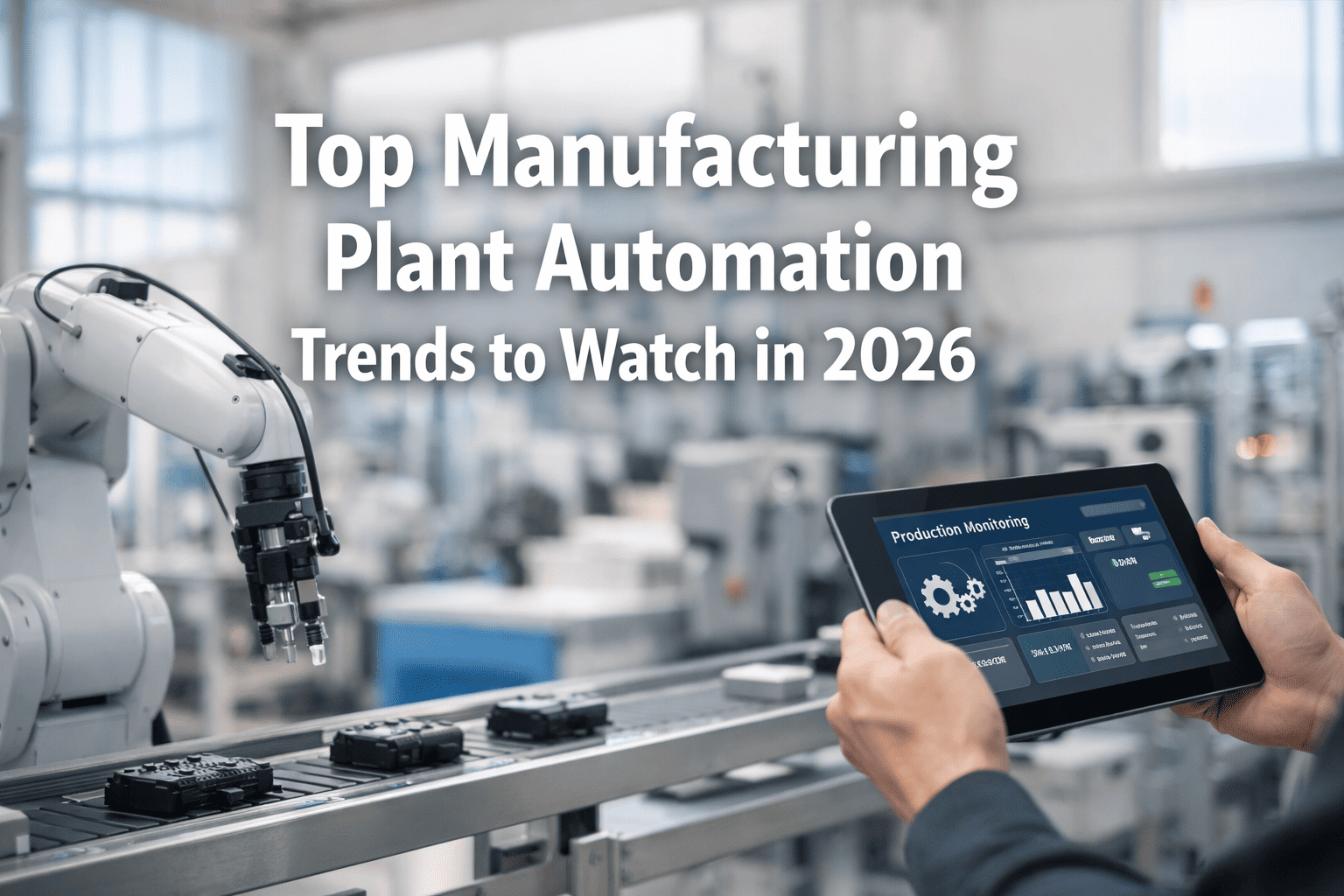
The factory floor in 2026 looks nothing like it did even two years ago. Physical AI is moving from labs to production lines, collaborative robots are now affordable for mid-size plants, and digital twins are projected to become a $34 billion market this year alone. For plant managers and maintenance leaders navigating this shift, the question is no longer whether to automate but how to build the right foundation to support it. This guide breaks down the automation trends defining 2026 and how a maintenance-first strategy keeps every investment on track. Sign up for Oxmaint's free CMMS to start building your automation-ready foundation today.
What Is Driving the Manufacturing Automation Surge in 2026?
A combination of economic, workforce, and policy forces are pushing manufacturers toward automation faster than any previous cycle. Tariff volatility is making labor-intensive operations risky, while government incentives are pouring billions into domestic manufacturing infrastructure. Plants that invested early in flexible control systems and digital maintenance platforms are now outperforming competitors who delayed.
6 Plant Automation Trends Reshaping the Factory Floor This Year
Not every trend deserves equal attention. These six are backed by real deployment data, growing investment, and direct impact on plant uptime, throughput, and maintenance workload. Understanding each one helps you prioritize where to invest first. Schedule a free demo to see how Oxmaint helps you manage every new automated asset from day one.
Physical AI Enters Production Environments
Robots that can see, reason, and physically interact with their environment are transitioning from R&D prototypes to production-ready systems. Hyundai debuted its Atlas humanoid robot for factory settings at CES 2026, and companies like BMW and Audi are actively piloting humanoids on assembly lines. A recent Deloitte survey found that roughly 58% of global business leaders are already using physical AI in their operations for smart monitoring or production tasks alongside human workers.
Collaborative Robots Reach the Mainstream
The global collaborative robot market is expected to surpass $2.9 billion in 2025 and grow at over 23% CAGR through 2033. Cobots are no longer exclusive to large automotive plants. Updated safety standards (ISO/TS 15066), simplified programming interfaces, and sub-$30K price points have made them accessible to mid-size manufacturers in food processing, electronics, and packaging. Automakers report cutting cycle times by 20% and lowering operating costs by 15% through cobot deployment.
Digital Twins Expand Beyond Simulation
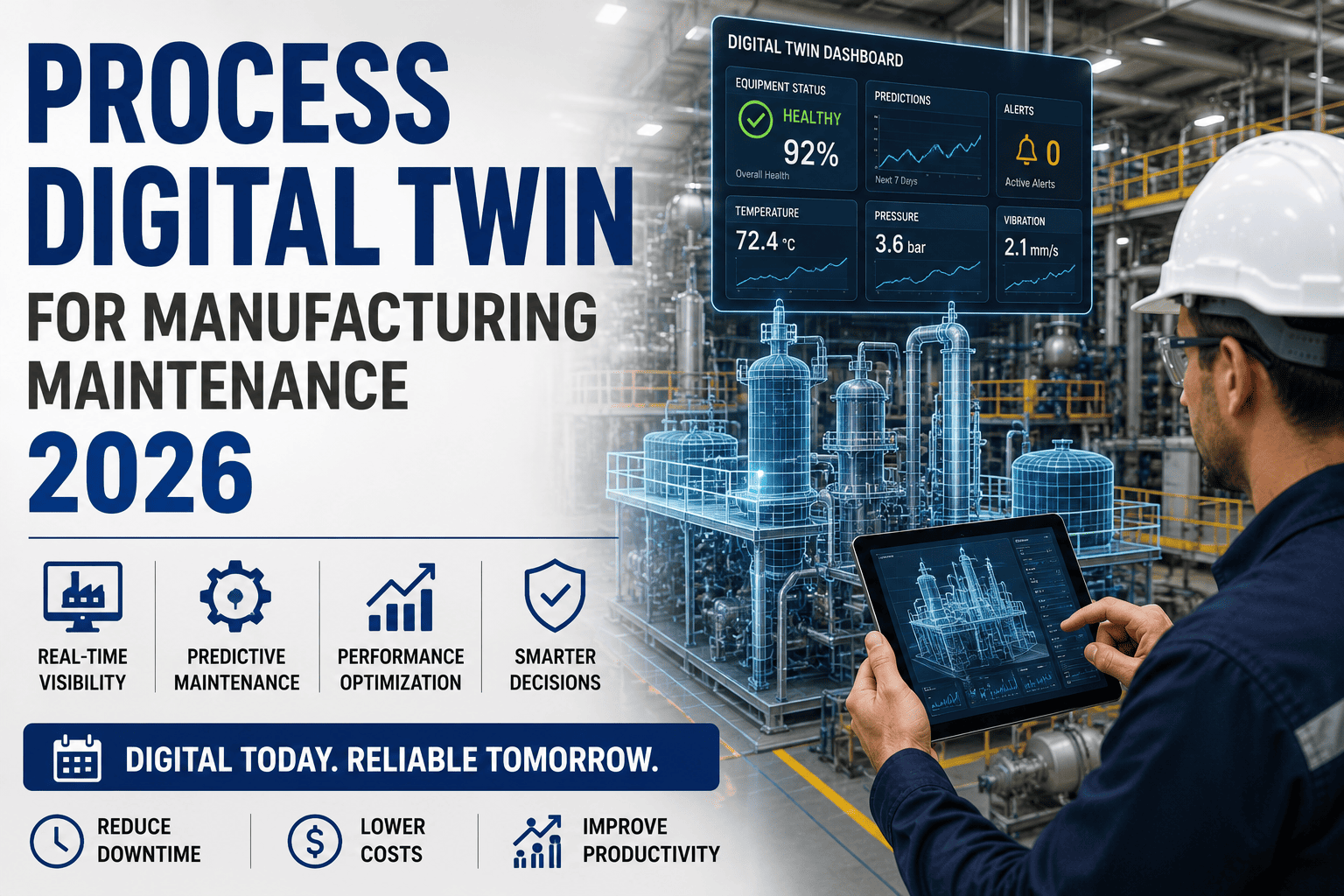
The digital twin market is projected to reach $34 billion in 2026, with manufacturing leading adoption at 48% globally. These virtual replicas now go far beyond 3D visualization. They enable predictive maintenance modeling, production line simulation, and real-time process optimization. Companies using digital twins report up to 50% faster development cycles and 20% reduction in unexpected downtime. The technology is increasingly being paired with edge computing and IoT to deliver actionable insights at the machine level.
AI-Powered Predictive Maintenance Goes Standard
Predictive maintenance has moved from a competitive advantage to a baseline expectation. AI models trained on vibration, temperature, and operational sensor data can now forecast equipment failures days or weeks before they happen. The result: manufacturers report up to 45% reduction in unplanned downtime and significant extensions in asset lifespan. When these AI predictions are routed through a CMMS, the entire loop from detection to resolution is automated. Sign up for Oxmaint to connect predictive insights directly to automated work orders and team assignments.
Autonomous Mobile Robots Transform Intralogistics
AMRs (Autonomous Mobile Robots) are self-navigating machines that transport materials between workstations without tracks, wires, or remote control. The mobile cobot market is projected to grow from roughly 11,800 units in 2025 to over 15,700 in 2026. Companies like DHL have expanded their fleet to 7,500 units, freeing human workers for higher-value tasks. AMRs dynamically reroute in real time based on floor traffic, production priorities, and safety zones.
Cybersecurity Becomes a Plant Floor Priority
Manufacturing has been the most targeted industry for cyberattacks four consecutive years according to IBM's X-Force Threat Intelligence Index. As plants connect more OT systems, SCADA networks, and IoT sensors, the attack surface grows dramatically. In 2025, Jaguar Land Rover suffered a cyberattack that halted global production for five weeks at a cost of $260 million. AI-powered cybersecurity tools and network segmentation strategies are now essential for any connected plant.
Why Maintenance Automation Must Come Before Floor Automation
Most plants make the same mistake: they invest heavily in robots, sensors, and smart equipment but continue to manage maintenance with spreadsheets and paper work orders. The result is expensive automated systems that break down without proper oversight. The data consistently shows that plants pairing automation with a CMMS dramatically outperform those that do not.
Automation Adoption Across Manufacturing Sectors in 2026
Different industries are moving at different speeds and with different priorities. Automotive leads in robot density, while food and beverage is rapidly adopting cobots for packaging and hygiene compliance. Understanding where your sector stands helps you benchmark your readiness and identify the right next step. Book a demo with our team to get an automation readiness roadmap customized for your industry and plant size.
Measurable Returns: The ROI of Automation-Ready Maintenance
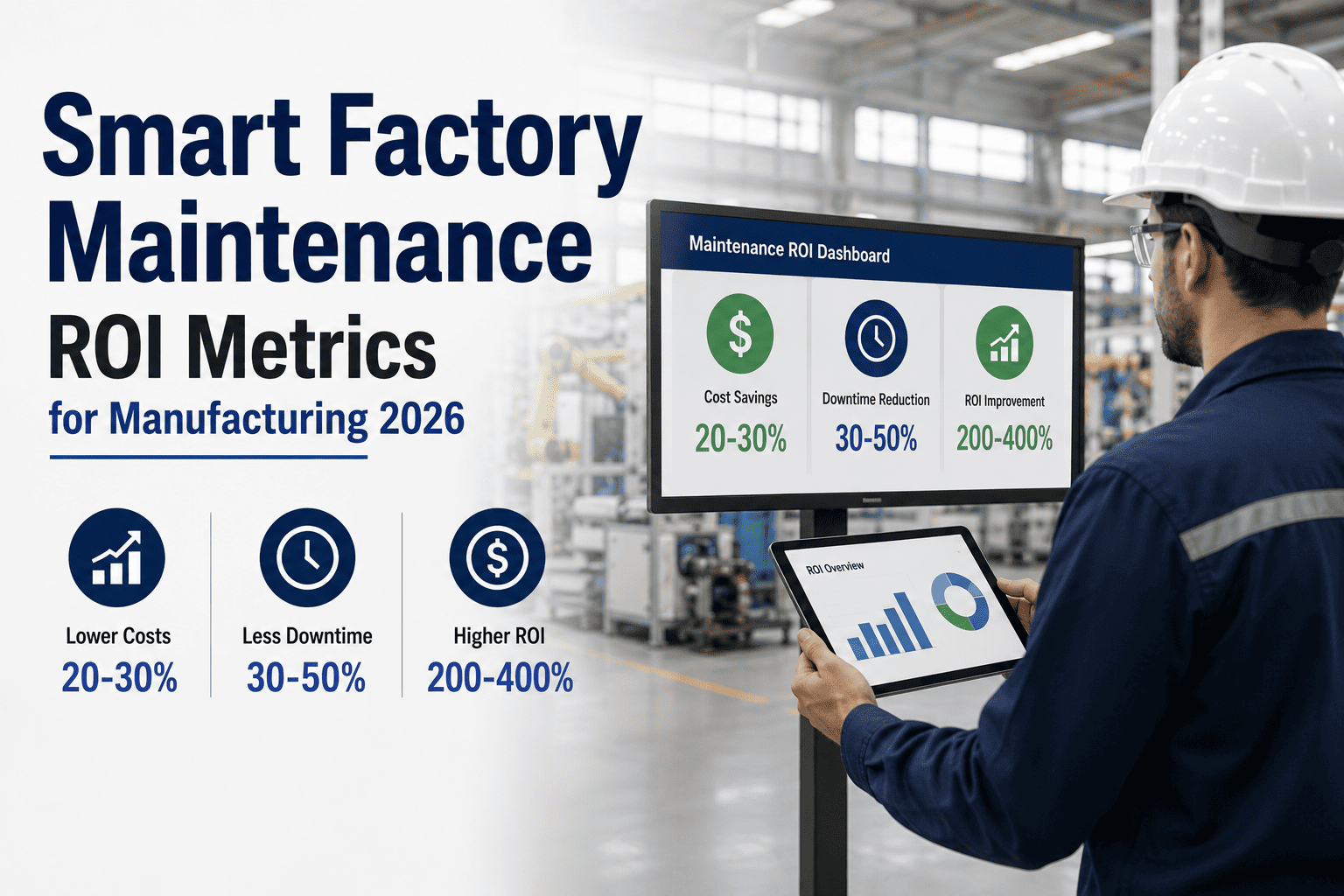
Automation only delivers ROI when the underlying maintenance infrastructure can keep pace. Plants that pair every automation investment with centralized maintenance tracking, automated work orders, and real-time asset visibility consistently outperform those that automate equipment in isolation.
Your 4-Phase Automation Readiness Roadmap
The most successful plants do not try to deploy everything at once. They follow a phased approach that starts with digitizing maintenance and progressively layers more complex automation. Each phase builds on the last, reducing risk and compounding returns.
Digitize Maintenance Operations
Deploy a CMMS to replace paper-based work orders. Catalog every asset, establish PM schedules, digitize SOPs, and create baseline KPIs for uptime, MTBF, and MTTR. This is the single most impactful step you can take.
Integrate IoT Sensors and Alerts
Install vibration, temperature, and runtime sensors on critical equipment. Route sensor data into your CMMS dashboards for real-time visibility. Enable automated alerts and threshold-based work order generation.
Activate AI-Driven Predictive Maintenance
Layer AI models on top of sensor data to forecast failures before they happen. Pair digital twin simulations with your CMMS to run what-if scenarios. Optimize preventive maintenance schedules based on actual condition data.
Deploy Robotics and Scale Across Sites
With a data-rich maintenance foundation in place, deploy cobots, AMRs, and advanced automation confidently. Use your CMMS to track every robotic asset, schedule calibrations, and manage multi-site operations from one dashboard.