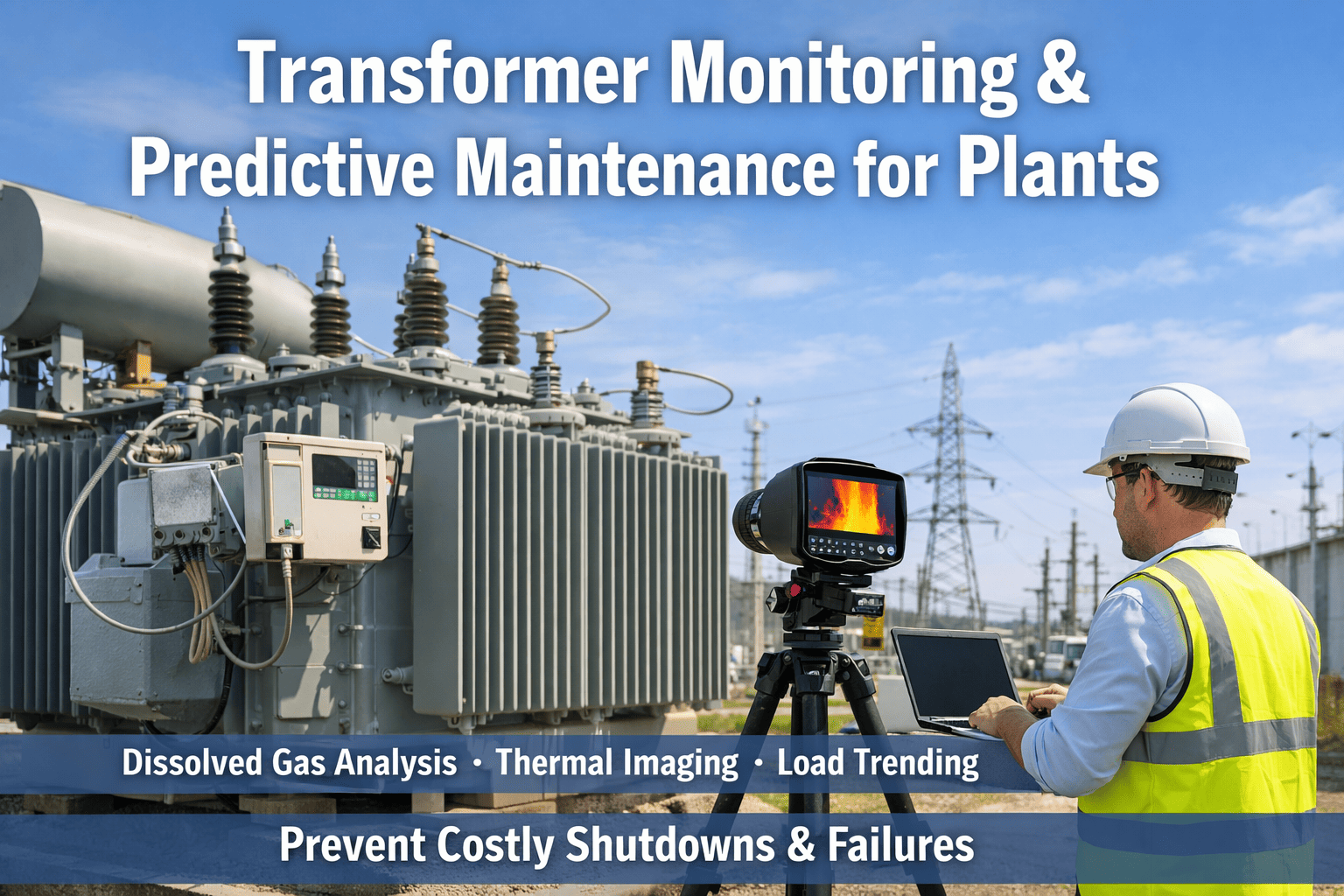
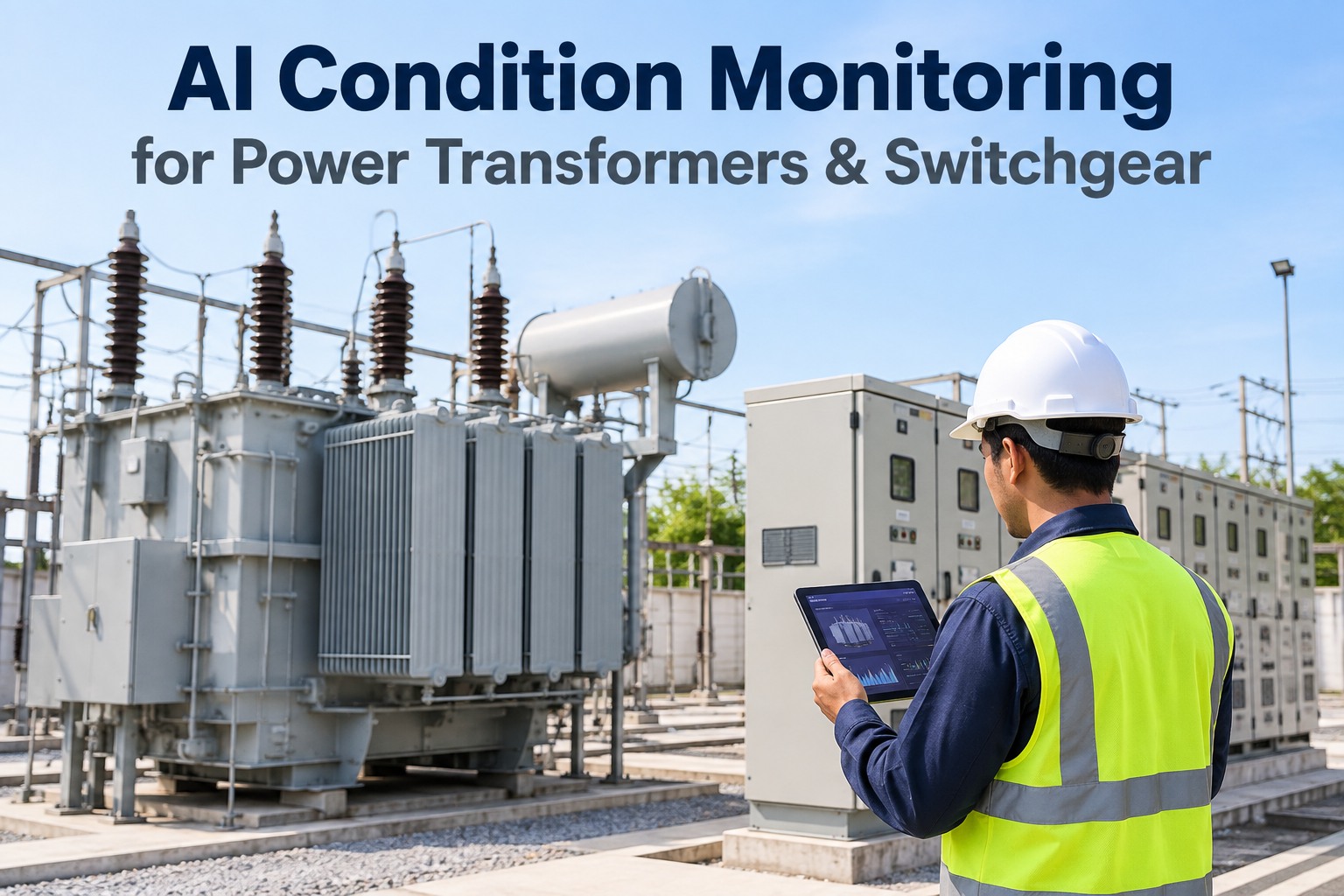
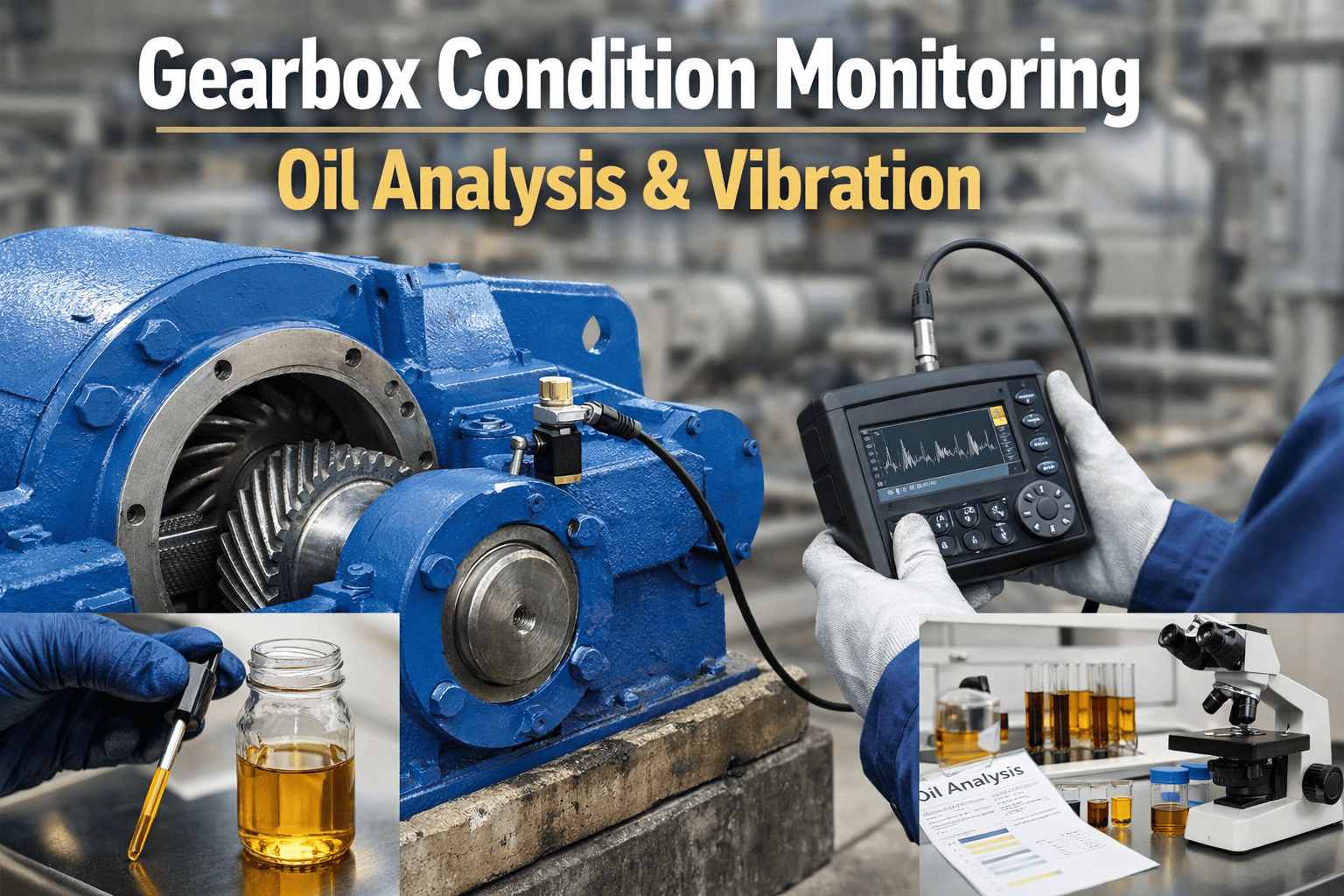
A single power transformer failure in a manufacturing plant is not a maintenance event — it is a facility-level emergency that halts every production line simultaneously, with replacement lead times of 4 to 16 weeks for large custom-wound units. Oxmaint's CMMS gives your electrical maintenance teams the asset tracking, DGA log management, and inspection compliance workflow that turns transformer monitoring data into scheduled action — start your free trial today. With dissolved gas analysis capable of detecting internal faults 30 to 120 days before catastrophic failure, and thermal imaging identifying winding hot spots invisible to any other inspection method, the only reason a plant transformer should fail without warning in 2025 is an absence of monitoring, not an absence of technology.
Power Reliability · Predictive Maintenance · Electrical Assets
Transformer Monitoring and Predictive Maintenance for Manufacturing Plants
Dissolved gas analysis, thermal imaging, partial discharge detection, and load trending — the four monitoring streams that detect internal transformer faults weeks before they cause a production shutdown.
Why Transformer Failures Devastate Plants
Replacement lead time
4 – 16 weeks
Advance warning via DGA
30 – 120 days
Failures detectable early
Over 85%
Production lines affected
All simultaneously
Primary DGA fault gas standard
IEEE C57.104-2019
Core Monitoring Method
Dissolved Gas Analysis — Reading the Transformer's Internal Fault Fingerprint
Every fault developing inside a transformer produces a specific mix of gases that dissolve into the insulating oil. DGA reads this gas fingerprint and maps it to the fault type — long before any external symptom appears. It is the most sensitive and specific diagnostic tool available for transformer condition assessment.
Acetylene (C₂H₂)
High-energy electrical arcing — the most critical fault indicator. Arcing between live parts, tap changer faults, or winding short circuits
Critical
Any detectable level triggers immediate investigation. Above 35 ppm: remove from service
Hydrogen (H₂)
Partial discharge in oil or gas spaces. Low-level corona discharge, loose connections, or moisture-induced discharge
High
Above 100 ppm: increase sampling frequency. Above 700 ppm: investigate immediately
Ethylene (C₂H₄)
Severe overheating of oil above 500°C — hot metal surfaces contacting oil, blocked cooling ducts, or overloaded windings
High
Above 50 ppm: investigate load and cooling. Rate-of-change more important than absolute value
Carbon Monoxide (CO)
Thermal degradation of cellulose insulation (paper windings). Indicates winding insulation breakdown — directly affects remaining transformer life
High
CO/CO₂ ratio above 0.1: cellulose degradation confirmed. Accelerated aging assessment required
Methane (CH₄)
Moderate oil overheating below 300°C — early-stage thermal fault. Often the first thermal fault indicator to appear in oil sampling
Monitor
Track rate of increase. Rising trend alongside ethylene elevates severity classification
Ethane (C₂H₆)
Low-temperature oil overheating. Often present alongside methane in early thermal fault development
Monitor
Interpreted in combination with methane and ethylene using Rogers or Duval triangle method
DGA thresholds per IEEE C57.104-2019. All readings must be trended over time — rate of change is more diagnostic than a single absolute value.
Your DGA Logs Belong in Your CMMS, Not in a Spreadsheet
Oxmaint links every oil sample result, thermal inspection, and maintenance event to each transformer asset — so your team sees the condition trend, not just the latest reading. Start building your transformer monitoring history today.
Complete Monitoring Framework
The Four Condition Monitoring Streams Every Plant Transformer Needs
DGA alone catches internal thermal and electrical faults. A complete transformer monitoring program adds three more continuous data streams — each catching fault types that DGA misses.
01
Dissolved Gas Analysis (DGA)
Continuous or periodic analysis of nine key fault gases dissolved in transformer oil. The most sensitive transformer diagnostic available — detecting internal arcing, partial discharge, and thermal faults 30 to 120 days before they produce visible symptoms. Online DGA sensors provide real-time gas trending. Periodic lab sampling provides baseline and calibration data.
Detects: Arcing · Partial discharge · Oil overheating · Insulation degradation
02
Thermal Imaging and Hot-Spot Monitoring
Fixed infrared sensors on transformer tank surfaces, bushings, and cooling radiators continuously track temperature distribution. Thermal imaging during regular inspection identifies hot spots at bushing connections, tap changers, and radiator blockages invisible to DGA. Winding hot-spot temperature is calculated from load current, ambient temperature, and top-oil temperature readings.
Detects: Bushing faults · Cooling failure · Connection overheating · Load-driven thermal stress
03
Partial Discharge (PD) Monitoring
Partial discharge monitoring detects the acoustic and electrical signatures of insulation degradation inside the transformer before it develops into a full dielectric failure. PD is particularly important for transformers operating above 66kV. High-frequency current transformers and acoustic emission sensors detect PD activity that DGA may not register until later fault stages.
Detects: Insulation voids · Surface tracking · Moisture ingress · Dielectric failure precursors
04
Load and Thermal Life Analytics
Continuous load current and power factor monitoring tracks whether the transformer is operating within its thermal rating for the ambient temperature. Sustained operation above nameplate rating accelerates insulation aging — each 8°C above rated temperature halves insulation life. Thermal life modeling predicts remaining useful life based on actual load history rather than nameplate assumptions.
Detects: Chronic overloading · Accelerated aging · Cooling system degradation · Load growth risk
Maintenance Strategy Comparison
What Each Transformer Maintenance Approach Actually Delivers
| Approach |
Trigger |
Fault Detection Window |
Unplanned Outage Risk |
Cost Profile |
| Reactive |
Transformer trips or fails |
None — fault already catastrophic |
Very High |
Emergency procurement + 4–16 week outage + secondary damage repair |
| Time-Based Preventive |
Annual/biennial inspection calendar |
Snapshot only — misses developing faults between visits |
Medium |
Scheduled inspection cost plus residual risk of inter-inspection failures |
| Oil Sampling (Periodic DGA) |
Quarterly or annual lab sample |
Weeks to months before failure if sampled at right frequency |
Low-Medium |
Low cost, moderate detection confidence — depends on sampling frequency |
| Online DGA + Thermal Monitoring |
Continuous real-time data streams |
30–120 days before catastrophic failure |
Very Low |
Sensor investment offset by eliminated emergency replacement and outage costs |
| AI-Driven Predictive (Full PdM) |
ML model on multi-parameter data |
Maximum advance warning with fault classification |
Near Zero |
Highest investment, highest ROI — optimal replacement timing eliminates emergency costs entirely |
Oxmaint for Transformer Teams
How Oxmaint Connects Transformer Monitoring to Maintenance Execution
Transformer condition data without a maintenance workflow is just an alarm nobody acts on. Oxmaint closes the gap between what your monitoring systems detect and what your maintenance team does about it.
Asset Registry
Complete Transformer Asset Records
Every transformer documented with nameplate data, manufacturer, installation date, oil type, cooling class, tap changer type, and inspection history. When a DGA result flags an abnormal gas, the full maintenance and oil change history is available in the same record — so your team diagnoses context, not just a number.
DGA Tracking
Oil Sample Results and Trend Logs
Every oil sample submission, lab result, and gas concentration logged against the transformer asset with date and technician. Trend charts show gas concentration movement over months and years — because rate of change is more diagnostic than any single reading, and a CMMS is the only place that trend is preserved reliably.
PM Scheduling
Inspection and Sampling Compliance
Scheduled oil sampling, thermal inspections, bushing tests, and tap changer maintenance managed as PM work orders with automatic escalation. IEEE C57.104 and IEC 60599 recommend sampling frequencies based on gas levels — Oxmaint triggers the right schedule automatically based on the last result rather than a calendar date.
Compliance
Audit-Ready Electrical Safety Records
Electrical safety regulations and insurance requirements demand documented transformer inspection and maintenance records. Oxmaint's timestamped work order history and oil analysis records export directly for regulatory audits — eliminating the manual compilation that turns every compliance review into a multi-day administrative exercise.
See how Oxmaint manages transformer compliance records — free trial available.
Common Questions
What Electrical Maintenance Engineers Ask About Transformer Monitoring
How often should we sample transformer oil for DGA?
IEEE C57.104-2019 recommends annual sampling for transformers with no known issues, quarterly for units showing elevated gas levels, and monthly or continuous monitoring when any key gas exceeds action levels. The critical factor is trend rate — a transformer with stable elevated gases needs less urgency than one showing rapid gas increase over three months.
Book a demo to see how Oxmaint manages DGA sampling schedules automatically.
What does acetylene in transformer oil always mean?
Acetylene is the single most serious fault gas in transformer diagnostics. Any detectable level above the lab's reporting threshold indicates high-energy electrical arcing inside the transformer — between live conductors, in a tap changer, or through degraded insulation. Unlike other gases, there is no normal operating level for acetylene. Even trace amounts require immediate expert investigation and accelerated sampling.
Track acetylene and all key fault gases in Oxmaint — start free today.
Can thermal imaging alone replace DGA for transformer monitoring?
No — they detect different fault types and are complementary. Thermal imaging excels at external hot spots: bushing connections, cooling radiator blockages, and tap changer contact wear. DGA detects internal faults that produce no external thermal signature until they are catastrophic: internal arcing, partial discharge, and winding insulation degradation. A complete program uses both together, with DGA as the primary internal condition monitoring tool.
Talk to our team about building a combined monitoring program in Oxmaint.
What is the 8-degree rule for transformer life?
The IEEE thermal aging model shows that every 8°C increase in sustained winding temperature above the rated operating point halves the insulation life of the transformer. A unit rated for 30 years at design temperature may have an effective remaining life of 8–12 years if it has been chronically overloaded or operated in elevated ambient temperatures. Load analytics and thermal life modeling quantify this degradation accurately.
Start tracking load history and thermal aging in Oxmaint — free trial available.
How does a CMMS improve transformer monitoring programs?
A CMMS turns transformer monitoring from data collection into maintenance action. DGA results, thermal inspection findings, and load alarm outputs all trigger condition-based work orders automatically. The full oil sample history, maintenance event log, and inspection record for each transformer are preserved in one place — making trend analysis, compliance reporting, and incident investigation possible without manual record reconstruction.
Book a demo to see Oxmaint's transformer asset management workflow in action.
A Transformer Failure You Could Not Predict Is One You Did Not Monitor
DGA detects internal faults 30 to 120 days before catastrophic failure. Thermal imaging catches bushing and cooling faults invisible to oil sampling. Load analytics quantify how fast your transformer's insulation life is being consumed. Oxmaint is where all of it becomes scheduled maintenance action — not a report in an inbox.