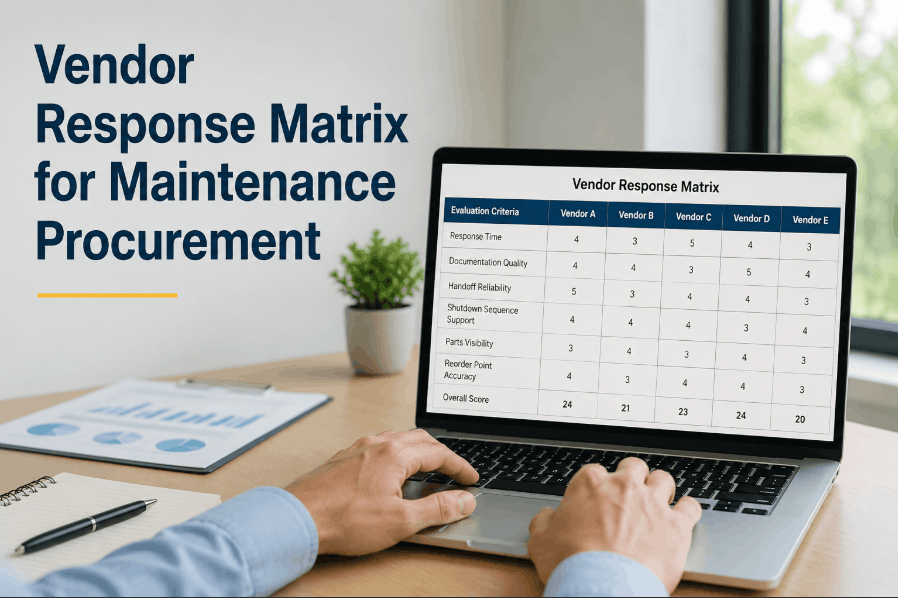
Maintenance procurement failures rarely start with a bad purchase — they start with an unstructured vendor evaluation. When supplier speed, documentation quality, and handoff reliability go unmeasured, procurement teams make decisions on incomplete signals. A vendor response matrix gives maintenance planners a structured method to score supplier behavior across shutdown sequences, parts visibility, reorder points, and lead time consistency. Facilities that Sign Up Free on Oxmaint can link vendor performance data directly to work order timelines — surfacing fill rate gaps and stockout risk before they interrupt production schedules. For multi-site plants managing complex procurement workflows, Book a Demo to see how Oxmaint connects supplier response data to live maintenance planning in real time.
Oxmaint links supplier speed, documentation quality, and handoff reliability to work order execution — giving procurement teams a live view of inventory health and procurement control.
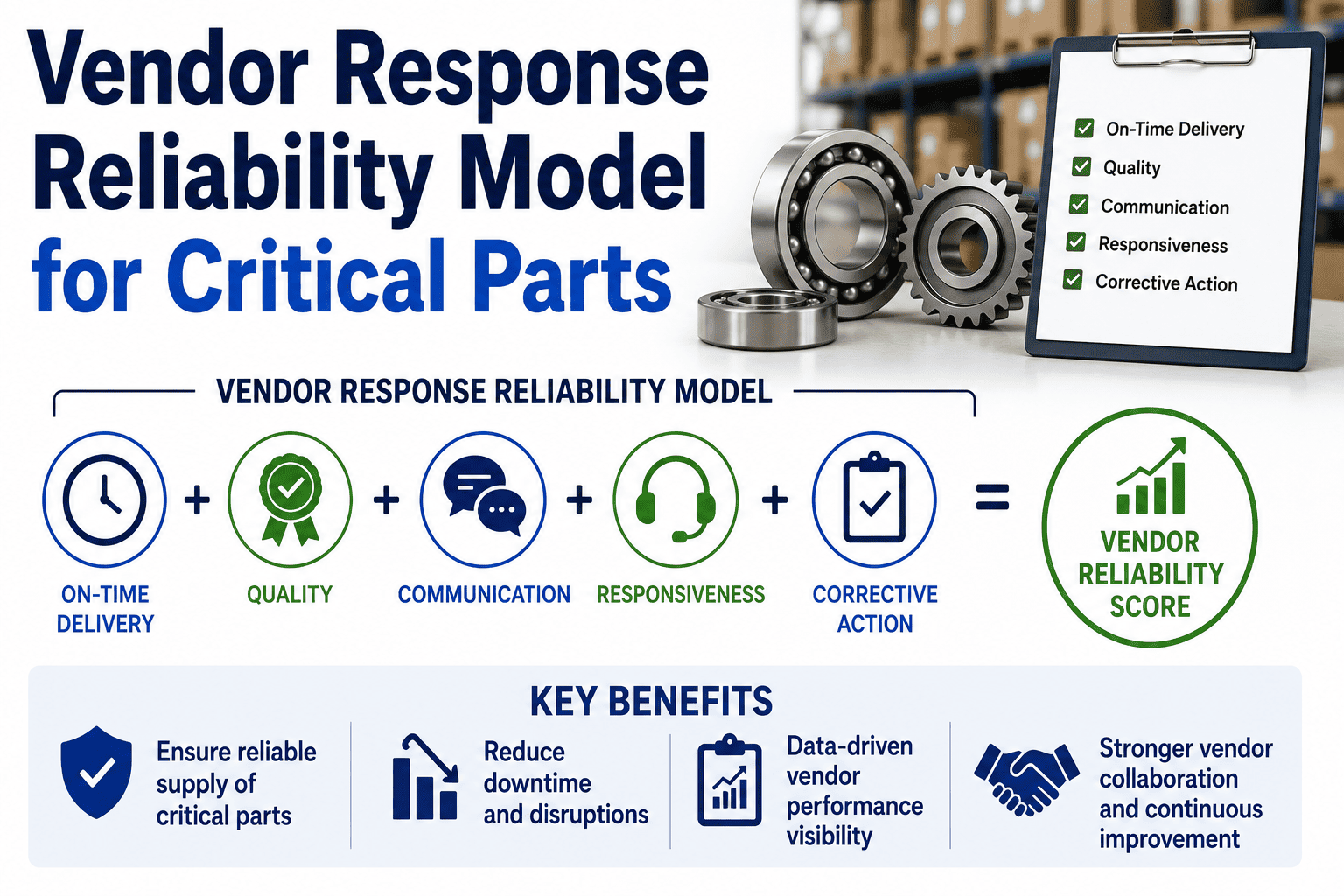
6 Vendor Response Metrics That Drive Procurement Control
A vendor response matrix is only effective when it measures the right signals. Procurement teams need more than price and delivery windows — they need visibility into supplier behavior under pressure. Facilities that Sign Up Free on Oxmaint can configure vendor-linked work orders to track fill rate, lead time, and documentation quality without manual spreadsheet logging.
Time from purchase order submission to supplier acknowledgment reveals dispatch readiness. Slow response on critical parts orders directly widens the window for unplanned downtime.
Incomplete or inaccurate delivery documentation — missing certifications, incorrect part numbers, or absent safety data — creates receiving delays and compliance gaps that stall work order execution.
The percentage of deliveries that arrive on time, complete, and matched to the original order. Poor handoff reliability is the leading driver of consumption variance and warehouse audit discrepancies.
Variance in lead time — not just average lead time — determines whether reorder points are reliable. High lead time variance forces inflated safety stock levels and inflates carrying costs across shifts.
Fill rate measures how often a supplier delivers the full requested quantity on the first shipment. Low fill rates force split orders, stockout risk escalation, and emergency procurement at premium cost.
Vendors that can align delivery windows with planned shutdown sequences reduce parts staging delays. Suppliers who miss shutdown-critical deliveries create cascading schedule impacts across the maintenance plan.
Vendor Response Matrix: Scoring Criteria by Procurement Risk Category
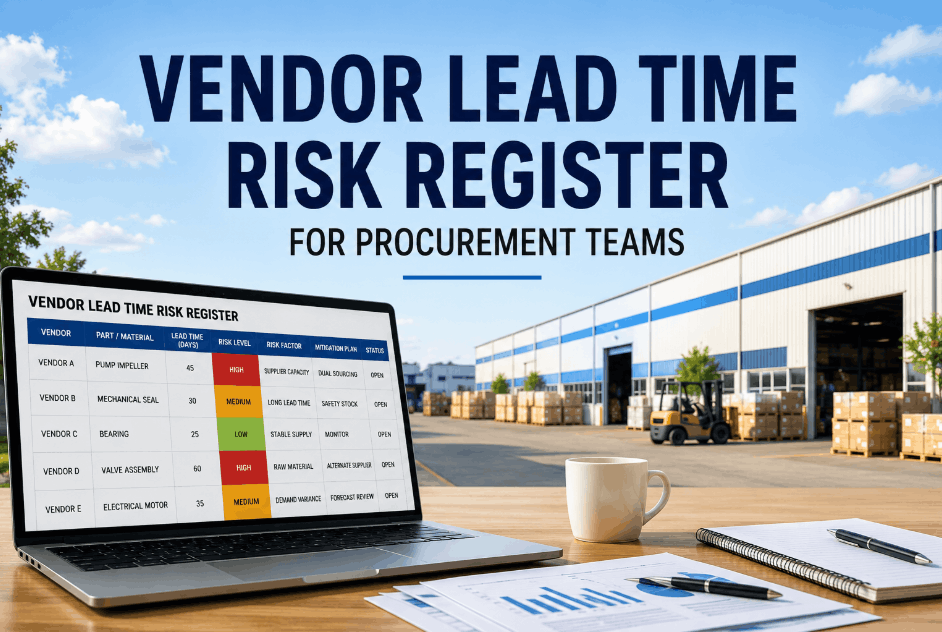
Not every vendor gap carries equal production risk. A structured scoring model separates suppliers whose behavior threatens asset reliability from those creating manageable friction. Use this matrix to benchmark your current vendor panel and identify where Oxmaint's procurement-linked work order engine closes the gaps. Teams ready to replace manual vendor tracking with live procurement data can Book a Demo with Oxmaint.
| Response Metric | Measurement Method | Acceptable Threshold | High Risk Threshold | Recommended Action |
|---|---|---|---|---|
| Supplier Response Speed | Hours to PO acknowledgment | < 4 hours | > 24 hours | Escalate to alternate vendor |
| Documentation Quality | % deliveries with complete docs | > 95% | < 80% | Issue supplier corrective notice |
| Handoff Reliability | % on-time, complete deliveries | > 90% | < 75% | Trigger vendor review cycle |
| Lead Time Variance | Std. deviation from quoted lead time | < ±1 day | > ±3 days | Adjust reorder point buffer |
| Fill Rate | % of orders fulfilled in full on first ship | > 95% | < 85% | Increase safety stock level |
| Shutdown Alignment | % shutdown-critical parts on time | > 98% | < 90% | Pre-stage or dual-source parts |
| Consumption Variance | Actual vs. forecast usage delta | < 10% | > 25% | Run warehouse audit cycle |
| Shift Coverage Support | Availability for off-hours urgent orders | 24/7 or agreed SLA | Business hours only | Negotiate emergency contact SLA |
How Maintenance Teams Deploy a Vendor Matrix Without Adding Reporting Overhead
The challenge in high-volume manufacturing is not defining vendor criteria — it is keeping scores current without manual data entry. Oxmaint automates the connection between parts receipts, work order timelines, and supplier performance signals across every production line and asset class. Teams can Sign Up Free and link vendor records to inventory and work order data in the first session — no IT project required.
- Parts receipt timestamps linked to PO creation for automatic lead time tracking
- Work order delay flags triggered when parts arrival misses planned maintenance windows
- Fill rate calculated per supplier from storeroom receipts and order history
- Documentation completeness tracked at goods receiving with configurable field validation
- Inventory health dashboard linking reorder point logic to vendor lead time variance
- Stockout risk alerts when consumption variance exceeds supplier fill rate patterns
- Spreadsheet vendor logs? Oxmaint replaces manual tracking with live procurement data
- No parts visibility? Storeroom integration surfaces inventory status on every work order
- Shutdown surprise shortfalls? Planned maintenance windows link directly to parts staging
- Consumption variance unknown? Usage tracking per asset class catches forecast drift early
- Shift coverage gaps? Emergency order workflows available to technicians on mobile
- No audit trail? Every parts receipt, PO, and vendor interaction timestamped and attributed
16 Questions to Ask Before Selecting a Procurement-Linked Maintenance Platform
Platform demos show clean dashboards. These questions expose whether the system connects vendor response data to work order execution, tracks stockout risk automatically, and integrates with how your planners actually procure. Teams shortlisting CMMS platforms for procurement control can Book a Demo with Oxmaint for direct answers during evaluation.
- Does the system link supplier lead times to work order scheduling automatically?
- Can fill rate be calculated per vendor from storeroom receipt history?
- Is documentation quality scored at goods receiving without manual entry?
- Does the platform flag lead time variance against configurable reorder point logic?
- Can stockout risk be viewed by asset class and production line simultaneously?
- Is consumption variance tracked against forecast per part number automatically?
- Does the system score inventory health without exporting to spreadsheets?
- Can planners see parts staging status linked to upcoming shutdown sequences?
- Are supplier response delays escalated automatically when PO acknowledgment is missed?
- Can alert thresholds differ by part criticality or asset class?
- Does the mobile app surface parts availability to technicians without planner intervention?
- Is there a configurable escalation path from stockout risk flag to procurement team?
- Can vendor response scores be compared quarter-over-quarter per supplier?
- Is there a warehouse audit report available without custom configuration?
- How is vendor performance data used to inform safety stock and reorder points?
- What is the total cost of ownership including multi-site and multi-supplier access?
Procurement Control ROI: What Structured Vendor Scoring Delivers
Per-user SaaS pricing with no server infrastructure. Most facilities configure vendor-linked work order dashboards within 30 days of initial onboarding.
Spreadsheet-based supplier scoring consumes planner time that should go to procurement decisions. Live auto-calculated vendor metrics eliminate weekly reporting cycles entirely.
Unmanaged fill rate gaps and lead time variance drive emergency procurement at premium prices. Each avoided stockout in a multi-line plant typically recovers multiple months of platform cost.
Plants with structured vendor response monitoring report measurable improvements in planned maintenance ratio within the first quarter — reducing stoppages caused by parts unavailability.
Automated vendor scoring and reorder point logic reduce daily procurement coordination overhead. Planners focus on supplier negotiation instead of manual inventory status tracking.
Timestamped receipt records, documentation quality logs, and vendor performance trends reduce compliance preparation effort and support ISO and customer audit requirements.
Oxmaint connects supplier speed, fill rate, lead time variance, and documentation quality to live work order execution — giving maintenance procurement teams structured control without spreadsheets.
Vendor Response Matrix for Maintenance Procurement — Questions Planners and Operations Leaders Ask
A vendor response matrix scores suppliers across response speed, fill rate, documentation quality, lead time consistency, and handoff reliability. It gives maintenance planners a structured method to compare supplier risk before placing orders or entering procurement agreements.
Oxmaint connects parts receipt timestamps and storeroom inventory data to work order timelines — automatically flagging when supplier lead time variance threatens planned maintenance windows without manual report generation.
A fill rate above 95% on first shipment is the standard threshold for low-risk suppliers. Fill rates below 85% consistently signal stockout risk and force emergency procurement that drives up total maintenance costs.
Yes. Oxmaint's condition-based rules engine allows planners to set criticality-specific thresholds — so a bottleneck asset triggers escalation faster than a non-critical spare with buffer inventory.
Oxmaint links planned maintenance windows and shutdown sequences to parts staging status — alerting planners when critical parts have not been confirmed delivered ahead of the scheduled work start.
Yes. Oxmaint's multi-site hierarchy provides consolidated vendor performance and inventory health views across all plants — with site-specific user roles and portfolio-level comparison dashboards for operations leadership.
Oxmaint gives maintenance teams live vendor scoring, automated stockout risk alerts, and procurement-linked work order execution — no IT project required to go live.