Power plants lose an estimated $1.4 trillion annually to unplanned equipment failures — and 70% of facilities still lack real-time visibility into when critical assets are approaching failure. The era of waiting for alarms, writing manual work orders, and scheduling maintenance by calendar is ending. Agentic AI systems — autonomous agents that perceive, reason, and act without human initiation — are now doing in milliseconds what used to take maintenance teams days: detecting degradation, diagnosing root cause, generating work orders, scheduling crews, and learning from every repair cycle. Deploy the intelligent CMMS that powers autonomous maintenance at your plant — free trial, live in under 60 minutes.
Future Technology · AI Work Order Automation · OxMaint
Agentic AI for Autonomous Maintenance in Power Plants & Utilities
Self-learning AI agents that predict failures, generate work orders, dispatch crews, and optimize every maintenance decision — without waiting for a human to pull the trigger. This is not automation. This is autonomous intelligence built for the grid.
$10.7B
Agentic AI in Energy market projected by 2034 — growing at 36.4% CAGR from $480M in 2024
22x
Peak ROI in year one for power plants deploying AI predictive maintenance on critical assets
47%
Reduction in unplanned downtime events when agentic AI replaces calendar-based schedules
30–40%
Drop in administrative workload when AI agents auto-generate and route all maintenance work orders
2026
Year 65%+ of manufacturers will have autonomous AI embedded in operations per Gartner
Understanding the Technology
What Makes AI "Agentic" — And Why It Changes Everything for Maintenance
Most AI systems today are passive: they surface insights and wait for a human to act. Agentic AI is fundamentally different. It closes the loop — perceiving conditions, reasoning about risk, deciding on action, and executing that action autonomously, then learning from the outcome to perform better next time.
Stage 1
Reactive
Wait for failure. Fix what broke. Pay 4.8x emergency rate. Lose generation revenue. Write a report.
Most plants today
→
Stage 2
Preventive
Service assets on fixed calendar schedules regardless of actual condition. Better than reactive — still wasteful.
Transitional
→
Stage 3
Predictive
Sensors and AI detect anomalies before failure. Maintenance teams still decide and act manually on findings.
Advancing
→
Stage 4
Agentic
AI detects, diagnoses, decides, dispatches, and learns — end-to-end autonomously. Humans own the strategy, not the admin.
The future is now
The Autonomous Agent Loop
How an Agentic AI Agent Handles a Power Plant Fault — Without Human Initiation
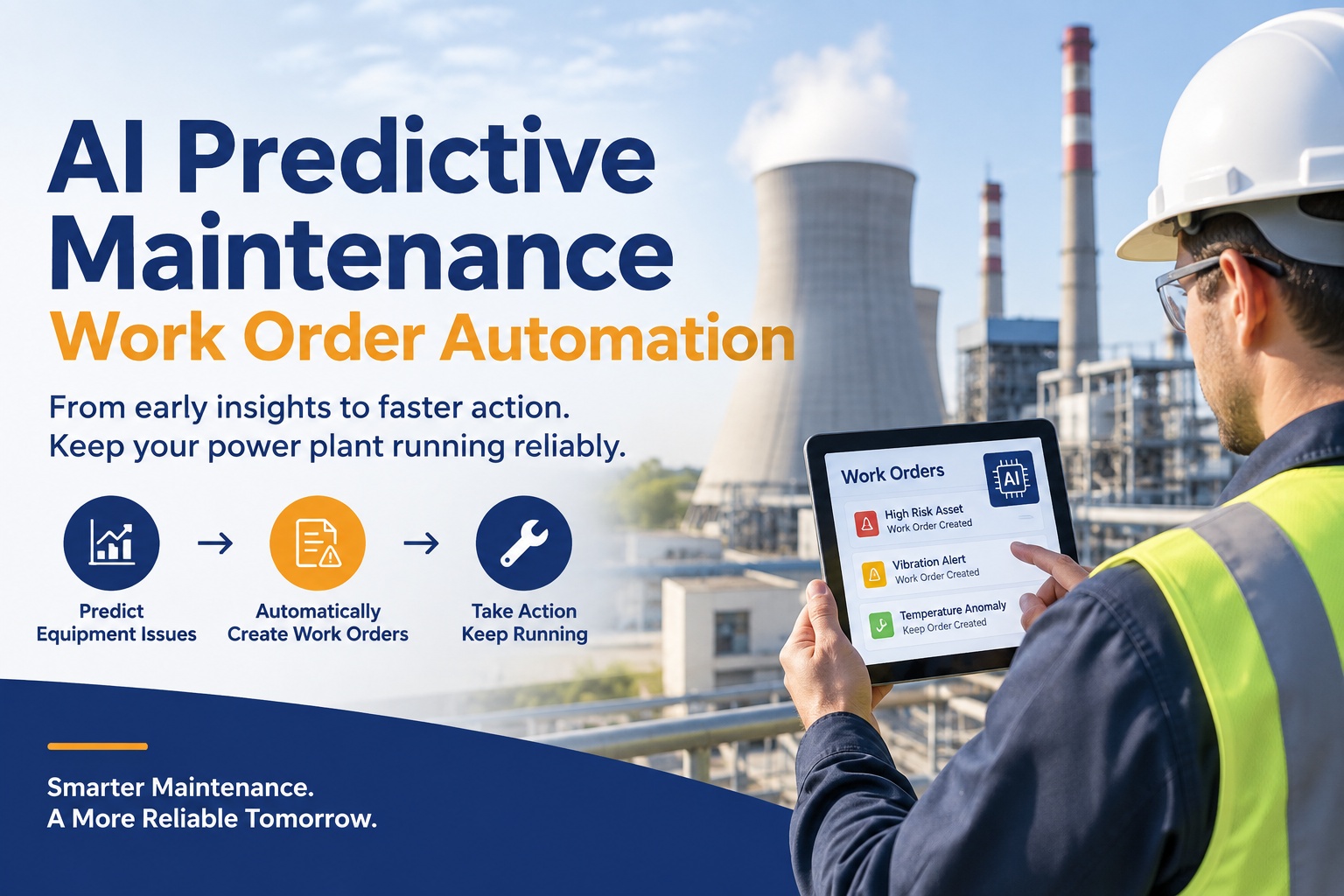
This is the complete autonomous maintenance cycle that OxMaint's agentic layer executes from first signal to closed work order — while your maintenance manager is still sleeping.
01
Continuous Perception
Thousands of IoT sensors stream vibration, temperature, pressure, and current data 24/7. The AI agent ingests every signal in real time — no polling delay, no sampling gaps.
Turbine bearing vibration amplitude trending +12% over 72 hours
02
Anomaly Detection
Machine learning models compare live readings against historical baselines and failure pattern libraries. LSTM networks identify degradation sequences invisible to threshold-based alarms.
Bearing inner race defect signature detected — 94% confidence, 3–4 week failure window
03
Root Cause Reasoning
The agent queries the full asset history — previous repairs, load cycles, operating conditions, parts used — to confirm diagnosis and rule out false positives before triggering any action.
Historical record: same bearing replaced 18 months ago. High-load operating period. Diagnosis confirmed.
04
Autonomous Work Order
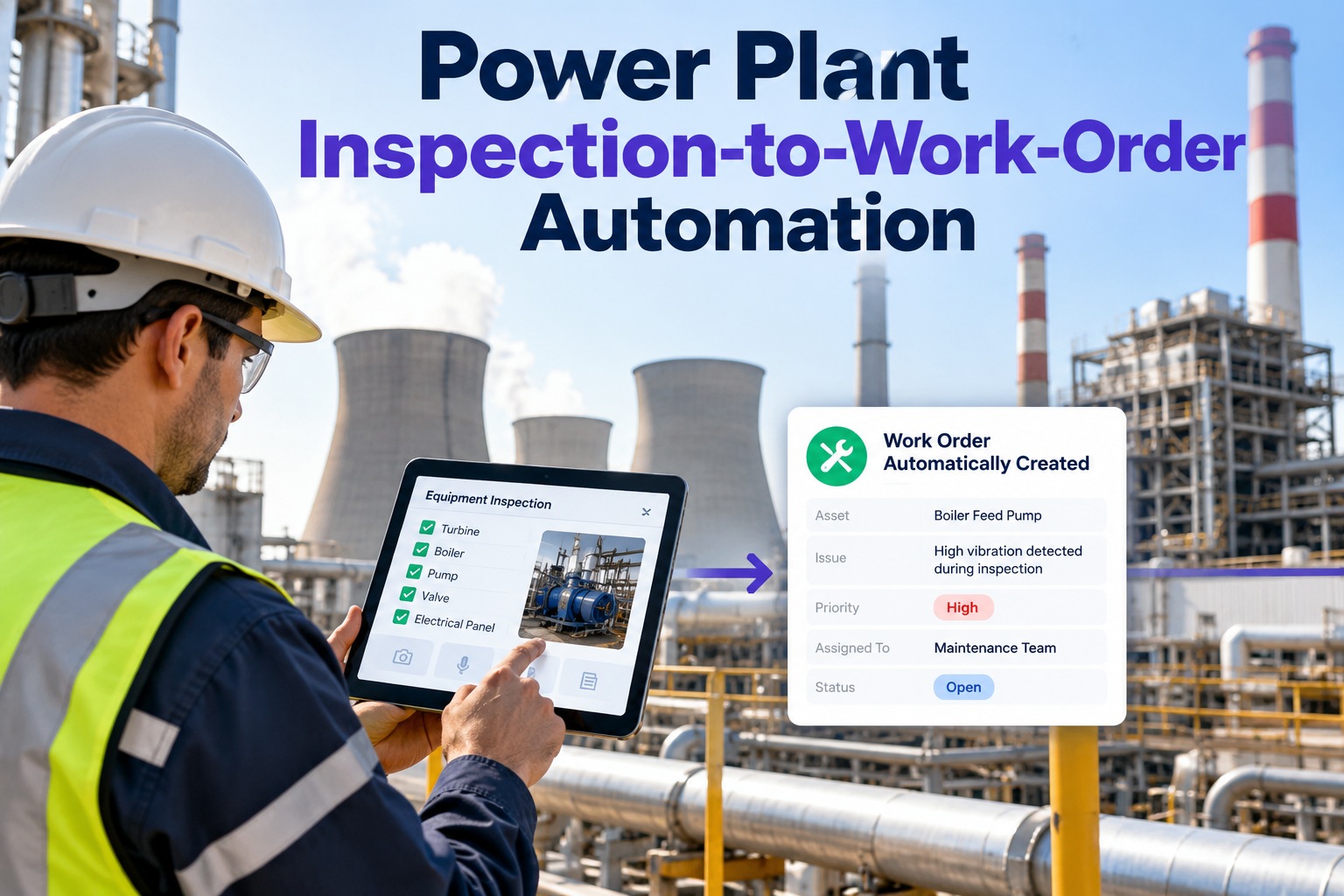
The agent creates a structured work order in OxMaint — assigns priority, recommends parts, schedules the optimal maintenance window around generation load, and routes to the right technician skill set.
WO generated. Priority: HIGH. Parts pre-ordered. Scheduled during Tuesday night minimum load window.
05
Execution & Tracking
Technician receives work order on mobile — full asset history, repair instructions, parts needed, safety requirements attached. Completion is tracked, photos verified, and the record closes automatically.
Work order completed. Bearing replaced. Asset record updated. Next PM window recalculated.
06
Continuous Learning
Every repair outcome, false positive, and confirmed failure updates the AI model. Accuracy improves from 82% to 94%+ over 12 months. The system gets sharper the longer it runs.
Model accuracy increased from 82.4% to 94.3% over first 12-month deployment period
Side by Side
Traditional CMMS vs. Agentic AI Maintenance Platform — What Operators Actually Experience
Traditional CMMS
Fault Detection
Alarm fires after threshold breach — usually after damage has begun. Operator investigates manually.
Work Order Creation
Supervisor writes work order manually — hours or days after initial detection. Priority is guesswork.
Scheduling
Calendar-based intervals. Assets serviced on fixed dates regardless of condition or generation load.
Root Cause Analysis
Engineer reviews logs manually after the event. Findings rarely feed back into future scheduling.
Parts Management
Emergency requisitions under pressure. Expedited shipping costs. Parts sometimes unavailable.
Compliance Records
Manual log compilation — 15–18 staff-hours per audit event. Binders risk gaps and lost entries.
Knowledge Retention
Institutional knowledge leaves with experienced technicians. New staff start from zero.
OxMaint Agentic AI
Fault Detection
AI detects degradation signatures 2–6 weeks before failure. Confidence-scored anomaly with failure window prediction.
Work Order Creation
Auto-generated within minutes of confirmed anomaly. Priority, parts, skills, and optimal window pre-calculated by AI.
Scheduling
Condition-based, load-aware scheduling. AI slots interventions at minimum-impact windows tied to generation forecast.
Root Cause Analysis
Automated RCA with full asset history context. Every finding updates the AI model to prevent recurrence.
Parts Management
Parts pre-ordered weeks ahead from predicted failure date. Inventory reduced 20–30%. Zero emergency rush costs.
Compliance Records
Timestamped digital trail built into every work order. One-click export for NERC, OSHA, ISO 55000 — under 2 hours audit-ready.
Knowledge Retention
Every repair, diagnosis, and pattern is stored in the platform. New staff inherit decades of plant intelligence from day one.
Critical Asset Coverage
The 6 Power Plant Asset Categories Where Agentic AI Delivers the Highest ROI
These six asset categories account for 88% of unplanned power plant downtime and 91% of emergency maintenance spend. AI monitoring on these systems alone delivers ROI that funds the entire program.
43%
Gas & Steam Turbines
Vibration amplitude, exhaust temperature spread, bearing metal trending. AI detects bearing defects 4–12 weeks before failure. A single prevented turbine trip saves $420K–$1.2M in emergency costs.
52%
Boiler Tube Systems
Corrosion, thermal fatigue, and creep show detectable signatures months before tube rupture. Responsible for over half of all forced outages in thermal plants — the highest-value AI monitoring target.
High
Generators
Partial discharge activity, hydrogen purity, stator coolant flow, rotor ground fault current. Insulation degradation detectable months ahead. Generator failures carry the longest outage duration of any plant asset.
Critical
Main Power Transformers
Dissolved gas analysis, thermal imaging, load tap changer condition. Catastrophic transformer failure means 6–18 month replacement lead times. Early AI detection is the only cost-effective protection.
Variable
Cooling & BOP Pumps
Cavitation damage, seal failures, impeller erosion, motor bearing degradation. Pump failures cascade — cooling system loss can force turbine derating or full shutdown in under an hour.
Emerging
Compressors & Auxiliary
Surge detection, blade fouling, inlet guide vane faults, intercooler degradation. Often overlooked until they cause primary equipment trips — AI monitoring extends mean time between overhauls by 20–35%.
Market Momentum
The Agentic AI Energy Market Is Accelerating Past Every Previous Technology Adoption Curve
Utilities adopting now will have a 3–5 year data advantage over those who wait. AI models improve with every repair cycle — making early deployment a compounding competitive asset, not a linear investment.
See OxMaint's roadmap — Book a Demo
$657M → $14.9B
Agentic AI in energy market size 2025–2035 at 36.65% CAGR
36.7%
Electric & gas utilities hold the largest buyer share — the segment leading adoption
79%
Of organizations already report some level of agentic AI adoption as of 2025
171%
Average ROI reported by companies deploying agentic AI — 3x traditional automation returns
OxMaint Platform
How OxMaint Powers Autonomous Maintenance Across Every Layer of Your Plant
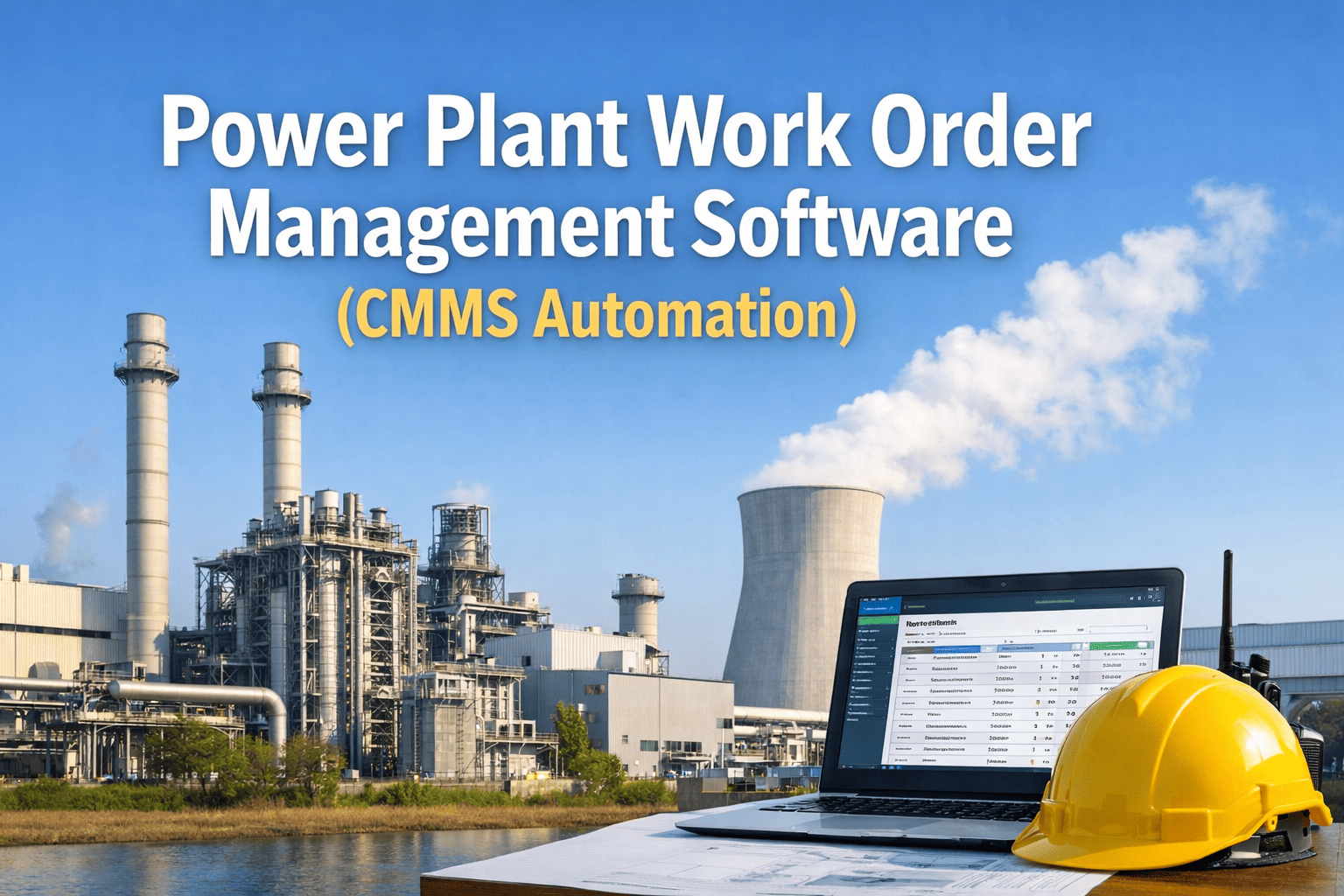
OxMaint is the intelligent CMMS built for the agentic era — connecting IoT data, AI analytics, work order execution, and CapEx planning in a single platform that operates continuously without manual input.
Every Month Without Agentic AI is a Month of Data You Will Never Get Back
AI models in predictive maintenance improve continuously with operational data. Plants that deploy now are building a compounding intelligence advantage that competitors cannot close retroactively. OxMaint goes live in under 60 minutes.
Real Results
What Power Plants Are Reporting in the First Year of Agentic AI Maintenance
12–22x
First-Year ROI
A 400–600 MW thermal plant deploying AI predictive maintenance on critical rotating assets reports net ROI of $3.97M–$6.3M against a $300K–$600K platform investment. Payback period: 5–8 weeks.
$1.8M
Single Prevented Failure
AI vibration analysis caught a generator bearing defect 4 weeks before scheduled outage — saving an estimated $1.8 million in emergency repair costs, lost generation, and cascade damage at one power generation facility.
94.3%
AI Prediction Accuracy
Multi-agent autonomous monitoring systems improve from 82.4% accuracy at deployment to 94.3% accuracy over 12 months of continuous learning — with 67% fewer false positives reducing crew dispatch costs.
43%
Less Unplanned Downtime
Federated learning-based agentic maintenance systems in industrial facilities achieved 43% reduction in unplanned downtime alongside a 1.6-year payback period and €447,300 NPV over five years.
Implementation Readiness
What Does Agentic AI Deployment Actually Look Like at a Power Plant?
The most common barrier is not technology — it is the belief that implementation is complex. Here is the realistic timeline for a power plant moving from reactive maintenance to agentic AI operations with OxMaint.
Week 1–2
Asset Foundation
Every critical asset logged into OxMaint with full hierarchy — plant, system, asset, component. IoT sensor connections configured. Historical maintenance records imported. AI baseline models begin training on existing data.
Week 3–4
Sensor Integration
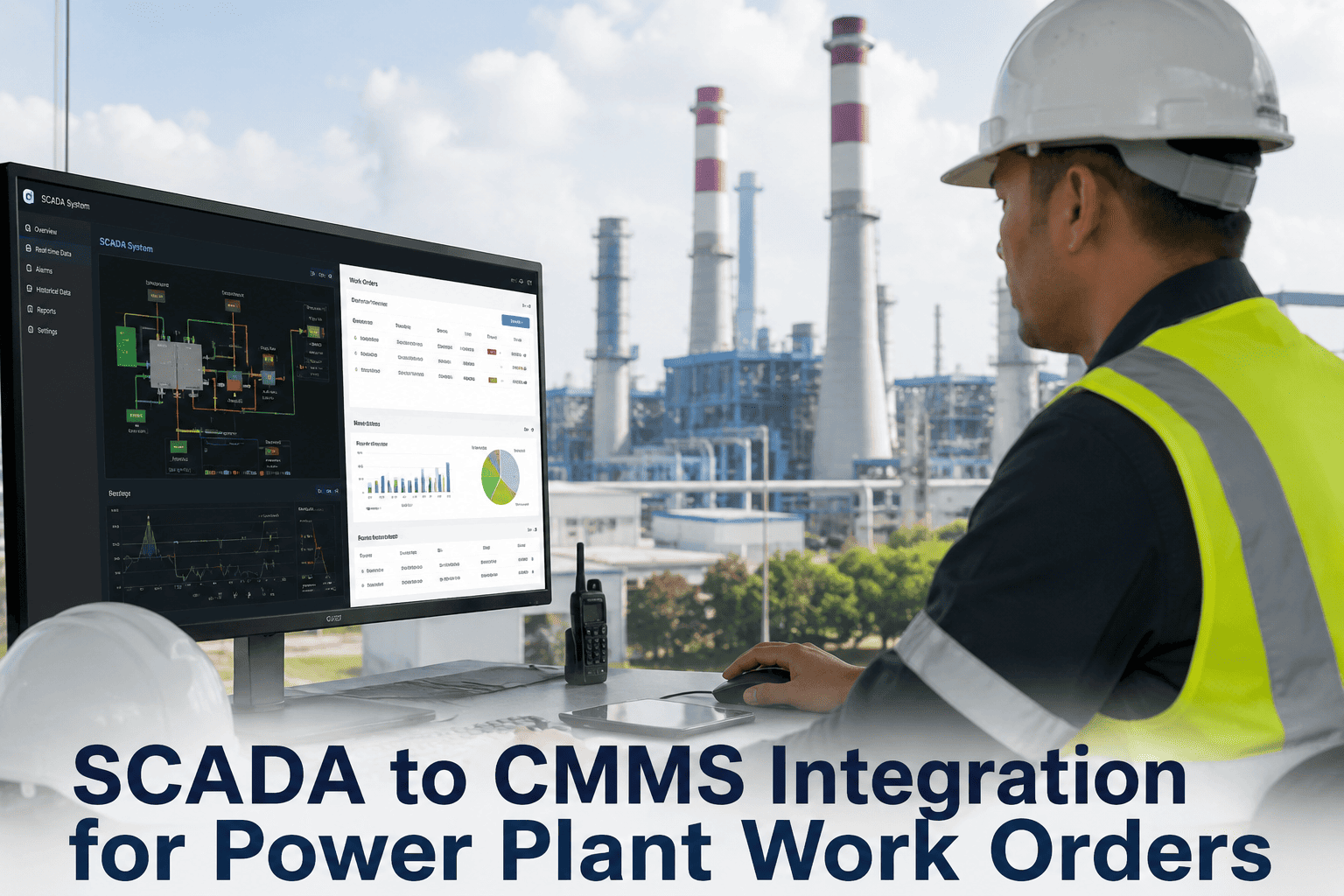
Live data streams flowing from SCADA, DCS, and IoT sensors into OxMaint. Anomaly detection thresholds configured per asset criticality. First AI predictions generated. Operations team validates against known equipment history.
Week 5–6
Autonomous Work Orders Active
AI-generated work orders flowing to technician mobile apps. First prevented emergency repairs validated. Compliance records building automatically. 30–40% reduction in administrative workload measurable within weeks of full activation.
Month 3–12
Compounding Intelligence
AI models learn plant-specific operating patterns, seasonal load variations, and equipment degradation curves. Prediction accuracy improves month-over-month. CapEx forecasts update automatically. The competitive data advantage widens every day.
Questions & Answers
What Power Plant Engineers and Reliability Managers Ask About Agentic AI Maintenance
Will agentic AI replace our maintenance engineers and technicians?
No — the role evolves, not disappears. Agentic AI eliminates the administrative burden: writing work orders, chasing parts, scheduling around guesswork, compiling compliance binders. Engineers shift to higher-value work — analyzing AI recommendations, managing exceptions, optimizing plant reliability strategy. Technicians receive better information, clearer priorities, and complete asset history at the point of repair — making them more productive, not redundant. Plants report 20–35% wrench-time improvement as crews execute planned tasks instead of emergency firefighting.
Book a demo to see how the human-AI workflow functions in OxMaint.
Our plant already has a CMMS. What does OxMaint add?
Traditional CMMS systems are passive record-keepers: they store what happened. OxMaint's agentic layer is active — it detects what is about to happen, decides what to do, and initiates the action autonomously. If your current CMMS requires a human to notice a problem and write a work order, you are leaving millions in preventable failure costs on the table annually. OxMaint connects to existing SCADA, DCS, and IoT infrastructure via standard APIs — no rip-and-replace required. It adds the autonomous intelligence layer on top of whatever data systems you already have.
Start the free trial and import your existing asset data in under an hour.
How does the AI actually get smarter over time?
Every repair outcome — whether the AI prediction was correct, what the actual root cause was, how the repair resolved the issue — feeds back into the model as labeled training data. The system identifies patterns across similar assets: which failure modes precede which degradation signatures, which operating conditions accelerate wear, which interventions have the longest lasting effect. In documented deployments, accuracy improves from 82.4% at deployment to 94.3% at 12 months, with false positive rates dropping 67%. The data advantage compounds — making early deployment significantly more valuable than delayed adoption.
Book a demo to see the AI learning architecture inside OxMaint.
Does OxMaint support multi-plant utility operations?
Yes. OxMaint is built for portfolio-level operations — every plant, every circuit, every critical asset visible on a single dashboard that updates in real time. Operations leadership sees the same picture as site engineers. Agentic work order generation, condition scoring, and CapEx forecasting run simultaneously across all sites without separate systems or manual aggregation. Plants can onboard one facility at a time with no disruption to operations at other sites.
Start the free trial and connect your first plant within the hour.
What is the biggest risk of delaying agentic AI adoption?
Three compounding risks. First, every unplanned failure costs 4.8x more than a planned intervention — delays mean ongoing avoidable emergency spend. Second, AI models improve with operational data — every month of delay is a permanent gap in model training that cannot be closed retroactively. Third, competitors deploying now will have 3–5 years of condition history, failure pattern data, and model accuracy that later adopters cannot replicate with money alone. The adoption gap in industrial AI is structural, not just operational.
Start closing the gap today — free trial, no implementation fees.
Full Platform · Power Plants & Utilities · Free to Start
Your Competitors Are Building an AI Intelligence Advantage Right Now. The Clock Is Running.
Autonomous work order generation from AI anomaly detection. Self-learning asset health scores. IoT and SCADA integration — no rip-and-replace. Load-aware condition-based maintenance scheduling. Auto-generated NERC, OSHA, and ISO 55000 compliance records. Rolling 5–10 year CapEx forecasting from real condition data. Portfolio dashboards across every plant and circuit. Offline-capable mobile for plant floor operations. No heavy implementation. No long onboarding. The complete agentic maintenance platform — live this week.