Every power plant runs on a silent contract: equipment performs, technicians respond, and the grid stays live. But that contract breaks the moment a work order gets buried in a radio call, scribbled on a clipboard, or lost in a shift handover — which happens dozens of times a day in facilities that still rely on manual intake. NLP-powered work order automation changes this entirely by letting your technicians report faults in plain spoken language, while AI instantly classifies the issue, identifies the asset, prioritizes the severity, and routes a fully structured work order to the right person — in under 60 seconds. If your team is still spending hours on administrative work instead of actual maintenance, start with Oxmaint for free or book a 30-minute demo to see NLP intake working live on your plant's asset types.
Manual Work Orders Are Costing Power Plants More Than They Realize
In a thermal or gas power plant, a single undetected fault can cascade from a minor vibration anomaly to a forced outage worth hundreds of thousands of dollars — not because no one noticed, but because the process of converting that observation into an actionable work order was slow, incomplete, or lost entirely.
Technicians waste an estimated 15–20 minutes per work order on data entry alone. Across a facility managing hundreds of assets, that administrative burden accumulates into thousands of lost maintenance hours annually. The real cost is not just time — it is the faults that go unreported because filing a work order feels like too much friction, and the misrouted orders that reach the wrong technician two shifts too late.
From Spoken Fault Report to Structured Work Order — in Under 60 Seconds
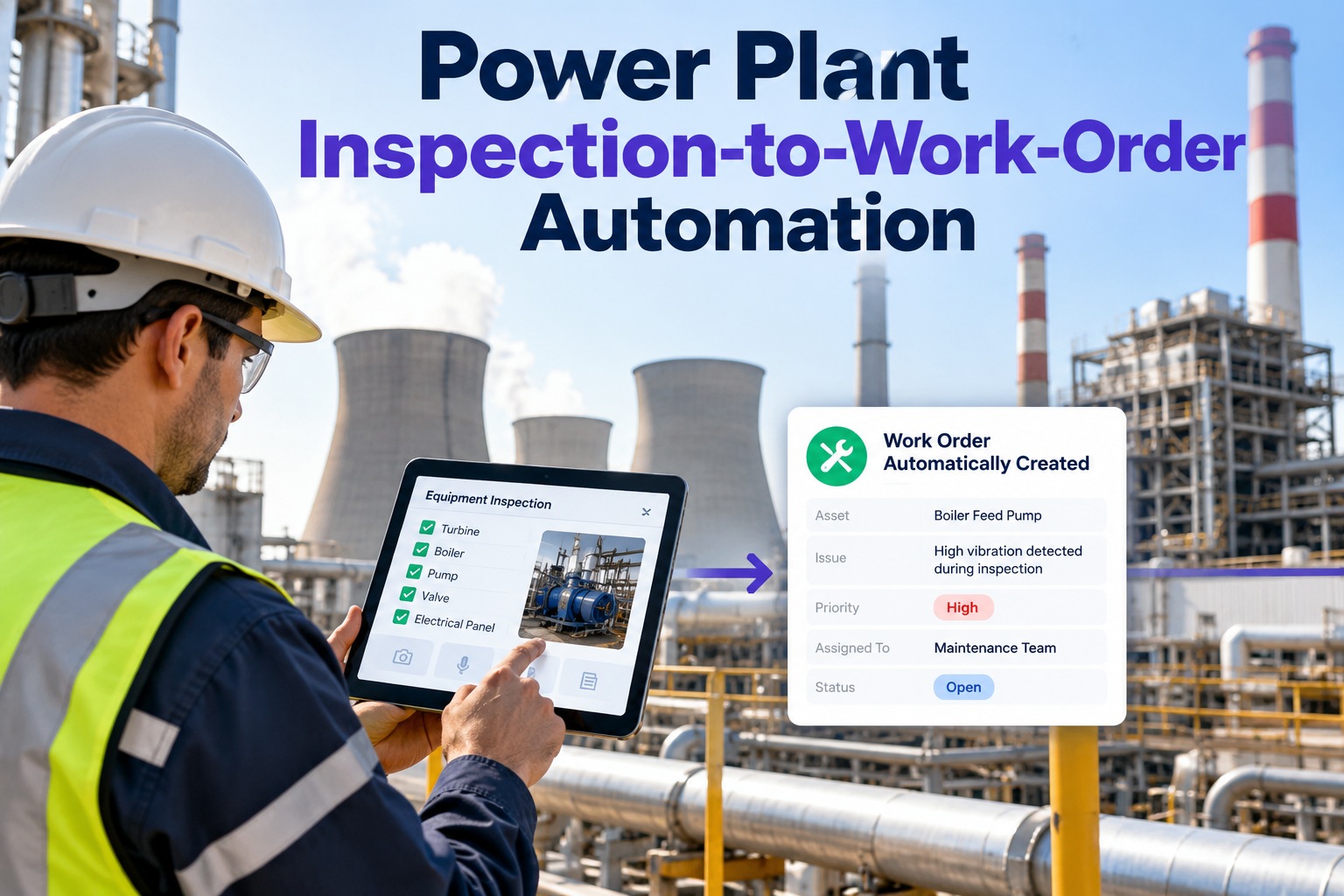
Natural Language Processing eliminates the gap between what a technician observes and what the CMMS records. Here is the exact sequence from fault observation to routed work order.
See NLP Work Order Automation Running on Your Plant Assets
Oxmaint's NLP intake is active from day one — no training period, no sensor overhaul required. Your technicians speak naturally. The CMMS builds structured, audit-ready work orders automatically. See it working on your actual asset types in a 30-minute session with our team.
Five NLP and AI Features That Transform Power Plant Maintenance Workflows
NLP-driven work order automation is not one feature — it is a stack of interconnected AI capabilities that together eliminate administrative friction at every stage of the maintenance cycle.
Technicians verbally describe faults in any natural phrasing — using equipment nicknames, colloquial descriptions, or partial information. NLP resolves ambiguity, maps the description to the correct asset in your registry, and creates a complete, structured work order without requiring the technician to touch a form or remember an asset code. This is particularly valuable in environments where hands are occupied and screens are inaccessible.
The AI classifies every fault report against a taxonomy of power plant failure modes — mechanical, electrical, thermal, fluid, structural — and assigns fault codes without manual selection. Classification is informed by the specific language used, the asset's maintenance history, and current sensor context. Misclassified work orders that waste technician time by sending the wrong skill set are eliminated from the first interaction.
Not every fault is equally urgent. The AI scores each incoming work order for urgency based on four factors: the fault's potential to cause a forced outage, the criticality of the affected asset to plant output, current operational load and generation targets, and available technician bandwidth. High-risk faults on critical assets generate immediate escalation alerts. Lower-risk items are batched into planned windows without human triage intervention.
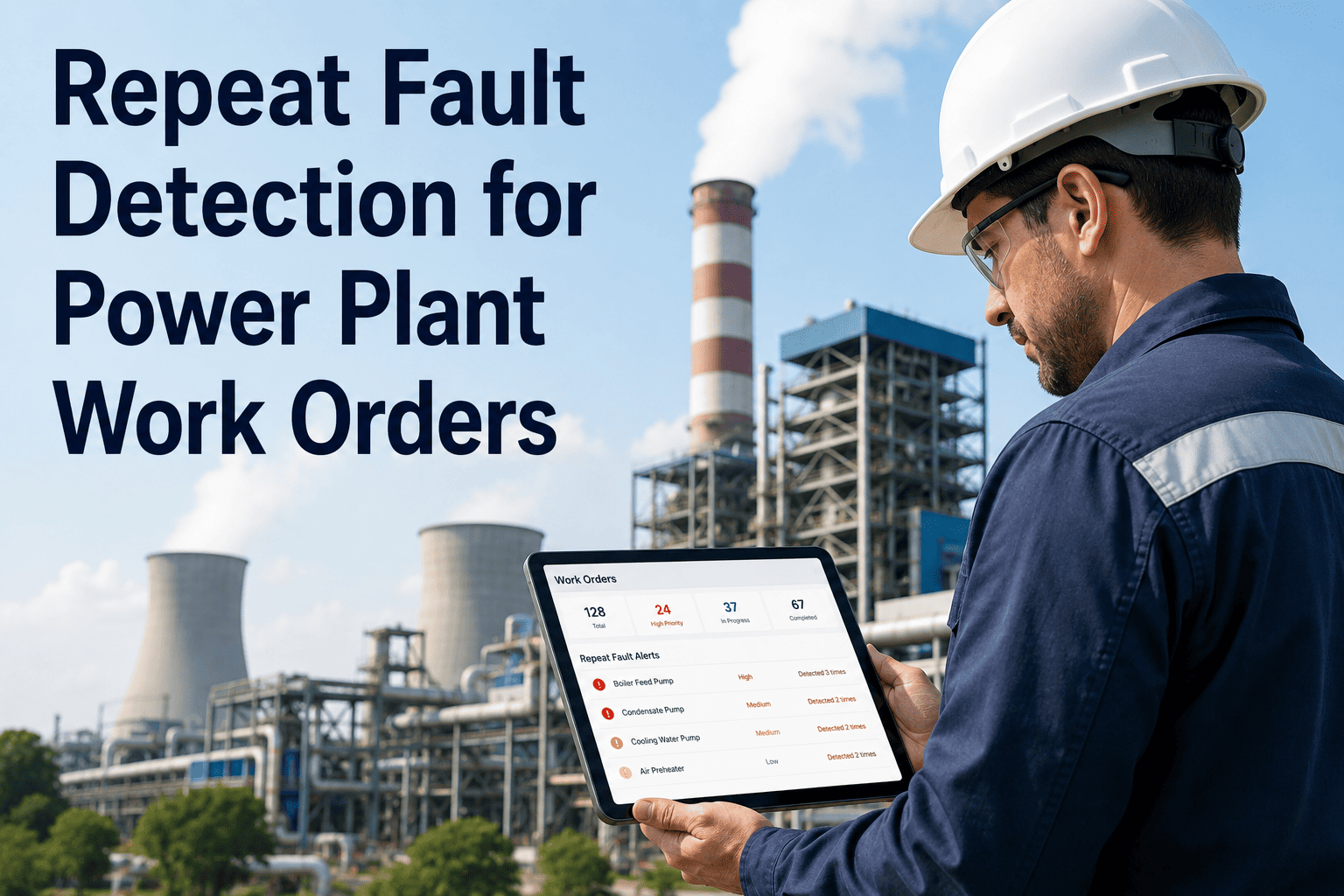
When the same fault is reported by multiple technicians across shifts — which happens frequently in large plants — the NLP engine identifies semantic similarity between incoming reports and merges them into a single tracked work order rather than creating redundant tickets. The original reporter is acknowledged, and all subsequent reporters are linked to the active work order. Maintenance backlogs are kept clean without manual review.
When Oxmaint's predictive engine detects an anomaly — a bearing temperature rising 4°C above learned baseline, a pump current draw spiking 6% beyond normal operating range — it generates a work order automatically without any human observation required. The AI writes the fault description, attaches the sensor evidence, estimates time-to-failure, and routes the order to the appropriate technician with relevant maintenance history already loaded.
What the Shift From Manual to NLP-Automated Looks Like in Practice
| Maintenance Scenario | Manual Process | With NLP + Oxmaint |
|---|---|---|
| Fault observed by field technician | Radio call to supervisor, manual WO form, 15–20 min delay | Voice input → structured WO created in under 60 seconds |
| Asset identification | Technician must know and enter correct asset code or ID | NLP resolves from plain description — no codes required |
| Priority assignment | Supervisor judgement, often inconsistent across shifts | AI scores urgency from fault type, asset criticality, load data |
| Same fault reported twice | Two separate WOs created, backlog inflated, duplicate work | NLP detects duplicate, merges into single tracked record |
| Sensor detects anomaly at 2 AM | Alert email sent; may sit unread until morning shift | WO auto-generated, technician assigned, parts pre-checked |
| Compliance audit documentation | Hours of manual log compilation across paper and spreadsheets | Full audit trail auto-generated per NERC CIP requirements |
Scroll right to view full comparison on mobile
Where NLP Work Order Automation Delivers the Strongest ROI in Power Generation
Questions Power Plant Maintenance Managers Ask About NLP Work Order Automation
Does NLP work order intake require technicians to learn new software or change how they communicate?
No — and that is the entire point. NLP intake is designed to match how technicians already communicate, not to impose new vocabulary or structured inputs on them. Whether a technician says "Unit 2 pump is making a grinding noise," "BFP-2 sounds like it's cavitating," or uses your plant's internal shorthand, the AI resolves the intent and maps it to the correct asset. Oxmaint's NLP is active from day one with no technician retraining required.
Can the system handle the volume and diversity of fault types in a large power plant?
Yes. Oxmaint's NLP engine is trained on power generation equipment fault language across thermal, gas, hydro, and combined-cycle facilities, covering thousands of distinct fault patterns across turbines, boilers, electrical systems, and auxiliaries. The model improves continuously as your team's specific language and asset naming conventions are learned from real work order history. Book a demo and we can map your plant's asset classes to specific NLP coverage during the session.
How does NLP-generated work order data connect to predictive maintenance and sensor monitoring?
Every NLP-created work order becomes a labelled training data point for Oxmaint's predictive models — fault type, asset, operating conditions at time of observation, and repair outcome are all captured. Over time, this structured history allows the AI to recognize the early language signatures that preceded past failures and generate proactive work orders before the next technician even notices. Sensor anomalies and verbal observations reinforce each other in the same unified model. Start free to see this feedback loop in your asset dashboard.
What happens to compliance and audit documentation when work orders are AI-generated?
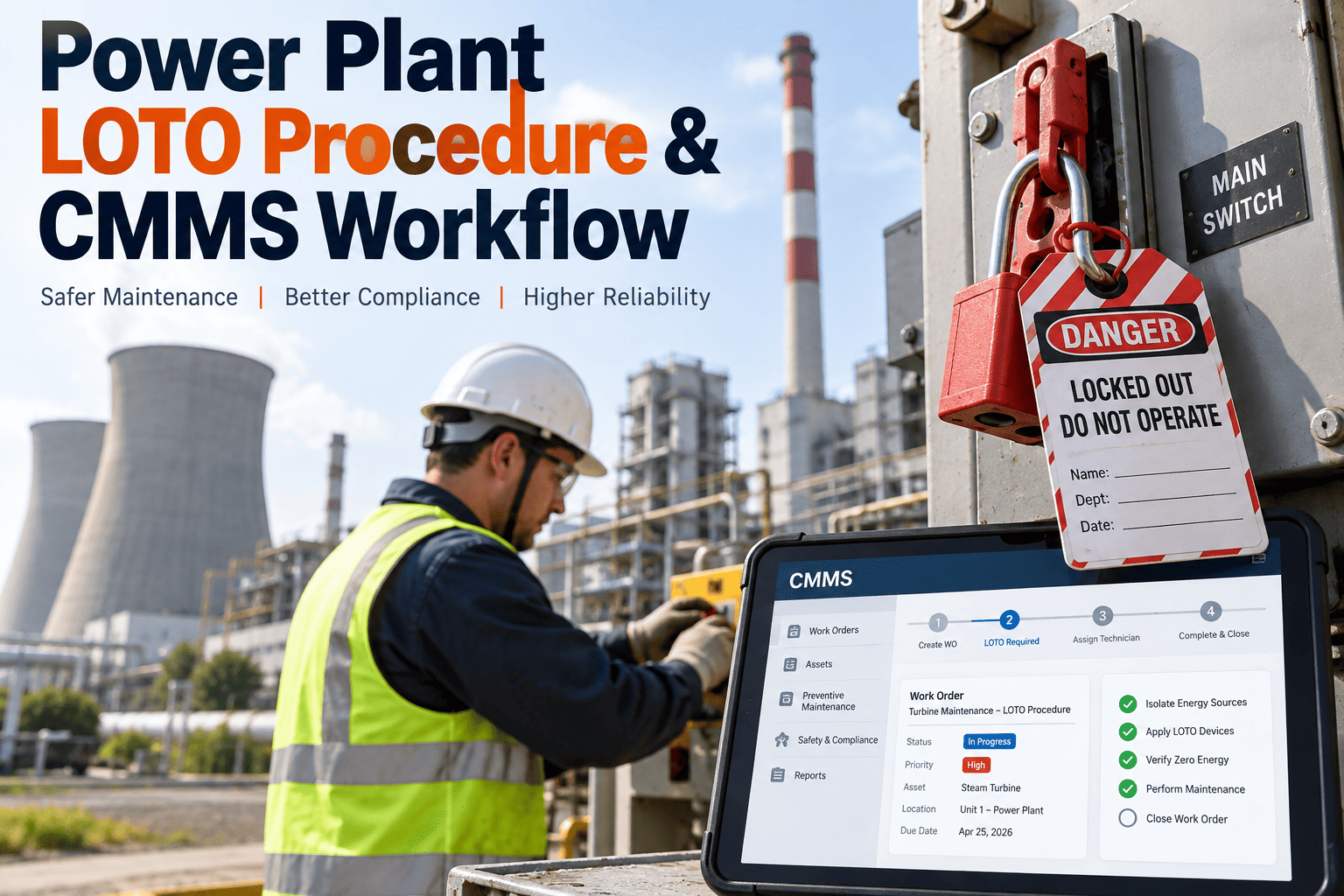
Compliance documentation improves significantly because every auto-generated work order is timestamped, asset-linked, and fault-classified at creation — not reconstructed after the fact. For NERC CIP, ISO 55001, and internal governance requirements, Oxmaint maintains a complete, searchable audit trail of every fault report, work order action, parts record, and technician completion note. Talk to our team about how this maps to your current compliance reporting process.
How quickly does NLP automation generate measurable ROI in a power generation environment?
Administrative time savings — the direct reduction in work order creation time from 15 minutes to under 60 seconds — are measurable from the first week. Fault prevention ROI from improved capture and faster routing typically manifests within the first two to three months, with the first prevented emergency event often covering the full platform cost. Plants with frequent unplanned outages on high-value assets recover their investment fastest. Sign up free and connect your first asset group in under 10 minutes.
Every Fault Your Technician Observes Today Is a Work Order That Should Create Itself
Your team already knows what is wrong with your equipment — the barrier is the friction between that knowledge and a structured maintenance action. Oxmaint's NLP engine removes that barrier entirely: faults are logged in plain language, AI handles the rest, and your maintenance data becomes more accurate, complete, and audit-ready with zero extra effort from your team. Start today and see NLP automation active on your plant assets within the first session.