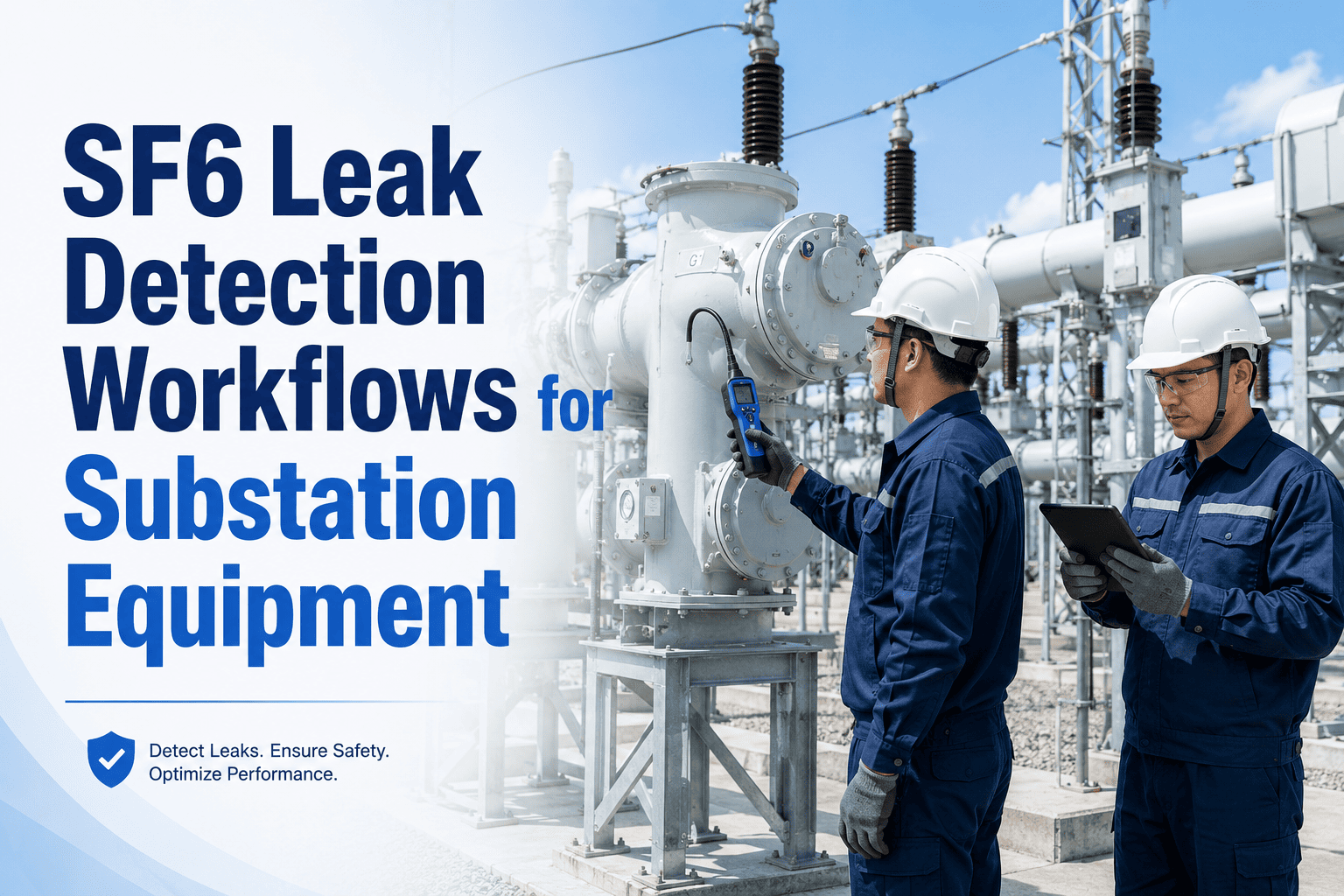
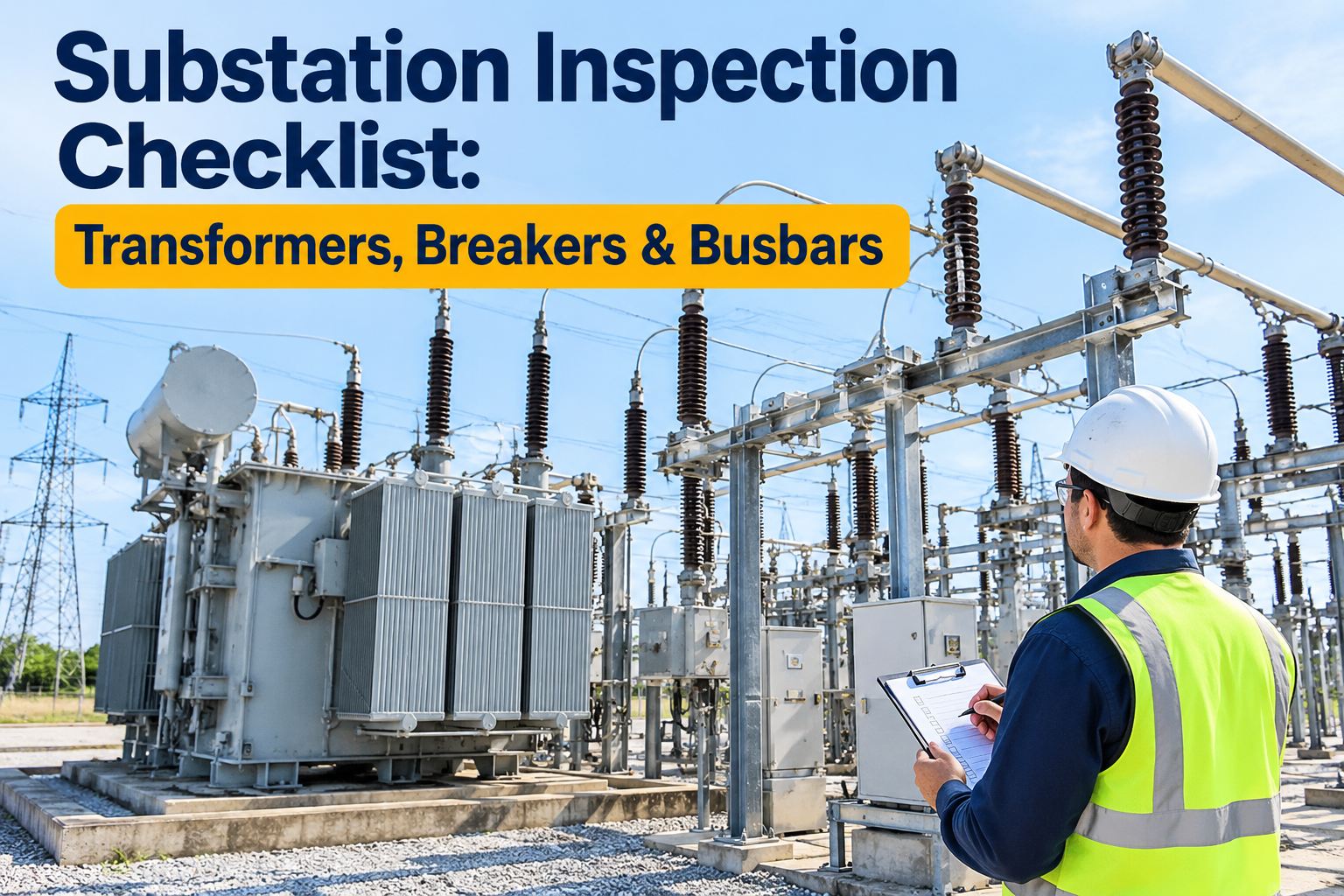
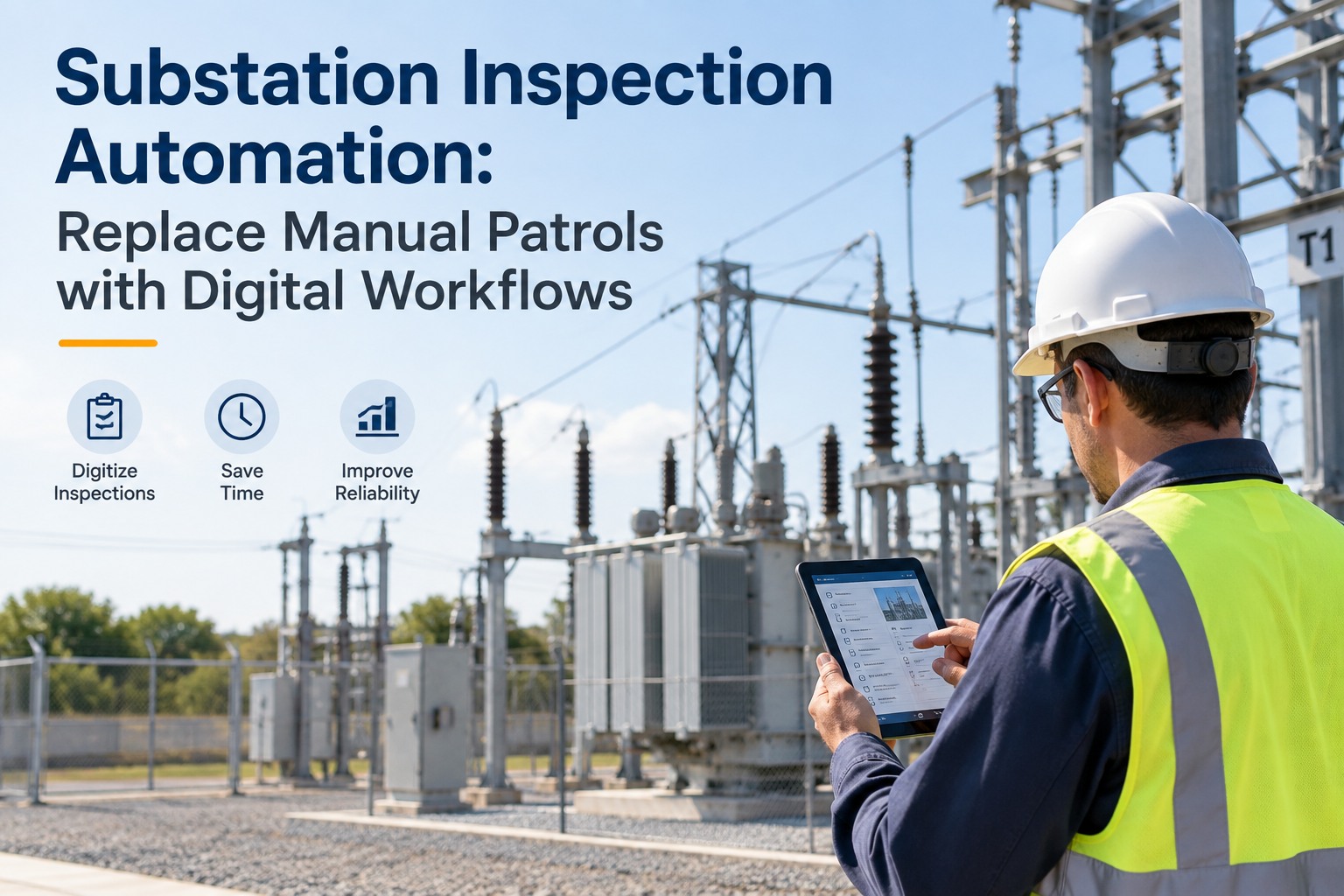
SF6 gas is the invisible backbone of modern substations — insulating breakers, extinguishing arcs, and keeping GIS equipment compact and reliable. But it is also a greenhouse gas with a global warming potential 23,500 times that of CO₂, and even a hairline seal leak can silently erode insulation integrity for months before a density monitor trips. Most substation teams discover SF6 problems at the worst possible moment: during a fault, during an inspection audit, or when a regulator calls. The difference between proactive and reactive SF6 management is not equipment — it is workflow. OxMaint gives substation maintenance teams mobile inspection tools, breaker asset history, gas top-up logs, and compliance-ready reports in one place. Start your free OxMaint trial and put your SF6 program on a defensible, digital foundation — or book a 30-minute session to see how it fits your substation operation.
SF6 Substation Compliance Risk
23,500×
SF6 global warming potential vs CO₂
0.1%
Max annual leak rate per IEC standard
40%
Of GIS leaks traced to bushing joints
3 hrs
Leak response time with digital workflows vs 3 days reactive
Why SF6 Leaks Stay Hidden Until They Become Costly
The problem with SF6 leaks is that they are slow, invisible, and spread across dozens of assets. A GIS bay with 40 compartments, each with flanges, bushings, and valves, gives leak pathways few inspection teams fully cover without a structured workflow. Three failure patterns account for the majority of undetected leaks:
01
Degraded Seals and O-Rings
Rubber seals age under UV, thermal cycling, and compression. Leaks begin as micro-seeps below density monitor thresholds — undetectable without a handheld sniffer running at single-digit ppm sensitivity. Equipment over 20 years old has near-certain seal degradation.
02
Loose Flange Joints
Vibration, mechanical stress, and installation gaps cause flange bolt torque to relax over time. GIS bushing joints account for roughly 40% of reported SF6 leaks — and they respond to a simple fix: torquing bolts to specification. But only if you find them first.
03
No Audit Trail After Top-Up
Gas top-up events logged in spreadsheets or paper forms cannot be correlated with inspection history, density trends, or regulatory emissions reporting. Repeated top-ups on the same compartment are a clear leak signal — but only visible if records are linked.
The 4-Stage SF6 Inspection Workflow That Closes Every Gap
Stage 1
Screening — Wide Area Sweep
Walk the GIS bay with a portable infrared or electrochemical detector at 100–500 ppm sensitivity. Flag any compartment showing elevated concentration. Log findings via mobile work order in OxMaint — tagged to the specific asset, bay, and compartment with GPS and timestamp. No paper, no end-of-shift transcription.
↓
Stage 2
Localization — Pinpoint the Source
At flagged assets, apply the bagging method: seal a plastic bag around suspect flanges for two hours, then measure accumulated SF6 concentration with a high-precision NDIR detector. Readings above background confirm the exact leak point. OxMaint auto-generates a corrective work order linked to the breaker asset record.
↓
Stage 3
Quantification — Calculate Annual Loss Rate
Convert ppm accumulation data to annual leak rate percentage against compartment volume. IEC standard requires leak rates below 0.1% per year. Results are logged against the asset history in OxMaint, feeding the emissions calculation workflow automatically — no manual transcription into separate spreadsheets.
↓
Stage 4
Corrective Action and Verification
Minor leaks are resolved by torquing flange bolts or replacing O-rings. Major leaks require component replacement. Every repair is closed in OxMaint with technician sign-off, before and after density readings, and post-repair verification sniff test. The asset record shows a complete repair-to-verification chain ready for regulatory audit.
OxMaint Inspection Management
Mobile SF6 Inspections — Logged, Linked, Audit-Ready
Every inspection, top-up event, and corrective action tied to your breaker asset history. Compliance reports generated in minutes, not days. Your team keeps doing the work — OxMaint handles the documentation.
Gas Top-Up Logs — The Leading Indicator Nobody Tracks
A breaker that receives a gas top-up every 18 months is telling you something. Two top-ups in 12 months is a clear escalation signal. Without a system that links top-up events to the same asset record as your inspection findings and density readings, that pattern is invisible until the density monitor trips or an audit asks for your emissions logs.
OxMaint's gas top-up workflow captures the quantity added, the technician, the density before and after, and the date — all linked to the compartment-level asset record. When a pattern emerges, the system surfaces it as a condition alert before the next inspection is even scheduled.
Single top-up event
Monitor
2 top-ups within 12 months
Investigate
3+ top-ups — recurring pattern
Corrective WO
Density monitor alarm
Emergency
Compliance and Reporting — What Regulators Actually Ask For
Annual Emissions Inventory
Regulators require annual SF6 emissions calculations by asset, compartment, and facility. OxMaint pulls top-up log data and leak quantification results into a structured emissions report — formatted for regulatory submission without additional spreadsheet work.
Inspection Frequency Records
Demonstrating that each GIS bay and circuit breaker received a documented inspection on schedule is an audit requirement in most jurisdictions. OxMaint's inspection history shows dates, technician, findings, and follow-up — per asset, per cycle.
Repair-to-Verification Chain
When a leak is found and repaired, regulators and insurance auditors want to see the corrective action, the repair date, and post-repair verification. OxMaint closes this loop automatically — every corrective work order requires a verification step before it closes.
Gas Recovery Documentation
SF6 decommissioning and recovery events require documented chain of custody for the recovered gas. OxMaint logs the recovery event, quantity, contractor, and disposition against the asset record — keeping every molecule accounted for in the audit trail.
Reactive vs. Structured SF6 Management — Side by Side
Without Structured Workflow
Leak discovery method
Density monitor alarm or visual
Average response time
2–3 days after alarm
Top-up pattern visibility
Paper logs, no correlation
Compliance report prep
Days of manual data assembly
Audit outcome risk
High — gaps in records common
With OxMaint Workflow
Leak discovery method
Scheduled mobile sniff + top-up alerts
Average response time
Under 3 hours from detection
Top-up pattern visibility
Automatic condition alert on repeat events
Compliance report prep
Minutes from live asset data
Audit outcome risk
Low — full repair-to-verification chain
Frequently Asked Questions
How often should SF6 equipment be inspected for leaks?
Most utility standards require a monthly visual check and a full quantitative leak scan during annual maintenance or whenever a density monitor triggers an alarm. OxMaint schedules and tracks both cycles automatically, with 30-day reminders before each inspection window.
Start your free trial to set up your first inspection schedule.
What is the IEC standard leak rate for GIS equipment?
IEC standards require annual SF6 leak rates below 0.1% of compartment volume. Equipment exceeding that threshold must be scheduled for corrective action. OxMaint's quantification workflow calculates leak rates from bagging test data and automatically flags non-compliant assets.
Book a demo to see the compliance dashboard in action.
Can OxMaint handle multi-site substation SF6 compliance reporting?
Yes. OxMaint consolidates inspection records, top-up logs, and leak quantification data across all sites into a single compliance dashboard. Annual emissions inventories are generated at the facility level and rolled up to portfolio level — without any manual data aggregation across sites.
What happens when a technician finds a leak during a mobile inspection?
The technician logs the finding directly in the OxMaint mobile app — with photos, ppm reading, and asset tag. A corrective work order is automatically generated, assigned, and tracked. The original inspection and the corrective action are linked in the asset history, creating an unbroken audit chain without any back-office data entry.
OxMaint for Substation Teams
Your SF6 Compliance Risk Is a Workflow Problem — Not an Equipment Problem
3 hrs
leak response time with digital mobile workflows
100%
audit trail from detection through verified repair
Minutes
to generate a compliance-ready emissions report
OxMaint connects your mobile inspection data, gas top-up logs, corrective work orders, and compliance reports into one linked asset history — so your SF6 program is always audit-ready and your team spends time finding leaks, not assembling paperwork.