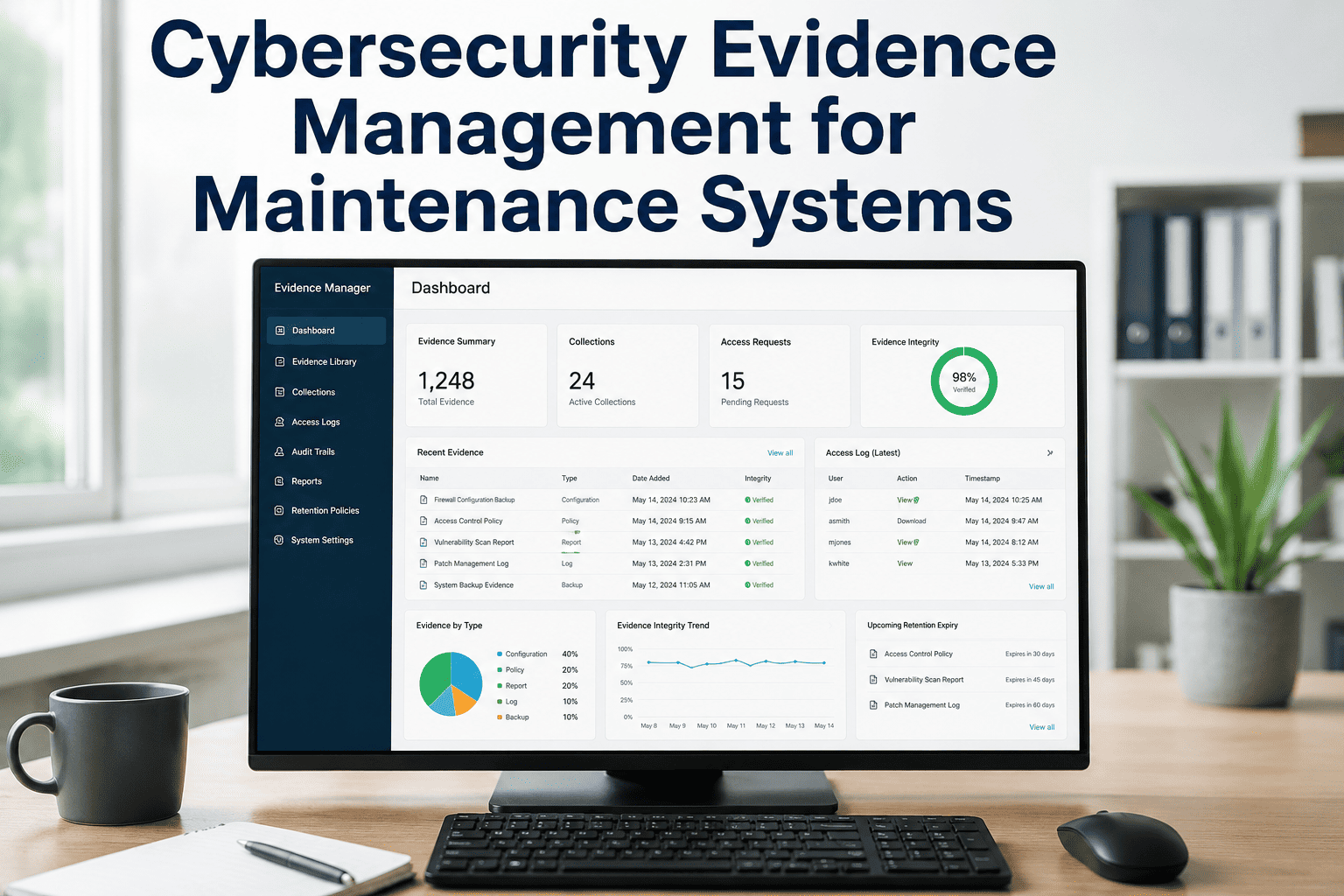
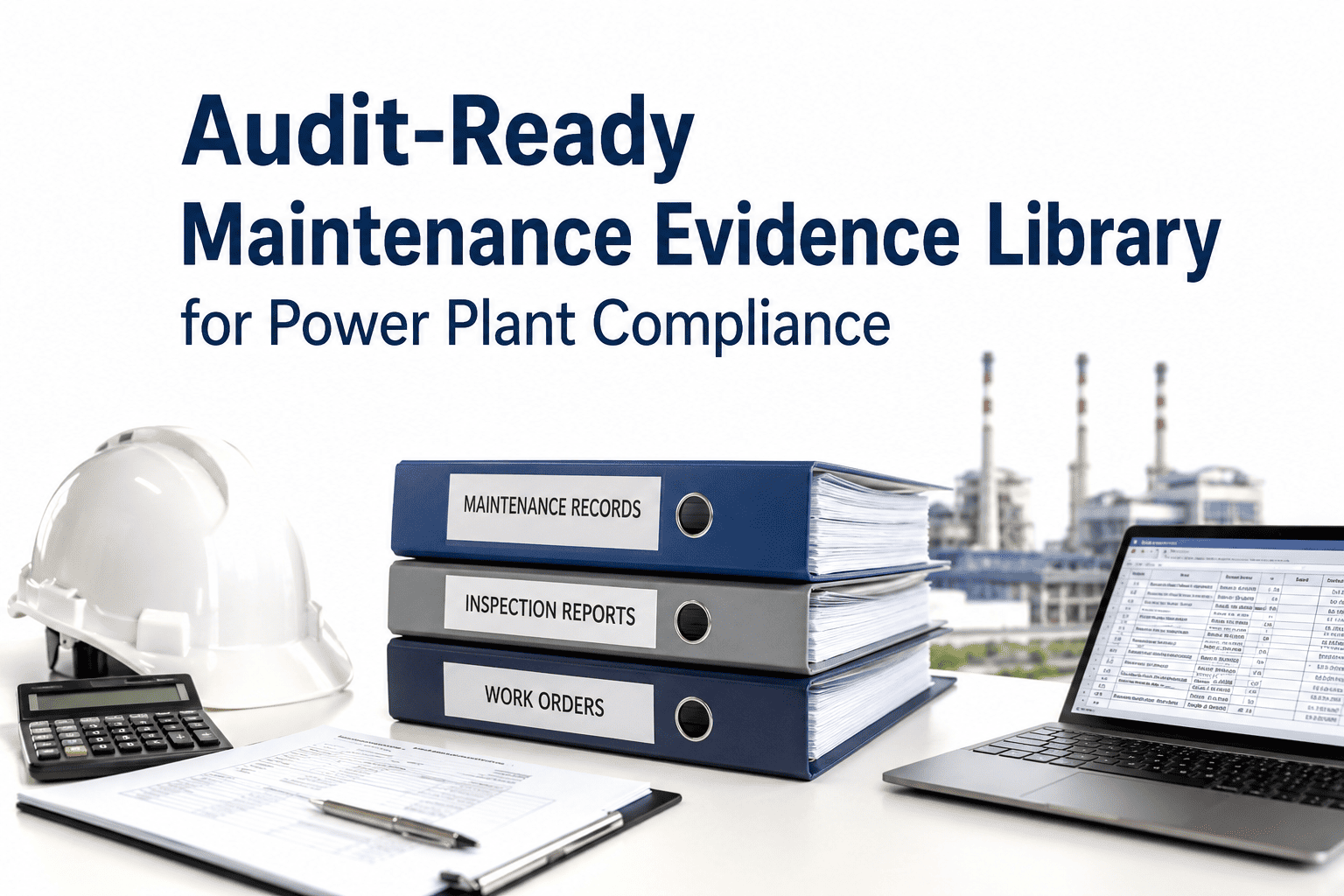
Power plant control systems and maintenance platforms sit at the intersection of physical reliability and digital security — and regulators are treating that intersection with increasing seriousness. NERC CIP standards require documented evidence of access controls, vendor activity monitoring, system change logs, and security patch records across every cyber asset in a facility's boundary. Most maintenance teams can operate their systems effectively; fewer can produce six months of timestamped access logs and vendor activity records on 48 hours' notice when a NERC audit request arrives. The gap between operating securely and being able to prove it is exactly where compliance penalties, failed audits, and remediation costs accumulate. OxMaint's maintenance platform structures the documentation that cybersecurity readiness requires — from vendor access records to asset change history — in formats that audit teams can use directly. Start your free OxMaint trial and put your cybersecurity evidence trail on a structured foundation, or book a 30-minute session to see the compliance dashboard mapped against your facility's requirements.
Cybersecurity Compliance Pressure — Power Generation
$1M+
Per-day NERC CIP violation penalty ceiling
35%
Of cyber incidents in utilities involve vendor or third-party access
48 hrs
Typical NERC audit evidence request response window
15–20 hrs
Monthly time spent on manual compliance documentation
What NERC CIP Actually Requires From Your Maintenance System
NERC CIP reliability standards are not abstract policy documents — they require specific, demonstrable evidence that is traceable to individual assets, personnel, and time windows. The maintenance system sits at the center of that evidence requirement because it controls who accesses assets, what changes are made, and who performs security-related work. Four evidence categories are most commonly cited in audit findings at power plants.
Physical Access Logs
Every individual who accesses a cyber asset or electronic security perimeter must be documented with identity, authorization basis, and access timestamp. Maintenance work orders in OxMaint automatically create this log when technicians check in and out of work on cyber-system-adjacent assets.
Configuration Change Management
Changes to baseline configurations of BES cyber systems — hardware, software, and communication settings — require documented authorization, implementation records, and post-change verification. OxMaint's asset change history provides the audit trail that links each change to its authorizing work order.
Vendor and Third-Party Access
Vendor remote and on-site access to control systems must be authorized, monitored, and terminated upon completion. Contractor work orders in OxMaint log vendor entry, the assets accessed, the work performed, and sign-off on access termination — all timestamped and linked to the applicable contract authority.
Security Patch Documentation
Security patches must be evaluated, applied, or formally deferred with documented rationale on a 35-day cycle. OxMaint schedules patch review work orders, tracks completion or approved deferrals, and maintains the evidence file for each patch cycle — eliminating the manual spreadsheet that most teams use today.
OxMaint Safety and Compliance
Audit-Ready Cybersecurity Evidence — Built Into Your Maintenance Workflow
Stop assembling compliance evidence after the fact. OxMaint structures access logs, asset changes, vendor activity, and patch records as a natural output of your maintenance operations — not a separate documentation burden.
The Evidence Gap — Where Most Plants Fall Short
Common Gap
Vendor access records kept in email threads or sign-in sheets — no link to work performed or authorization basis
→
OxMaint Approach
Vendor work orders require pre-authorization, log assets touched, and require sign-off at close — all linked to the vendor record and contract file
Common Gap
Asset configuration changes logged by engineers in personal notes or informal change tickets with no formal authorization trail
→
OxMaint Approach
Every asset change captured in work order history with authorizing supervisor, change description, and before/after asset state documented
Common Gap
Security patch tracking done in a spreadsheet that is not linked to the asset record or the maintenance work order system
→
OxMaint Approach
Patch review work orders auto-scheduled on 35-day cycle, with completion and deferral rationale tied directly to each cyber asset record
Common Gap
Audit evidence assembly takes 2–3 weeks of manual effort pulling data from multiple disconnected systems before each inspection
→
OxMaint Approach
Compliance report generated in minutes from live maintenance data — asset access history, change log, and vendor activity in a single audit-ready export
Evidence Quality Spectrum — From Non-Compliant to Audit-Ready
Level 1
Paper and Email
Sign-in sheets, email chains, informal notes. No system of record. High audit failure risk.
→
Level 2
Spreadsheet Tracking
Manual logs in Excel. Data not linked to assets. Version control problems. Moderate risk.
→
Level 3
Ticketing System
IT ticketing captures some changes but not linked to OT asset hierarchy. Gaps in vendor records.
→
Level 4
CMMS-Integrated
All access, change, vendor, and patch evidence in one system. Linked to asset records. Report in minutes.
Frequently Asked Questions
What NERC CIP standards specifically require maintenance system documentation?
CIP-004 and CIP-006 govern physical access records, CIP-005 governs vendor and remote access, CIP-007 governs security patch management, and CIP-010 governs configuration change management. All four require evidence that is traceable to specific assets, personnel, and timestamps — which is exactly what a maintenance work order system produces when structured correctly.
Start your OxMaint trial to see the compliance dashboard configured for your NERC obligations.
How does OxMaint handle vendor and third-party access documentation?
Vendor work orders in OxMaint require pre-authorization before access is granted, log each asset touched during the visit, and require a supervisor sign-off when access is terminated. The complete vendor activity record — authorization, scope, assets accessed, and closure — is retained in the asset history and exportable for NERC audit submission.
Book a demo to walk through the vendor workflow in detail.
Can OxMaint generate NERC compliance reports directly?
Yes. OxMaint generates compliance reports from live maintenance data across all required evidence categories — access logs, change records, vendor activity, and patch history. Reports are formatted for regulatory submission and can be produced in minutes rather than the 2–3 weeks of manual assembly that most plants currently spend before each audit cycle.
Does using a cloud-based CMMS create cybersecurity risk for OT systems?
OxMaint operates as a maintenance management system with no direct connection to OT control networks. It records what maintenance personnel do — work orders, access logs, asset changes — without any integration into SCADA, DCS, or BES cyber system communications. This design means it enhances compliance documentation without expanding the cyber attack surface of the OT environment.
OxMaint for Cybersecurity Compliance
Operating Securely Is Not Enough — You Have to Prove It
Minutes
to generate a NERC-ready compliance evidence report
100%
vendor access records linked to asset history and authorization
35-day
patch review cycle auto-scheduled and tracked per CIP-007
OxMaint turns your maintenance operations into a continuous compliance evidence engine — so when an audit request arrives, you pull a report, not a fire drill.