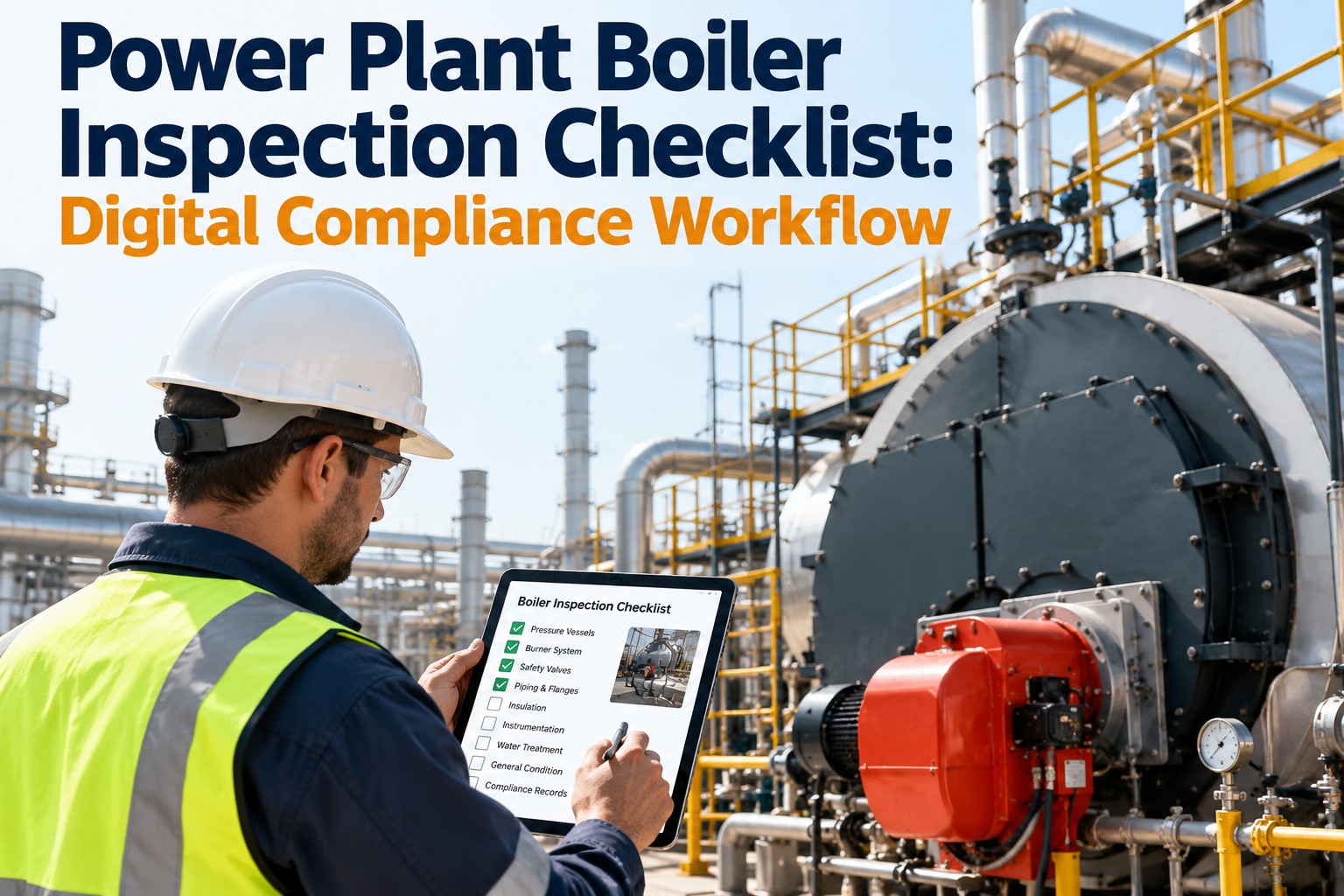
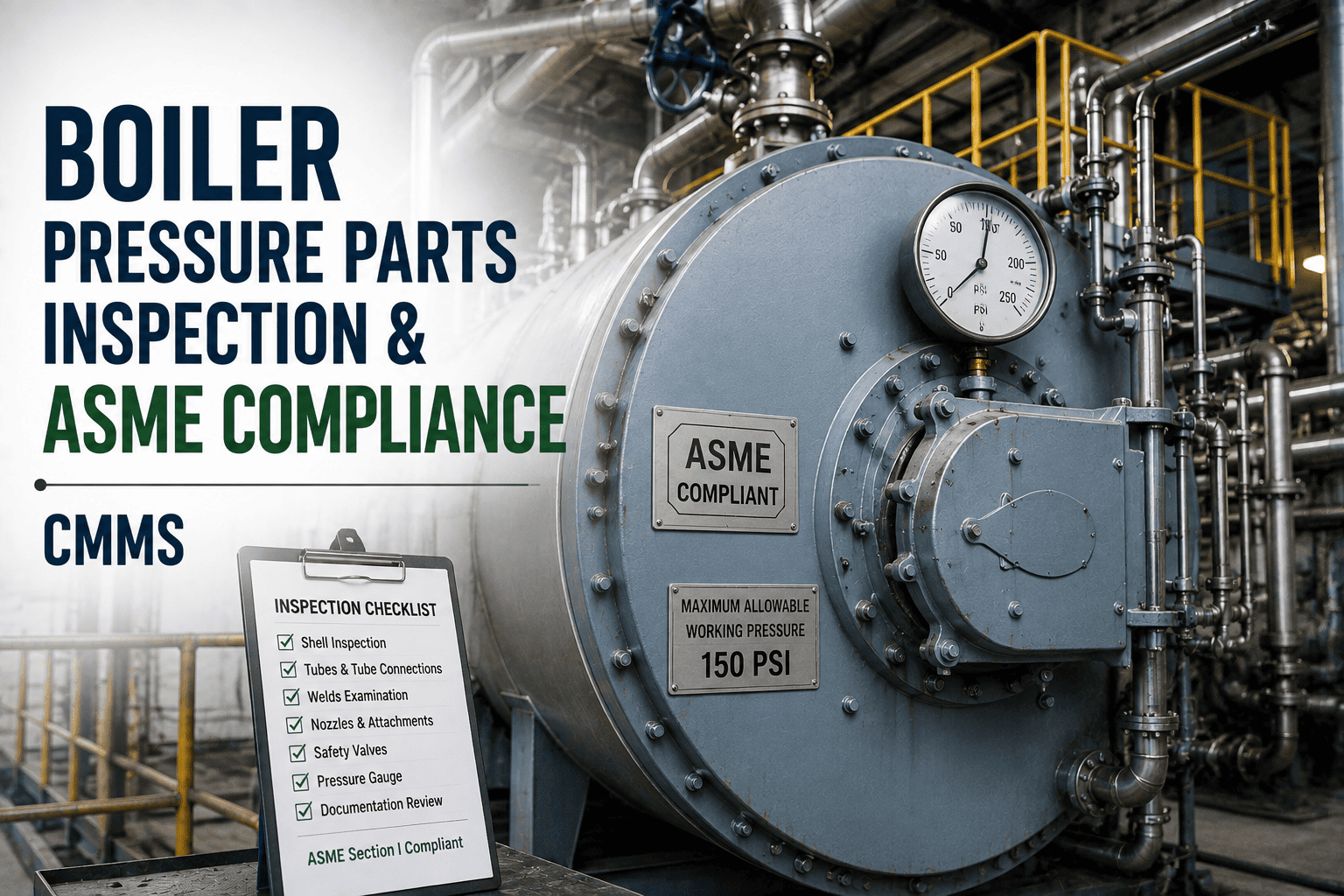
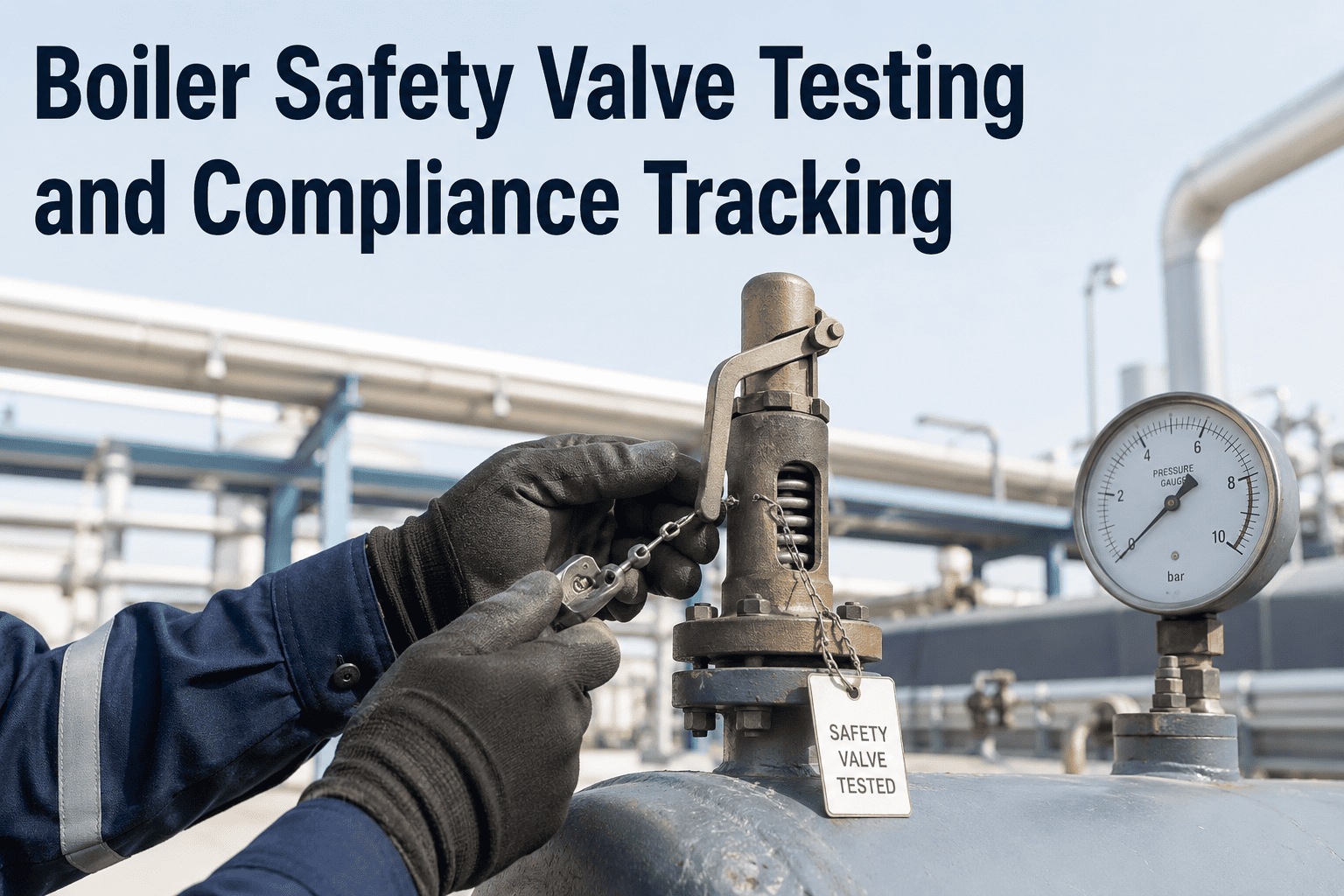
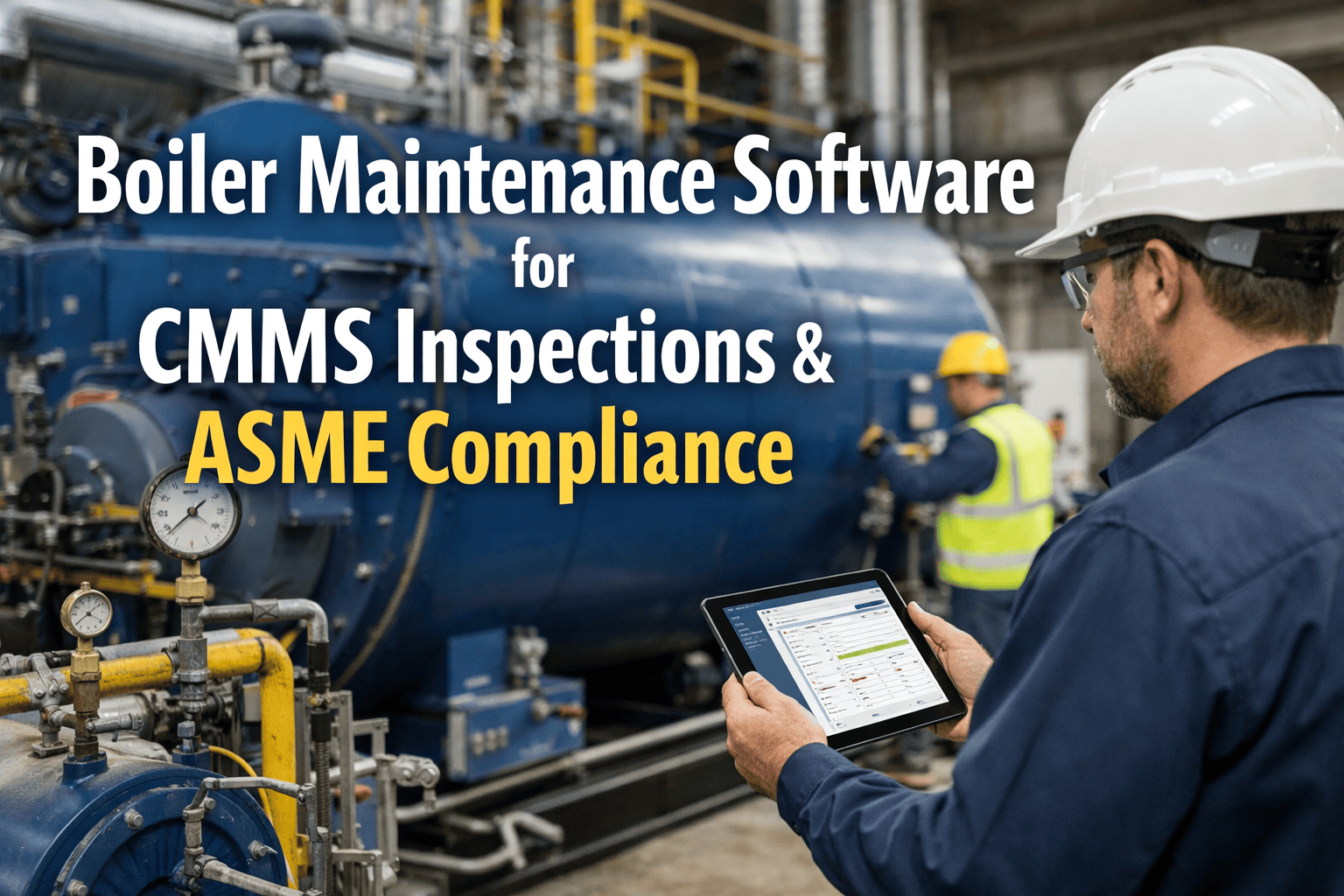
Operating a boiler or pressure vessel without a valid inspection certificate is a Class A misdemeanor in multiple U.S. states — carrying fines of up to $10,000 per day, per vessel under statutes like Missouri RSMo 650.270 and New Jersey N.J.S.A. 34:7-26. The ASME Boiler and Pressure Vessel Code (BPVC) is now enforced across more than 100 countries, with 47 U.S. states and Canadian provinces mandating compliance as a legal requirement for operation. Yet the majority of industrial facilities still manage inspection schedules, certificate renewals, and National Board registration records in spreadsheets — missing renewal dates, failing audits, and operating with expired certificates they did not know had lapsed. Start your free OxMaint trial to bring automated ASME inspection scheduling and certification tracking to your entire pressure vessel fleet, or book a demo to see audit-ready compliance dashboards built for boiler and pressure vessel operations.
ASME BPVC Compliance at a Glance
100+
countries recognizing ASME BPVC as the governing standard for boilers and pressure vessels
$10K
per day, per vessel — maximum daily fine for operating without a valid inspection certificate
Annual
inspection frequency required for power boilers under most state jurisdictions — both internal and external
6,800+
active ASME BPVC Certificate Holders globally — each managing ongoing inspection and documentation obligations
The ASME BPVC Sections Every Plant Operator Must Know
The ASME Boiler and Pressure Vessel Code is not a single document — it is a set of 12 active sections, each governing a specific class of equipment or activity. Compliance obligations vary by which sections apply to your equipment, your state jurisdiction, and whether you are the manufacturer, owner, or operator. Getting this wrong is not a paperwork error — it is a legal liability.
Section I
Power Boilers
Rules for fired and unfired steam boilers generating steam at pressures exceeding 15 psig. Covers construction, inspection, safety valves, and certification. Most common for power generation and industrial steam plants.
Owner obligation: Annual internal and external inspection. National Board registration mandatory in most jurisdictions.
Section IV
Heating Boilers
Governs steam heating boilers at or below 15 psig and hot water heating boilers at or below 160 psi and 250°F. Common in commercial buildings, universities, and district heating systems.
Owner obligation: Biennial internal inspection in most jurisdictions. Certificate must be posted in boiler room at all times.
Section VIII Div. 1
Pressure Vessels
The most widely applied section — mandatory requirements for design, fabrication, inspection, testing, and certification of fired and unfired pressure vessels operating above 15 psig. Applies to the majority of industrial pressure vessels.
Owner obligation: Design documentation, U-Stamp certification, periodic in-service inspection per National Board Inspection Code (NBIC).
Section VIII Div. 2
High-Stress Pressure Vessels
Alternative rules for vessels requiring higher design stress — tighter NDT requirements but allows higher allowable stress values. Used for vessels where weight or cost reduction through thinner walls is critical.
Owner obligation: More rigorous NDE documentation. Welding procedure qualifications per Section IX required.
Section IX
Welding & Brazing Qualifications
Qualification standards for welding procedures and welders/brazers working on ASME Code-stamped equipment. Welding Procedure Specifications (WPS) and Procedure Qualification Records (PQR) must be maintained and available for inspection.
Owner obligation: Active WPS/PQR records. Welder qualification records current and accessible on demand.
Section XIII
Overpressure Protection
Rules for pressure relief devices — safety valves, relief valves, and rupture disks. Covers design, installation, testing, and repair. Every pressure-retaining item requires compliant overpressure protection regardless of the construction section.
Owner obligation: Periodic test and inspection of all relief devices. Relief valve "VR" stamp required for repair organizations.
What ASME Compliance Actually Requires From Operators
Most facility managers understand that they need inspections. Fewer understand the full documentation burden that goes with them — and it is the documentation failures that trigger regulatory penalties during audits, not the inspections themselves.
New Install
Verify ASME Code Symbol Stamp on equipment (U, S, or H stamp as applicable)
Obtain Manufacturer's Data Report (Form U-1 for pressure vessels; Form P-1 for power boilers)
Register with National Board of Boiler and Pressure Vessel Inspectors
Notify jurisdiction authority within 30 days of installation
Obtain initial Certificate of Inspection from Authorized Inspector (AI)
Post Certificate visibly in boiler room or plant office
Annual
Schedule and complete external inspection while vessel is under operating pressure
Schedule internal inspection (vessel shutdown required) — annually for power boilers, biennially for heating boilers in most jurisdictions
Document inspection findings in National Board Inspection Code (NBIC) format
Renew Certificate of Inspection and update posted certificate in boiler room
Verify relief valve test and calibration records are current
Ongoing
Maintain active Welding Procedure Specifications (WPS) and Procedure Qualification Records (PQR)
Track welder qualification expiration and recertification dates
Log all repairs and alterations with appropriate "R" stamp documentation
Keep National Board registration numbers current for all registered vessels
Maintain audit trail of all inspection certificates, reports, and corrective actions
OxMaint Certification Tracking
Never Miss an Inspection Deadline or Certificate Renewal Again
OxMaint tracks every inspection interval, certificate expiry, and documentation requirement across your entire boiler and pressure vessel fleet — sending automated reminders before deadlines and generating audit-ready compliance reports on demand.
Inspection Intervals by Equipment Type and Jurisdiction
Inspection frequency is not uniform — it varies by equipment type, operating pressure, and state jurisdiction. The table below reflects the most commonly applied intervals across major U.S. jurisdictions. Always confirm requirements with your state authority, as local amendments may apply.
| Equipment Type |
Internal Inspection |
External Inspection |
Certificate Renewal |
Jurisdiction Notes |
| Power Boilers (steam >15 psi) |
Annual (shutdown required) |
Annual (under pressure) |
Annual |
Midyear external strongly recommended by NB |
| Steam Heating Boilers (≤15 psi) |
Annual |
Annual |
Annual |
Most jurisdictions — some allow biennial |
| Hot Water Heating Boilers |
Every 24 months |
Every 12 months |
Annual |
NJ, MD, MO and most states — per NBIC |
| Unfired Pressure Vessels (>15 psi) |
Every 1–5 years (risk-based) |
Annual in many jurisdictions |
Annual or biennial |
Owner-user inspection programs allowed in some states |
| Air Compressor Tanks (>10 cu ft, >200 psi) |
Biennial |
Annual |
Annual |
MO, NJ, MD explicitly specify — check local code |
| Process Boilers / Steam Kettles |
Annual |
Annual |
Annual |
Same as power boilers under most jurisdictions |
| Relief Valves (Safety Devices) |
Test per manufacturer interval |
Visual check at each inspection |
With parent vessel |
"VR" stamp required for repair orgs — ASME Sec XIII |
The Compliance Gap: Where Most Facilities Actually Fail Audits
The most common ASME compliance failures are not missed inspections — they are documentation failures discovered during audits. Inspections happen; records disappear. Certificates expire because no one was tracking the renewal date. Welder qualifications lapse between projects. These are the gaps that generate regulatory penalties.
38%
Expired certificates still posted or undiscovered — operating on lapsed certificates without knowing
29%
Missing or incomplete Manufacturer's Data Reports — Form U-1 or P-1 not on file for all registered vessels
24%
Lapsed welder qualifications — WPS/PQR records not maintained between repair projects
19%
Relief valve records missing — no documented test history for safety devices on inspected vessels
15%
Repair and alteration documentation incomplete — "R" stamp work not properly logged in National Board format
11%
National Board registration numbers not tracked — vessels on-site with no NB number on record
How OxMaint Closes Every Compliance Gap
OxMaint transforms ASME compliance from a manually managed document burden into an automated workflow — where every deadline, every certificate, and every inspection record is tracked, reminded, and stored in an audit-ready format.
| Compliance Requirement |
Without OxMaint |
With OxMaint |
| Inspection scheduling |
Manual calendar reminders — missed when staff changes |
Auto-scheduled by equipment type, jurisdiction, and last inspection date |
| Certificate expiry tracking |
Spreadsheet updated manually — often stale |
Real-time expiry dashboard with 90/60/30-day automated alerts |
| National Board registration records |
Filed in physical folders — not searchable |
Digitised and indexed against each vessel asset record |
| Manufacturer Data Reports (U-1/P-1) |
Paper copies in binders — risk of loss |
Uploaded and linked to vessel — searchable and audit-ready instantly |
| Welder qualification tracking |
HR records separate from maintenance — no cross-reference |
Welder certs tracked with expiry alerts and linked to work orders |
| Repair and alteration documentation |
Stored in project files — not linked to vessel history |
Logged against the vessel record with NBIC-format fields |
| Audit preparation |
Days of manual document gathering and reconciliation |
Full compliance package exported in minutes |
Frequently Asked Questions
What is the difference between an ASME inspection and a National Board inspection?
ASME inspections occur during manufacturing and construction — an Authorized Inspector (AI) from an Authorized Inspection Agency (AIA) witnesses fabrication and stamps compliant vessels with the ASME Code Symbol. National Board (NB) inspections occur throughout the vessel's service life under the National Board Inspection Code (NBIC), covering in-service inspection, repair, and alteration. Both require separate documentation: ASME issues the Code Symbol Stamp and the Manufacturer's Data Report; the National Board issues the registration number and governs ongoing in-service inspection records. OxMaint tracks both sets of records against each vessel.
Start your free trial to set up your vessel compliance profile today.
Which U.S. states require ASME BPVC compliance and what are the penalties for non-compliance?
47 U.S. states and all Canadian provinces have adopted ASME BPVC requirements into law for boilers and pressure vessels. Penalties vary by jurisdiction: Missouri and New Jersey impose fines up to $10,000 per day per vessel for operating without a valid certificate; subsequent offenses in New Jersey can reach $25,000 per day. Operating without a valid certificate is classified as a Class A misdemeanor in multiple states. OxMaint's jurisdiction configuration lets you set the correct inspection intervals and certificate renewal rules for each state where your vessels operate.
Book a demo to configure your jurisdiction-specific compliance schedule.
How far in advance should we start preparing for an ASME inspection?
Most jurisdictions require 30 days' prior notice for new or replacement equipment installations, and insurance-company inspectors typically need 2–4 weeks to schedule. For existing vessels, practical preparation should begin 60–90 days before the certificate expiry: confirm the inspection scope with your AI, verify all documentation is current, identify any deficiencies that need corrective action before the inspection, and ensure National Board registration is active. OxMaint sends automated alerts at 90, 60, and 30 days before each certificate expiry, with a structured pre-inspection checklist auto-generated for each vessel.
Sign up free to activate automated inspection scheduling for your fleet.
Can OxMaint track compliance for multiple vessel types across multiple sites?
Yes — OxMaint is designed for multi-site, multi-asset operations. Each vessel gets its own digital record with ASME section classification, National Board registration number, inspection interval rules, certificate history, and document storage. Compliance status across all vessels is visible in a single dashboard, filterable by site, equipment type, certificate status, and upcoming inspection date. For organisations operating across multiple states, jurisdiction-specific inspection intervals are configured per vessel — so a power boiler in Missouri and a heating boiler in New Jersey follow their respective rules automatically.
Book a demo to see multi-site compliance management in action.
What documents should be digitised first when setting up ASME compliance tracking in OxMaint?
Start with the four documents most frequently missing during audits: the Manufacturer's Data Report (Form U-1 or P-1) for each vessel, the current Certificate of Inspection, the National Board registration number, and the most recent inspection report. These four records cover the core compliance obligations for every registered vessel and represent the highest audit risk when missing or out of date. OxMaint's onboarding workflow prompts you to upload these for each asset before activation.
Start your free trial and follow the guided vessel registration process to build your compliance record from day one.
OxMaint ASME Compliance CMMS
Is Your Boiler Compliance Running on Spreadsheets and Memory? That Is a Legal Risk.
$10K/day
max fine for operating on an expired certificate
90-Day
advance alerts before every certificate expiry
Minutes
to generate a full audit-ready compliance report