Boiler tube failures are the single leading cause of forced outages in steam power plants — responsible for roughly 60 percent of all boiler downtime events. The failure mechanics are gradual: wall thinning from corrosion, erosion, or thermal fatigue develops over weeks to months, but remains invisible until the tube ruptures and steam escapes under pressure. The cost cascade that follows is severe — emergency scaffolding, replacement power procurement, refractory removal, welding, hydrostatic testing, and recommissioning — often exceeding $200,000 before accounting for lost generation. The critical insight is that boiler tube leaks do not arrive without warning. Acoustic signatures, water chemistry deviations, and inspection-documented wall thickness readings all provide early evidence — but only if those signals are structured, tracked, and linked to maintenance action in a system that closes the gap between detection and response. OxMaint's CMMS connects inspection notes, acoustic alert logs, water chemistry history, repair records, and outage work packages into one workflow so your maintenance team acts on tube health signals before the rupture. Start your free OxMaint trial today.
Boiler Maintenance · Predictive Maintenance · CMMS
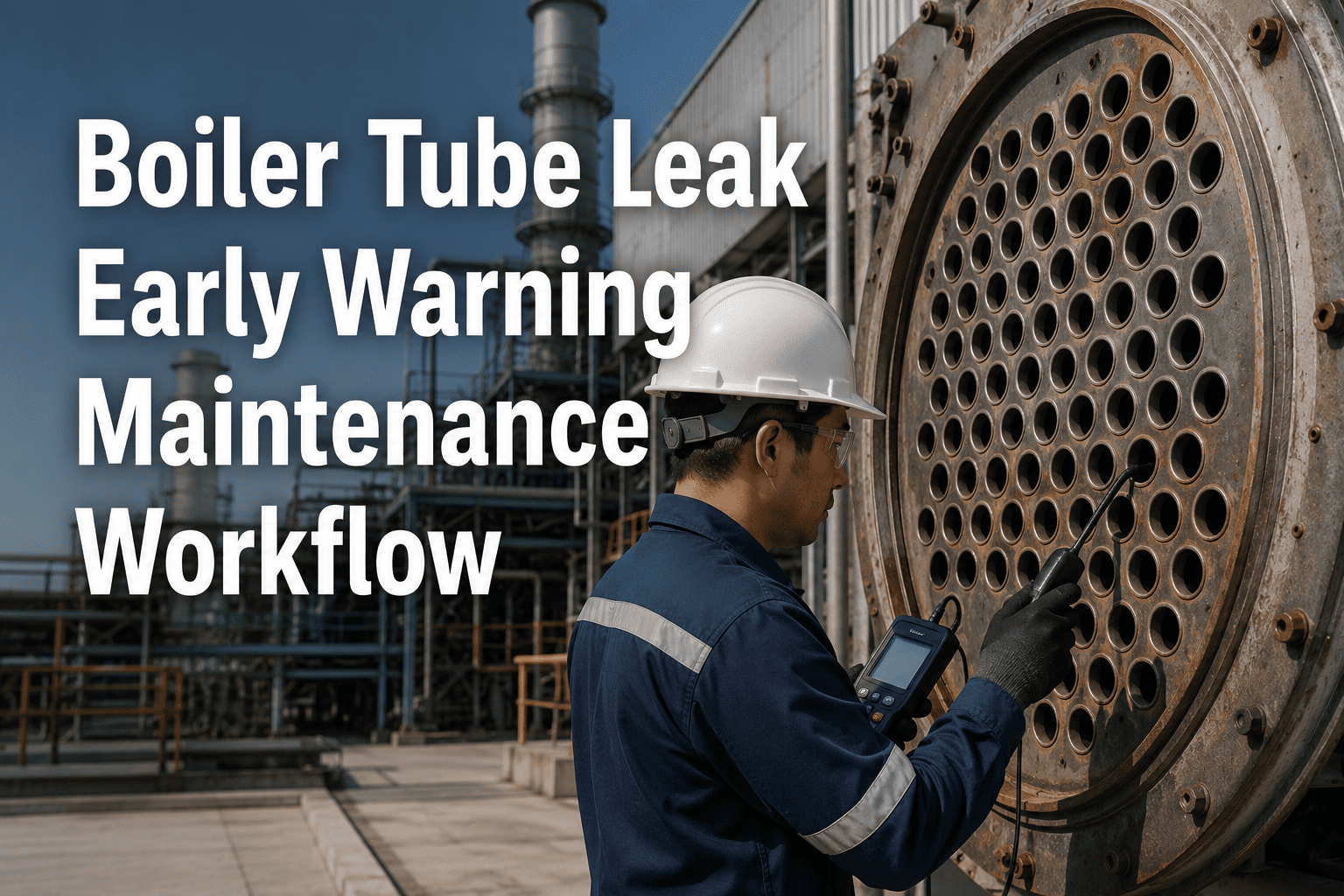
Boiler Tube Leak Early Warning Maintenance Workflow
Connect acoustic signals, water chemistry, inspection data, and repair history into one maintenance workflow — before a tube failure becomes a forced outage.
Acoustic Monitor
Baseline
Steam Drum Na+
Rising — Day 3
Planned Outage
Day 15 Locked
60%
of all boiler outages are caused by tube failure — the single largest forced outage driver in steam power
$200K+
typical cost cascade from a single undetected boiler tube rupture — emergency repair, refractory, and lost generation
92%
fault prediction accuracy achieved in 2024 studies using structured acoustic and chemistry signal correlation
5 min
ahead of plant control system trip — how early structured predictive monitoring can flag a tube leak event
The Four Failure Paths OxMaint Tracks
Waterwall Tube Corrosion
Dissolved oxygen, pH excursions, and flow-accelerated corrosion progressively thin waterwall tube walls — the most frequent failure zone in steam boilers. Chemistry deviations precede physical failure by weeks.
OxMaint tracks water chemistry history against each boiler asset record — corrosion-related WOs are linked to the upstream chemistry excursion that preceded them.
Superheater and Reheater Overheating
High-temperature sections operate near material design limits. Fouling deposits, flow blockages, or steam distribution imbalances push tube metal temperatures above the creep threshold — the failure signature is slow but irreversible.
OxMaint PM schedules include tube metal temperature spot checks and visual inspections; anomalies are logged with photo evidence against the asset record.
Erosion from Fly Ash and Steam Cutting
Coal-fired and biomass boilers expose tubes to high-velocity ash particles that erode tube walls from the outside. Steam cutting from an existing micro-leak accelerates adjacent tube damage rapidly once initiated.
OxMaint inspection checklists include wear pattern documentation and wall thickness reading capture — thickness trends are tracked per tube section over multiple inspection cycles.
Internal Scale and Deposit Buildup
Poor feedwater treatment allows magnetite and calcium deposits to accumulate on tube inner walls — reducing heat transfer and raising tube metal temperatures to creep levels even at normal steam conditions.
OxMaint links feedwater chemistry readings to boiler tube inspection intervals — elevated hardness or iron readings trigger inspection WOs against the affected boiler sections.
From Acoustic Signal to Planned Outage — OxMaint Closes the Gap
The data that predicts tube failures already exists in your plant — acoustic logs, chemistry readings, inspection notes. OxMaint structures them into a single maintenance workflow so every signal creates a traceable work order, not just a report that gets filed.
Boiler Tube Inspection PM Schedule — OxMaint Template
The Early Warning Workflow — How OxMaint Connects Signals to Action
Signal 1 — Chemistry Excursion Detected
Steam drum sodium rises above OxMaint control limit for the third consecutive reading — a chemistry corrective WO is generated and assigned. Acoustic baseline is flagged for heightened monitoring.
Signal 2 — Acoustic Correlation Triggered
Acoustic amplitude deviation persists alongside the sodium trend. OxMaint generates a dual-signal correlation alert classified as Warning — maintenance supervisor and plant manager notified automatically.
Outage Window Identified and Locked
Engineering team uses OxMaint's acoustic triangulation data to narrow the probable leak location to a specific tube section — scaffolding and access planning begins. Outage window confirmed for Day 15. Parts procurement and welding crew scheduled.
Planned Repair — No Forced Outage
Tube section replaced during the planned window. Repair record, weld test results, and post-repair inspection are stored against the boiler asset record in OxMaint — full outage evidence package available for regulatory review.
Frequently Asked Questions
How does OxMaint connect acoustic monitoring data to maintenance work orders?
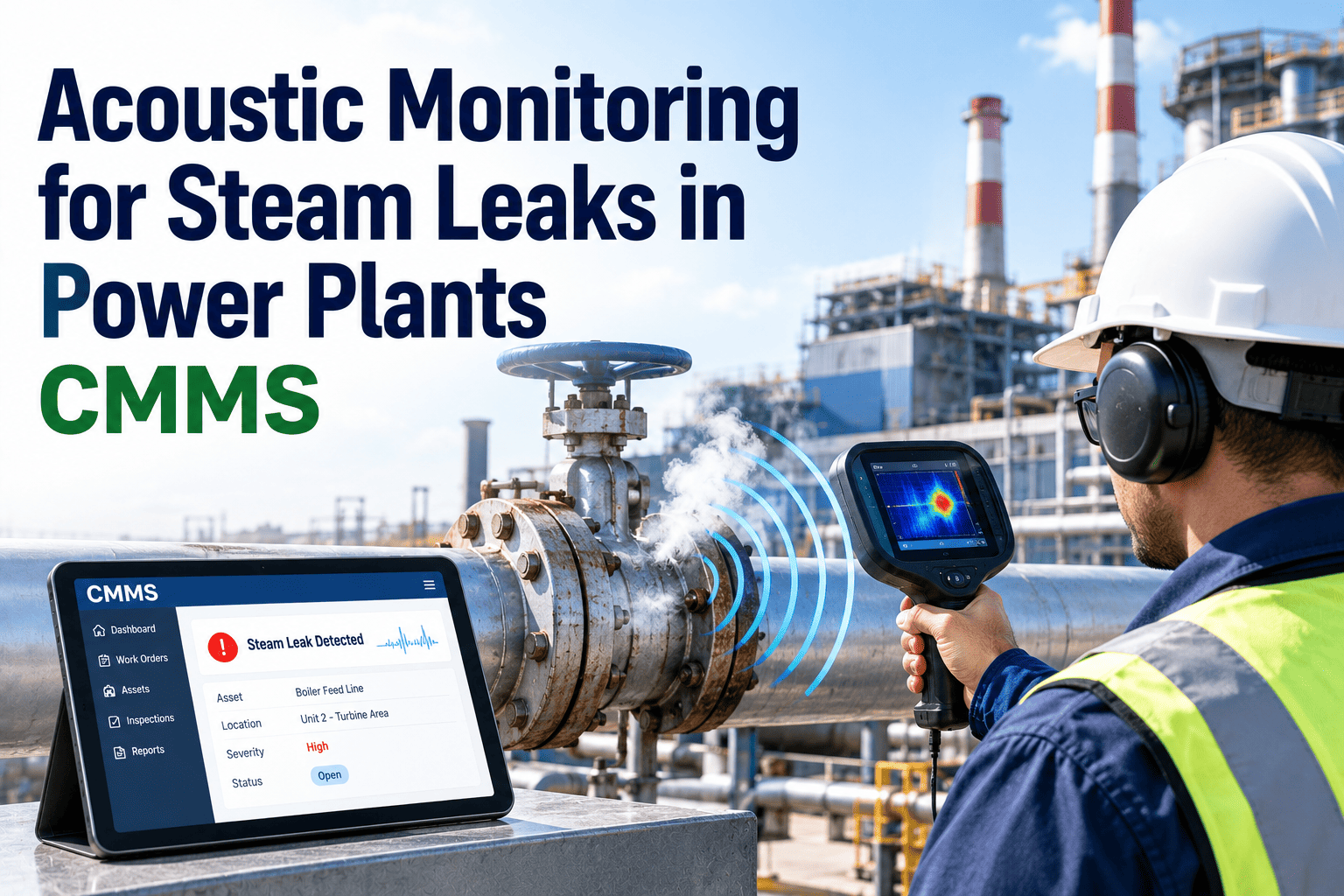
OxMaint accepts acoustic deviation alerts via API or manual log entry and creates maintenance work orders directly against the affected boiler asset record. The alert type, signal level, and timestamp are attached to the WO — giving technicians the diagnostic context before they enter the boiler room.
See the sensor-to-work-order workflow in a demo.
Can OxMaint track wall thickness measurement trends across multiple outages?
Each tube section can be registered as a measurement point within the boiler asset record. UT thickness readings from successive outages are stored with technician, date, and method — enabling thinning rate calculation and threshold-based replacement planning before structural failure occurs.
Register your boiler assets in OxMaint.
How does OxMaint support outage work package preparation for tube repairs?
OxMaint's work order system allows outage repair tasks to be planned and grouped into outage packages — scope, parts list, crew assignment, weld procedure reference, and inspection hold points are all documented against the asset record and accessible to the outage team on mobile devices before the outage begins.
What happens if water chemistry and acoustic signals conflict?
OxMaint logs both signals independently against the asset record. When chemistry and acoustic data are reviewed together through the asset's condition history, maintenance engineers can assess whether the two signals correlate to a common leak signature or represent separate issues — enabling confident planning decisions rather than guesswork.
Can OxMaint generate boiler tube failure history reports for regulatory submissions?
Every inspection result, WO completion, repair record, and test outcome is timestamped and stored against the boiler asset — extractable as a formatted evidence package for regulatory audits, insurance reviews, or OEM warranty assessments without manual compilation.
Start building your boiler maintenance history in OxMaint.
Boiler Tube Failures Do Not Arrive Without Warning — They Arrive Without a System to Catch the Signals
OxMaint gives your boiler maintenance team structured inspection workflows, chemistry excursion linkage, acoustic log capture, wall thickness trending, and outage work packages — so your team plans the repair before the rupture forces it.