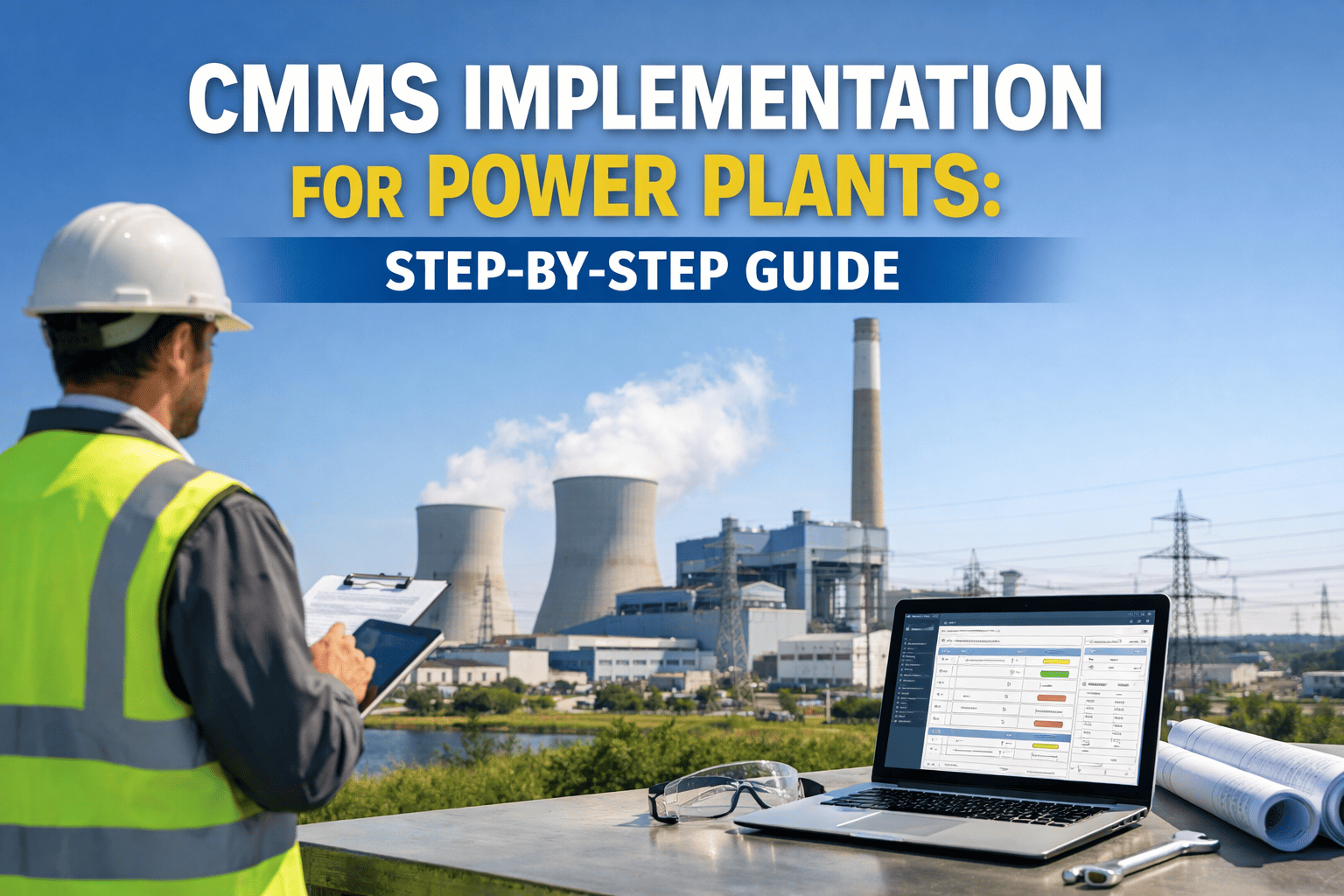
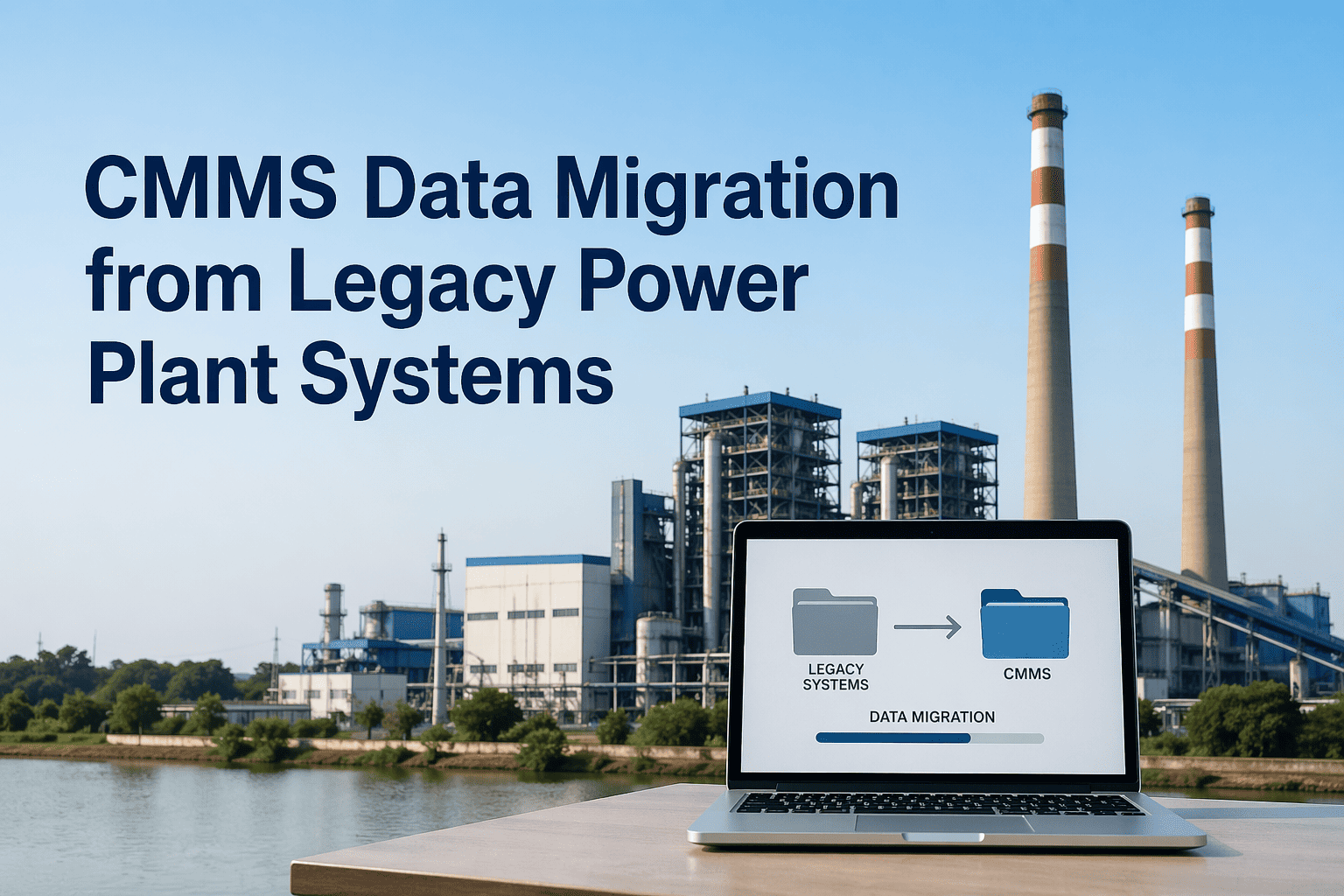
Power plant operators lose 12-18% of maintenance capacity due to fragmented workflows and unplanned downtime. Implementing a CMMS (Computerized Maintenance Management System) in a live power generation facility requires surgical precision — one misstep can disrupt critical assets. A Midwest coal-fired plant reduced work order backlog by 73% within 8 weeks of a structured CMMS rollout, while another avoided $2.1M in lost revenue by migrating asset data without halting turbines. OxMaint's CMMS implementation module bridges the gap between legacy paper logs and digital reliability. Book a 15‑min demo to see how power plants achieve zero-downtime deployments.
41%
less emergency repair time
$2.1M
saved by smooth asset migration
Critical path
7‑Phase CMMS Rollout for Power Plants (No Production Loss)
Unlike generic software rollouts, power plant CMMS implementation must align with outage windows, safety systems, and real-time asset hierarchy. Follow this phased method validated by 40+ utility plants.
Extract equipment data from existing logs, spreadsheets, and historian systems. Tag each turbine, boiler, pump, and control system with criticality scores (A/B/C). Migrate only clean, structured data into CMMS to avoid garbage-in-garbage-out.
Link spare parts, vendor manuals, and preventive maintenance frequencies to each asset. Use OEM recommendations and plant history to set dynamic PM calendars — filter changes, lubrication rounds, vibration analysis.
Run CMMS alongside legacy system for 2–4 weeks. Compare work order completion rates, spare part consumption, and technician feedback. Validate data integrity without halting operations.
Train operators, maintenance leads, and planners separately. Create power-plant specific workflows — lockout/tagout integration, permit to work, and shift handover logs. Empower superusers from each shift.
Schedule final cutover during a minor maintenance window (weekend or planned turbine wash). Pre-load all open work orders, safety certificates, and inspection checklists. Ensure offline backup for critical systems.
Dedicated on-site or remote support for 14 days. Monitor user adoption, backlog clearance, and report accuracy. Fine‑tune automated workflows based on real plant data.
Use CMMS dashboards to track MTBF, MTTR, and compliance scores. Schedule quarterly layout reviews and data audits to keep asset health at peak.
Ready to digitize your plant maintenance?
Map every generator, conveyor, and scrubber in one system — reduce unplanned outages and simplify compliance.
Team readiness
Who does what? Role-based CMMS adoption plan
Successful implementation depends on clear ownership. Define responsibilities before go-live to accelerate adoption and sustain data quality.
Plant Manager
Sponsor the rollout, allocate resources, review KPIs (MTBF/MTTR), and drive cultural shift toward data-driven maintenance.
Maintenance Planner
Build PM schedules, manage BOM accuracy, coordinate work order backlog, and optimize spare parts inventory levels.
Reliability Engineer
Validate asset criticality, configure condition monitoring triggers, analyze failure codes, and lead RCA workflows.
Shift Supervisors
Enforce digital checklists, approve urgent work orders, and ensure shift handover data is complete and accurate.
Pre-deployment checklist
30-day readiness assessment for power plants
Use this checklist to validate your plant's preparedness before CMMS cutover. Each completed item reduces implementation risk.
Complete asset hierarchy with functional locations (Unit → System → Subsystem → Tag)
Define criticality matrix for all production and safety-related equipment
Identify top 50 spare parts with min/max reorder points and vendors
Document standard operating procedures for each preventive task
Assign CMMS champions per shift and schedule hands-on training sessions
Plan integration points with DCS, historian, or ERP systems
Prepare fallback protocol in case of post-cutover issues
Real-world results
What changes after power plant CMMS deployment?
-62%
material kitting delays
Gas-fired plant reduced waiting time for spares by centralizing inventory with CMMS trigger points.
+48%
PM compliance rate
Automated scheduling & digital sign-offs improved adherence to regulatory maintenance windows.
3.2hrs
saved daily in report generation
Supervisors replaced manual logs with live dashboards and automatic shift reports.
89%
technician adoption after 30 days
Mobile-friendly checklists and offline mode increased field crew buy-in.
Asset migration & pitfalls
Avoid these 5 CMMS implementation traps in power plants
Duplicated asset tags, missing criticality, obsolete BOMs cause chaos. Cleanse before import — use hierarchy templates (Plant → System → Subsystem → Asset).
Resistance kills adoption. Start early with “CMMS champions” from each shift and gamify data entry accuracy.
Avoid complex scripted workflows initially. Use standard PM, WO, inventory modules first, then adapt after 3 months of usage.
Power plants have dead zones near boilers. Choose CMMS that supports offline work order completion and sync when back online.
Loss of condition monitoring data silos performance gains. Plan API or middleware for OSIsoft, SAP, or Maximo bridge.
| Implementation phase | Timeline (weeks) | Key power plant considerations |
| Asset data & hierarchy |
2–3 |
Tag turbines, breakers, HRSG, and balance-of-plant equipment with criticality codes |
| PM & safety procedure mapping |
1–2 |
Integrate LOTO, switching orders, and NERC compliance tasks |
| Parallel testing |
2–4 |
Use a sandbox environment with recent work orders to compare accuracy |
| Training & dry runs |
1–2 |
Hands-on simulation for outage planning and emergency work order flow |
| Cutover & hypercare |
1–2 |
Go-live during weekend outage; daily standups for first 10 days |
Answers from field experts
Frequently asked questions about CMMS deployment
How long does CMMS implementation take in a combined-cycle power plant?
Can we run CMMS without stopping plant operations?
Yes — parallel run method keeps legacy system active while validating new workflows. Only final cutover is planned during brief maintenance window. No production loss.
What training is required for power plant technicians?
Role-based: operators focus on safety checklists & rounds; mechanics on WO closure, parts requests; supervisors on scheduling & KPI dashboards. Total 4–6 hours each.
How do we migrate old paper work orders into CMMS?
Prioritize open WOs and high-value assets. Digitize only last 12 months of history for trend analysis, others store as PDF references.
Demo bulk data migration.
Does CMMS integrate with vibration monitoring or DCS?
Modern CMMS supports APIs to pull condition monitoring alerts and auto-create work orders when thresholds exceed. Ensure your vendor provides open architecture.
Move from reactive to predictive — the right CMMS foundation
Join 230+ energy facilities that achieved 99% asset data accuracy and 35% faster maintenance turns with structured implementation.