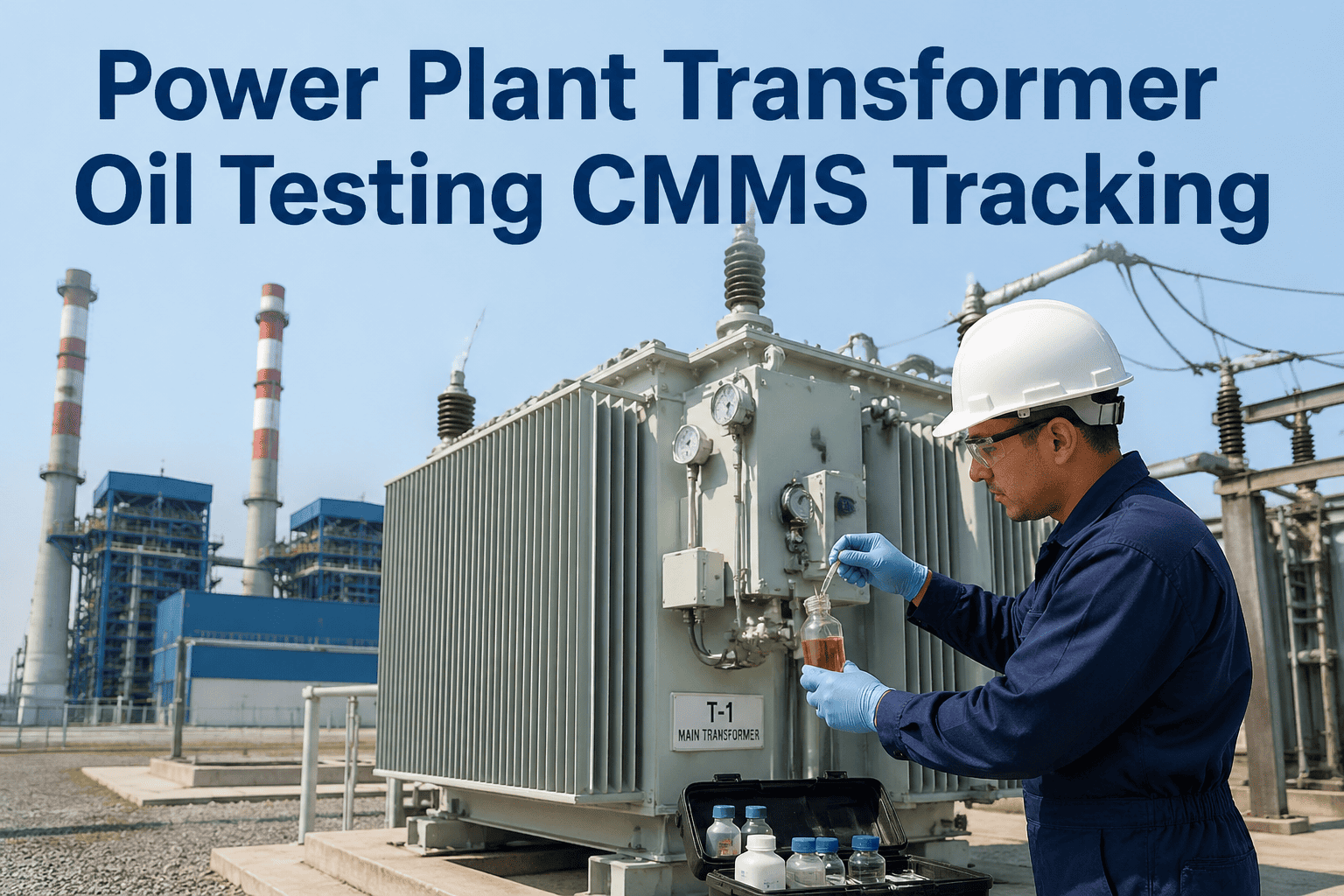
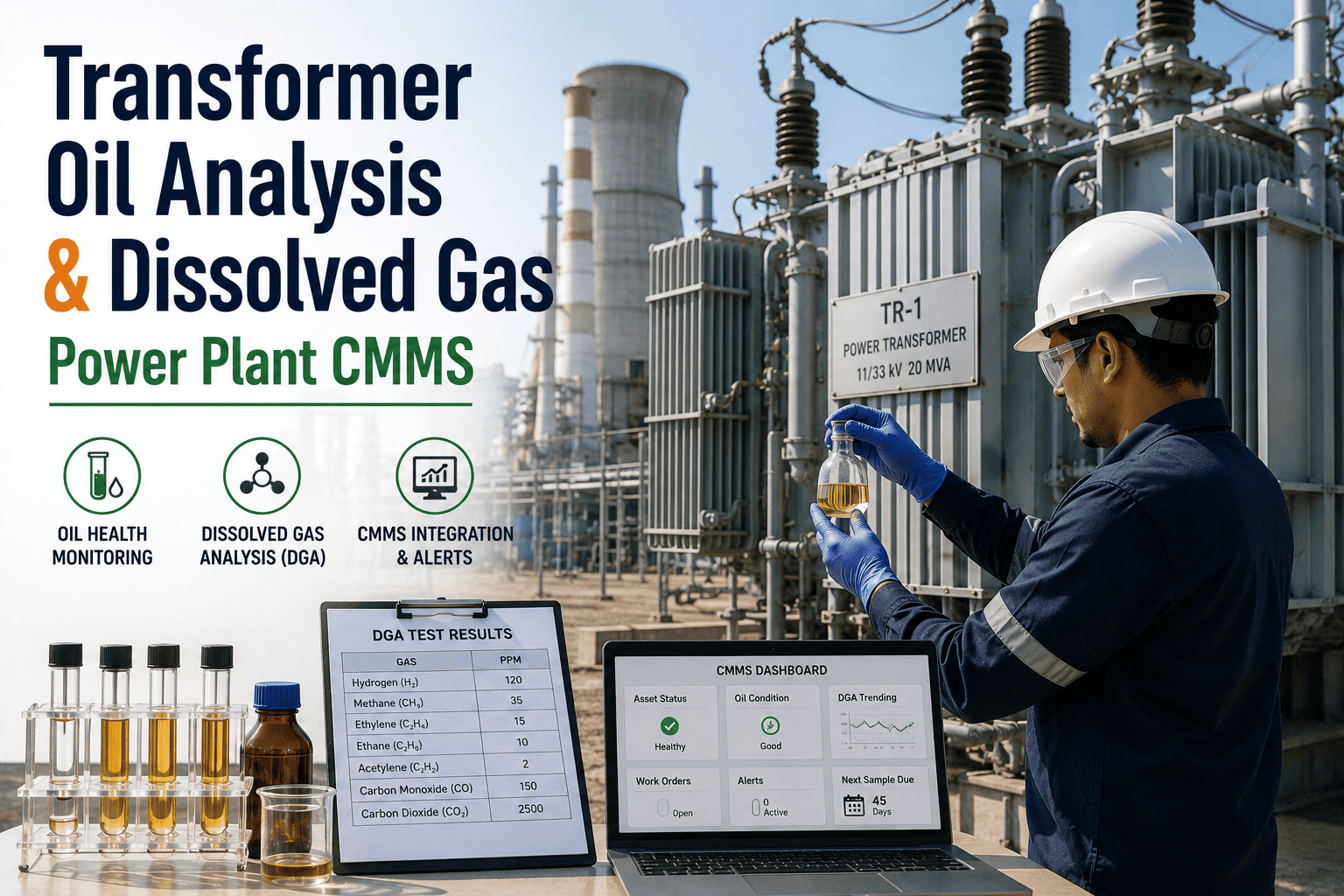
A 240 MVA generator transformer at a thermal station goes silent at 03:14 in the morning. The Buchholz relay has tripped. By the time the maintenance team arrives, the unit is already off the grid, and the question is no longer whether something is wrong inside the tank — it is how long the warning signs sat in oil reports nobody had time to trend. IEEE estimates the cost of a single large transformer failure at $2–10 million when equipment, downtime, and insurance deductibles are combined. The gas signature that would have called this out months earlier almost always exists in the lab reports already. What is missing is a system that puts every DGA, BDV, moisture, and acidity reading against the asset they describe, and watches the trend automatically. Oxmaint’s transformer oil testing module is built for exactly this gap: every oil report imported, every gas trended, every filtration job tracked — one record per transformer, across the full fleet.
Case Study · Transformer Oil Testing & Tracking
From Disconnected Lab Reports to a Single Asset Health Record — for Every Transformer in the Plant
DGA imports, dielectric strength trending, moisture tracking, and oil filtration scheduling — all consolidated in one CMMS asset record per transformer. This is how a 1,500 MW thermal fleet stopped losing the trend between sample dates.
$2–10M
Cost of a single large transformer failure (IEEE estimate)
7
Key fault gases tracked under IEEE C57.104
90/95
Percentile thresholds defined in C57.104-2019
12–24
Months of trend data needed for rate analysis
Before The Change
The State of Oil Testing Across Most Plants
Talk to any reliability engineer at a power station and the same picture emerges. The lab is doing its job. The tests are getting done. The data is just not where it needs to be when a decision has to be made.
01
Lab reports live in email inboxes
DGA, BDV, and moisture results arrive as PDFs from the testing lab. Engineers print them, file them, and forward to whoever happened to ask. Three months later, the trend that mattered is buried in a thread.
02
Trends require manual spreadsheet work
Comparing this quarter’s acetylene reading to the last six samples means somebody has to type values into Excel. The first time pressure hits the schedule, that step gets skipped — and the rate-of-change calculation goes with it.
03
Filtration history is anecdotal
When was this transformer last filtered? Which contractor did the work? What was the dielectric reading before and after? Three different people give three different answers, and the work order — if one was raised — is in a different system.
04
Severity calls happen too late
By the time someone notices that hydrogen has crossed the 90th percentile, the gas has already been climbing for two sample cycles. The conservative response — weekly resampling, load reduction, planned offline inspection — gets activated weeks late.
The Diagnostic Foundation
What Each Key Gas Tells You
DGA works because every fault mode inside an oil-filled transformer produces its own gas signature. The IEEE C57.104 framework tracks seven gases — each pointing to a different internal condition.
H₂
Hydrogen
Partial discharge · corona · arcing
Levels above 100 ppm warrant investigation. The first gas to rise in most fault scenarios.
CH₄
Methane
Low-temperature thermal fault
Rising methane with ethane usually points to overheating below 300°C — loose connections, poor cooling.
C₂H₆
Ethane
Low-medium thermal fault
Tracks alongside methane on early-stage thermal degradation. The two together strengthen the diagnosis.
C₂H₄
Ethylene
High-temperature thermal fault
Indicates hot spots above 300°C. Rising ethylene with rising ethane ratio is a strong thermal signature.
C₂H₂
Acetylene
High-energy arcing
The most serious finding. Any acetylene above trace levels warrants weekly resampling and offline assessment.
CO
Carbon Monoxide
Cellulose insulation overheating
Specifically points to paper insulation degradation — not just oil. Long-term predictor of remaining life.
CO₂
Carbon Dioxide
Cellulose aging · paper degradation
Read with CO. The CO₂/CO ratio differentiates normal aging from active fault activity in the paper insulation.
O₂/N₂
Oxygen / Nitrogen
Sealing & breather status
Their ratio tells you whether the unit is sealed or free-breathing — which determines the threshold table to apply.
Built for IEEE C57.104 Workflows
Every Lab Report Lands on the Right Asset Record — Automatically
Stop emailing PDFs. Oxmaint pulls oil test data into the transformer’s record by serial number and tag. Trends are visible the moment the next sample is logged.
The Problem We Set Out to Fix
A 1,500 MW Thermal Fleet’s Oil Testing Pain Points
Fragmented Data
Lab results from three different testing partners arrived in three different formats — and got reconciled by hand each quarter. By the time the consolidated view existed, it was a snapshot of last quarter, not real-time decision support.
Missed Rate Alerts
IEEE C57.104-2019 builds severity assessment around delta and rate-of-change tables, not just absolute thresholds. Without automated trending, the rate calculations were not happening reliably between sample cycles.
Filtration Tracking Gaps
Oil filtration jobs were performed when contractors were available, not on a schedule tied to dielectric strength readings. Pre and post-filtration BDV values were sometimes recorded, sometimes not — making efficacy hard to prove.
No Cross-Unit Comparison
Transformers of similar age, rating, and duty across units could not be benchmarked against each other because the data did not sit in one structure. An outlier in one unit’s gas profile stayed invisible until it became a fault.
The Solution We Built
Transformer Oil Management Inside Oxmaint
Four capabilities, one asset record per transformer. Each one removes a step where data used to slip through the cracks.
A · Automated DGA Import
Lab CSV and PDF reports drop into the transformer’s record by tag number and sample date. The seven key gases populate the trend chart automatically. Each new sample triggers a rate-of-change calculation against the previous 3–6 readings — the multi-point analysis that IEEE C57.104-2019 calls out specifically.
Auto-import from lab partners by tag
Trend chart per gas, per asset
Delta & rate calculations between samples
90th and 95th percentile threshold flags
B · Dielectric Strength Trending
Breakdown voltage (BDV) readings are stored against the asset and trended. A sudden BDV drop — the kind that almost always traces back to moisture ingress or a leaking gasket — gets flagged in the dashboard before the next test cycle, not after. Pre and post-filtration values stay tied to the work order that produced them.
BDV trend per transformer
Sudden-drop alerts
Pre/post filtration values linked
Acidity & IFT logged together
C · Moisture Content Tracking
Karl Fischer titration values, water activity readings, and frequency domain spectroscopy results all attach to the asset. Moisture in oil reduces dielectric strength and accelerates paper aging — and silica gel breather inspections become work orders triggered automatically when moisture trends rise.
Karl Fischer ppm logged per sample
Breather inspection auto-triggered
Gasket leak flags routed to work orders
Moisture & BDV correlated on one chart
D · Filtration Schedule Management
Vacuum filtration, dehydration, and regeneration jobs are scheduled by condition — triggered when BDV, moisture, or particle count cross thresholds — not by an outdated annual calendar. Contractor records, vacuum levels achieved, and post-job certificates all attach to the asset for audit trail.
Condition-triggered work orders
Contractor & vendor records linked
Pre-job and post-job test attachments
Audit trail for insurance & regulators
Severity Framework
DGA Status Levels — What Each Tier Means
The Results
What Centralized Oil Testing Tracking Returned
100%
Of DGA, BDV, and moisture reports captured against the correct transformer asset within 24 hours of sampling
3×
Faster identification of rate-of-change anomalies versus the previous quarterly spreadsheet review process
0
Lab reports lost in email or filed against the wrong unit since centralized capture went live
100%
Of filtration jobs now have linked pre and post-job BDV readings — full efficacy audit trail
12–24mo
Continuous trend window now available per transformer for IEEE C57.104-2019 multi-point rate analysis
1
System where reliability engineers, planners, and outage managers see the same transformer health view
Common Questions
Transformer Oil Testing & CMMS — FAQ
Can Oxmaint import DGA results from any testing lab’s format?
Yes. Lab reports in CSV, PDF, and structured Excel formats are mapped on first import — subsequent reports from the same lab pull in automatically. The seven IEEE C57.104 key gases populate the trend chart per asset.
Book a demo to see lab integration on your fleet.
Does the system handle the IEEE C57.104-2019 90th and 95th percentile thresholds?
Yes. Thresholds are configurable per transformer based on age and breather type (sealed vs. free-breathing), as the standard requires. Status assessment uses both absolute concentration and multi-point rate analysis.
Start a free trial to load your fleet and apply C57.104 status logic immediately.
How is oil filtration scheduling handled differently from a calendar-based PM?
Filtration is condition-triggered — work orders generate when BDV, moisture, or particle count cross asset-specific thresholds. The previous filtration job’s pre and post readings stay attached, so efficacy is verifiable across the asset’s life.
Can the same record hold electrical tests like Tan Delta, SFRA, and OLTC results?
Yes. Beyond oil tests, electrical diagnostics — insulation resistance, Tan Delta, SFRA, turn ratio, OLTC function tests — all attach to the transformer record. The full asset health picture lives in one place.
Book a demo to see the consolidated view.
Does Oxmaint support multi-site transformer fleets across plants?
Yes. Transformers can be grouped by site, voltage class, criticality, and duty type. Cross-site benchmarking surfaces outliers — a unit whose gas profile diverges from peers of similar age and rating gets flagged automatically.
Protect The Most Expensive Asset On The Property
Bring Every Transformer Oil Test Into One Asset Record
A power transformer that fails costs millions. The data that would have called the failure out months earlier is almost always already in lab reports somewhere. Oxmaint puts those reports against the asset they describe — with trending, severity logic, and filtration management built in — so the warning gets seen while there is still time to act on it.