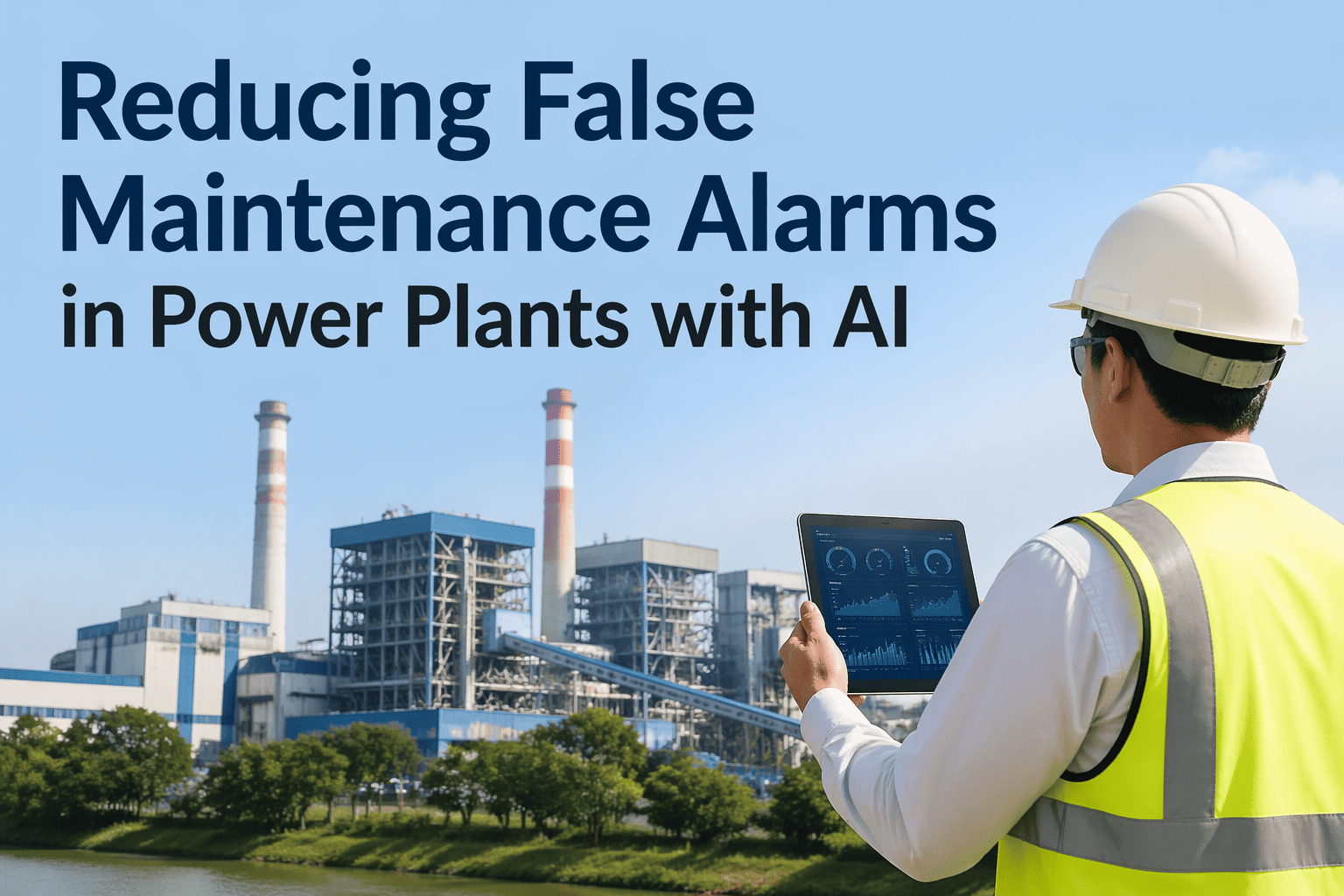
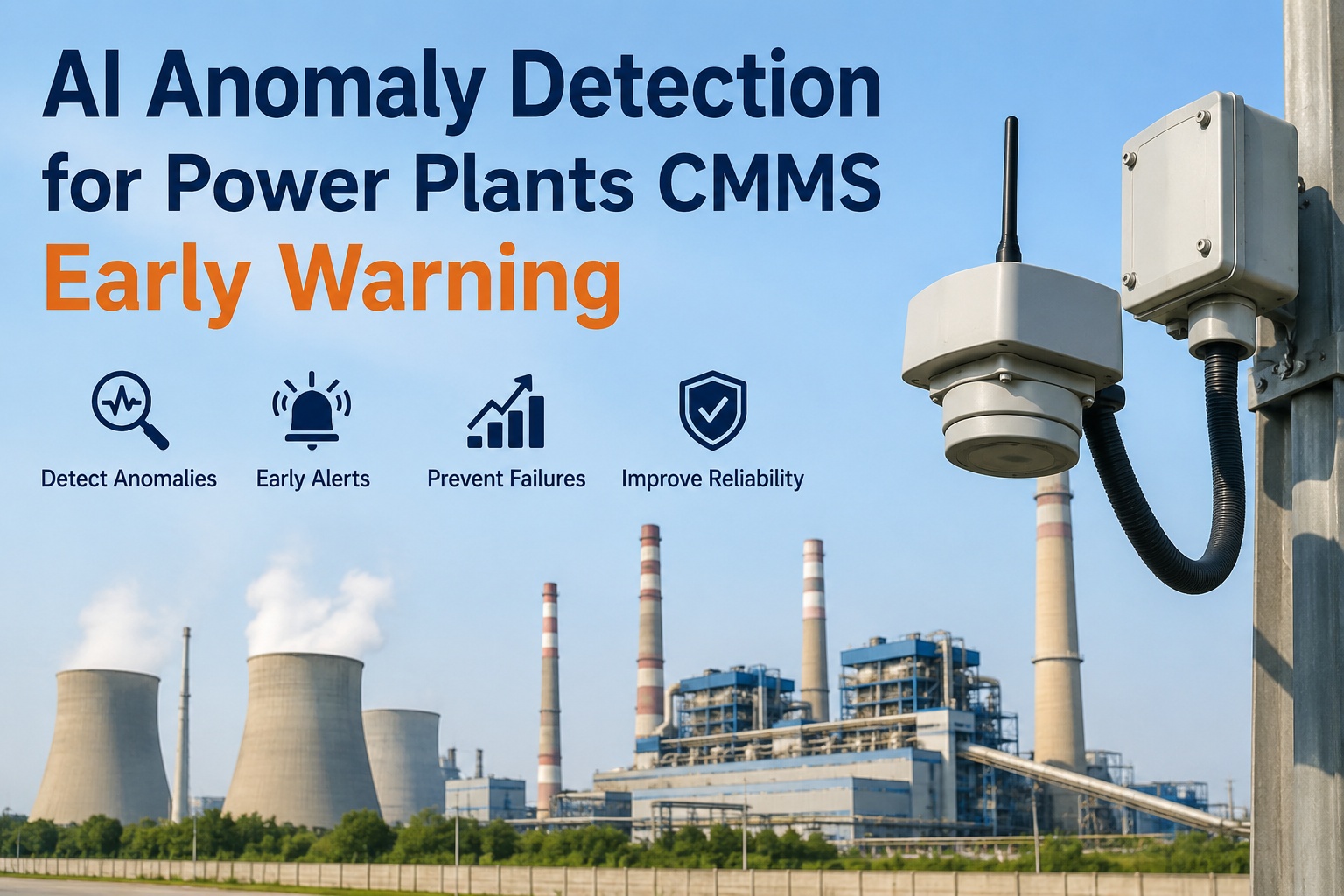
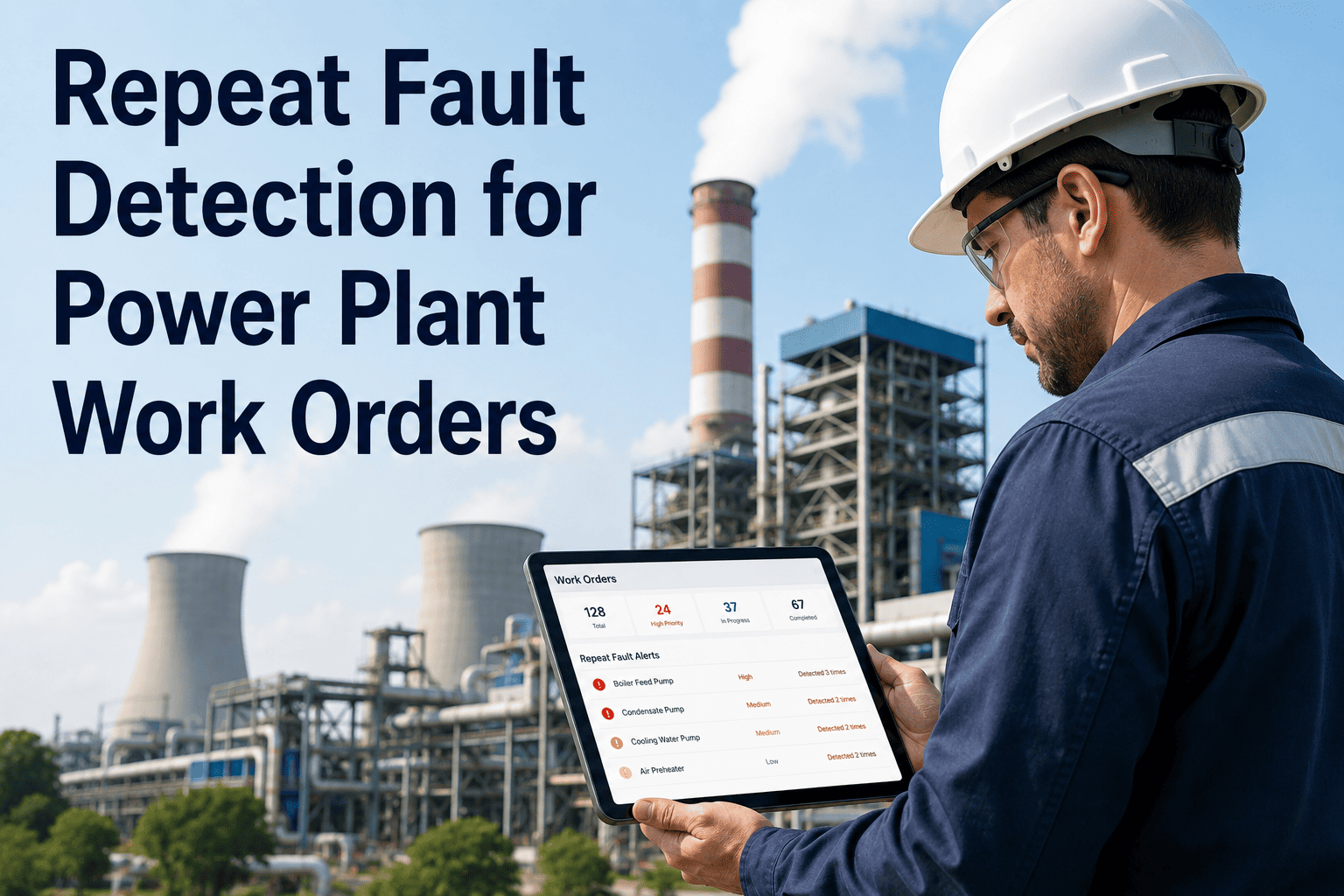
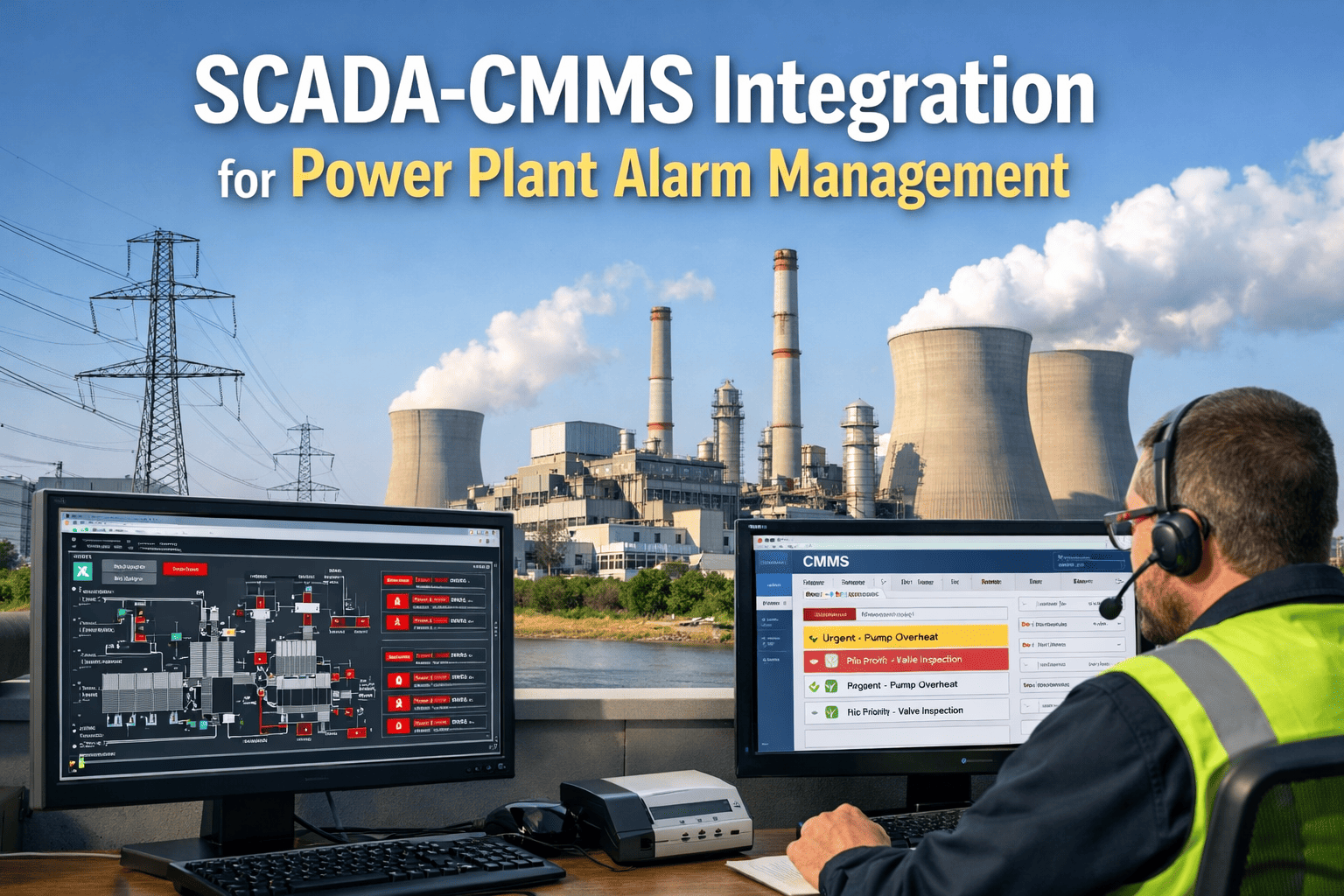
A modern power plant instrumented with thousands of sensors now fires off between 1,000 and 5,000 maintenance alarms every single day — and industry research shows that somewhere between 40 percent and over 90 percent of them are false positives caused by sensor drift, environmental noise, load-cycling artifacts, or calibration decay. Your maintenance team is not lazy when they start ignoring alerts. They are rational. After the tenth false alarm in a row, the eleventh one gets a cursory glance at best — and studies show the likelihood of acting on a repeat alert drops roughly 30 percent with every recurrence. That is how real failures slip through. The fix is not fewer sensors or louder alarms. The fix is AI that learns your plant's specific signal-versus-noise pattern and only escalates the alarms that deserve a work order. See how Oxmaint's AI alarm filtering turns noisy sensor feeds into high-trust maintenance actions in under 90 days.
The Cry-Wolf Problem
How Alarm Fatigue Actually Breaks a Power Plant Maintenance Operation
Alarm fatigue is not an abstract concept — it is a measurable, staged psychological process that ends with your team desensitized to real warnings. Understanding the cascade is the first step in designing AI filtering that actually disrupts it.
Stage 1
Alarm Flood Begins
Thousands of raw sensor alarms per day. No prioritization. Every alarm looks identical on the dashboard regardless of whether it is a transient spike or impending bearing failure.
↓
Stage 2
Technicians Investigate Everything
Early in the rollout, the team chases each alarm. They discover that 60 to 90 percent are false. Response time is high, technician hours are wasted, and nothing productive comes from the majority of dispatches.
↓
Stage 3
Desensitization Sets In
Research shows alert acceptance drops roughly 30 percent per repeat. After a few weeks, technicians start filtering mentally — glancing at alarms, assuming false, moving on. Response times lengthen without anyone announcing a policy change.
↓
Stage 4
Real Failures Slip Through
A genuine alarm — bearing vibration rising toward alarm threshold on a feedwater pump — looks exactly like the last 50 false positives. The team delays. The pump fails. A forced outage costs over $100,000 per hour. The investigation blames the sensor; the real cause was alarm fatigue.
The Data Behind The Noise
What The Research Actually Says About Alarm Volume
The numbers below come from peer-reviewed industrial studies and documented plant deployments. They are not marketing claims — they are the operational baseline most plants work within without realizing it.
40-90%
of sensor alarms in instrumented facilities turn out to be false positives caused by drift, noise, or calibration issues
95%
share of plant alarms that were low-priority in an STMicroelectronics study — only 4 percent triggered real action
100 of 5,000
alarms accounted for 70 percent of total alarm activity in the same study — a classic long-tail distribution
30% drop
in operator likelihood to act on each repeated alert — the mechanical signature of cry-wolf desensitization
60-80%
typical reduction in nuisance alarms achieved by mature AI-based alarm management systems
92.7%
precision rate reported in adaptive machine learning models for industrial anomaly detection
How AI Filters Differently
Why Threshold Rules Fail Where AI Models Succeed
Traditional alarm systems work on static thresholds — if vibration exceeds X, fire an alarm. That logic cannot tell the difference between a real bearing fault and a pump starting up under load. AI-based filtering is not a faster threshold check; it is a structurally different decision.
Static Threshold Logic
What most plants run today
Fixed numeric cutoff, set once at commissioning
Same threshold whether unit is at 40% or 100% load
No awareness of ambient temperature or operating context
Every threshold breach fires the same alarm
Sensor drift over time produces phantom alerts
Startup and transient events trigger the same way as failures
No learning — behaves the same on day 1 and year 5
AI-Based Alarm Filtering
What Oxmaint enables
Dynamic threshold, adjusted to operating context
Load-aware — learns normal vibration at each load band
Cross-sensor correlation — checks 3 to 5 related signals
Severity and confidence scoring on every alert
Detects drift and de-weights stale sensor readings
Ignores known transients like startup spikes automatically
Improves every week from technician feedback loop
Cut the Noise
Turn 5,000 Daily Alarms Into 50 High-Trust Work Orders
Oxmaint's AI alarm engine connects to your existing DCS, SCADA, and historian feeds and starts scoring alerts by severity and confidence from week one. Most plants see a 60 to 80 percent reduction in nuisance alarms and a sharp rise in technician trust within 90 days — without replacing a single sensor.
The AI Stack
The Four-Layer AI Filter That Sits Between Your Sensors and Your CMMS
A production-grade AI alarm filter is not one model — it is a stack of progressively smarter filters, each catching a different category of false positive. By the time an alert reaches the work order stage, it has survived four independent tests for legitimacy.
Input
Raw Sensor Stream
~5,000 daily events across plant
L1
Context Normalization
Each raw reading is contextualized against operating mode — startup, ramp, steady state, shutdown. Known-benign transients are suppressed automatically. Sensor drift is compensated using rolling baselines.
Filters ~40% of noise
L2
Cross-Signal Correlation
The model checks whether the alarm correlates with supporting signals. High bearing vibration without matching temperature rise or oil viscosity change is weighted down as likely spurious. Multi-sensor agreement elevates confidence.
Filters another ~25%
L3
Failure Signature Matching
Surviving alerts are compared against learned signatures of actual historical failures at your plant. Unique spectral patterns, rate of change, and time-to-failure estimates are generated for each candidate alarm.
Filters another ~10%
L4
Severity and Confidence Scoring
Each remaining alert is assigned a severity tier (advisory, warning, critical) and a confidence score (0-100%). The CMMS routes work orders based on the combination — critical plus high confidence goes immediately; advisory plus low confidence logs for review.
Output: ~50 scored alerts
Output
CMMS Work Orders
High-trust, actionable, prioritized
The Feedback Loop
Why AI Filtering Gets Smarter Every Week — And What Your Team Has To Do
The AI is not static. Every time a technician acts on an alert and records the outcome — confirmed fault, false alarm, or inconclusive — that label feeds back into the model. Over 8 to 12 weeks of disciplined closure logging, false positive rates typically drop by another 30 to 50 percent on top of the initial filtering.
1
AI Flags Alert
Alert is scored and auto-routed to the CMMS with severity tier, confidence level, probable fault type, and recommended inspection scope.
2
Technician Responds
Craft visits the asset, performs inspection, and records the outcome on the work order closure — confirmed fault, false alarm, inconclusive, or deferred.
3
Model Re-learns
Outcome feeds back into the model weights. Signatures associated with confirmed false alarms get de-prioritized. Signatures that predicted real faults gain weight.
4
Precision Improves
Month by month, true positive rate rises, false positives drop, and technician trust increases. The alarm system transitions from "noise channel" to "decision engine".
Measured Outcomes
What Plants Actually Report After 6 Months of AI Alarm Filtering
The outcomes below are drawn from published case studies, peer-reviewed deployment data, and internal reports across industrial facilities that have run AI-based alarm management for at least six months.
| Metric |
Before AI Filter |
After 6 Months |
Typical Delta |
| Daily alarm volume per unit |
2,000 - 5,000 |
300 - 900 |
-75% to -85% |
| False positive rate |
60 - 90% |
10 - 25% |
-65 to -75 pts |
| Median response time to critical alert |
4 - 12 hours |
20 - 90 minutes |
-70% to -85% |
| Work orders generated from alarms |
All or nothing |
Prioritized, scored |
Quality shift |
| Missed genuine failures |
2 - 6 per quarter |
0 - 1 per quarter |
Near-zero |
| Technician hours on false dispatches |
30 - 45% of shift |
5 - 10% of shift |
-70% to -80% |
| Forced outage rate (EFOR) |
Baseline |
-35% to -45% |
Material drop |
Implementation Reality
What Actually Matters During The First 90 Days of Rollout
The biggest reason AI alarm filtering projects underperform is not the technology — it is the rollout discipline. These five factors separate plants that hit the 75 percent alarm reduction target from the ones that plateau at 20 percent.
Clean Historical Failure Codes
AI learns from labeled outcomes. Plants that invest 2 to 3 weeks standardizing historical CMMS failure codes before go-live see anomaly detection accuracy 40 percent higher in the first quarter.
Start Narrow, Not Plant-Wide
Roll out on 3 to 5 Category A assets first. Prove the value on familiar equipment. Expand only after the initial cohort is running at target precision. Plant-wide day-one rollouts almost always stall.
Mandatory Outcome Logging
Every work order closure must record whether the alarm was a real fault, false alarm, or inconclusive. Without this label, the model cannot learn. This is a cultural change, not a software setting.
Baseline Before Tuning
Run the AI in shadow mode for 4 to 6 weeks before turning on auto-routing. Capture what it would have flagged, compare against reality, and tune thresholds. Live tuning on day one creates noise.
Executive Dashboard From Day One
Leadership needs weekly visibility on alarm volume, false positive rate, and response time — otherwise the program loses political air cover the first time something unexpected happens.
Technician-Facing Explanations
Every AI alert should include a plain-language reason: "bearing vibration rising 20 percent faster than 30-day baseline at current load." Black-box alerts erode trust; explained alerts build it.
Frequently Asked Questions
Common Questions About AI Alarm Reduction in Power Plants
Do we need new sensors to deploy AI alarm filtering?
No. AI filtering works on the existing sensor feeds already flowing into your DCS, SCADA, or historian. New sensors only come in later if coverage gaps exist on Category A assets.
Book a scoping call to see what existing data Oxmaint can use immediately.
How long before we see a meaningful drop in false alarms?
Most plants see a 30 to 50 percent false positive reduction within the first 90 days after shadow-mode baseline. Reaching the mature 75 to 85 percent reduction typically takes 6 months of disciplined outcome logging.
Start a free Oxmaint trial to benchmark on your own data.
What happens if the AI misses a real failure?
AI filtering uses confidence-weighted routing, not hard suppression. Low-confidence alerts still log for review rather than disappear. The goal is not to ignore signals but to rank them — so genuine failures always surface, even if initially scored below critical.
How is this different from standard alarm rationalization per ISA 18.2?
ISA 18.2 rationalization is a one-time static audit that sets better thresholds. AI filtering is a continuous dynamic layer on top — it learns, adapts to operating context, and improves as new failure data accumulates. The two are complementary.
Does the model need to be retrained every time we commission new equipment?
New assets enter shadow mode for 4 to 6 weeks while the model builds a baseline. Full AI filtering activates once the signature is established. No full retraining is required — Oxmaint handles this as an automated onboarding step per asset.
Can we keep our existing alarm management system and add AI filtering on top?
Yes. Oxmaint integrates with existing DCS and SCADA alarm outputs, adds the AI scoring layer, and routes only surviving alerts into the CMMS work order stream. Your current system continues to operate for control-room needs.
Book a demo to see the integration pattern.
Stop Chasing Phantom Alerts
Give Your Maintenance Team Alarms They Can Trust
Oxmaint combines context-aware alarm scoring, automatic work order routing, and a continuous learning loop into one CMMS platform — so your technicians spend their shift on real failures, not phantom alerts. Deployable against your existing sensor infrastructure with no capital spend. First measurable alarm reduction in under 90 days.