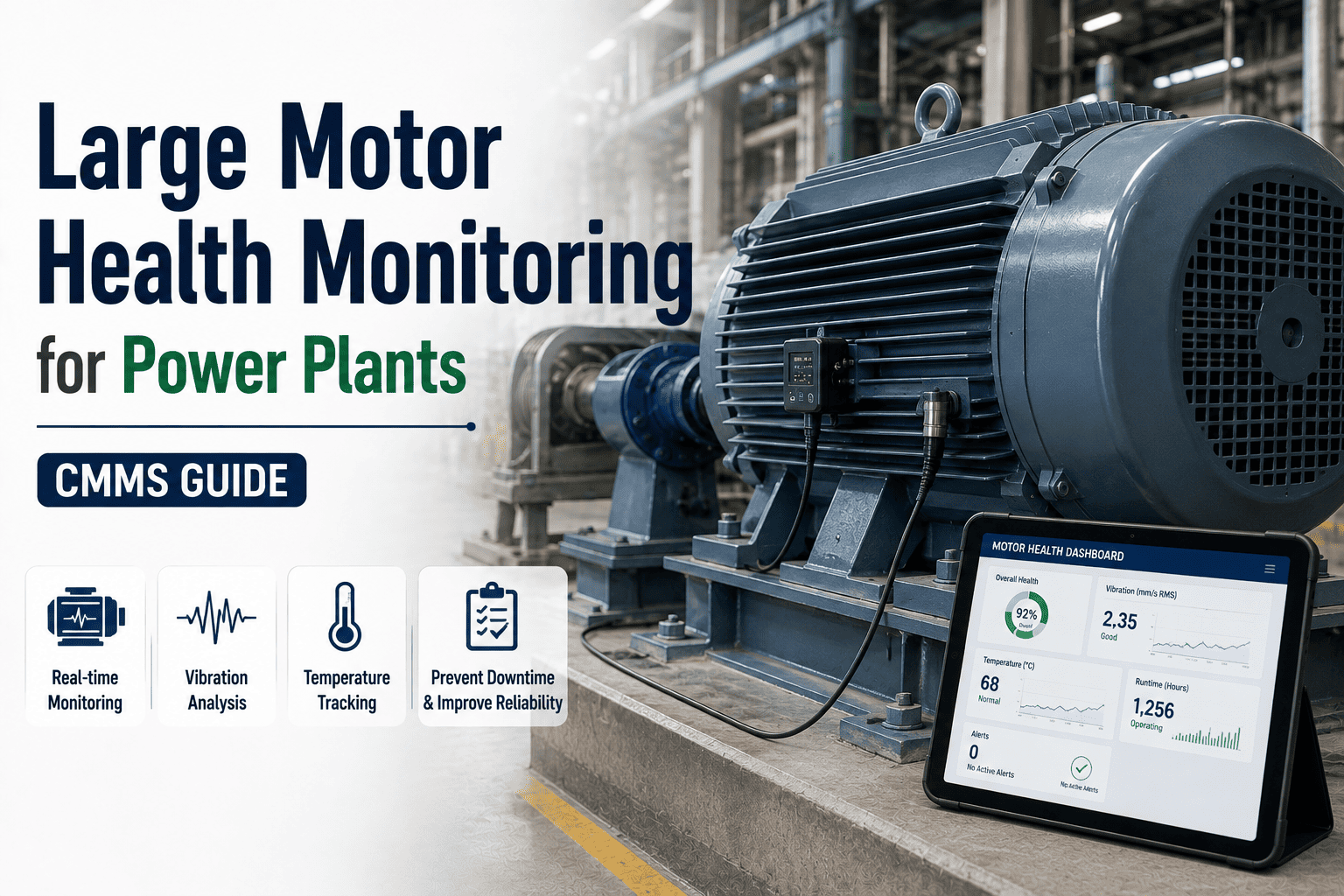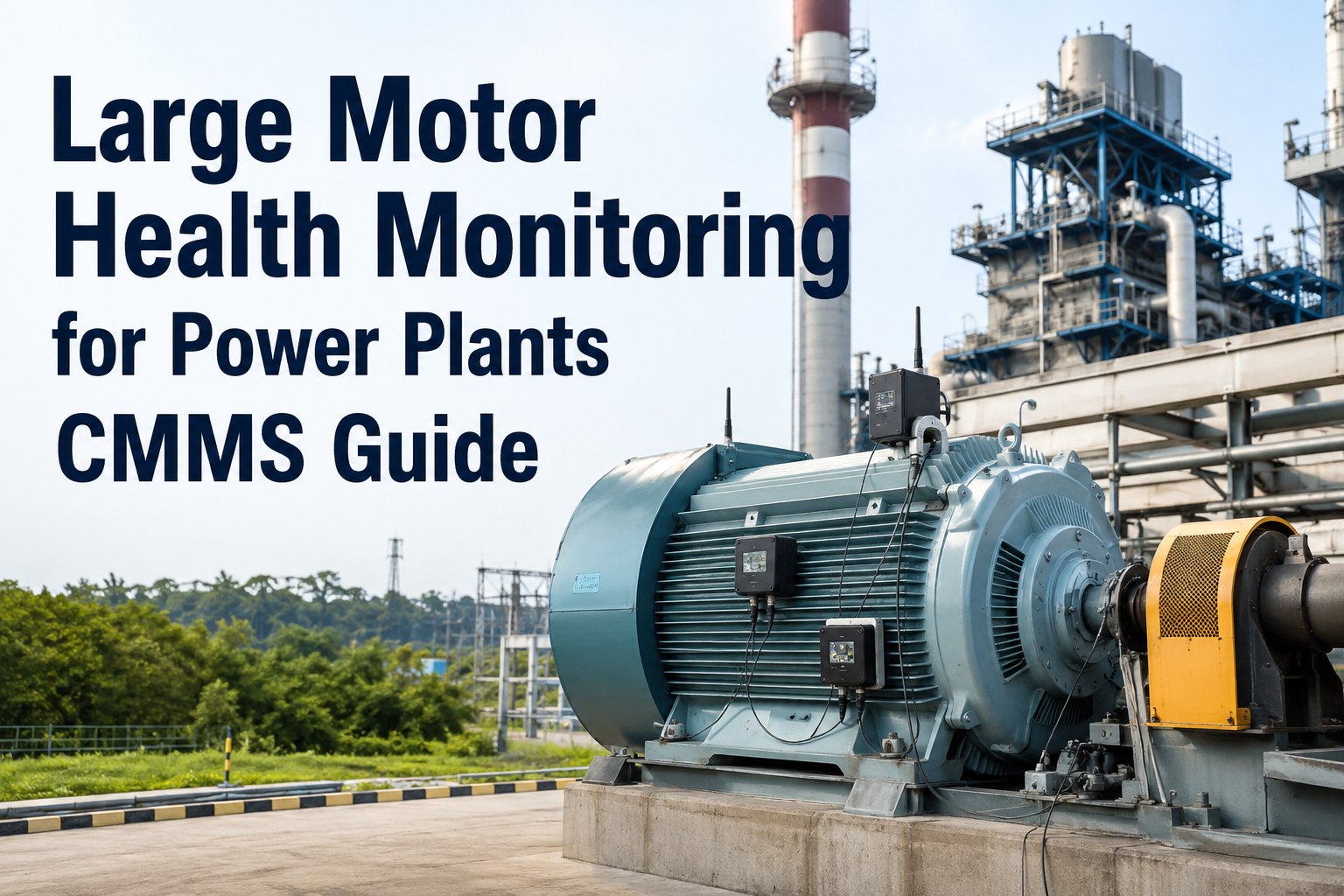
A 1,200 MW thermal power station can have over 800 electric motors in service at any given moment — boiler feed pumps, induced draft fans, cooling water pumps, coal mill drives, condensate extraction pumps, ash handling motors. Bearings cause 41–51% of all motor failures. Winding insulation breakdown causes another 30–37%. And the cost of a single unplanned trip on a critical 4kV motor can run anywhere from $15,000 to over $100,000 in lost generation and emergency repair. The problem is rarely a lack of knowledge about what to test — plants run megger tests, vibration routes, and grease schedules every year. The problem is that the data lives in disconnected spreadsheets, paper logbooks, and individual technicians’ heads, so trends get missed until the failure has already started. Oxmaint’s motor management module consolidates rewind history, IR trending, lubrication schedules, and MCSA findings into one asset record per motor — so the warning signs that already exist in your data actually get acted on.
Motor Reliability Software That Catches Failures Before They Trip the Unit
Track every motor across your plant — rewind records, insulation resistance trends, bearing lubrication intervals, and MCSA findings — inside one CMMS asset record per machine. Built for plants running hundreds of LV and MV motors across multiple units.
Where Plant Motors Actually Fail — And Why Spreadsheets Miss It
EASA and IEEE failure surveys have produced a remarkably consistent picture across decades. The failure modes are predictable. The early warning signs already exist in routine plant data. What’s missing is a system that connects them.
Stop Losing the Trend in Disconnected Spreadsheets
Every megger test, vibration reading, grease entry, and rewind goes into the motor’s asset record in Oxmaint. The trend is visible the moment it starts — not the morning after the trip.
What Power Plant Motor Management Looks Like in Oxmaint
Four data streams that already exist somewhere in your plant — brought together against the asset they describe.
A motor that has been rewound twice has a different reliability curve than a virgin motor — but the rewind shop ticket usually lives in a folder somewhere, not against the asset. Oxmaint stores the full rewind history per serial number: shop, date, work performed, post-repair test results, warranty, and rewind count. The next technician who pulls up that motor sees its full repair lineage in one place.
A new motor reads above 1,000 megohms. The number that matters is not today’s reading — it is the slope. A motor declining from 800 to 400 to 150 megohms over three years is failing, even if 150 is still “passing.” Oxmaint plots IR per motor over time, alongside polarization index and dielectric absorption ratio, and flags trend-based degradation before the absolute value crosses any threshold.
Different motor frame sizes, bearing types, and duty cycles need different grease intervals and different grease quantities. A 200 HP TEFC running 24/7 is not the same as a 50 HP fan motor running intermittently. Oxmaint generates per-motor lubrication work orders triggered by runtime hours or calendar — whichever comes first — with the correct grease type and shot count specified per asset, so technicians don’t over-grease.
Motor Current Signature Analysis catches rotor bar defects, eccentricity, and bearing-related faults 60–120 days before vibration analysis sees them — but only if the findings actually reach the planner. Oxmaint accepts MCSA reports, vibration route data, and IR thermography findings into the motor record, so the planner who is scheduling the next outage sees every condition flag in one place.
Power Plant Motor PM Intervals — What Goes Into the CMMS
Critical 4kV motors and standby auxiliaries do not need the same PM frequency. Below is a working baseline for plant motor management — configurable per criticality class in Oxmaint.
| PM Task | Critical (4kV / BFP / ID Fan) | Important (CW / CEP / Mills) | Standard (Aux / LT) | CMMS Trigger |
|---|---|---|---|---|
| Visual & thermal walkdown | Daily / shift | Daily | Weekly | Operator route |
| Vibration analysis & trending | Monthly | Quarterly | Semi-annual | Calendar PM |
| Grease replenishment | Per OEM (runtime hrs) | Per OEM (runtime hrs) | Per OEM (runtime hrs) | Hours-based |
| Insulation resistance test (megger) | Quarterly | Semi-annual | Annual | Calendar PM |
| Polarization Index test | Semi-annual | Annual | On condition | Calendar PM |
| MCSA & current signature scan | Quarterly | Semi-annual | Annual | Calendar PM |
| Alignment check (laser) | Annual or after work | Annual or after work | After any work | Calendar + post-job |
| Full overhaul / inspection | Major outage cycle | Major outage cycle | On condition | Outage planner |
| Voltage unbalance & supply check | Quarterly | Semi-annual | Annual | Calendar PM |
How a Motor Issue Moves Through Oxmaint
What Structured Motor Management Returns
Power Plant Motor Management — FAQ
Can Oxmaint handle motors of different voltage classes — LT, MV, and 4kV — in one system?
How does Oxmaint trend insulation resistance over time?
Does the lubrication module account for different grease types and quantities per motor?
Can MCSA reports from third-party analyzers be linked to the motor record?
How does this support outage planning for hundreds of motors?
Bring Every Motor Reading Into One Asset Record
Your plant already generates the data needed to predict 60–70% of motor failures before they happen. Oxmaint is what connects rewind tickets, megger logs, grease cards, and MCSA reports against the motor they describe — so the trend is visible while there is still time to act on it.