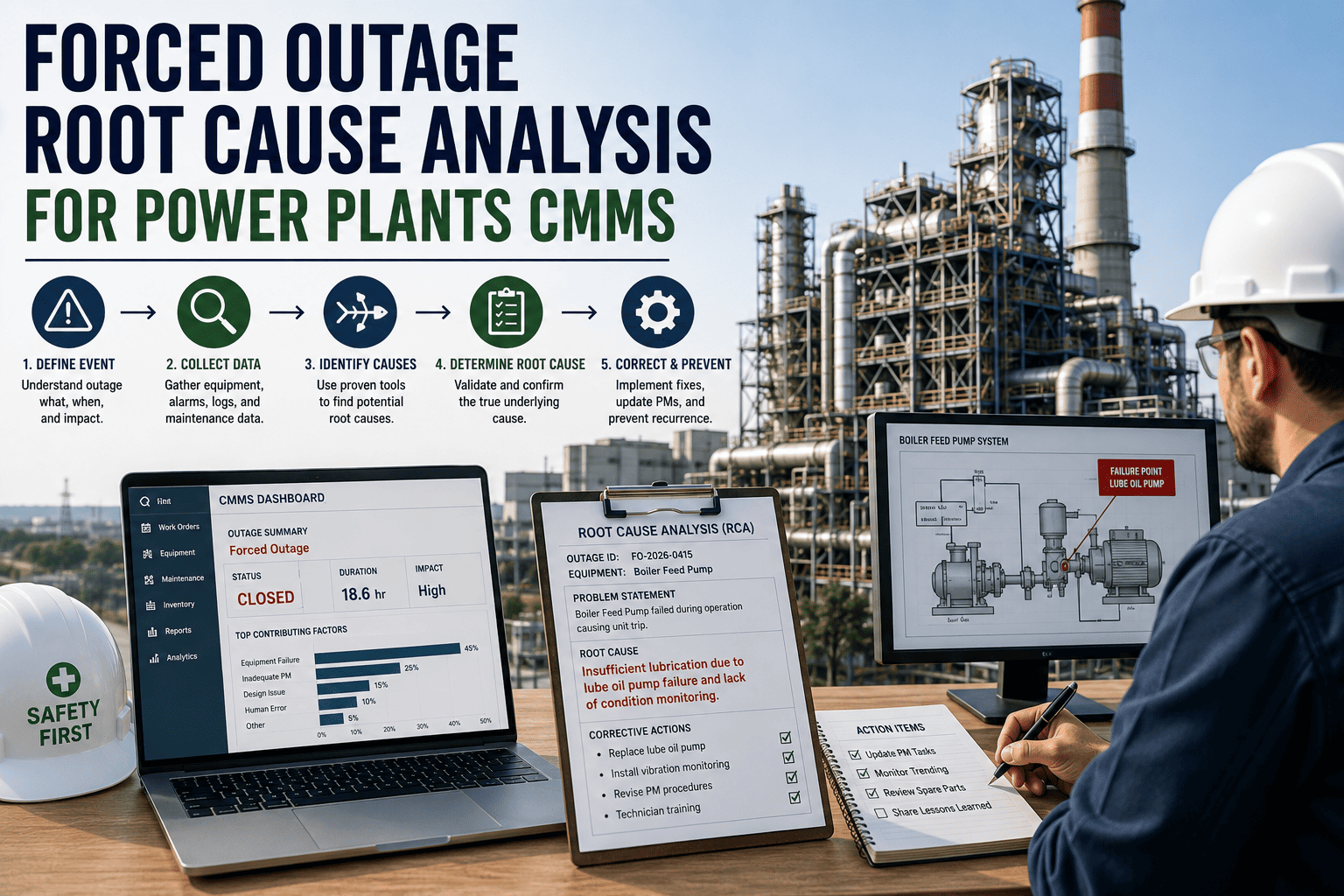
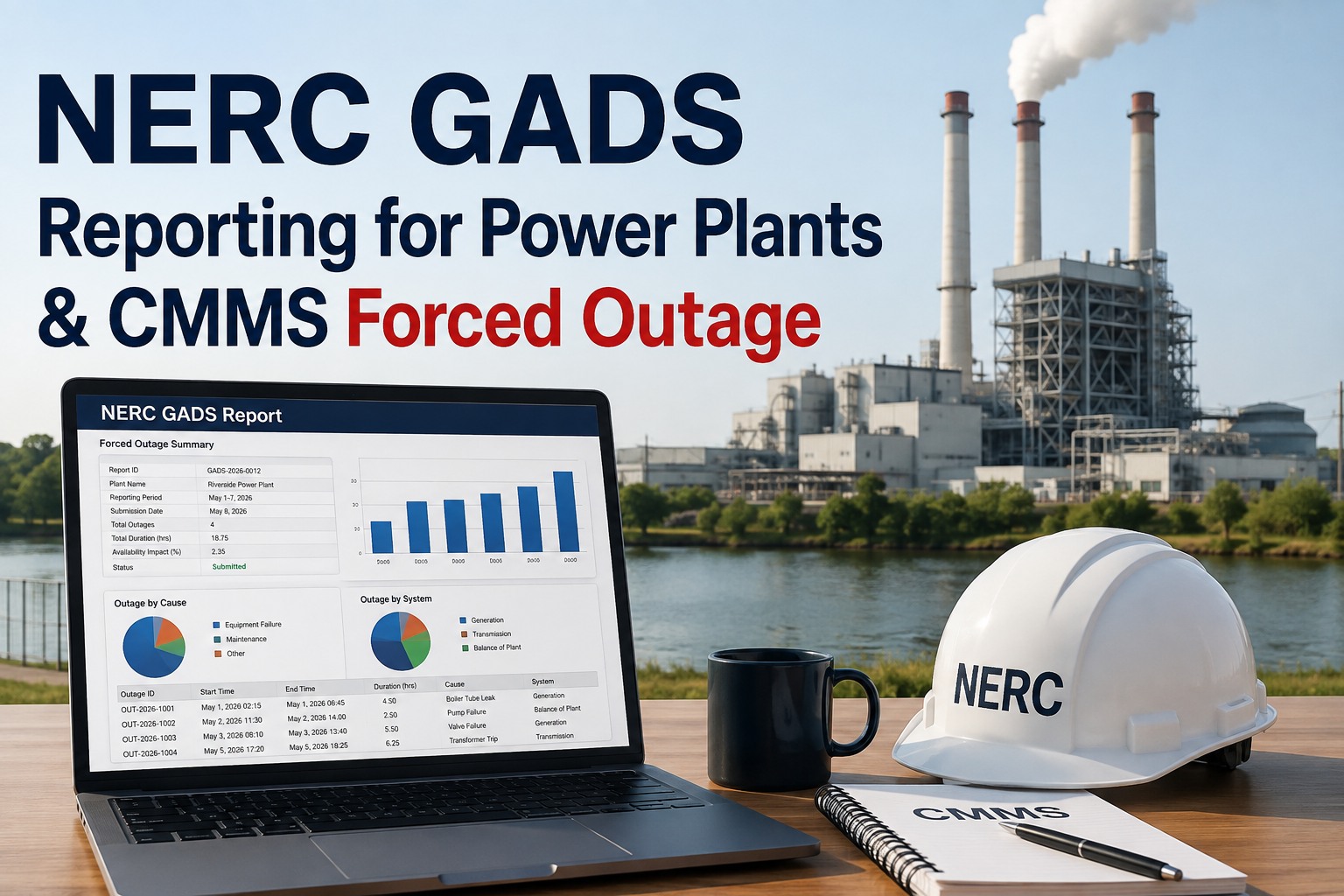
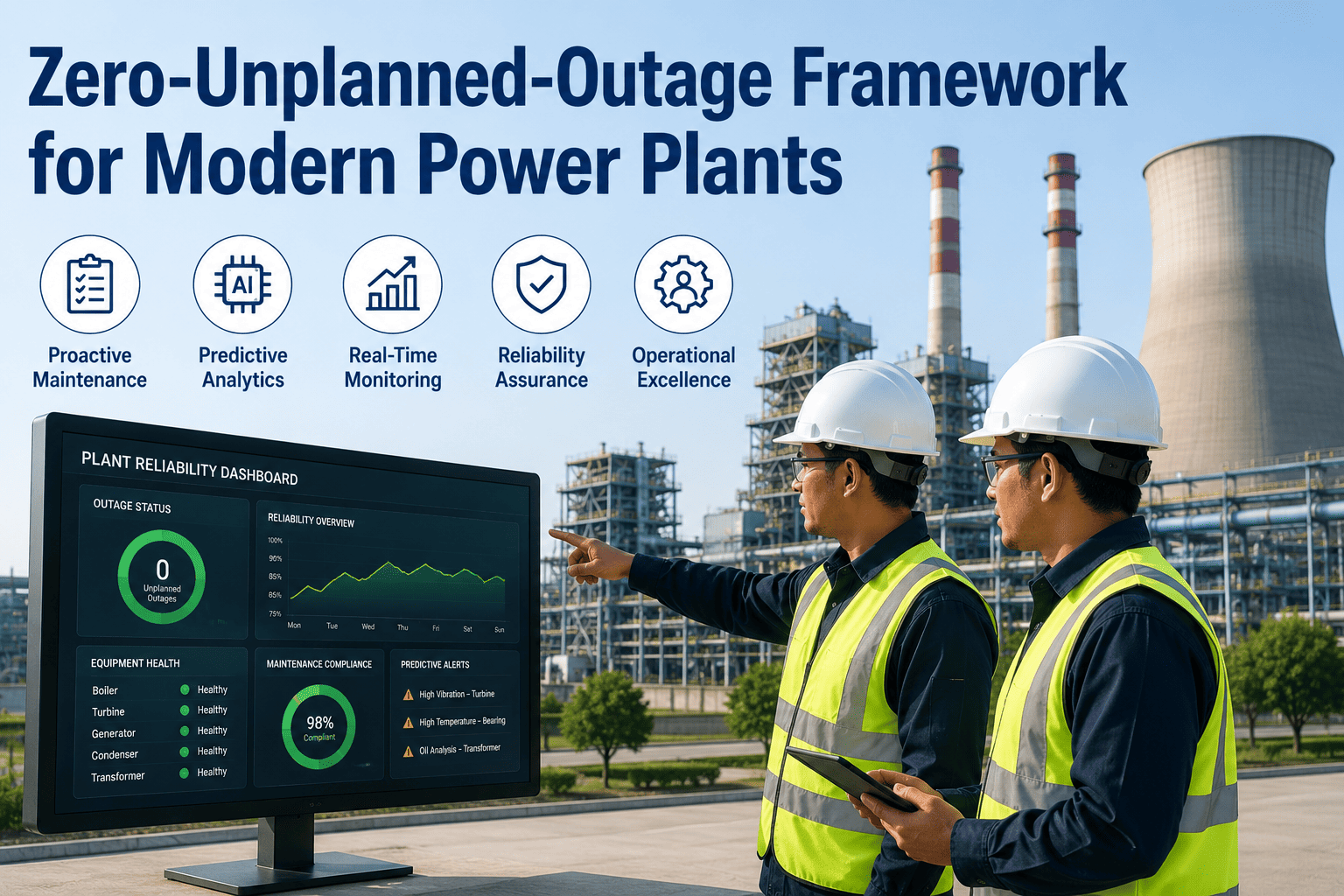
At 2:47 AM on a Tuesday, a bearing in your 400MW steam turbine begins its final failure sequence. By 3:12 AM, the unit trips offline. By sunrise, your operations team is scrambling to source replacement parts that have a six-week lead time. The wholesale electricity price that day: $85 per megawatt-hour. Your lost generation over the next 45 days: 432,000 MWh. The direct revenue impact: $36.7 million. This scenario plays out across power plants every month, with forced outages extracting an enormous financial toll that extends far beyond simple repair costs. Understanding the true cost of these unplanned shutdowns is the first step toward preventing them.
Why Forced Outage Rates Keep Climbing
Conventional generation forced-outage metrics remain at historically high levels, exceeding rates for all years prior to 2021, according to the North American Electric Reliability Corporation's 2024 State of Reliability report. Coal-fired generation shows a weighted equivalent forced outage rate (WEFOR) of approximately 12%—compared to the pre-2021 average of around 10%. Meanwhile, 43% of all plant incidents are caused by mechanical failures that could have been detected and prevented with proper monitoring. Plants that sign up for predictive monitoring solutions are transforming these statistics by catching degradation before it becomes catastrophic.
The causes of rising forced outage rates are well documented. According to the National Energy Technology Laboratory, more than half of forced outages at coal plants stem from boiler tube leaks, followed by balance of plant issues (15%), steam turbine failures (13%), generator problems (12%), and human errors (4%). Aging infrastructure compounds these challenges—the capacity-weighted average age of coal plants in the U.S. is now 39 years, and plants are increasingly cycled between baseload and load-following operations for which they weren't designed. This cycling accelerates fatigue, creep and thermal stress on critical components.
The Hidden Multiplier Effect
The direct costs of a forced outage—repair expenses and lost generation revenue—represent only part of the financial impact. Siemens' True Cost of Downtime 2024 report found that unscheduled downtime now costs the world's 500 largest companies $1.4 trillion annually, representing 11% of their total revenues. For power generators, the multiplier effects include replacement power procurement at premium spot market prices, contractual penalties for non-delivery, regulatory fines under SAIFI metrics ranging from $100,000 to $1 million per incident, and long-term damage to capacity auction standing and customer relationships.
What makes these costs particularly frustrating is that 70% of plants have little insight into when equipment is due for maintenance, upgrades, or replacement. This visibility gap directly translates to higher forced outage rates. Plants that schedule a consultation with maintenance experts discover that modern condition monitoring can provide weeks of advance warning before most mechanical failures occur—enough time to order parts, schedule repairs during planned outages, and avoid the cascade of costs that accompanies an unplanned shutdown.
Expert Analysis: The Economics of Prevention
The economic case for predictive maintenance in power generation has never been clearer. A large utility in the southern U.S. deployed over 400 AI models across 67 generation units and achieved $60 million in annual savings while reducing carbon emissions by 1.6 million tons. Duke Energy implemented predictive maintenance across its generating fleet, resulting in a 36% reduction in unplanned outages at fossil-fuel plants. These aren't theoretical projections—they're documented results from plants that made the transition from reactive to predictive maintenance strategies.
The mathematics of prevention are straightforward. Corrective maintenance after a failure costs $17-18 per horsepower annually, while preventive and predictive maintenance costs just $7-13 per horsepower—a savings of up to 45% even before accounting for avoided downtime. For a 500MW plant, this differential represents hundreds of thousands of dollars annually. More importantly, 95% of companies adopting predictive maintenance report positive ROI, with about 30% achieving full payback in less than one year. Facilities ready to create their monitoring account often see returns from the very first prevented outage.
Building Your Prevention Strategy
Transitioning from reactive to predictive maintenance requires a structured approach focused on the equipment most likely to cause forced outages. Start with turbines, boilers, and generators—the components responsible for 77% of mechanical-related outages. Modern IoT sensors continuously monitor vibration, temperature, pressure, and electrical parameters, feeding data to AI systems that detect anomalies weeks before failures occur. When integrated with a CMMS platform, these alerts automatically generate work orders, assign technicians, and schedule repairs during planned maintenance windows.
The transition doesn't require wholesale infrastructure replacement. Many plants begin with wireless sensors on their most critical equipment, establishing baselines within weeks and identifying developing problems almost immediately. A properly implemented predictive maintenance program can eliminate 70-75% of equipment breakdowns according to U.S. Department of Energy research. For plant managers tired of explaining forced outages to executives and regulators, this capability represents a fundamental shift from hoping equipment holds together to knowing exactly when intervention is needed. Schedule your demo today to see how quickly you can gain this visibility.