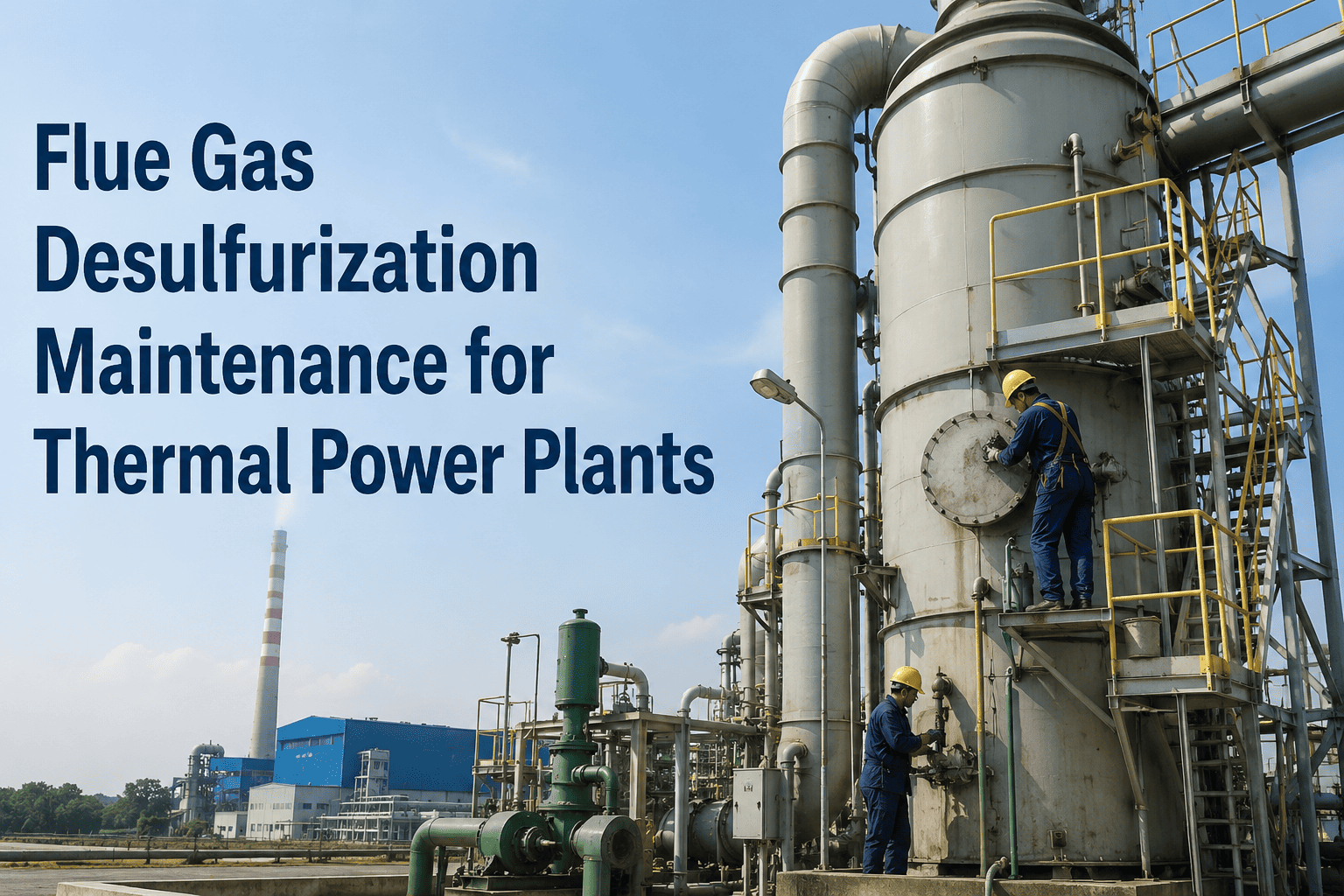
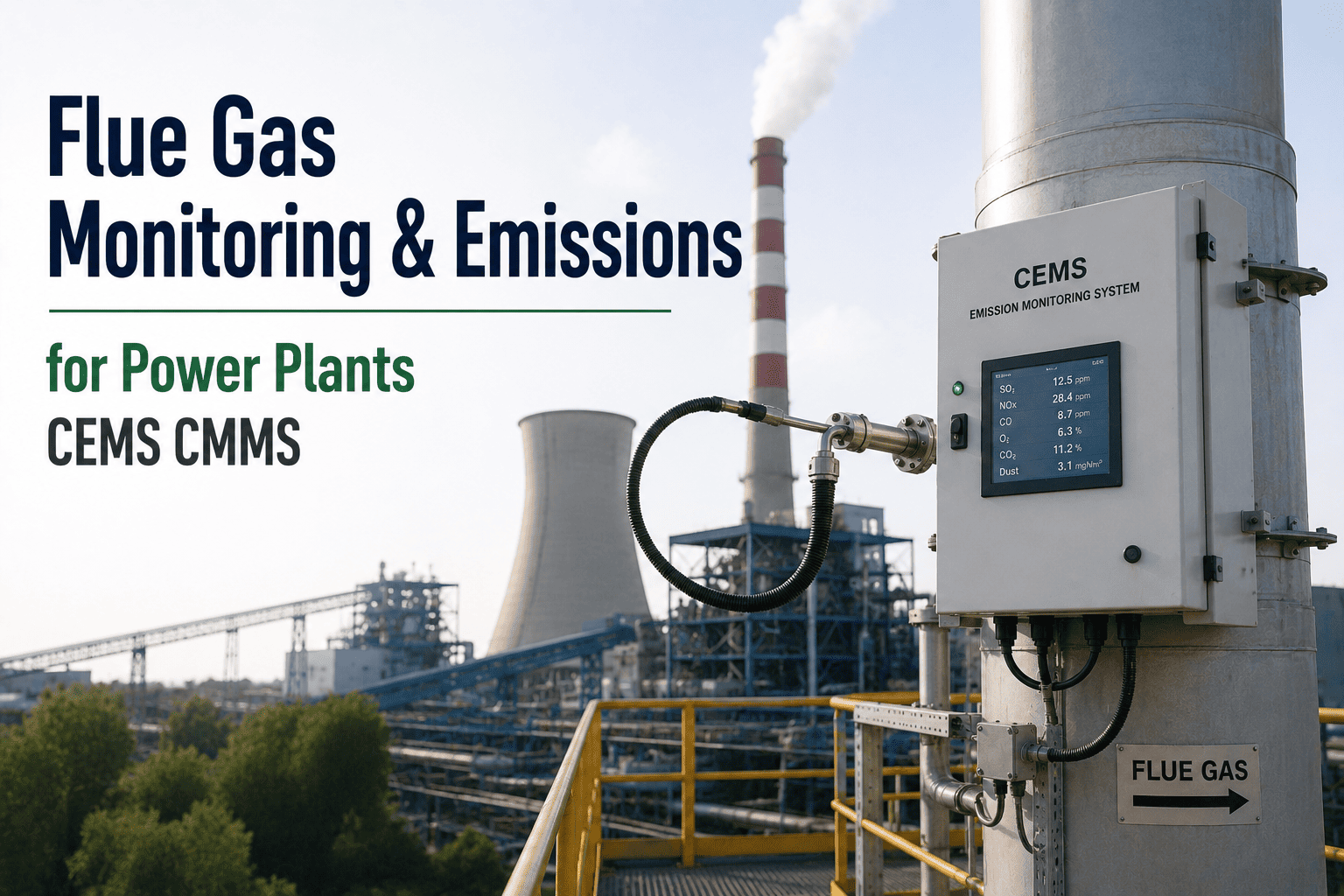
Flue gas desulfurization systems are the last line of defense between a coal-fired power plant and its SO₂ emission permit. An FGD system running at 85% efficiency instead of its designed 98% represents not just a regulatory risk — it represents thousands of tons of excess sulfur dioxide released annually and the very real possibility of permit violation, public enforcement action, or forced load curtailment. FGD maintenance is uniquely demanding because it combines corrosive slurry chemistry, abrasive solid handling, and precision gas-liquid contact engineering into a single system that must run continuously during plant operation. Explore OxMaint's compliance tracking platform for FGD systems or schedule a walkthrough of the emission compliance maintenance workflow.
!
FGD systems that miss scheduled maintenance see SO₂ removal efficiency drop 10–15% within 90 days — placing plant permits at risk and triggering costly emergency interventions.
Compliance Starts with Maintenance
Keep Your FGD System Running at Permit-Required Efficiency
OxMaint's compliance tracking platform structures every FGD inspection, chemical dosing record, and corrective work order into an audit-ready system. See it in action in 30 minutes — no commitment required.
System Overview
How a Wet FGD System Works — and Where Maintenance Matters Most
1
Flue Gas Inlet
Raw flue gas from boiler enters absorber tower at 120–180°C. Inlet duct corrosion and damper condition are first failure points.
—
2
Absorber Tower
Limestone slurry sprayed countercurrently absorbs SO₂. Spray nozzle condition and slurry pH are critical efficiency variables.
—
3
Reaction Tank
Gypsum crystals form from SO₂-limestone reaction. Oxidation air distribution, agitator condition, and density control determine product quality.
—
4
Dewatering System
Hydrocyclones and vacuum belt filters separate gypsum solids. Belt integrity, vacuum level, and cake moisture all require routine monitoring.
—
5
Clean Gas Stack
Treated flue gas exits above permit SO₂ limits. CEMS data here is the final compliance record — trace back failures to any upstream component.
Critical Components
FGD Component Maintenance: What Gets Checked and Why It Matters
Each major FGD subsystem has its own failure modes, maintenance intervals, and compliance implications. Below is the structured framework that high-performing compliance teams use to stay ahead of degradation.
Absorber Tower
Spray nozzle flow rate and pattern inspection — blocked nozzles reduce gas-liquid contact area directly, cutting SO₂ absorption efficiency
Absorber lining condition survey — rubber or alloy lining failures expose carbon steel to pH 4–6 slurry, causing accelerated corrosion
Mist eliminator washing and inspection — scale buildup on eliminators increases stack moisture carry-over and can cause downstream duct corrosion
Slurry pH trending — target range 5.0–5.8; deviation toward acidic conditions accelerates corrosion; deviation toward alkaline reduces SO₂ capture rate
Inspection frequency: Monthly visual + quarterly shutdown inspection
Slurry Recirculation Pumps
Impeller wear measurement — abrasive limestone slurry causes significant impeller degradation; flow rate reduction directly reduces slurry-to-gas contact ratio
Mechanical seal condition — leaks create housekeeping and corrosion hazards in the pump room and can cause pump shaft damage if undetected
Vibration baseline monitoring — pump bearing failures in redundant systems are often discovered only after the standby unit fails to start during the primary pump trip
Inspection frequency: Weekly vibration check + 6-month wear inspection
Limestone Handling & Feed
Ball mill liner and grinding media inspection — worn grinding media reduces limestone fineness, causing slurry reactivity loss and SO₂ absorption drop
Slurry density and particle size monitoring — target D₅₀ of 40–60 µm; coarser grind reduces reaction rate and increases limestone consumption per ton of SO₂ captured
Conveyor belt and feed hopper level sensor calibration — feed interruptions cause absorber pH swings that take hours to stabilize, impacting permit compliance windows
Inspection frequency: Monthly for conveyors; quarterly for mill internals
Corrosion Monitoring
Duct and flue expansion joint inspection — chloride-rich condensate in inlet ducts causes rapid carbon steel attack; expansion joints are high-priority failure points in aging systems
Stack liner thickness measurement — fiberglass or alloy stack liners protect structural steel; wall thickness trending predicts liner replacement well before failure
Bleed stream chemistry monitoring — chloride buildup in the system causes accelerated corrosion across multiple components if bleed rate is insufficient
Inspection frequency: UT thickness annually; visual monthly in high-risk zones
Compliance Records
What OxMaint Tracks for FGD Compliance Documentation
Records OxMaint Generates
Timestamped inspection logs per component with inspector attribution
Chemical dosing records linked to SO₂ removal efficiency readings
Corrective work order history with resolution timestamps
CEMS deviation response documentation
Spare parts usage and procurement records by asset
Permit condition cross-reference for each maintenance task
Compliance Scenarios Covered
EPA Title V permit mechanical integrity requirements
State environmental agency FGD inspection documentation
MATS rule operational monitoring records for coal-fired units
Excess emission event root cause documentation
Third-party auditor access to maintenance history records
ISO 14001 EMS operational control evidence
Maintenance Schedule
FGD System Maintenance Intervals at a Glance
| Component |
Task |
Frequency |
Compliance Impact |
| Absorber spray nozzles |
Flow pattern check, clearing, replacement |
Quarterly outage |
Direct SO₂ efficiency link |
| Recirculation pumps |
Vibration, seal, wear inspection |
Weekly + 6-monthly |
Availability risk if unmonitored |
| Mist eliminators |
Washing, visual for scale and damage |
Monthly wash, quarterly inspect |
Stack moisture and opacity compliance |
| Absorber lining |
Visual + UT wall thickness survey |
Annual shutdown |
Structural integrity, long outage risk |
| Ball mill internals |
Liner wear, grinding media level |
Quarterly |
Slurry reactivity, reagent efficiency |
| Oxidation air blowers |
Vibration, bearing temp, flow rate |
Monthly condition + annual overhaul |
Gypsum quality and dewatering |
| Stack liner |
UT thickness in chloride-exposure zones |
Annual |
Structural safety, permit continuity |
Frequently Asked Questions
FGD Maintenance and Compliance: Common Questions
How does OxMaint link maintenance tasks to specific permit conditions?
Each work order in OxMaint can be tagged with the relevant permit section or regulatory reference. When the task is completed, the record is automatically grouped under that permit condition in the compliance report — giving auditors a direct line from the regulation requirement to the maintenance evidence.
Start a free trial to explore compliance tagging.
Can OxMaint track SO₂ removal efficiency alongside maintenance records?
What happens when a CEMS deviation event occurs — can OxMaint support the root cause record?
Yes. When a CEMS alarm is triggered, a corrective work order can be created immediately in OxMaint with the deviation timestamp, affected emission parameter, and investigation findings — forming the documented root cause record required by most state environmental agencies.
Explore the deviation response workflow in OxMaint.
Does OxMaint support multi-unit plants with separate FGD systems per boiler?
OxMaint's asset hierarchy supports unlimited plant units, with separate FGD asset trees, inspection schedules, and compliance records per unit. Cross-unit reporting is also available for plant-level compliance summaries.
Book a demo to see multi-unit plant configuration.
Compliance Requires Documentation. OxMaint Makes It Automatic.
Every FGD Inspection Logged. Every Permit Condition Covered.
OxMaint brings FGD maintenance schedules, chemical records, work order history, and compliance documentation into one platform — so audits are evidence-ready without manual compilation. Start free or see the full compliance workflow in a live demo.