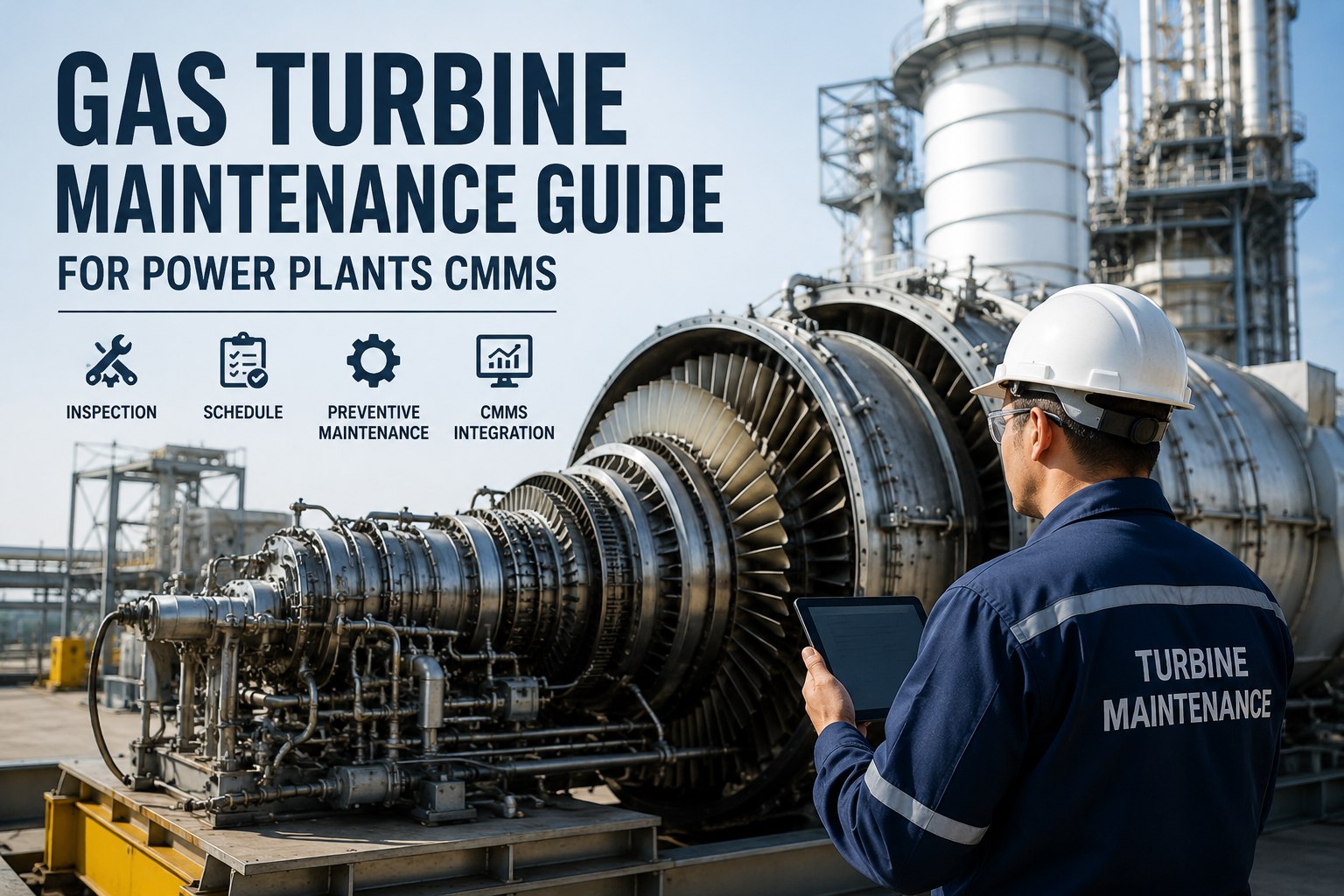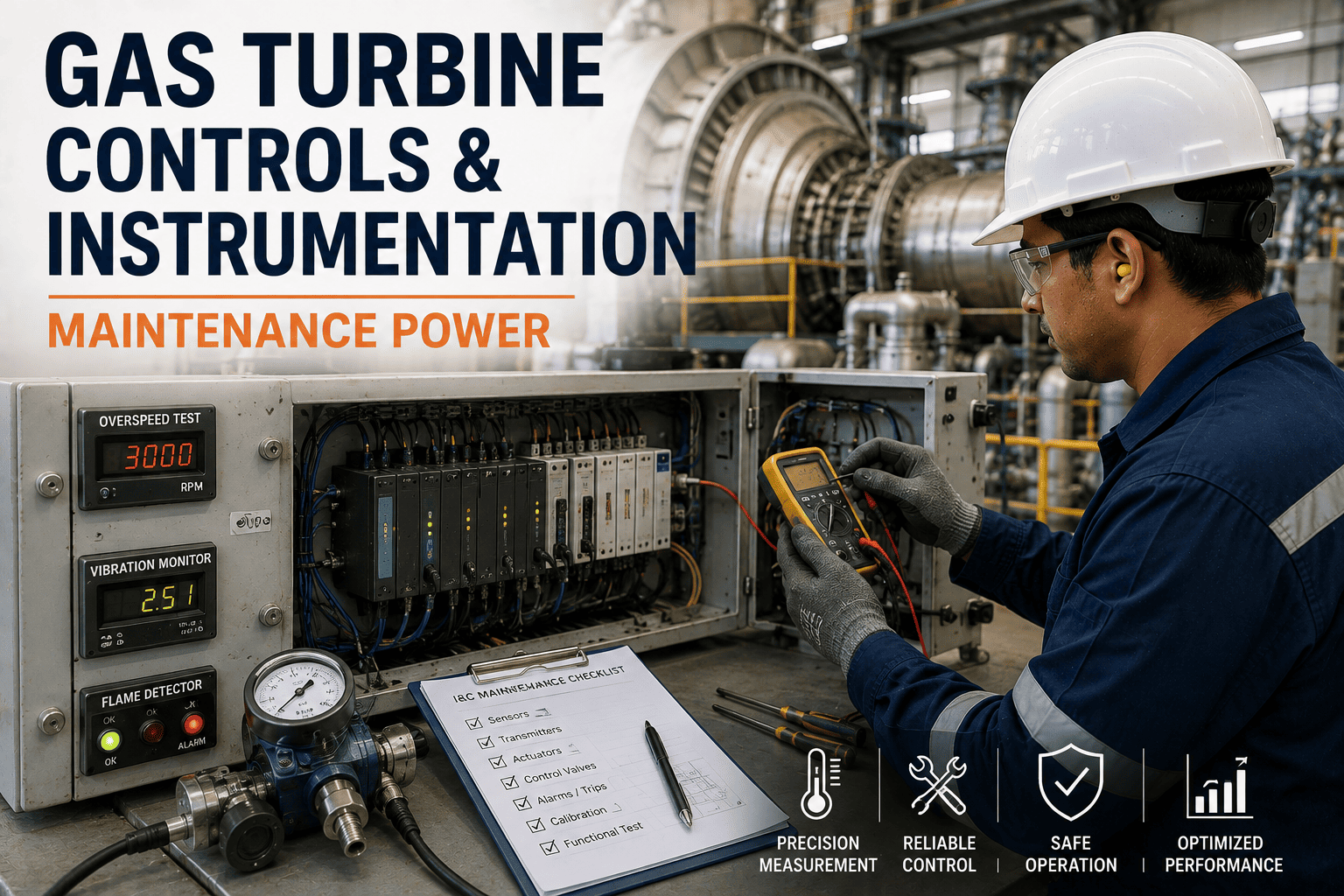
Gas turbine controls and instrumentation maintenance is the difference between a unit that runs 8,000 hours between outages and one that trips quarterly. A single drifting speed sensor or a fouled flame detector can cascade into a $40K–$120K unplanned downtime event, while a DCS loop left uncalibrated quietly burns 1–3% in heat rate. This guide breaks the discipline into actionable PM pillars—DCS calibration, thermocouple replacement, flame detector cleaning, and vibration probe verification—with the cadence, tolerances, and CMMS workflow that keep dispatchable capacity online. Schedule the full preventive program in OxMaint and Start Free Trial to auto-generate work orders from turbine runtime.
Is your turbine one drifting thermocouple away from an unplanned trip?
Controls and instrumentation failures account for an estimated 32% of all gas turbine unplanned outages — and most are preventable with disciplined PM on DCS loops, flame detectors, thermocouples, and vibration probes. Build a defensible maintenance program that catches drift before the unit does.
Why controls PM deserves a seat at the outage-planning table
In a typical 7FA-class unit running 4,000–6,000 fired hours per year, the controls and instrumentation stack — DCS I/O, speed sensors, thermocouples, flame scanners, vibration probes, and fuel-control valves — generates more forced-outage hours than the hot-gas-path components it protects. Yet it receives a fraction of the PM budget.
A 180-MW peaking site in the Southwest spent $42K/yr on reactive thermocouple and flame-detector callouts. After implementing a 4,000-hour PM cycle in OxMaint — covering T/C replacement, flame-scanner cleaning, and Bently Nevada probe gap verification — the site cut controls-related forced outages by 71% in year one and recovered the $18K program cost within 11 weeks.
The maintenance pillars that keep controls and instrumentation healthy
A defensible gas-turbine controls PM program rests on four pillars, each with its own cadence, tolerance band, and CMMS trigger. Skipping any one pillar shifts failure mode from gradual, detectable drift into sudden, trip-grade events.
DCS loop calibration & I/O verification
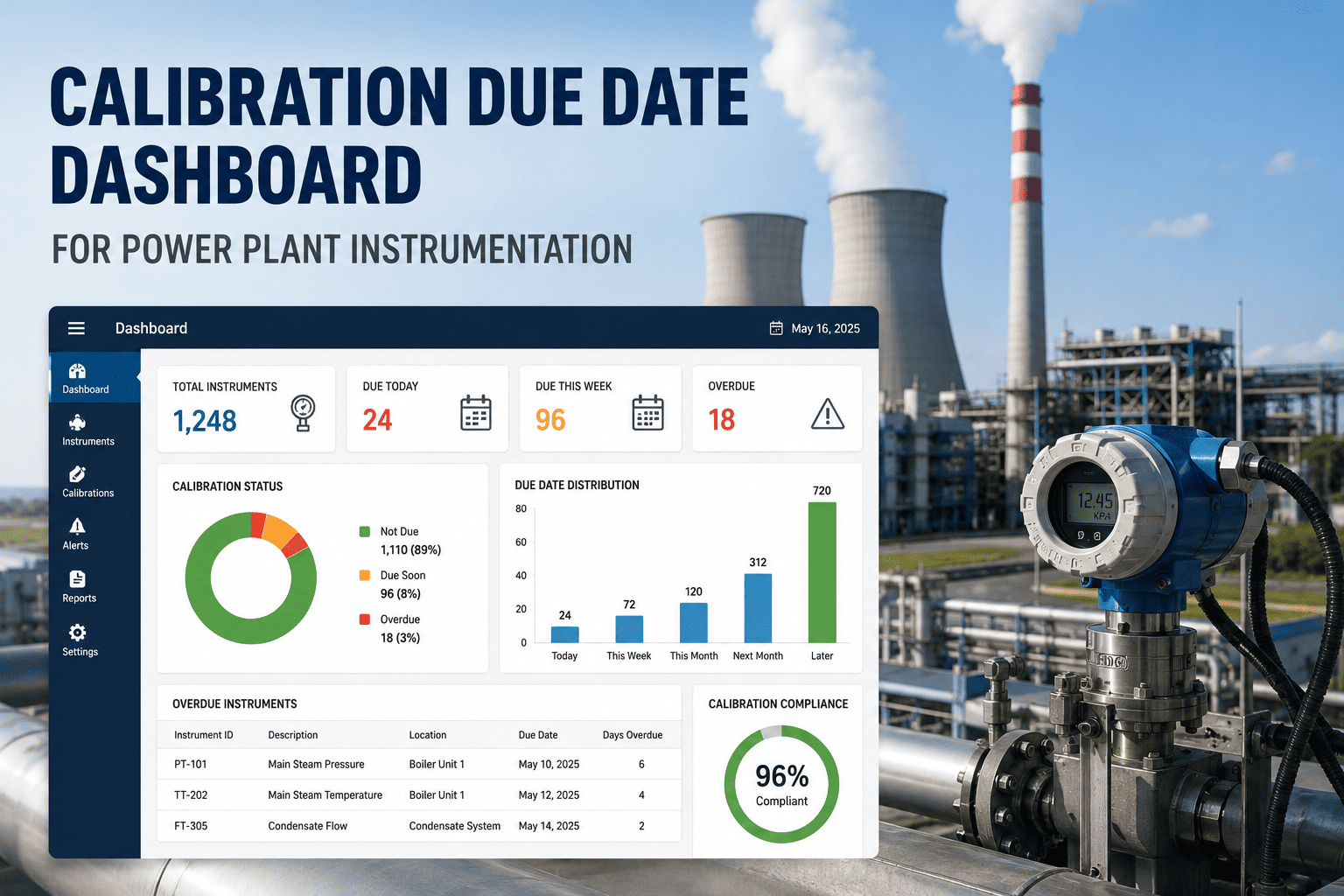
Cadence: every 8,000 fired hours or 12 monthsVerify every analog input and output loop — exhaust temperature, compressor discharge pressure, fuel-gas flow, IGV position — against a NIST-traceable calibrator. Tolerance bands are typically ±0.5% of span for temperature loops and ±0.25% for pressure/flow loops. Log as-found and as-left values in the CMMS; any loop that drifts more than 1.0% of span between calibrations gets a half-interval recheck. Calibration records are the first document a reliability auditor will request.
Exhaust thermocouple & RTD replacement
Cadence: full replacement at every combustion inspection (12,000–24,000 hrs)Exhaust thermocouples operate at 1,100–1,300°F and fail by drift, not by open-circuit — which means a bad T/C quietly skews the exhaust-temperature spread the controller uses for trip logic. Replace the full ring at every CI, not just the failed channels. Track the exhaust-spread alarm history between outages; a recurring single-position spread is a leading indicator of a thermocouple drifting high, not a combustion-can problem.
Flame detector cleaning & response testing
Cadence: clean quarterly, flame-out response test annuallyUV/IR flame scanners foul fastest on liquid-fuel or dual-fuel units, but even gas-only units accumulate combustion particulate on the sight glass. A dirty scanner doesn't fail — it desensitizes, raising the risk of a false flame-out trip during low-load transients. Clean the lens with the manufacturer-approved solvent, verify the flame signal strength against the baseline, and perform a controlled flame-out response test to confirm the turbine shuts down within the specified 2–5 second window.
Vibration probe & proximity sensor verification
Cadence: gap-voltage check semi-annually, full system verification at CI/HGPBently Nevada (or equivalent) proximity probes measure rotor displacement in mils peak-to-peak. The leading failure mode is not the probe itself but the extension cable, connector corrosion, and gap drift from thermal cycling. Verify gap voltage against the -10 VDC standard, check connector insulation resistance, and confirm the thrust-position probe reads within 0.1 mil of the mechanical zero. A probe that drifts more than 0.5 mils between checks is a candidate for replacement at the next planned outage.
Turbine controls PM checklist — what to inspect, verify, and replace
Use this checklist as the spine of every controls PM work order. Items are grouped by subsystem and tagged with the minimum interval; adjust downward for peaking duty or harsh fuel.
DCS & Control Logic
7 items- Verify analog input loop accuracy ±0.5% of span
- Verify analog output commands to fuel-gas valve
- Test IGV position feedback vs. mechanical stop
- Confirm overspeed trip setpoint at 110% rated
- Backup DCS configuration and logic files
- Test uninterruptible power supply switchover
- Verify HMI alarm hierarchy and silencing logic
Temperature Sensors
6 items- Replace full exhaust T/C ring at every CI
- Verify wheel-space RTD response time
- Check bearing-temperature RTD continuity
- Inspect T/C extension wire for thermal damage
- Validate cold-junction compensation at junction box
- Review exhaust-spread trend for silent drifters
Flame Detection
5 items- Clean UV/IR scanner sight glass
- Verify flame signal strength vs. baseline
- Test flame-out response time (2–5 sec)
- Inspect scanner cooling-air supply pressure
- Confirm dual-channel redundancy logic
Vibration & Speed
6 items- Verify proximity probe gap voltage (-10 VDC)
- Check connector insulation resistance
- Confirm thrust-position probe within 0.1 mil
- Test speed-sensor signal at 100% rated RPM
- Review vibration trend for baseline shift
- Inspect accelerometer mounting torque
The math behind a defensible controls PM budget
Maintenance managers get pushback on controls PM because the spend is visible and the avoided cost is invisible. The formula below makes the avoided cost tangible — plug in your own unit's numbers and the business case usually writes itself.
| PM Scenario | Annual PM Cost | Trips Avoided/yr | Heat-Rate Recovery | Net Annual Savings | Payback |
|---|---|---|---|---|---|
| Reactive (no scheduled PM) | $3K | — | 0% | Baseline | — |
| Quarterly inspection only | $9K | 1 | 0.4% | $22K | 5 months |
| Full 4-pillar PM program | $18K | 2–3 | 1.2% | $64K | 11 weeks |
| Full program + predictive analytics | $24K | 3–4 | 1.5% | $88K | 8 weeks |
Silent drift vs. hard failure — what each looks like in the CMMS
Controls and instrumentation failures split into two families: silent drift that degrades efficiency and margins over months, and hard failures that trip the unit in seconds. Your PM program must catch both, but they require different detection strategies.
| Failure Mode | Typical Component | Detection Method | Lead Time | Cost If Undetected |
|---|---|---|---|---|
| Silent drift (gradual) | Exhaust thermocouple, DCS analog loop, IGV feedback | Trend analysis, as-found calibration data | Weeks to months | 1–3% heat-rate penalty; false spread alarms |
| Hard failure (sudden) | Flame scanner, speed sensor, vibration probe cable | Redundancy logic, real-time alarm, trip test | Seconds to minutes | $48K–$120K per forced outage event |
| Intermittent / transient | Connector corrosion, ground fault, EMI on signal wire | Event log review, insulation resistance test | Days to weeks | Nuisance trips; operator confidence erosion |
| Latent (hidden) failure | Backup overspeed trip, redundant flame channel | Periodic functional trip test | Only found on test | Loss of protection layer; catastrophic if primary also fails |
Stop reacting to turbine trips that started as a drifting sensor
OxMaint auto-generates controls PM work orders from fired-hour triggers, tracks as-found/as-left calibration data, and flags drift trends before they become forced outages. Set up your turbine's full PM program in under an hour.
Gas turbine controls & instrumentation maintenance — answered
How often should gas turbine exhaust thermocouples be replaced?
Replace the full exhaust thermocouple ring at every combustion inspection — typically every 12,000 to 24,000 fired hours depending on duty class. Replacing only failed channels creates a mixed-age population that skews the exhaust-spread baseline and makes drift detection harder. Between outages, review the spread trend monthly and replace any T/C that drifts more than 15°F from the ring average.
What DCS loop-calibration tolerance should I use for turbine controls?
Industry standard is ±0.5% of span for temperature loops (exhaust T/C, wheel-space RTD) and ±0.25% of span for pressure and flow loops (compressor discharge, fuel-gas flow). Any loop that drifts more than 1.0% of span between scheduled calibrations should move to a half-interval recheck. Log both as-found and as-left values in your CMMS — see the full calibration workflow when you Book a Demo with our team.
Why do flame detectors trip the turbine even when flame is present?
The most common cause is a fouled scanner sight glass that attenuates the UV or IR signal below the controller's flame-present threshold. This produces false flame-out trips, especially during low-load transients when the flame envelope shifts. Clean the sight glass quarterly on gas-only units and monthly on liquid-fuel or dual-fuel units, and verify the flame signal strength against the commissioned baseline after every cleaning.
What is the correct gap voltage for a Bently Nevada vibration probe on a gas turbine?
The standard target gap voltage is -10 VDC, which positions the probe at the midpoint of its linear range. Verify this semi-annually with the unit at rest and at operating temperature. A probe that drifts more than 0.5 mils or shifts more than 0.5 VDC from the established baseline warrants immediate investigation — the root cause is usually connector corrosion, extension-cable degradation, or thermal-cycling fatigue in the probe mount.
How do I justify a controls PM program to plant management?
Frame it in avoided forced-outage cost. A single GT trip averages $48K in lost generation, restart fuel, and grid penalties. A full four-pillar PM program costing $18K/yr that prevents two trips pays back in 11 weeks. Add the 1–2% heat-rate recovery from calibrated loops and the case strengthens further. You can model your own unit's payback in OxMaint — Start Free Trial and use the built-in ROI calculator.
Build a turbine controls PM program that pays for itself in 11 weeks
Auto-generate work orders from fired-hour triggers, track as-found/as-left calibration data, and catch sensor drift before it becomes a forced outage. OxMaint is purpose-built for power-gen maintenance teams.
Free 14-day trial · No credit card

.png)