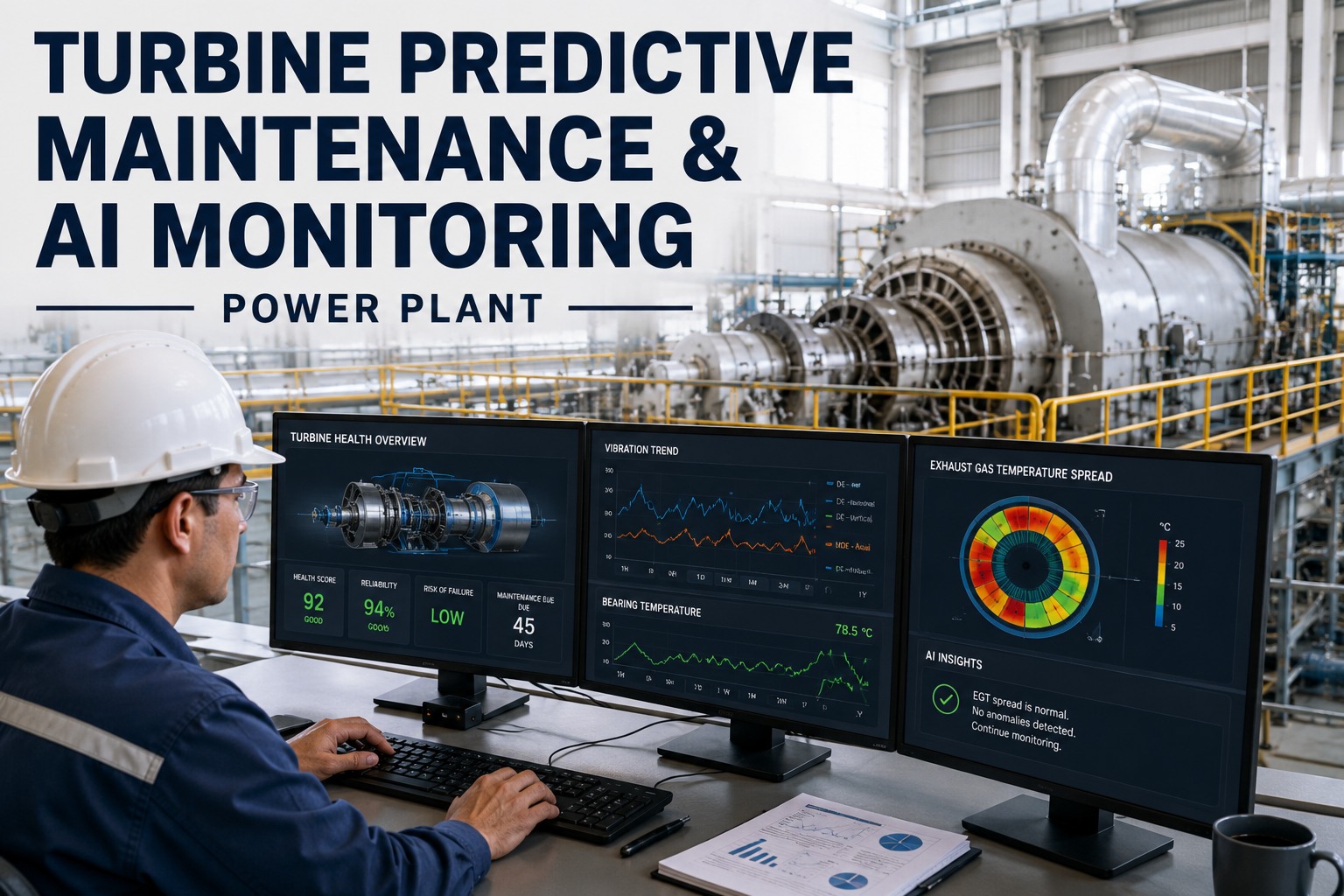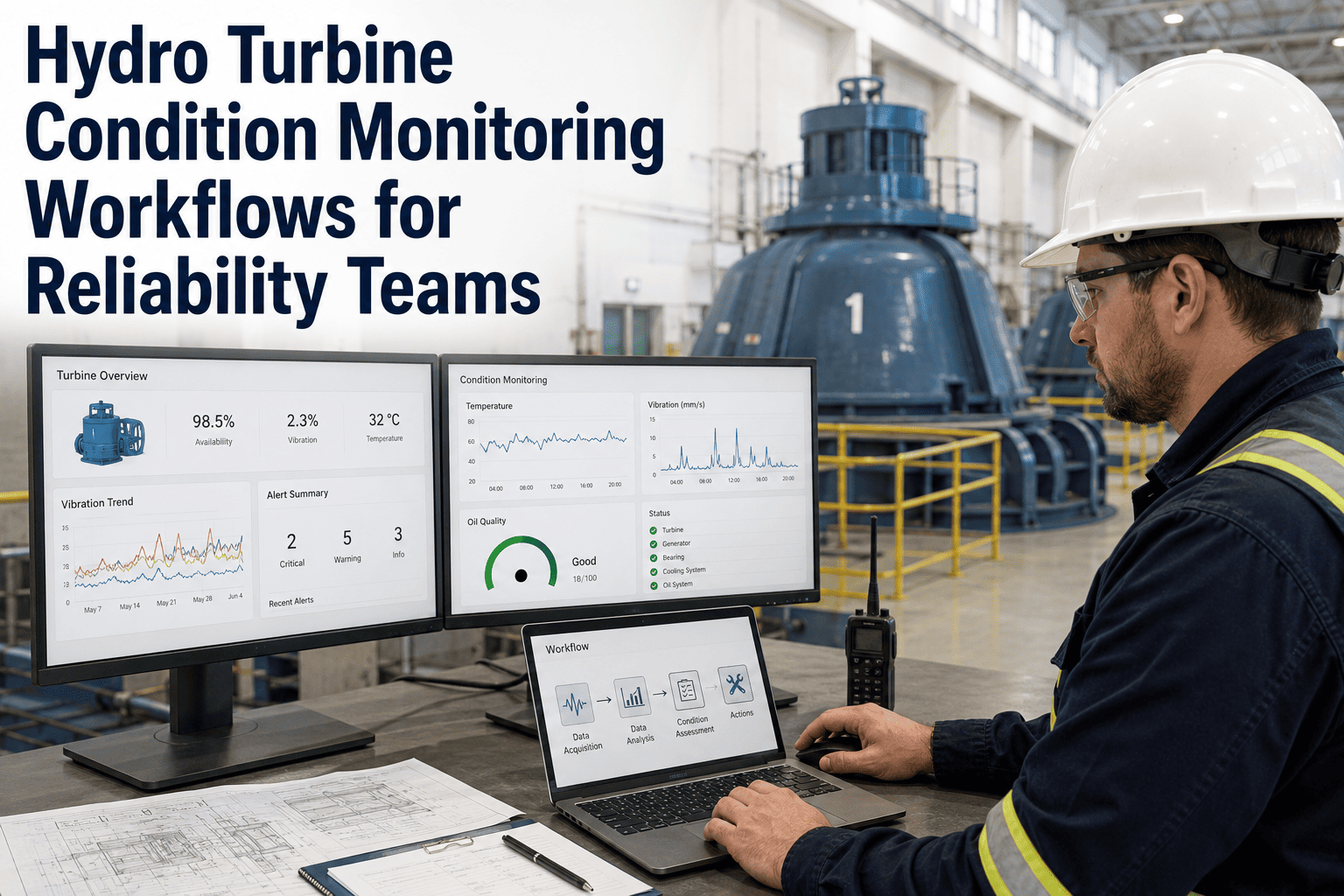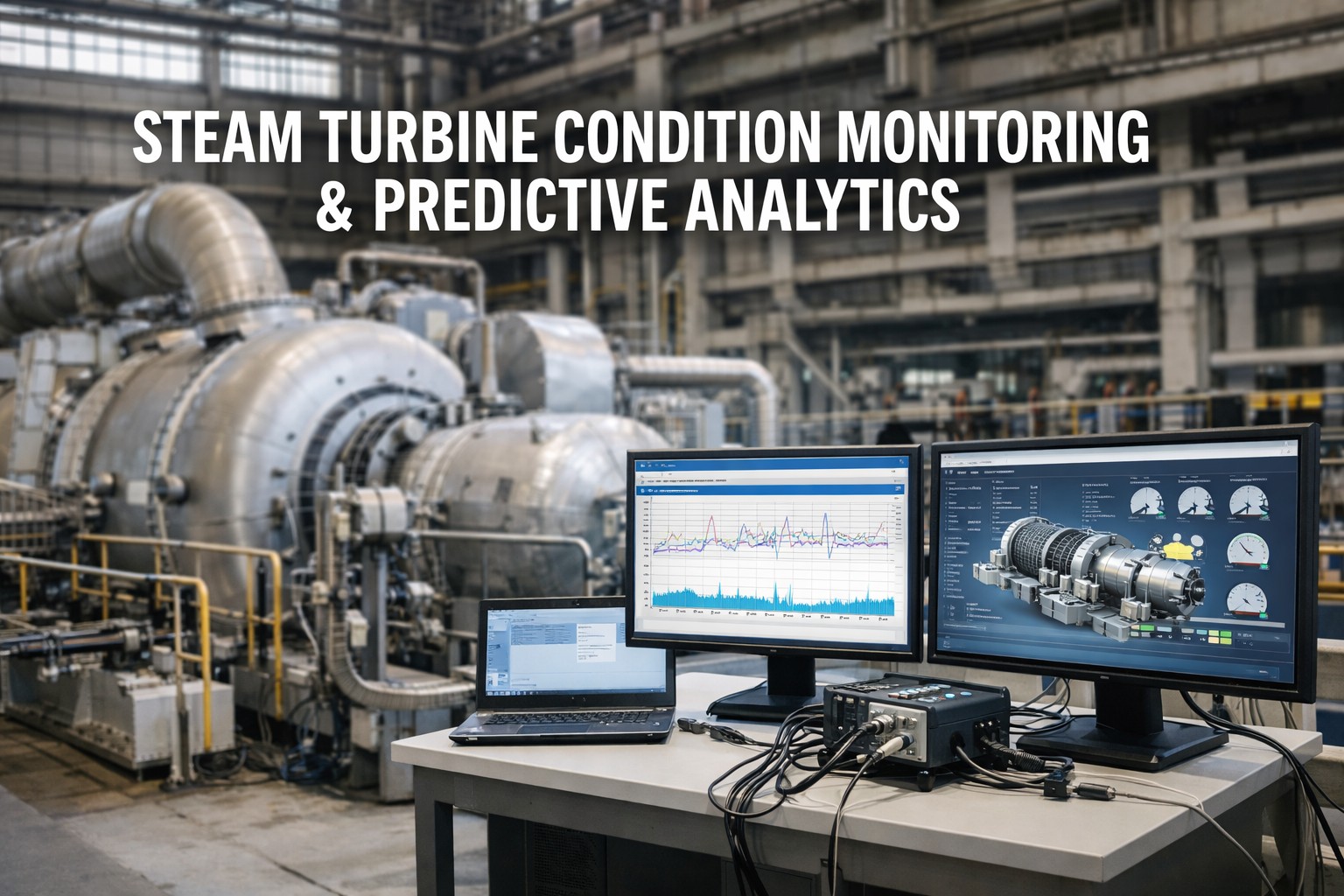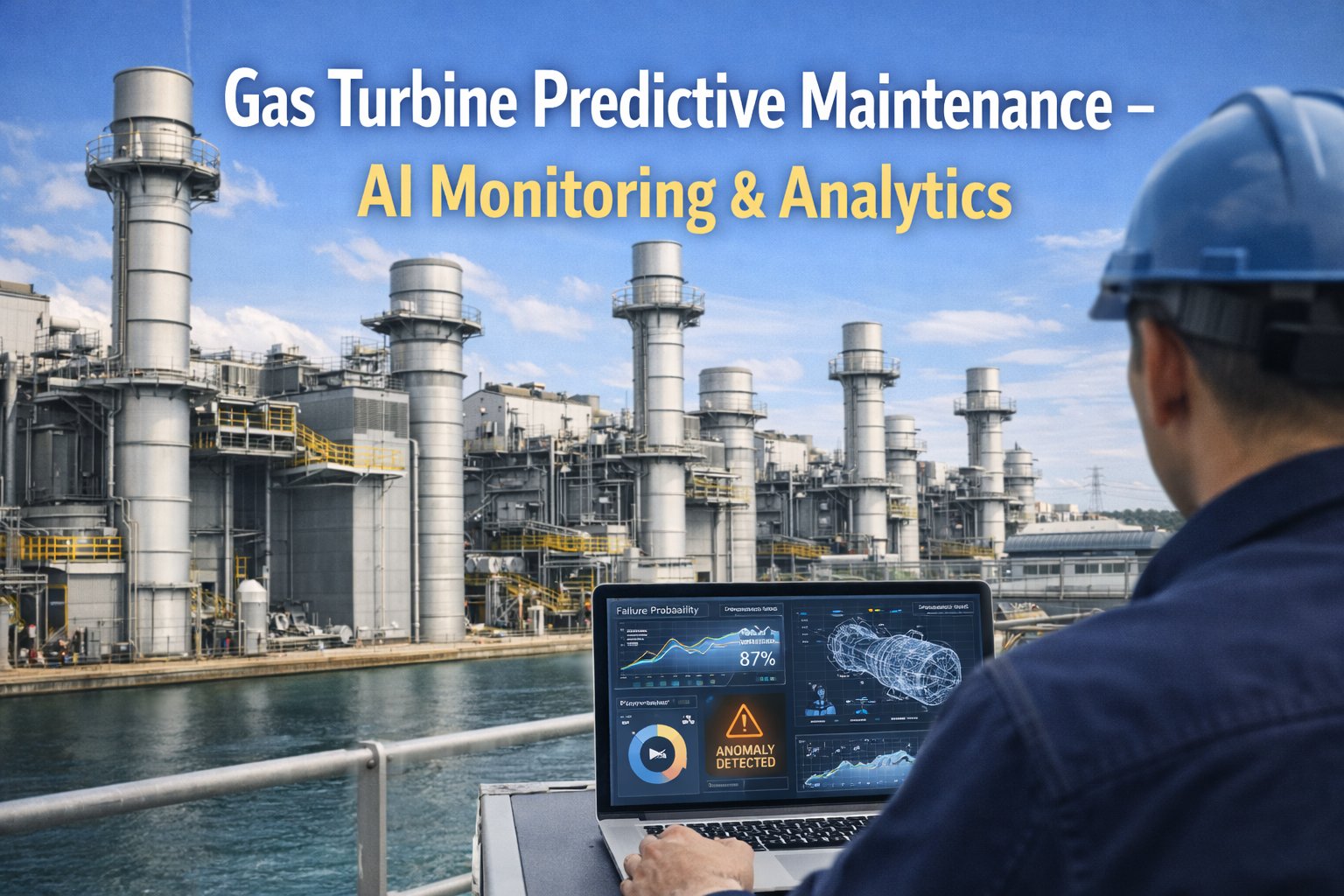
Every gas turbine in operation right now is generating thousands of data points per second — exhaust gas temperatures, vibration signatures, compressor pressure ratios, bearing conditions, and fuel flow rates. Yet most power plants and industrial facilities still rely on calendar-based maintenance schedules that were designed decades ago. The result? Unplanned downtime that costs an average of $125,000 per hour in the energy sector, with a single gas turbine forced outage event running anywhere from $500,000 to $2.5 million when you factor in lost generation revenue, emergency repair premiums, and cascade impacts on grid commitments. The gas turbine MRO market alone is valued at over $15.6 billion in 2025, and predictive maintenance adoption in this sector grew by 22% last year. The facilities that are winning are not spending more on maintenance — they are spending smarter, using AI-powered monitoring and analytics to predict failures weeks or months before they happen. Oxmaint's predictive maintenance platform gives turbine operators the tools to shift from reactive firefighting to proactive, data-driven asset management — reducing unplanned downtime by up to 65% and extending turbine life by 15-25%.
Gas Turbines Account for 68% of Power Generation MRO Demand — Yet 21% of Operators Still Run to Failure
Predictive maintenance technologies are now deployed in 63% of combined-cycle plants, reducing forced outage rates by 28%. The question is: are you in the 63% or the 37%?
Why Traditional Gas Turbine Maintenance Is Failing
Gas turbines operate under extreme conditions — firing temperatures exceeding 1,400 degrees Celsius, rotational speeds of 3,000-3,600 RPM, and thermal cycling that stresses every component from hot-section blades to compressor seals. Traditional time-based maintenance schedules inspect and replace parts at fixed intervals regardless of actual condition. This means you are either replacing components too early (wasting money on parts with remaining useful life) or too late (suffering unplanned failures that cost 4-5x more than planned repairs). With approximately 77 GW of global gas-fired capacity now over 50 years old and over 672 GW less than ten years old, the maintenance landscape demands a smarter, condition-based approach. Oxmaint helps turbine operators transition from calendar-based to condition-based maintenance — ensuring every intervention happens at exactly the right time.
6 Critical Gas Turbine Components That Demand AI Monitoring
Not every component in a gas turbine justifies predictive investment. But the components that operate under extreme thermal and mechanical stress, carry catastrophic failure consequences, and show detectable degradation patterns absolutely do. These six areas account for over 85% of all gas turbine forced outages and emergency maintenance spending. Deploying AI monitoring on these systems alone delivers ROI that justifies the entire predictive program. Facilities using Oxmaint's turbine-focused asset tracking prioritize these high-impact components first.
Hot-Section Blades and Vanes
Thermal barrier coating degradation, creep elongation, and oxidation erosion at 1,400+ degrees C. AI detects exhaust gas temperature spread anomalies 4-12 weeks before blade failure.
Combustion System
Flame instability, crossfire tube cracking, combustor liner distortion, and transition piece wear. Vibration and acoustic signatures predict combustion dynamics issues 2-8 weeks ahead.
Bearings and Rotor Dynamics
Journal bearing wear, thrust bearing degradation, rotor imbalance, and misalignment. Vibration trending and oil debris analysis detect bearing deterioration 6-16 weeks before seizure risk.
Compressor Section
Blade fouling, inlet guide vane actuator drift, compressor stall precursors, and surge margin erosion. Performance analytics track pressure ratio degradation and efficiency loss in real time.
Exhaust and HRSG Interface
Exhaust diffuser cracking, expansion joint failures, and HRSG tube leaks impact both turbine performance and combined-cycle efficiency. Temperature profiling catches thermal stress patterns months ahead.
Control and Auxiliary Systems
Fuel valve response degradation, lube oil system contamination, cooling air system blockages, and generator hydrogen seal integrity. Sensor drift detection prevents false trips and unwarranted shutdowns.
Stop Reacting to Turbine Failures — Start Predicting Them
Oxmaint connects to your existing DCS, SCADA, and sensor infrastructure to detect gas turbine degradation patterns invisible to manual inspection — then auto-generates work orders with parts, timing, and cost impact documentation weeks before failure.
How Oxmaint's AI Monitoring Pipeline Works for Gas Turbines
Predictive maintenance for gas turbines is not guesswork with better dashboards — it is a structured intelligence pipeline that converts continuous equipment performance data into actionable failure forecasts with specific timelines, recommended interventions, and cost impact projections. The system works in four stages, each building on the previous to deliver increasingly accurate predictions. Schedule a demo to see this pipeline applied to your specific turbine fleet.
ROI of Predictive Maintenance for Gas Turbine Fleets
The financial case for AI-powered gas turbine maintenance is arithmetic, not speculation. Every prevented forced outage avoids the 4.8x cost multiplier from emergency labor, expedited parts, replacement power purchases, and cascade damage. Every predicted failure that enables repair during a planned outage eliminates the generation revenue loss and grid penalty costs that reactive failures impose. Here is what the numbers look like for a typical combined-cycle plant:
Implementation: From Pilot to Fleet-Wide Predictive Operations
Deploying predictive maintenance for gas turbines follows a proven path that delivers measurable value at each phase. You do not need to instrument every auxiliary system on day one. Start with the highest-impact monitoring points on your most critical turbines, prove value fast, and expand with evidence. Book a demo and our turbine specialists will design a phased deployment plan for your specific fleet.
Connect Existing Data Infrastructure
Audit DCS/SCADA, historian, and CMMS data feeds. Connect existing sensor streams to Oxmaint without replacing any current systems. Deploy supplementary IoT sensors on monitoring gaps.
AI Baseline Learning
AI models learn each turbine's normal operating envelope across load ranges, ambient conditions, and fuel variations. First anomaly detections begin within 2-4 weeks of data ingestion.
Predictive Alerts and Work Orders
System transitions from learning to predicting. Automated work orders generated with component-specific repair guidance, parts lists, and optimal intervention timing aligned to planned outages.
Fleet-Wide Optimization
Expand coverage to all turbines and auxiliary systems. AI models continuously improve accuracy. Maintenance planning driven by condition data, not calendar schedules. Capital planning uses real asset health.
Your Gas Turbines Are Generating Predictive Data Right Now
Every exhaust thermocouple, vibration probe, and pressure transmitter on your turbines is broadcasting health information. The question is whether you will see the warning 12 weeks early — or discover the problem when the unit trips at peak demand. Oxmaint turns your existing sensor data into predictive intelligence that prevents the emergency calls and protects your generation revenue.