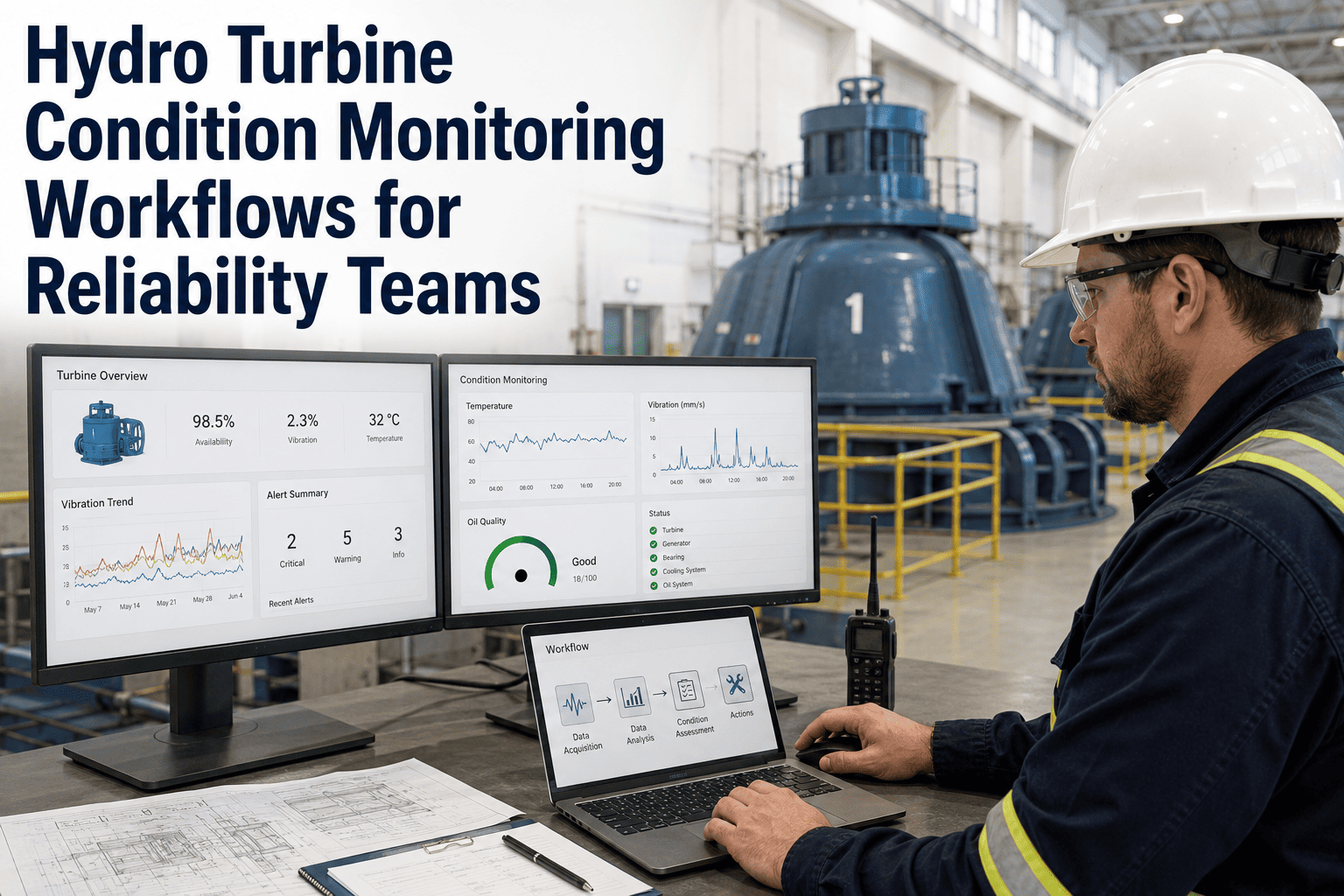
Hydroelectric power plants are among the longest-lived energy assets on the planet, with many facilities operating well past their 50th year. Yet this longevity comes with a hidden cost: aging turbines, deteriorating penstocks, corroding generators, and silting reservoirs that silently erode efficiency by 10-25% before anyone notices. The average hydroelectric facility loses $1.2-$3.8 million annually to unplanned downtime, emergency repairs, and efficiency degradation that could have been prevented with systematic maintenance management. Typical O&M costs run at 2-2.5% of capital investment each year, but poorly managed plants can see that number spike to 4-6% when reactive maintenance dominates the workflow.
The challenge is not a lack of maintenance knowledge but a lack of maintenance structure. Paper-based logs, spreadsheet tracking, and tribal knowledge cannot keep pace with the complexity of modern hydroelectric operations. Oxmaint's hydroelectric maintenance management platform replaces fragmented processes with a single digital system that tracks every turbine, every penstock inspection, every generator winding test, and every dam safety check in real time, turning maintenance from a cost center into a revenue protection strategy.
The Average Hydroelectric Plant Operates 10-25% Below Peak Efficiency
For a 100 MW facility running at 45% capacity factor, that gap represents $1.5-4.2 million in lost annual revenue. Every percentage point recovered flows directly to your bottom line.
6 Critical Maintenance Challenges in Hydroelectric Operations
Hydroelectric plant performance does not collapse overnight. It degrades through dozens of compounding maintenance gaps that individually seem minor but collectively destroy efficiency, reliability, and revenue. Here are the six most critical challenges and how structured maintenance management through Oxmaint addresses each one:
Turbine Erosion and Cavitation
Silt-laden water erodes runner blades, guide vanes, and draft tube surfaces. Cavitation pitting accelerates wear on Francis and Kaplan turbines, reducing hydraulic efficiency by 5-15% and increasing vibration that cascades into bearing and seal failures.
Generator Winding Degradation
Moisture contamination, dust infiltration, and partial discharge weaken stator insulation over time. Winding failures are the most common electrical fault in hydroelectric generators, with aging and contamination responsible for the majority of insulation system breakdowns.
Penstock and Gate Integrity
Corrosion, fatigue cracking, and joint deterioration in penstocks can lead to catastrophic rupture. Intake gate mechanisms, trash racks, and stop logs require systematic inspection to prevent water control failures that threaten both safety and generation capacity.
Dam Safety and Civil Structures
Dam inspections, spillway gate testing, seepage monitoring, and structural integrity assessments are regulatory requirements with zero tolerance for missed deadlines. Manual tracking of FERC and state dam safety compliance creates audit risk and potential shutdown orders.
Instrumentation and Controls
SCADA sensors, level transmitters, flow meters, and protective relays drift out of calibration over time. Industry data shows that after one year, approximately 5% of instruments report inaccurately, leading to suboptimal turbine operation and delayed fault detection.
Bearing and Seal System Failures
Thrust bearings, guide bearings, shaft seals, and wicket gate bushings are high-wear components that generate escalating vibration signatures before failure. A single unplanned bearing replacement can cost over $500,000 when emergency mobilization, crane rental, and lost generation are included.
Asset-by-Asset Maintenance Map for Hydroelectric Plants
Every major subsystem in a hydroelectric facility has unique failure modes, inspection intervals, and efficiency drivers. This map breaks down the specific maintenance requirements for each asset category and shows where Oxmaint's digital work order and asset tracking system delivers the highest operational impact:
Hydraulic Turbines (Francis, Kaplan, Pelton)
The turbine is the revenue engine of every hydroelectric plant, converting water energy into mechanical rotation at efficiencies above 90% when properly maintained. Degradation from erosion, cavitation, and mechanical wear can reduce output by 5-15% before visual inspection reveals the damage.
Generators and Electrical Systems
Hydroelectric generators operate continuously for decades, making insulation degradation and winding contamination inevitable without systematic monitoring. Transformer oil quality, breaker reliability, and protective relay calibration are equally critical to sustained generation.
Dam and Water Conveyance
Dams, spillways, penstocks, and intake structures demand rigorous safety inspections with full regulatory documentation. Seepage rates, structural movement, and gate operability must be tracked continuously.
Balance of Plant Systems
Cooling water systems, drainage pumps, HVAC, fire suppression, cranes, and backup power systems support continuous operation. Failure in any auxiliary system can force a full plant shutdown.
Digitize Every Asset in Your Hydroelectric Plant
Oxmaint tracks turbine condition, generator health, penstock integrity, and dam safety compliance for every asset, turning maintenance data into measurable reliability and revenue protection.
How Oxmaint Powers Hydroelectric Plant Maintenance
Maintaining a hydroelectric plant is not a one-time overhaul but a continuous cycle of inspection, analysis, action, and verification. Here is how Oxmaint's CMMS platform embeds reliability into every maintenance workflow across your facility:
Complete Asset Registry
Catalog every turbine, generator, transformer, penstock section, gate, valve, and auxiliary system with full specification history, nameplate data, and maintenance lineage from commissioning to present day.
Condition-Based PM Scheduling
Schedule maintenance by actual equipment condition and operating hours, not just calendar dates. Vibration trends, oil analysis results, and insulation test values trigger work orders at exactly the right time.
Regulatory Compliance Tracking
Automate FERC dam safety inspection schedules, NERC reliability compliance, environmental permit requirements, and state regulatory filings. Never miss a deadline or scramble for documentation during audits.
Mobile Inspections with Photo Evidence
Operators complete turbine inspections, penstock surveys, and dam safety walks on smartphones from inside the powerhouse or on the dam crest. Offline mode captures data in areas with limited connectivity, syncing when signal returns.
Spare Parts and Inventory Management
Track critical spare parts inventory for long-lead items like runner blades, guide vane assemblies, bearings, and transformer components. Auto-reorder alerts prevent stockout emergencies at remote plant locations.
Performance and Energy Dashboards
Real-time dashboards showing efficiency per unit, availability factor, forced outage rate, and maintenance cost per MWh. Correlate performance dips with maintenance activities to isolate root causes and prioritize high-impact repairs.
Hydroelectric Maintenance Schedule That Maximizes Availability
This is the comprehensive PM schedule that high-performing hydroelectric plants follow for peak reliability. Each task directly impacts generation availability, and missing any single item can cascade into significant revenue losses over weeks:
Reactive vs. Predictive: The Cost Comparison
The financial case for moving from reactive to predictive maintenance in hydroelectric operations is straightforward arithmetic. Every prevented emergency avoids premium repair costs, lost generation revenue, and regulatory exposure that reactive failures impose:
4 Steps to Hydroelectric Plant Optimization with Oxmaint
This implementation roadmap takes your hydroelectric operations from fragmented manual tracking to data-driven reliability management. Most plants see measurable results within the first 60 days through Oxmaint's structured onboarding for power generation facilities:
Asset Inventory and Baseline
Register every plant asset from turbines and generators to penstocks, gates, and auxiliary systems. Establish performance baselines using historical operating data and OEM specifications for each unit.
Configure PM and Compliance Schedules
Build preventive maintenance plans with condition-based triggers for every critical component. Configure FERC dam safety, NERC reliability, and environmental compliance tracking with automated deadline alerts.
Deploy Mobile Inspections
Roll out mobile inspection checklists to operators and maintenance crews. Every turbine walk-down, dam safety observation, and equipment reading is captured digitally with photo evidence and GPS location.
Track Performance and Optimize
Use dashboards to monitor availability, forced outage rate, maintenance cost per MWh, and PM compliance. Monthly optimization reviews with real data drive continuous improvement and justify capital renewal projects.
Protect Every Megawatt Your Plant Generates
Join hydroelectric operators reducing forced outages by 65% and recovering millions in lost generation revenue through maintenance-driven reliability optimization.
Frequently Asked Questions
How does Oxmaint handle dam safety compliance tracking?
Oxmaint automates the full cycle of dam safety compliance including FERC Part 12 inspection scheduling, Emergency Action Plan (EAP) drill tracking, spillway gate operability testing records, seepage and piezometer data logging, and structural inspection documentation. The system sends automated alerts before regulatory deadlines, generates audit-ready reports with full inspection histories and photo evidence, and maintains a complete chain-of-custody record for every safety observation. This eliminates the risk of missed deadlines that can trigger regulatory action, fines, or forced shutdowns. Schedule a demo to see compliance tracking for your specific regulatory requirements.
Can Oxmaint track turbine erosion and predict overhaul timing?
Yes. Oxmaint logs runner blade profile measurements, guide vane clearances, seal ring gap data, and vibration trending against operating hours and cumulative flow volume for each turbine unit. The system builds degradation curves over time and alerts when performance metrics approach the threshold that justifies a planned overhaul rather than waiting for efficiency to deteriorate further. Major turbine overhauls typically occur every 8-10 years, but actual timing should be driven by condition data rather than calendar schedules. Plants using condition-based scheduling extend average runner life by 15-25% while maintaining efficiency within 2% of design specifications. Sign up to start tracking your turbine condition today.
Does Oxmaint work for both large and small hydroelectric facilities?
Oxmaint is designed to scale from single-unit run-of-river plants to multi-unit reservoir facilities with hundreds of megawatts of capacity. Small hydropower operators benefit from the same structured PM scheduling and compliance tracking that large plants use, but at a scale and cost appropriate to their operation. The platform adapts to Francis, Kaplan, Pelton, and bulb turbine configurations, each with dedicated inspection templates and maintenance checklists specific to their unique failure modes and operating characteristics.
How quickly will we see measurable improvements in plant availability?
Most plants see first measurable improvements within 30-60 days from quick-win maintenance actions: clearing deferred work orders, establishing consistent inspection routines, and addressing known equipment issues that were previously tracked informally. Full optimization impact builds over 6-12 months as PM compliance reaches 90% and condition-based data generates actionable trend intelligence. Typical payback on the platform investment is under 6 months when measured against reduced forced outage hours and recovered generation revenue alone.
Can plant operators use Oxmaint in remote powerhouse locations?
Oxmaint's mobile interface is built for remote and rugged environments typical of hydroelectric facilities. Operators complete inspections, log measurements, and report issues from any smartphone with an interface designed for use in wet, noisy powerhouse conditions. Offline mode captures all data in areas with no cellular or Wi-Fi connectivity common at dam sites and remote powerhouses, syncing automatically when connection is restored. Photo attachments for turbine runner condition, penstock coating inspections, and dam face observations are standard features that eliminate the need to return to an office to file reports.