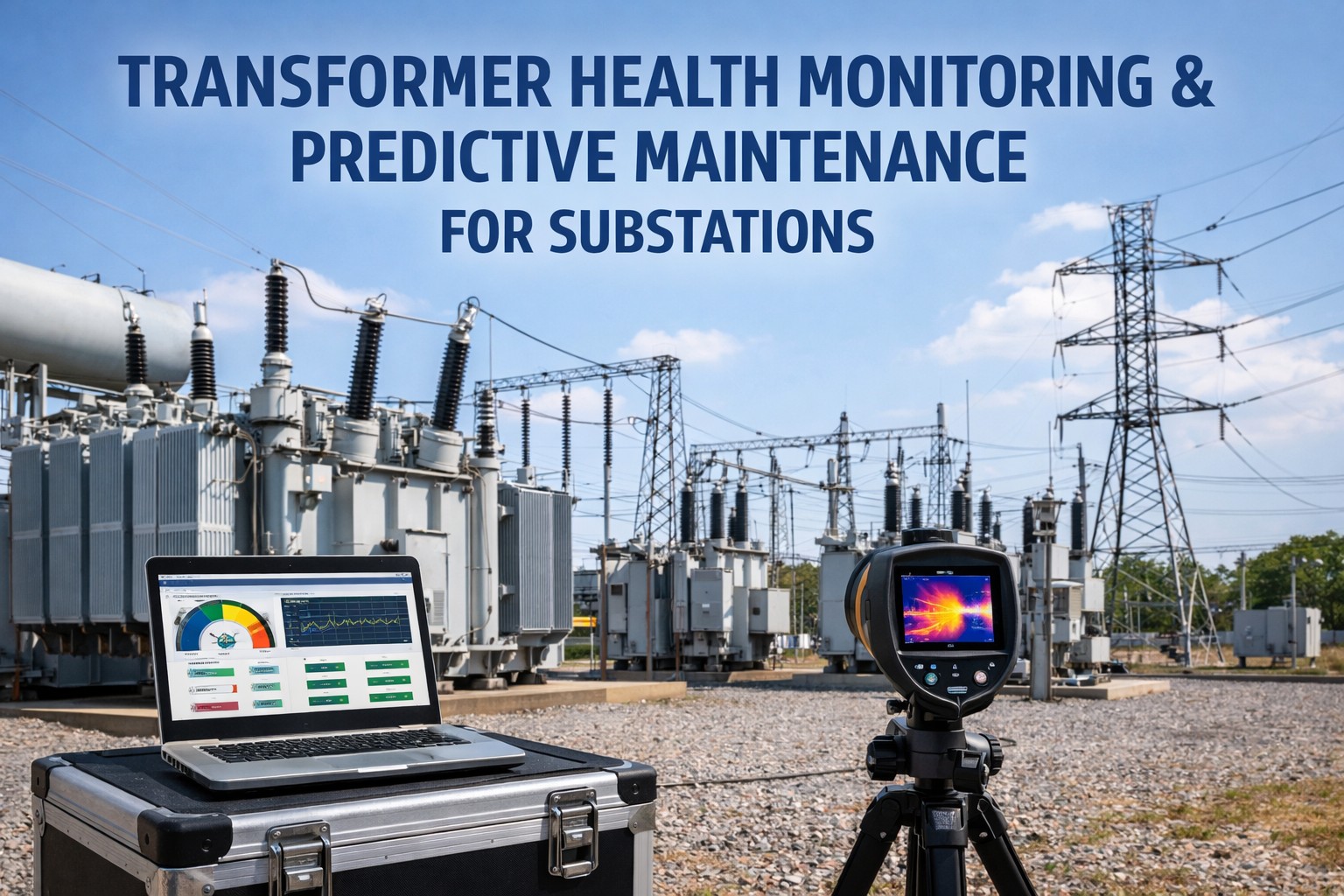
Every substation transformer silently degrades from the moment it enters service. Insulation ages, oil chemistry shifts, and thermal stress accumulates across thousands of load cycles. Yet most utilities and industrial operators still rely on calendar-based inspections that miss the 3-to-18-month degradation window where intervention costs 80% less than emergency repair. Over 40% of transformers currently in operation have exceeded 25 years of service life, and a single catastrophic transformer failure can cost anywhere from $100,000 to over $2 million when factoring in equipment replacement, emergency labor, environmental cleanup, and lost production. The transformer monitoring systems market, valued at approximately $2.7 billion in 2024 and growing at nearly 9% annually, reflects a clear industry shift toward predictive intelligence. Facilities that implement structured maintenance management for their transformer assets reduce unplanned outages by up to 73% and extend equipment lifespan by 15 to 20 years. Oxmaint gives substation operators the digital backbone to track transformer health indicators in real time, automate condition-based work orders, and convert raw monitoring data into actionable maintenance decisions before failures disrupt operations.
Before exploring how predictive maintenance transforms substation operations, consider the scale of what is at stake. Unplanned transformer outages cost utilities over $150 billion worldwide in 2024 alone, and the average lead time for a replacement power transformer ranges from several weeks to over a year depending on specifications. Every hour of unplanned downtime at a manufacturing facility can cost $500,000 or more, while data centers face losses in the millions per day. The financial case for continuous transformer health monitoring is not theoretical; it is supported by documented results across thousands of substation deployments globally. Oxmaint's asset management platform bridges the gap between raw transformer data and maintenance action, ensuring your team acts on degradation patterns weeks or months before they become emergencies.
The 6 Critical Health Indicators Every Substation Must Monitor
Transformer degradation does not happen randomly. It follows predictable patterns across six core health indicators, each producing measurable signals long before catastrophic failure occurs. Understanding what to monitor and why each parameter matters is the foundation of any effective preventive maintenance strategy for substation transformers:
Dissolved Gas Analysis (DGA)
Internal faults generate specific gases: hydrogen from partial discharge, acetylene from arcing, ethylene from severe overheating. DGA detects these gases in transformer oil at parts-per-million concentrations, revealing internal degradation months before physical symptoms appear.
Insulation Resistance & Power Factor
Insulation breakdown is the leading cause of transformer failures globally. Moisture ingress, thermal aging, and chemical contamination degrade insulation integrity. Every 10 degrees C rise above rated temperature cuts insulation life in half, making continuous thermal monitoring essential.
Oil Quality & Moisture Content
Transformer oil serves as both coolant and insulating medium. Degraded oil with moisture above 30 ppm or dielectric breakdown voltage below 30 kV signals imminent risk. Oil oxidation produces sludge that blocks cooling passages and accelerates thermal degradation.
Partial Discharge Activity
Small electrical discharges in weakened insulation areas produce measurable acoustic and electromagnetic signatures. Partial discharge levels trending upward indicate insulation voids, contamination, or manufacturing defects that will eventually cause turn-to-turn or phase-to-ground faults.
Load Tap Changer (LTC) Performance
Load tap changers are the only moving parts in most transformers, making them the most failure-prone component. Contact wear, timing drift, and oil contamination in the LTC compartment account for a significant share of transformer service interruptions at substations.
Bushing Condition & Cooling Efficiency
Bushing failures can cause catastrophic tank ruptures and fires. Monitoring capacitance, power factor, and leakage current trends on bushings provides early warning. Simultaneously, cooling system performance directly governs thermal capacity and peak loading capability.
The Real Cost of Reactive vs. Predictive Transformer Maintenance
The financial difference between waiting for a transformer to fail and predicting its failure in advance is not marginal. It is exponential. Emergency transformer replacement carries cost multipliers of 4 to 5 times the planned maintenance cost, and that is before counting production losses, regulatory penalties, environmental remediation, and reputational damage. Here is what the numbers look like for a typical substation operation:
Stop Waiting for Transformer Failures. Start Predicting Them.
Oxmaint connects your existing DGA monitors, thermal sensors, and oil analysis data into a unified transformer health dashboard that auto-generates condition-based work orders weeks before critical thresholds are reached.
How Oxmaint Powers Transformer Predictive Maintenance
Effective transformer health monitoring requires more than sensors; it demands a structured system that converts continuous data streams into prioritized maintenance actions. Oxmaint provides six integrated capabilities purpose-built for substation transformer management:
Real-Time Health Index Scoring
Aggregate DGA readings, oil quality, thermal data, partial discharge levels, and bushing condition into a single health index score per transformer. Trend the score over time to visualize degradation trajectories and prioritize maintenance investment on the assets that need it most.
Condition-Based Work Order Automation
When any health parameter crosses its configured threshold, Oxmaint auto-generates a prioritized work order with diagnostic context, recommended actions, required parts, and estimated labor hours. No manual interpretation needed; the system routes the right task to the right technician.
Digital Inspection Checklists
Mobile-optimized inspection checklists for daily visual checks, weekly oil level readings, monthly thermal surveys, quarterly DGA sampling, and annual comprehensive testing. Every reading is timestamped, geotagged, and linked to the specific transformer asset record for complete traceability.
Degradation Trend Analytics
Track how each health indicator changes over time with AI-powered trend lines that project remaining useful life. Compare performance across transformers of similar age, make, and loading profile to identify units degrading faster than fleet average and investigate root causes early.
PM Scheduling by Load & Condition
Schedule preventive maintenance not just by calendar dates but by actual operating conditions: cumulative load hours, peak thermal events, oil test results, and DGA trends. This ensures critical maintenance happens at exactly the right time based on how hard each transformer is actually working.
NERC/FERC Compliance Reporting
Auto-generate audit-ready reports for regulatory compliance with timestamped maintenance records, test results, and corrective action documentation. Every inspection, test, and repair is logged with full chain-of-custody for NERC CIP, FERC, and local utility commission requirements.
Transformer Maintenance Schedule for Maximum Reliability
High-performing substations follow a structured maintenance cadence where every task is tied to a specific health outcome. Missing any single item can cascade into accelerated degradation that compounds over weeks and months. Here is the maintenance schedule that top-quartile operators follow, and that Oxmaint's inspection management tools automate:
4-Phase Implementation Roadmap
Deploying predictive transformer health monitoring follows a structured path that delivers measurable value at each phase. You do not need to instrument every transformer on day one. Start with the highest-risk units, prove value fast, and expand with evidence. Oxmaint's mobile-first platform ensures your field technicians can capture data from any substation location from day one:
Asset Registry and Baseline
Catalog every transformer asset: nameplate data, age, loading history, maintenance records, and existing test results. Establish performance baselines from historical DGA, oil quality, and thermal data. Identify the 20% of transformers causing 70% of your risk.
Configure Monitoring and PM Schedules
Set up health parameter thresholds per transformer based on IEEE and IEC standards. Build condition-based PM schedules with digital inspection checklists. Connect existing online DGA monitors and SCADA data feeds to the Oxmaint platform for continuous ingestion.
Deploy Digital Inspections and Alerts
Roll out mobile inspection checklists to field crews. Activate automated alerting when any parameter drifts from baseline. First predictive work orders begin generating within weeks as the system detects existing degradation patterns that manual inspections missed.
Optimize and Scale
Use dashboards to measure avoided failures, cost savings, and asset life extension. Present ROI data to stakeholders. Expand monitoring to remaining substation assets, refine thresholds based on fleet-specific data, and continuously improve maintenance strategies.
Your Transformers Are Degrading Right Now. The Data Exists. Use It.
Every transformer in your substation generates performance data that reveals its health trajectory. Oxmaint converts that data into predictive intelligence that prevents emergency failures, extends asset life by 15-20 years, and transforms your maintenance team from reactive firefighters into strategic asset managers.