Hybrid Power Plant Maintenance – Integrating Solar, Wind & Battery Systems
By Johnson on March 14, 2026
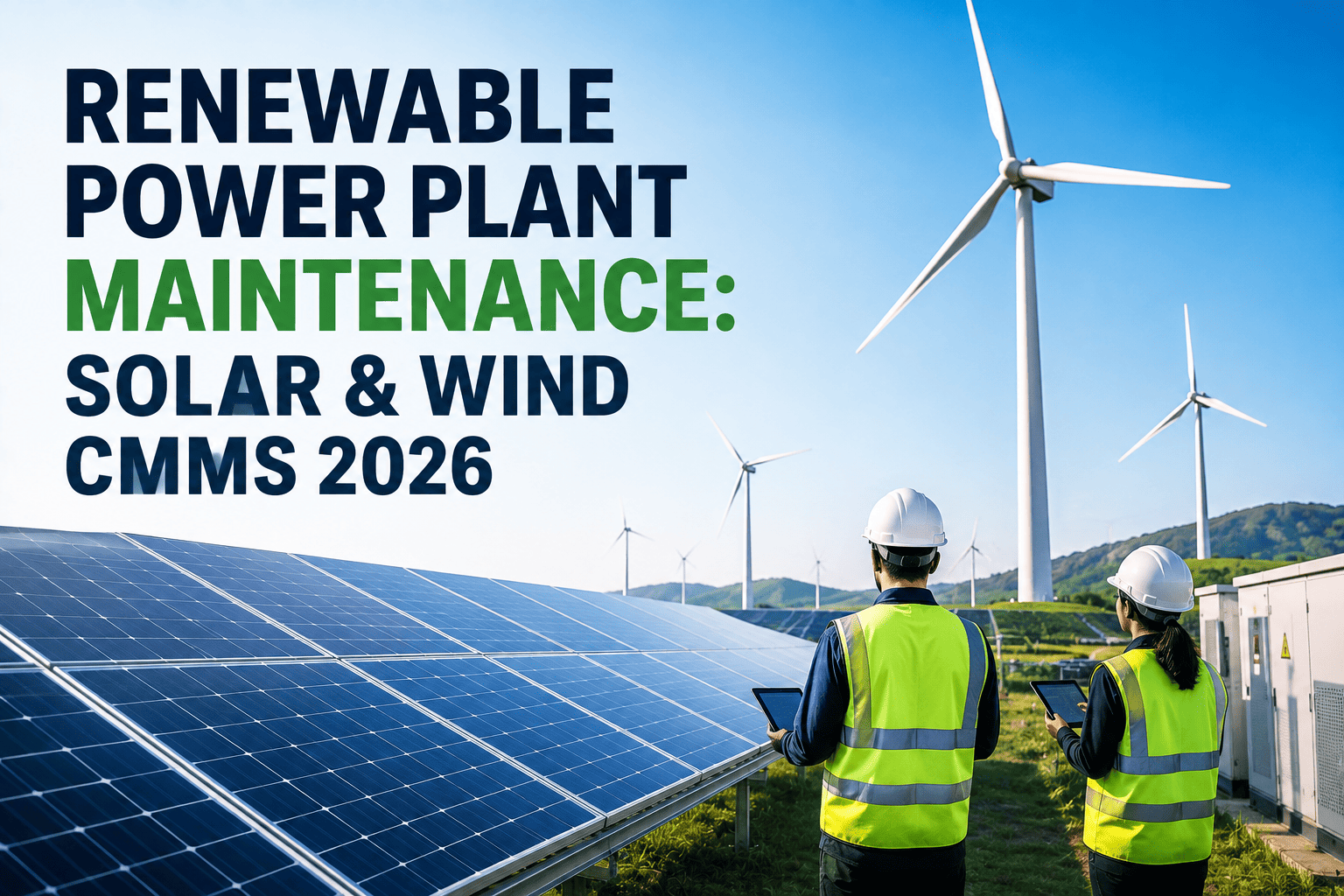
Hybrid power plants — combining solar PV arrays, wind turbines, and battery energy storage systems on a single site — are the fastest-growing segment of new renewable capacity globally. By 2030, over 40% of all new utility-scale renewable installations will be hybrid configurations. Yet the maintenance reality inside these plants remains deeply fragmented: solar teams use one monitoring platform, wind technicians rely on another, and battery storage operators work in a third. The result is three isolated health streams for assets that share land, interconnections, and generation targets. OxMaint's unified hybrid plant maintenance platform consolidates all three technology streams into a single predictive dashboard — one work order system, one alert queue, one maintenance team, and one measurable ROI.
Multi-Technology Renewable O&M
63% of Hybrid Plant Operators Manage Solar, Wind & Battery in Separate Disconnected Systems
That fragmentation costs the average 100MW hybrid site $1.4M annually in missed predictive windows, duplicated labor, and uncoordinated dispatch downtime. A unified maintenance platform changes the math entirely.
34%Avg Downtime Reduction with Unified O&M
$1.4MAnnual Loss from Fragmented Maintenance
2.8xFaster Fault Response with Cross-Technology Alerts
6 MoTypical ROI Payback Period
The Problem Nobody Talks About: The Hybrid Maintenance Gap
Managing a hybrid plant is not the sum of managing a solar plant plus a wind farm plus a battery system. The interdependencies create failure cascades that siloed tools never catch. A degraded battery cell that reduces storage dispatch capacity forces wind turbines to curtail output during peak price hours — a $40,000 revenue event that shows up in no single monitoring tool as a maintenance priority. Solar inverter derating during afternoon heat reduces the charge available to batteries, shortening their cycle life. These cross-technology consequences require a maintenance intelligence platform built for multi-asset renewable sites — not three disconnected tools duct-taped together.
Fragmented Approach
3 separate SCADA or monitoring platforms
Cross-technology failures invisible until generation drops
Manual data export & spreadsheet reconciliation
Separate work order queues per technology team
Dispatch coordination failures cost 18–24% of revenue
Automated compliance reports across all asset classes
Three Technologies. One Maintenance Intelligence Layer.
Solar PV, wind turbines, and battery storage each have fundamentally different failure physics, degradation timelines, and maintenance rhythms. OxMaint maps specialized predictive models onto each technology — then layers cross-technology correlation intelligence on top. Talk to our hybrid plant specialists to see how the platform handles your specific technology mix.
Solar PV
Top Failure Modes
Inverter IGBT degradation (41% of failures)
String-level soiling & shading losses
PID (potential-induced degradation) on panels
Tracker actuator failures reducing yield 12–18%
Detection Lead Time2–6 Weeks
Failure Cost: $8K–$180K per event
Wind Turbines
Top Failure Modes
Gearbox bearing wear (29% of major outages)
Blade leading-edge erosion reducing AEP
Generator winding insulation breakdown
Pitch control hydraulic system leaks
Detection Lead Time4–12 Weeks
Failure Cost: $35K–$450K per event
Battery Storage (BESS)
Top Failure Modes
Accelerated capacity fade from thermal stress
Cell imbalance causing BMS trips & curtailment
HVAC cooling unit failures raising cell temps
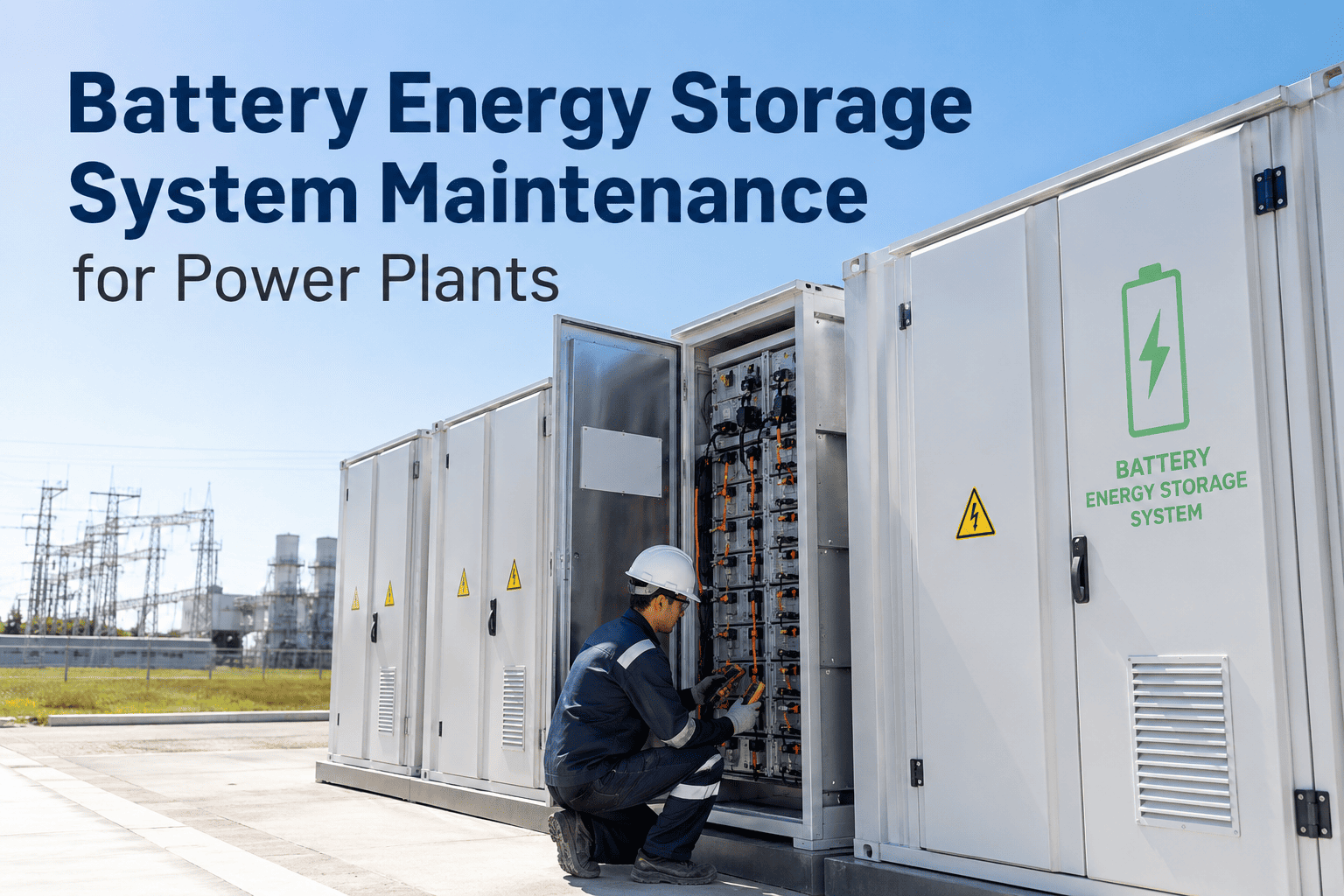
PCS (power conversion system) faults
Detection Lead Time1–8 Weeks
Failure Cost: $20K–$600K per event
Cross-Technology Alert Example: OxMaint detects a 14% capacity fade trend in BESS Module 3 and automatically adjusts wind turbine maintenance scheduling to ensure maximum generation during battery unavailability — preventing $62,000 in dispatch revenue loss that neither system's standalone monitoring would have flagged.
OxMaint Unified Platform: How It Works Across All Three Technologies
The platform does not bolt three monitoring tools together. It builds a single asset health graph across all technologies, then applies cross-technology intelligence to surface failures that only become visible when you can see the whole picture at once.
OxMaint Unified Hub
Solar PV Data
Wind SCADA
BESS BMS
Grid Meter
Weather Data
Platform Delivers
01
Unified Asset Health Dashboard
Single view of health scores, alerts, and work order status across all three technologies in one screen
02
Cross-Technology Predictive Alerts
AI detects multi-asset failure cascades weeks before revenue impact materializes
03
Dispatch-Aware Work Scheduling
Maintenance windows aligned to energy price forecasts to minimize revenue sacrifice during planned outages
04
Automated Multi-Tech Work Orders
Single work order system assigns tasks across solar, wind, and BESS teams with coordinated scheduling
05
Portfolio-Level Reporting
Consolidated availability, production loss, and maintenance cost reports across all asset classes
See Your Entire Hybrid Plant in One Dashboard
Stop switching between three monitoring tools to understand your plant's health. OxMaint gives you a single predictive view across solar, wind, and battery — with automated alerts and work orders that keep your team ahead of every failure.
Key Performance Metrics: Unified vs. Fragmented O&M
The data below reflects documented performance outcomes from hybrid renewable sites that transitioned from siloed monitoring to unified predictive maintenance programs. These figures come from 25MW to 200MW hybrid facilities across North America, Europe, and Asia-Pacific.
The ROI model below is built on published hybrid O&M benchmarks and documented outcomes from utility-scale multi-technology renewable sites. Platform investment and avoided cost figures reflect 2024–2025 market data for North American and European hybrid renewable deployments.
Annual Value Delivered — OxMaint Unified Maintenance Program
Unplanned Downtime Reduction
150 fewer outage hours at $4,200/hr blended (solar+wind+BESS)
Cross-technology coordination prevents missed peak dispatch windows worth $3,800/hr average
$456,000
Maintenance Cost Reduction
38% labor and parts efficiency gain across unified O&M team
$520,000
BESS Life Extension
Thermal management optimization extends 20MW battery pack life by 2.4 years, deferring $3.2M replacement
$280,000
Warranty & Insurance Recovery
Documented fault records increase warranty claim recovery by 49 percentage points
$195,000
Total Annual Value
Platform investment: $120K–$280K/yr · Net ROI: $2.66M–$2.82M · Payback: under 6 months
$2,939,000
Getting Started: From Fragmented to Unified in 4 Stages
You do not need to replace existing SCADA or monitoring tools to unify your hybrid plant maintenance. OxMaint sits above your existing systems, ingests their data, and adds the cross-technology intelligence and workflow automation layer on top. Book a demo to map your current systems to OxMaint's integration architecture.
Stage 1
Inventory & Integration Mapping
Catalog all solar, wind, and BESS assets with criticality scores. Map existing SCADA, inverter, and BMS data feeds to OxMaint integration points via OPC-UA, REST API, or Modbus.
Weeks 1–3
Stage 2
Data Unification & Baseline Learning
Live data from all three technologies flows into a single OxMaint asset graph. AI baselines each asset type — solar string performance, wind vibration profiles, BESS thermal curves — within 2–4 weeks.
Weeks 3–8
Stage 3
Predictive Alerts & Unified Work Orders
Cross-technology predictive alerts begin firing. Automated work orders route to the right technology team with parts specifications, safety procedures, and energy-price-aware timing recommendations.
Weeks 8–14
Stage 4
Portfolio Optimization & Reporting
Monthly performance reviews track avoided downtime, maintenance cost trends, and BESS health across the full hybrid portfolio. Investor and lender-ready reports generated automatically from live data.
Month 4 onward
Your Hybrid Plant Deserves a Maintenance Platform Built for All Three Technologies
Solar, wind, and battery storage are each complex on their own. Together, they create failure interdependencies that no single-technology tool was ever designed to manage. OxMaint gives your hybrid plant the unified predictive intelligence it needs — one dashboard, one alert queue, and one maintenance strategy across your entire multi-technology portfolio.
Can OxMaint integrate with existing solar, wind, and BESS monitoring tools simultaneously?
Yes. OxMaint is designed as an integration layer above existing monitoring systems, not a replacement for them. It ingests data from solar SCADA platforms like SolarEdge, SMA, or Fronius; wind SCADA systems from Vestas, Siemens-Gamesa, or GE; and BESS management systems from Tesla, Fluence, or BYD through standard API connections, OPC-UA, or Modbus TCP protocols. Your existing tools remain in place — OxMaint adds the cross-technology intelligence and unified work order workflow that each standalone system lacks. Most hybrid plants complete integration within 5–8 weeks without disrupting existing operations. Sign up free to explore what integration looks like for your specific technology stack.
How does OxMaint handle battery degradation trending differently from solar and wind?
Battery storage requires fundamentally different predictive models than rotating equipment or solar strings. OxMaint's BESS health module tracks cell voltage variance, state-of-health (SoH) degradation curves, temperature differential patterns across modules, and cycle count weighting by depth-of-discharge. Unlike solar and wind failures which are typically event-driven, BESS capacity fade is continuous and cumulative — so OxMaint projects remaining useful capacity quarters ahead, giving O&M teams time to schedule cell replacement groups during planned outage windows rather than replacing entire modules after BMS trips. Thermal anomaly alerts flag cooling system issues 1–3 weeks before cell temperatures breach warranty thresholds.
Does the platform work for hybrid plants with only two of the three technologies?
Fully supported. Many OxMaint deployments are solar-plus-storage or wind-plus-storage sites without all three technologies on the same premises. The platform's value in a two-technology configuration comes from the same cross-technology intelligence engine — specifically, understanding how degradation in one asset class affects optimal dispatch and availability commitments in the other. A solar-plus-BESS site benefits enormously from OxMaint's ability to correlate inverter derating with battery charge cycle patterns, catching the thermal stress cycles that accelerate capacity fade long before they appear in quarterly SoH reports. Book a demo tailored to your specific technology configuration.
What size hybrid plant sees the strongest ROI from OxMaint?
The ROI case is strongest for hybrid sites above 30MW total capacity that operate under power purchase agreements or merchant market exposure, as these plants have quantifiable revenue consequences for every hour of unplanned downtime. Smaller hybrid sites in the 8–30MW range still achieve positive ROI — particularly those with BESS components, where even one prevented thermal management failure pays for a year of platform costs. For utility-scale hybrid portfolios above 200MW across multiple sites, OxMaint's portfolio-level reporting and benchmarking across sites adds a second tier of value beyond single-site reliability improvements, typically adding 15–20% to the calculated ROI versus single-site deployments.