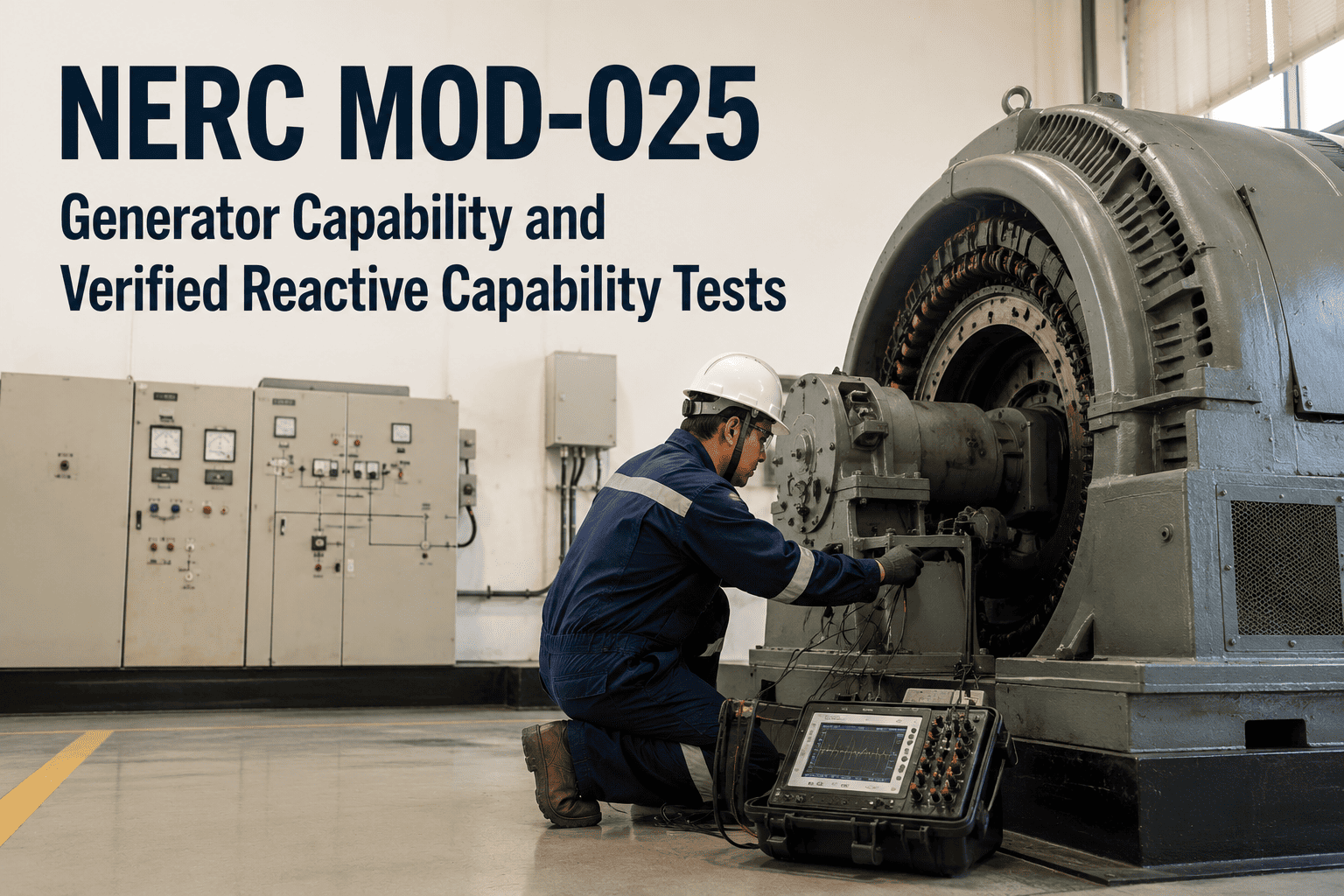
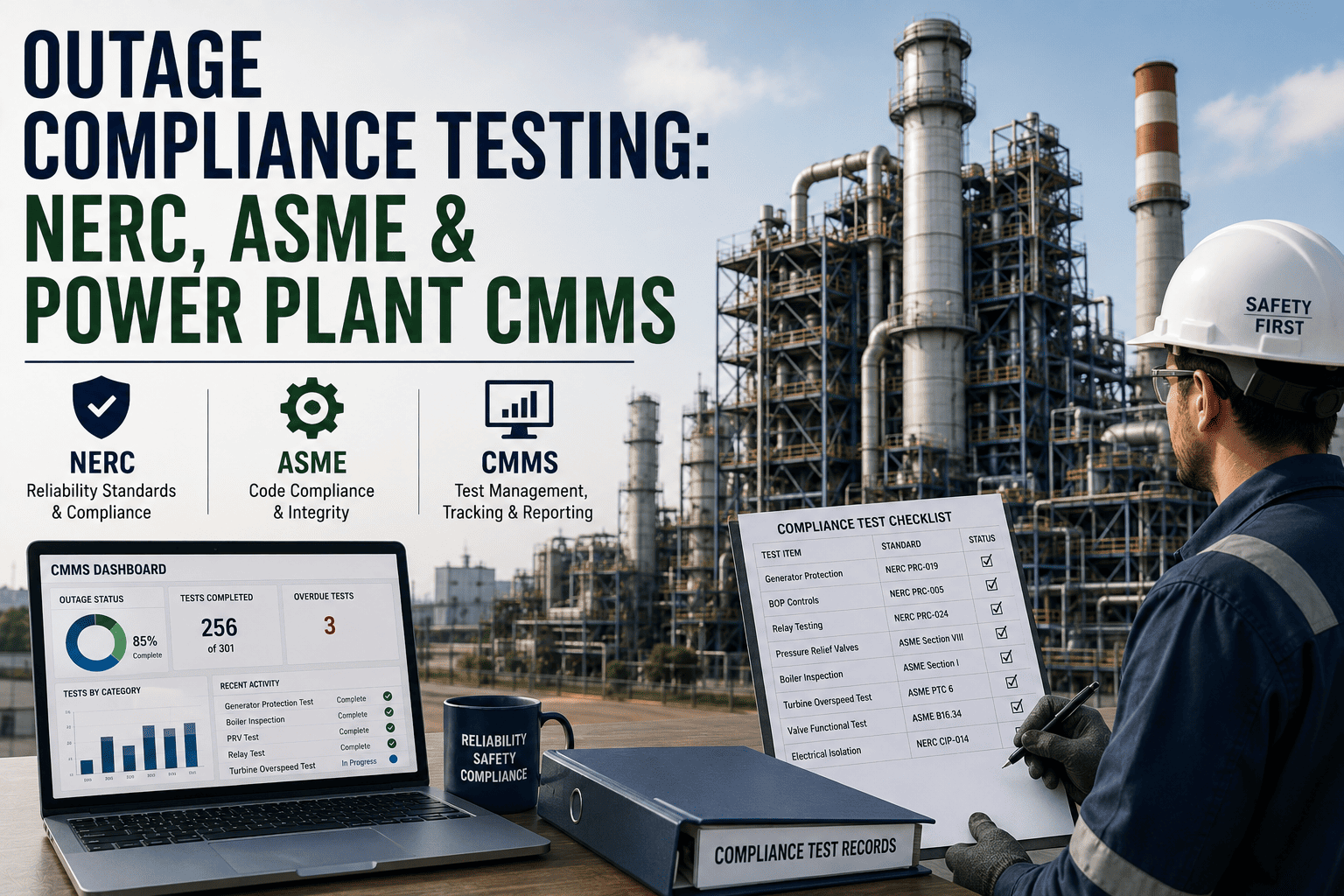
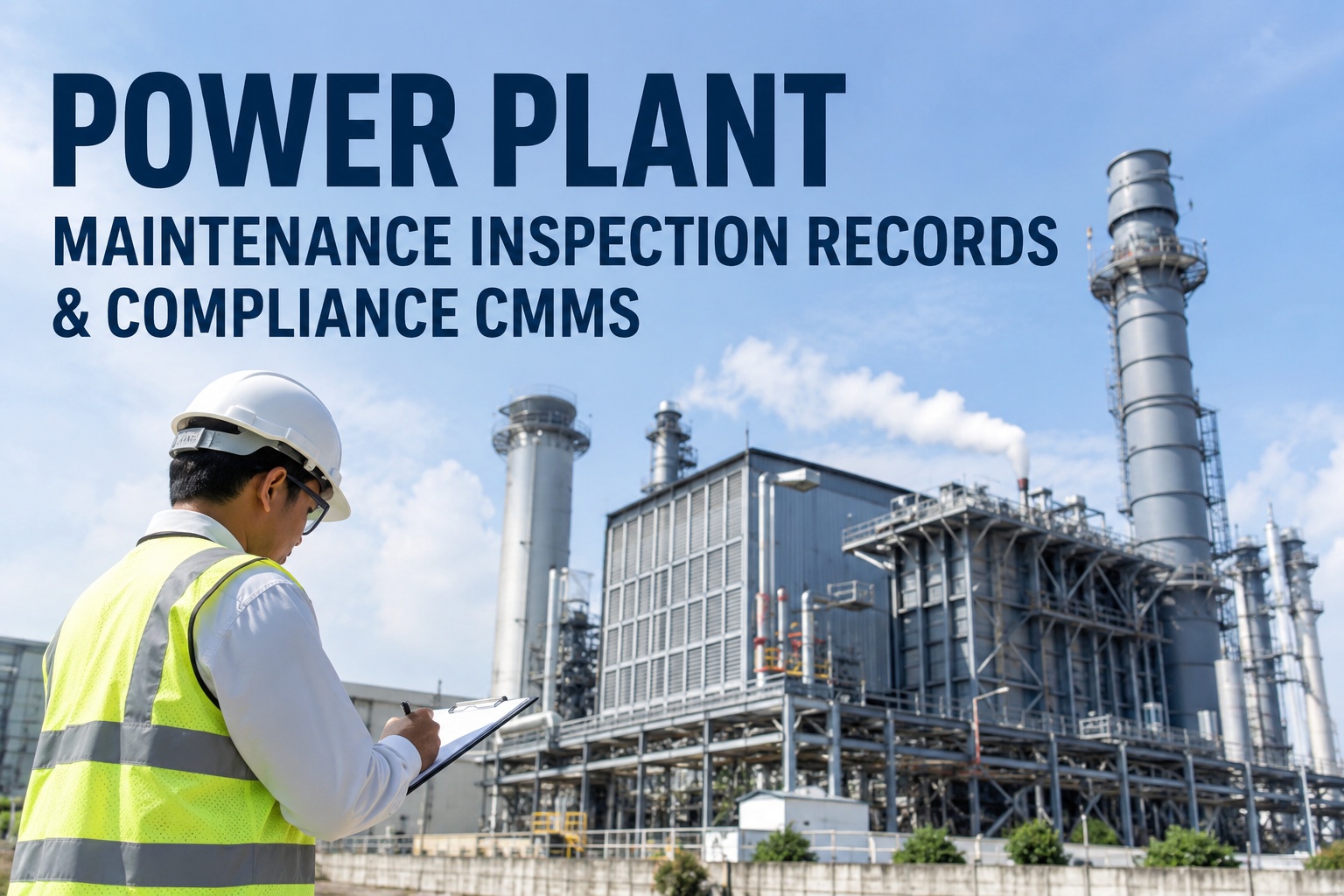
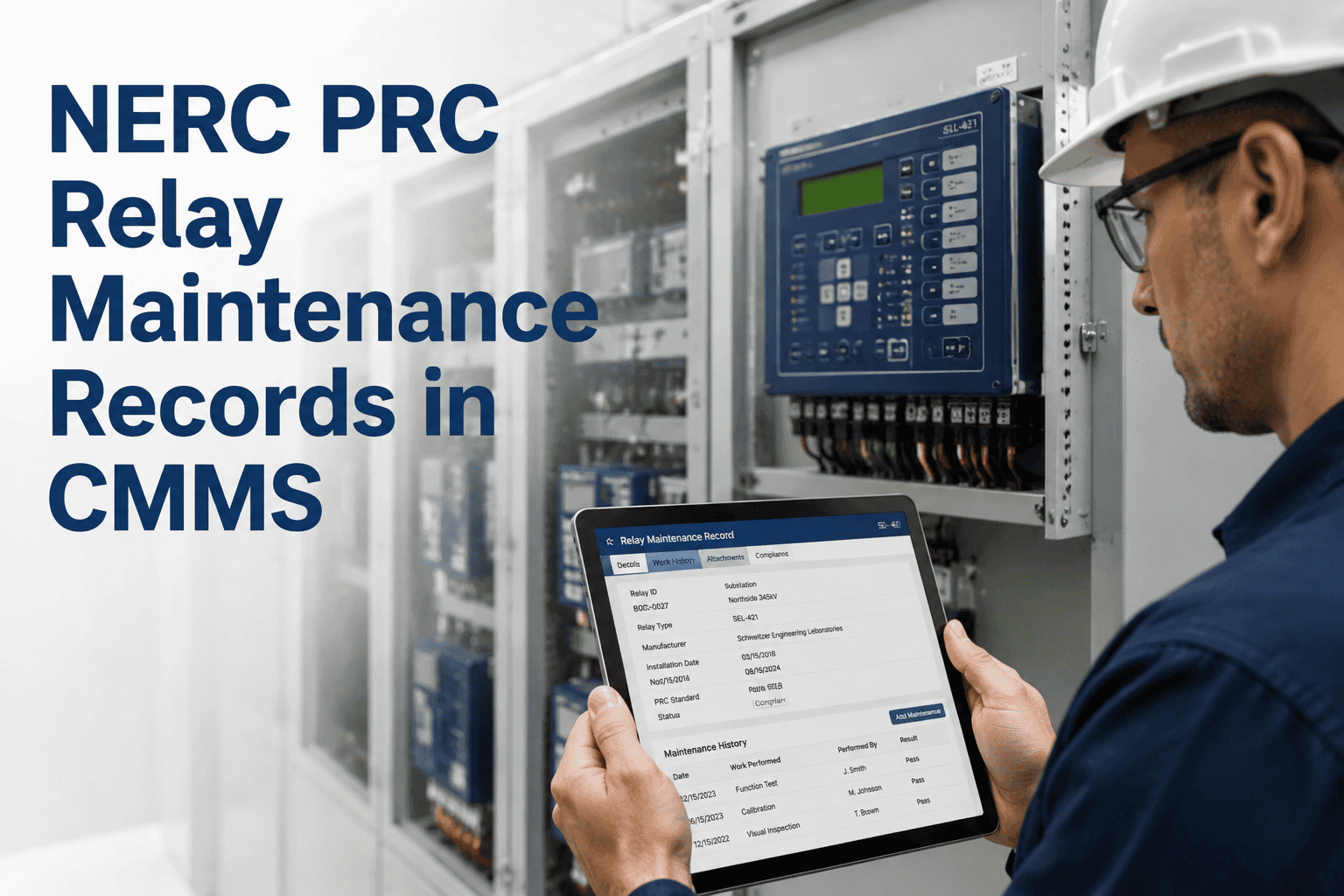
NERC MOD-025 requires generator owners to verify real and reactive power capability through structured field testing — and to maintain audit-ready records proving those tests were completed on schedule. Most compliance failures on MOD-025 are not testing failures; they are recordkeeping failures. A test was conducted, but the data was logged in a spreadsheet, the spreadsheet was not linked to the asset, and the auditor found a gap. CMMS-driven compliance tracking solves that problem by attaching every MOD-025 test record directly to the generator asset, scheduling the next test automatically, and producing audit packages on demand. If your MOD-025 program relies on spreadsheets or paper binders, explore OxMaint's compliance management tools or book a 30-minute session with a power plant CMMS specialist to see how structured record management changes audit outcomes.
NERC MOD-025 · Generator Compliance · Reactive Capability Testing
NERC MOD-025 Generator Capability and Verified Reactive Tests: Field Testing, Records, and Audit Readiness
Most MOD-025 violations are recordkeeping failures, not testing failures. Here is the complete framework for field testing, CMMS-tracked records, and audit-ready compliance.
R1
Real Power Capability Verification Requirement
R2
Reactive Power Capability Verification Requirement
5 yr
Maximum Test Interval for Most Generator Types
7 day
Data Submission Window to Planning Coordinator
What MOD-025 Actually Requires: R1 and R2 Broken Down
MOD-025 contains two core requirements that apply to applicable generator owners. Understanding exactly what each requires — and what supporting evidence satisfies an auditor — is the starting point for a defensible compliance program.
Requirement R1
Real Power Capability Verification
- Verify gross real power capability at rated power factor
- Test must be performed during normal operating conditions
- Results submitted to the Planning Coordinator within 7 calendar days
- Retesting required after any modification affecting real power output
- Maximum 5-year interval between scheduled verifications
Requirement R2
Reactive Power Capability Verification
- Verify both leading and lagging reactive capability (MVAR range)
- Test conducted at or near rated MW output
- Results submitted to the Planning Coordinator within 7 calendar days
- Retesting required after AVR, exciter, or PSS modifications
- Maximum 5-year interval between scheduled verifications
MOD-025 Applicability: Which Generators Must Comply
Not every generator is subject to MOD-025. The standard applies based on a threshold tied to the generator's interconnection voltage and net real power capability. Understanding the applicability boundary prevents both over-testing resources that are exempt and missing units that are in scope.
| Generator Type |
Applicability Threshold |
R1 Required |
R2 Required |
| Synchronous Generator |
Connected at 100 kV or above, or designated in Facilities Study |
Yes |
Yes |
| Wind / Solar (Type IV) |
Net real power above regional threshold per applicable Reliability Standard |
Yes |
Yes (reactive range) |
| Hydro Generator |
Connected at 100 kV or above; applicable if designated by Planning Coordinator |
Yes |
Yes |
| Nuclear Unit |
All nuclear generators connected to the BES |
Yes |
Yes |
| Small Generator (Exempt) |
Below regional threshold and not designated by Planning Coordinator |
No |
No |
Field Testing Protocol: How MOD-025 Tests Are Conducted
A MOD-025 field test is not a simple meter reading. It is a structured operational procedure that must be documented with timestamped data, environmental conditions, and equipment configuration — all of which form the evidence package submitted to the Planning Coordinator and retained for audit.
01
Pre-Test Coordination
Notify the Planning Coordinator and Transmission Operator of planned test window. Confirm system conditions permit stable high-MW, high-MVAR operation for the test duration (typically 15–30 minutes of stable data collection).
02
Equipment Configuration Verification
Confirm AVR is in automatic voltage control mode, PSS is in service (if applicable), and all auxiliary equipment is operating at rated conditions. Document configuration in the test record before data collection begins.
03
Real Power Capability Test (R1)
Raise MW output to maximum sustainable capability. Record gross MW, terminal voltage, power factor, ambient temperature (for thermal units), and water head/flow (for hydro) at 1-minute intervals over a 15-minute stable window.
04
Reactive Capability Test (R2) — Lagging
With MW held at rated output, raise excitation to maximum lagging MVAR limit. Record terminal voltage, MW, MVAR, and field current at stability. Hold stable for 15 minutes of data collection at the MVAR ceiling.
05
Reactive Capability Test (R2) — Leading
Reduce excitation to maximum leading MVAR limit while maintaining rated MW. Record terminal voltage, MW, and MVAR at the leading limit. System stability constraints may limit the leading test range — document any system-imposed restriction.
06
Data Package Assembly and Submission
Assemble the complete test record: timestamped SCADA or DCS data, equipment configuration sheet, ambient/environmental data, and comparison to previous test results. Submit to Planning Coordinator within 7 calendar days of the test date.
Stop Managing MOD-025 Records in Spreadsheets
OxMaint attaches every MOD-025 test record directly to the generator asset, triggers retesting automatically after any modification, and generates audit-ready compliance packages without manual data gathering.
Common MOD-025 Violations and How CMMS Prevents Each One
NERC audit findings on MOD-025 follow a consistent pattern. The same violation types appear across utilities, and almost all of them trace back to the same root cause: manual tracking systems that fail to catch schedule slippage, trigger retests after modifications, or preserve complete test records.
Violation Type 1
Missed 5-Year Test Interval
A generator went 6 years between tests because the spreadsheet tracking system had no automated alert. CMMS auto-schedules the next test at time of record closure and alerts 90, 60, and 30 days before the deadline.
Violation Type 2
Missing Retest After Modification
AVR replacement was not linked to a triggered MOD-025 retest obligation. CMMS work order templates for exciter and AVR maintenance automatically generate a linked MOD-025 retest work order upon job closure.
Violation Type 3
Incomplete Test Data Package
Auditors found a test record with MW data but no reactive data, and no environmental conditions. CMMS test templates require all mandatory fields before a MOD-025 work order can be closed, preventing incomplete records.
Violation Type 4
Late Submission to Planning Coordinator
Test data was compiled but not submitted within 7 days due to internal routing delays. CMMS work order closure triggers an automatic submission task assigned to the compliance coordinator with a 5-day internal deadline.
Violation Type 5
Records Lost After Personnel Change
Five years of MOD-025 records were stored in a departing engineer's personal drive. CMMS centralises all test records to the asset history, independent of individual users, with role-based access and retention enforcement.
Violation Type 6
Applicability Not Reassessed After Upgrade
A generator upgrade moved a unit from below to above the applicability threshold, but MOD-025 tracking was never initiated. CMMS asset records flag capability changes that may trigger new compliance obligations.
MOD-025 CMMS Record Structure: What Each Asset Record Must Contain
An audit-ready MOD-025 record is not just the test data. Auditors review the complete chain of evidence from the test trigger event through data submission confirmation. A CMMS that structures records correctly makes audit response a report export, not a multi-day document hunt.
A
Asset Profile
Generator ID and unit name
Interconnection voltage level
Nameplate MW and MVAR ratings
Planning Coordinator designation
MOD-025 applicability flag
T
Test Record
Test date and duration
Timestamped MW, MVAR, voltage data
Equipment configuration at test time
Environmental / ambient conditions
Prior test comparison
S
Submission Record
Submission date to Planning Coordinator
Confirmation receipt or acknowledgement
Submitting engineer name and role
Days from test to submission
Any accepted deviation notes
N
Next Test Schedule
Auto-calculated next test due date
Alert schedule (90 / 60 / 30 days)
Assigned responsible technician
Linked modification triggers
Escalation path if deadline at risk
Frequently Asked Questions
What triggers a mandatory MOD-025 retest outside the 5-year cycle?
Any modification that affects real or reactive power capability triggers a retest obligation. This includes AVR replacement, exciter upgrades, PSS installation or tuning, generator rewind, step-up transformer replacement, and any uprate or derating affecting nameplate capability.
OxMaint's work order templates automatically generate a linked MOD-025 retest obligation when these maintenance categories are closed.
Can a generator claim exemption from MOD-025 if it cannot reach rated output due to age or condition?
No. MOD-025 requires verification of actual capability, not nameplate capability. A unit that can only reach 85% of nameplate must test and report actual achievable output. Degraded capability must be documented and submitted — it is not grounds for exemption. The Planning Coordinator uses the verified reduced capability in system models, which is exactly why the test is required.
Speak with a compliance specialist if your unit has known capability limitations.
How does CMMS help when a MOD-025 test cannot be completed due to system conditions?
CMMS allows the work order to be documented with a system-condition exception, linking the Transmission Operator's written notification as an attachment. This creates an auditable record showing the test was scheduled, attempted, and deferred for documented system reasons — which is the accepted basis for a compliance extension request to the Planning Coordinator.
What is the penalty exposure for a MOD-025 violation?
MOD-025 violations are subject to NERC's Sanction Guidelines. The severity level (lower, moderate, high, severe) depends on how far outside the test interval the unit went and whether the data gap affected system planning decisions. Fines can reach six figures per violation per day for severe category findings. CMMS-managed programs eliminate the scheduling and recordkeeping failures that produce violations.
Does OxMaint support the SAR (Self-Assessment Report) process for MOD-025?
Yes.
OxMaint provides compliance dashboards that show every in-scope generator's current test status, days to next due date, open retest obligations, and submission history. This data feeds directly into the SAR process and provides the evidence set an auditor would request during a compliance audit or spot check.
Your Next MOD-025 Audit Starts With the Records You Are Creating Today
OxMaint gives power plant compliance teams structured test scheduling, asset-linked records, automatic retest triggers, and audit packages that take minutes to generate — not days.