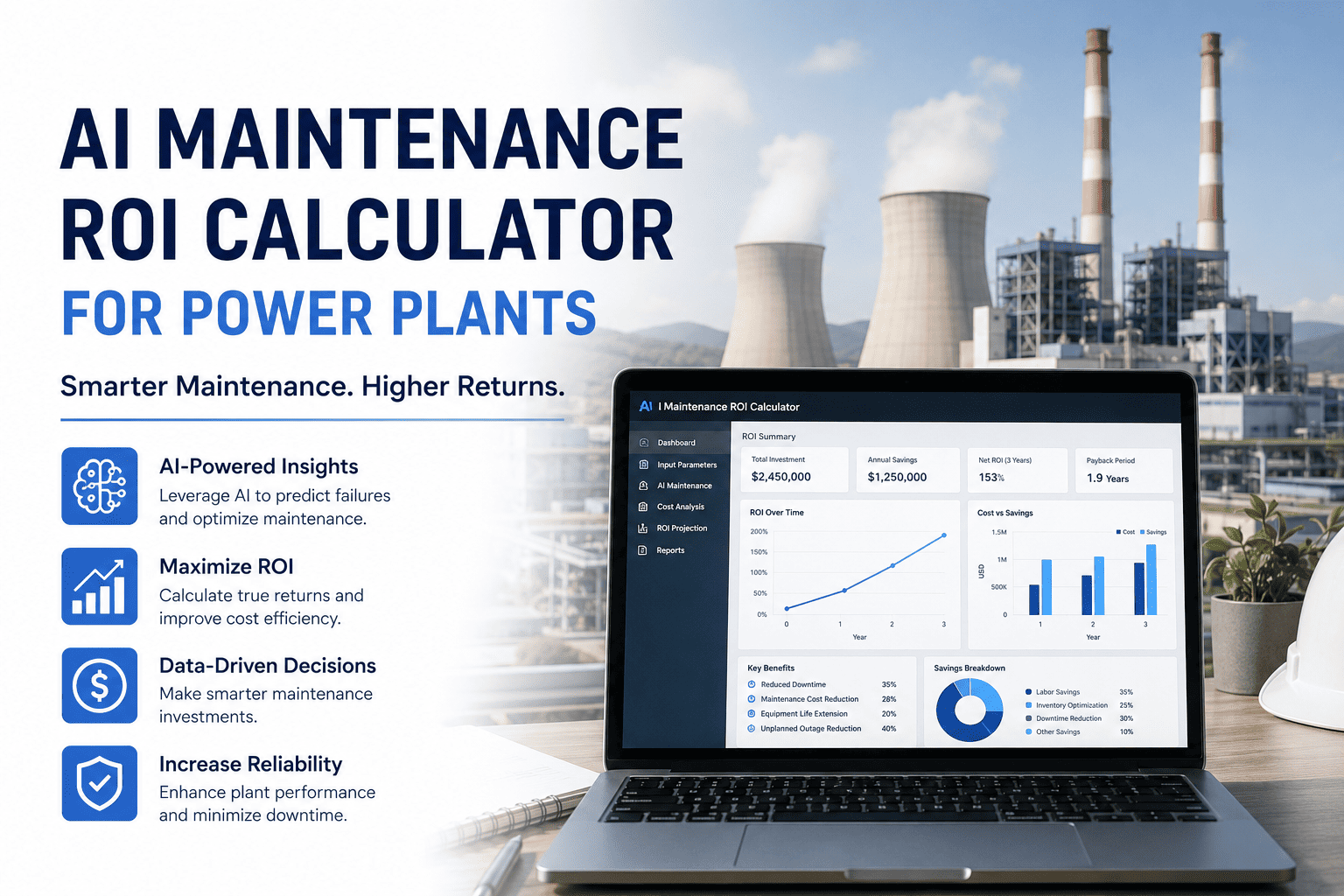
Power plants operating under EPA Clean Air Act obligations face a compliance environment that has grown measurably more demanding every year — with CEMS downtime violations, missed opacity test windows, and permit exceedance events each carrying penalty exposure that can reach $70,117 per day per violation under current EPA civil penalty authority. The difference between a plant that passes its annual compliance evaluation and one that receives a Notice of Violation is almost always operational — it is the maintenance programme behind the monitoring equipment and the documentation system behind the reporting. Start tracking your CEMS maintenance and emissions compliance in OxMaint today — or book a demo to see how OxMaint automates EPA compliance documentation for power generators running under Title V, NSPS, and MATS obligations.
EPA Violations Don't Start at the Stack.
They Start in the Maintenance Log.
CEMS availability tracking, opacity test scheduling, permit limit monitoring, and automated compliance documentation — purpose-built for power plant environmental compliance teams.
The EPA Compliance Framework for Power Plants: 5 Regulatory Obligations
Power generation facilities subject to EPA Clean Air Act regulations operate under a layered compliance structure. Each layer has its own monitoring requirements, reporting deadlines, and maintenance obligations — and failure in any one layer can trigger enforcement action independent of performance in the others.
CEMS Availability: The Maintenance Problem Behind Every Data Gap
Continuous Emissions Monitoring Systems are the single most maintenance-intensive piece of environmental compliance equipment at a power plant. The 95% quarterly availability requirement under 40 CFR Part 75 translates to no more than approximately 219 hours of allowable downtime per quarter — across every analyzer, probe, flow monitor, and associated data acquisition system that feeds the CEMS.
Permit Limit Tracking: Turning Your Operating Permit Into a Live Dashboard
A Title V operating permit is not a static document — it is a live compliance obligation that runs 24 hours a day. Every emission limit, operational restriction, monitoring frequency requirement, and recordkeeping obligation in the permit creates a real-time compliance condition that must be monitored, documented, and reported. OxMaint structures permit limits as trackable parameters linked directly to maintenance and monitoring work orders.
EPA Compliance Calendar: Key Deadlines OxMaint Tracks Automatically
EPA compliance is deadline-driven. Missing a reporting submission, exceeding a performance test schedule, or allowing a permit condition monitoring gap to accumulate are the most common triggers for enforcement referral. OxMaint's compliance calendar creates work orders and alerts for every scheduled obligation before the deadline arrives.
The Real Cost of EPA Non-Compliance: What Documentation Failures Generate
EPA enforcement data consistently shows that the majority of Clean Air Act penalties at power facilities are driven by monitoring and documentation failures — not by exceeding actual emission limits. The following penalty categories reflect enforcement actions where inadequate monitoring systems and record-keeping gaps drove the violation finding.
OxMaint EPA Compliance Module: What Environmental Teams Use Daily
Frequently Asked Questions
Your CEMS Is Running Right Now.
Is Your Compliance Documentation Keeping Up?
OxMaint connects your CEMS maintenance programme, permit tracking, and emissions recordkeeping into a single compliance system that generates audit-ready documentation as a byproduct of daily operations. Most facilities are live within three weeks.