Power plants running SAP invest millions in their ERP backbone, yet maintenance teams still battle disconnected systems every day. Work orders live in SAP PM while technicians track repairs on spreadsheets. Equipment histories sit in one database, cost reports in another. The result is a visibility gap that costs the average utility plant hundreds of thousands in avoidable downtime each year. SAP integration for power plant asset management eliminates this gap by creating a live, bi-directional data bridge between your ERP and your maintenance execution platform. According to IDC, organizations that connect modern maintenance tools with SAP S/4HANA report up to 53% improved operational efficiency across asset-heavy operations.
The ERP market for energy and utilities reached $10.29 billion in 2025 and continues to grow rapidly. SAP remains the dominant ERP platform in this sector, with over 395 energy and utility companies actively running SAP Utilities worldwide. Yet a significant portion of these organizations still rely on manual processes to connect SAP data with day-to-day maintenance work. Power plants ready to close the gap between SAP and field execution are discovering that true integration delivers returns far beyond simple data synchronization.
How Bi-Directional SAP Integration Actually Works
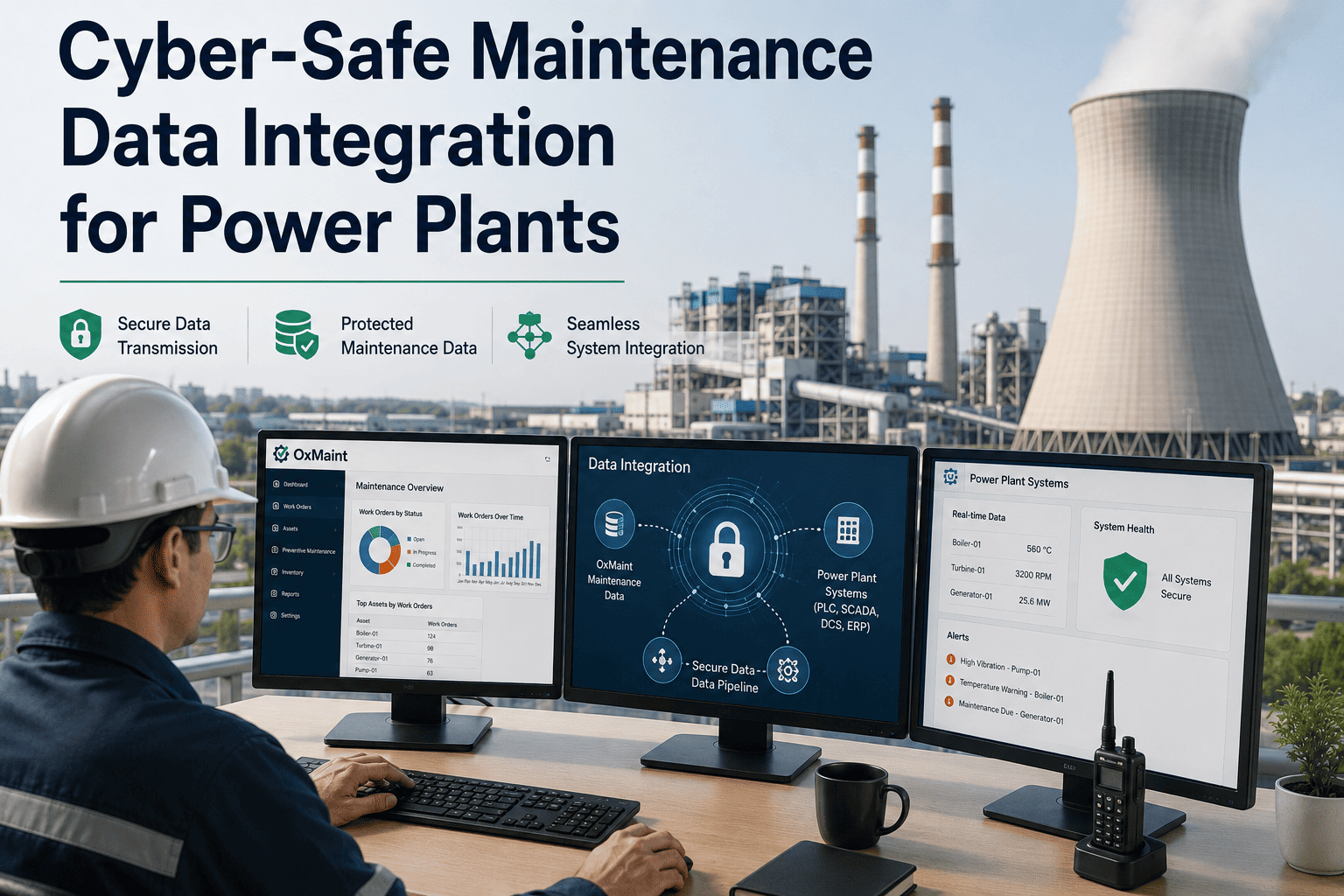
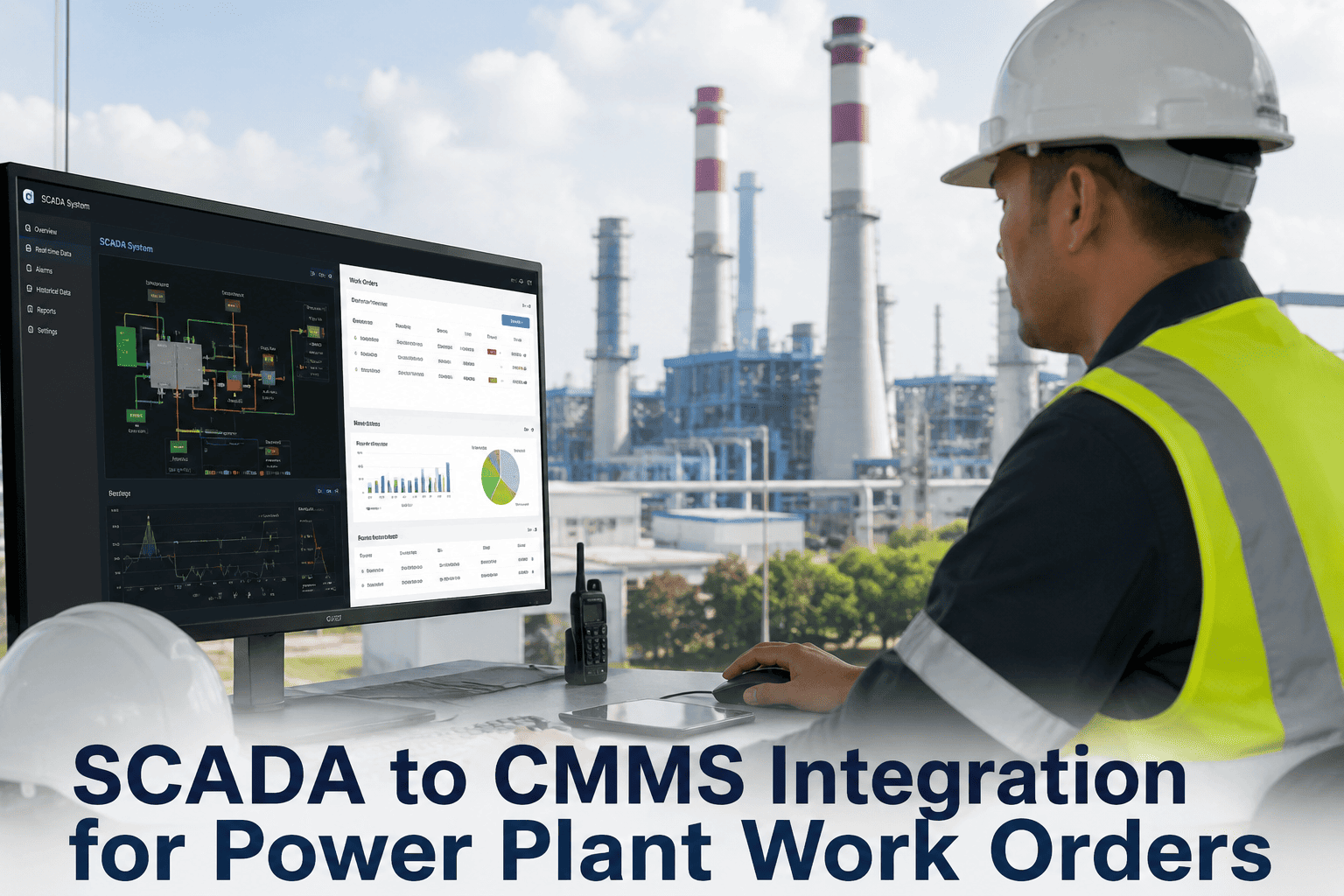
Bi-directional integration means data flows both ways in real time. When a technician closes a work order in OxMaint, SAP PM updates automatically with labor hours, parts consumed, and completion status. When procurement approves a spare part in SAP, the inventory count in your CMMS reflects the change instantly. There is no batch upload at end-of-day, no CSV export, and no re-keying data between screens. The integration connects through standard SAP interfaces including OData, BAPI, RFC, and IDoc protocols, ensuring compatibility with both SAP ECC and S/4HANA environments.
This architecture means your SAP investment is preserved and extended, not replaced. SAP continues to serve as the financial and procurement backbone while OxMaint handles the operational complexity of field maintenance, mobile inspections, and predictive analytics. The integration layer ensures both systems share a single version of truth. Facilities looking to explore how this integration maps to their SAP environment can see the data flow modeled against their own asset hierarchy.
What Gets Synchronized and Why It Matters
Not all data points carry equal weight. The highest-impact synchronizations are the ones that eliminate delays between decisions and actions. Here is exactly what moves between SAP and OxMaint, and the operational impact each data stream delivers.
Power Plant Assets That Demand SAP-Connected Maintenance
Every turbine, generator, and boiler in your fleet has a financial identity inside SAP and an operational identity in the field. When these identities are disconnected, maintenance decisions get made without cost context and financial reports miss the operational reality. The assets below represent where SAP integration delivers the most measurable impact for power generation facilities.
| Power Plant Asset | SAP Data Synced | Maintenance Impact | Annual Savings Potential |
|---|---|---|---|
| Gas / Steam Turbine | Equipment BOM, cost history, vendor contracts | Predictive work orders with auto-cost allocation | $400K - $1.8M |
| Generator | Winding specs, insulation test records, PM schedules | Condition-based overhauls synced with outage planning | $150K - $700K |
| Boiler System | Tube thickness data, inspection certifications | Tube leak prevention with integrated compliance tracking | $100K - $450K |
| Transformer | DGA results, load profiles, oil test history | Failure prediction linked to procurement triggers | $120K - $900K |
| Balance of Plant | Pump/motor specs, parts inventory, service records | Automated reorder points and PM scheduling | $50K - $200K |
Expert Perspective: Why SAP Alone Is Not Enough
SAP PM is an exceptional financial and planning backbone, but it was never designed to be a field-first maintenance execution tool. The user interface is built for desktop planners, not technicians standing next to a turbine in 110-degree heat. What power plants need is a system that extends SAP's strengths into the field, putting mobile work orders, photo documentation, and condition monitoring into technicians' hands while every action syncs back to SAP in real time. The plants achieving the highest availability rates in 2025 are the ones that stopped forcing SAP to do everything and instead connected it to purpose-built maintenance tools.
The asset management segment within the ERP for energy market is projected to reach $3.5 billion by 2035, reflecting the industry-wide recognition that maintenance data must be connected, not siloed. Power plants that begin building their integrated maintenance foundation today position themselves ahead of a rapidly shifting industry standard.
Implementation Without Disruption
The most common concern about SAP integration is disruption. Plant managers rightly worry about touching systems that run critical operations. The OxMaint integration approach is designed to connect alongside your existing SAP configuration without modifying your core ERP setup. Data flows through standard SAP APIs and connectors, preserving your existing business logic, approval workflows, and security configurations. Most deployments complete initial data sync within weeks, not months, with zero downtime to SAP or plant operations.