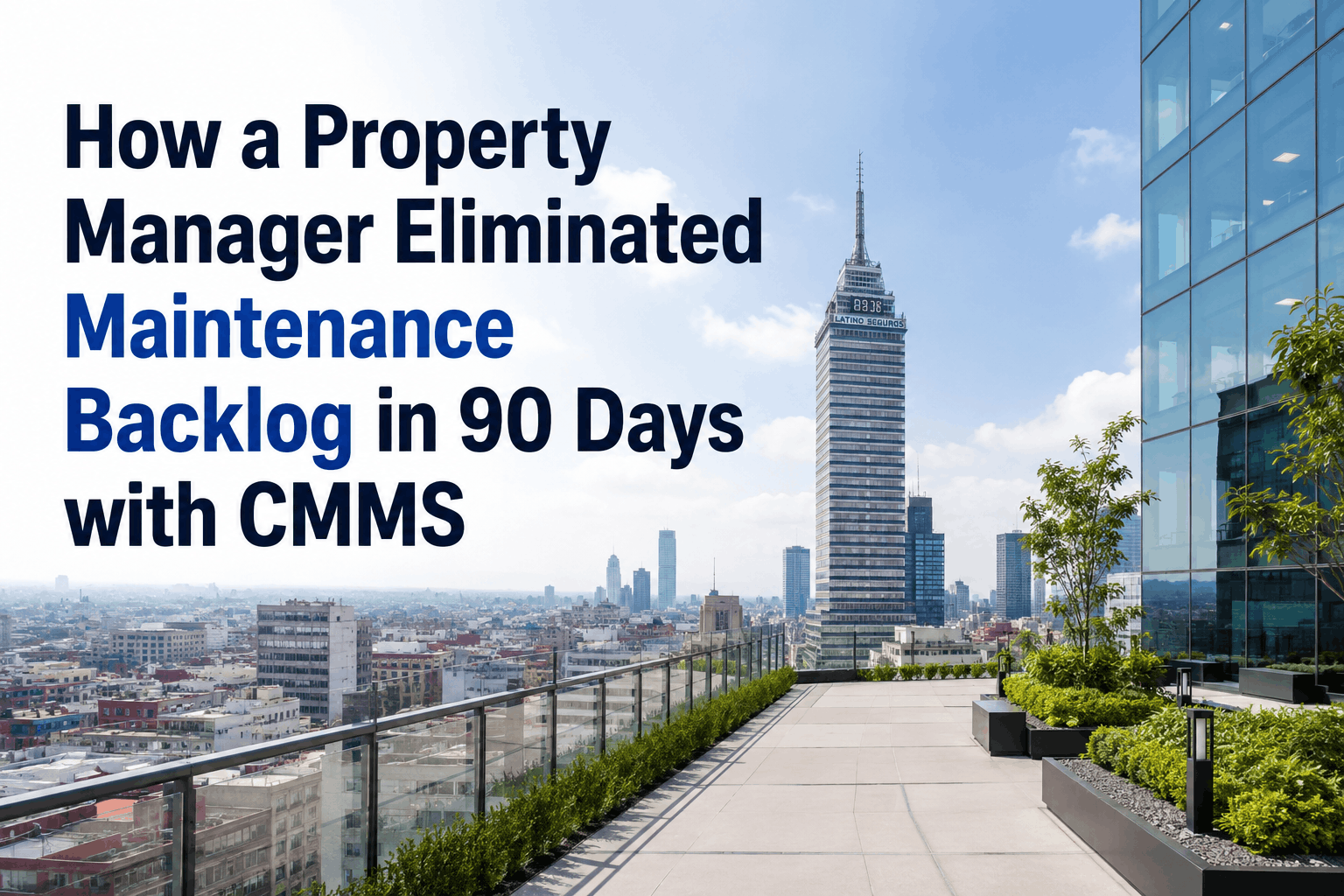
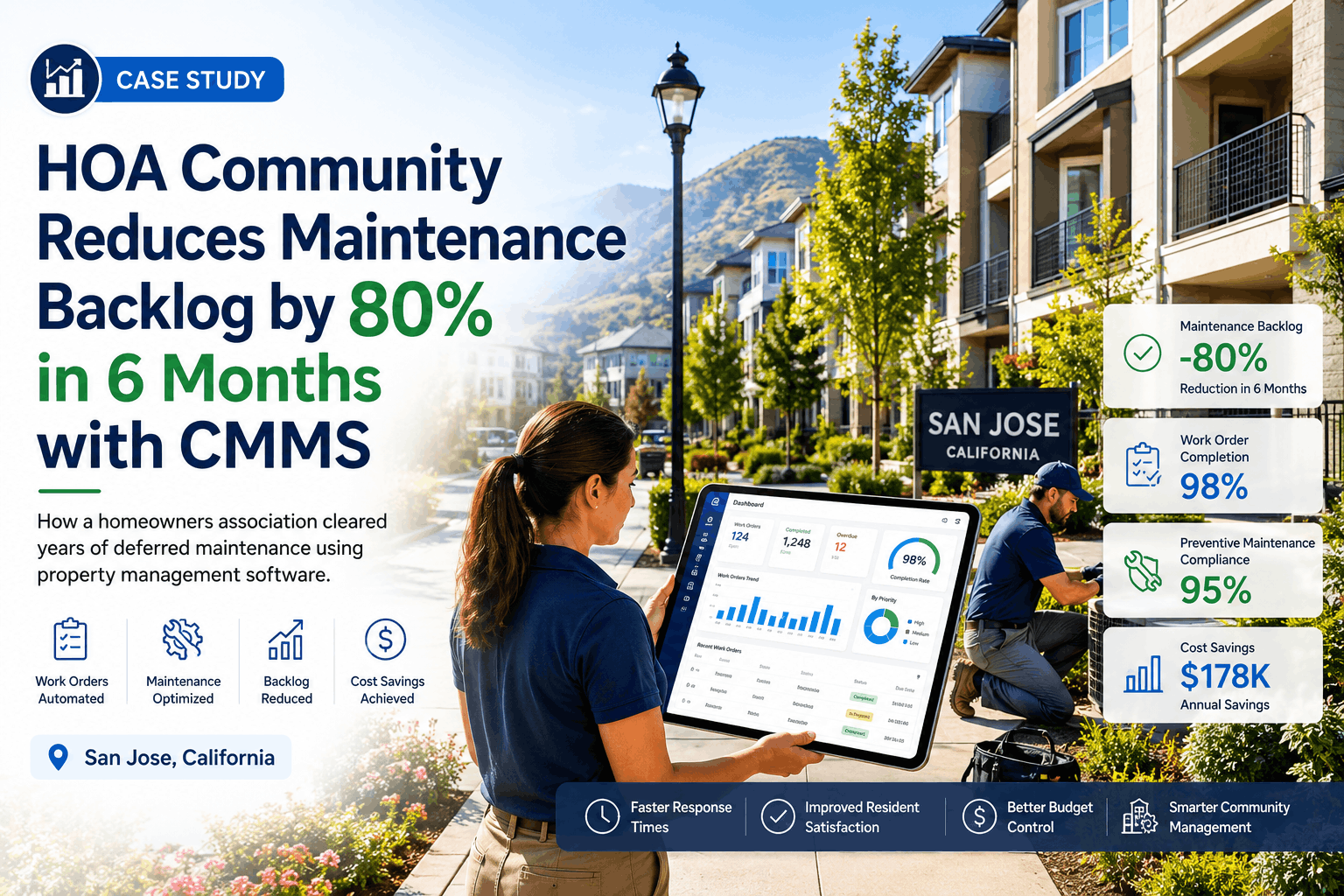
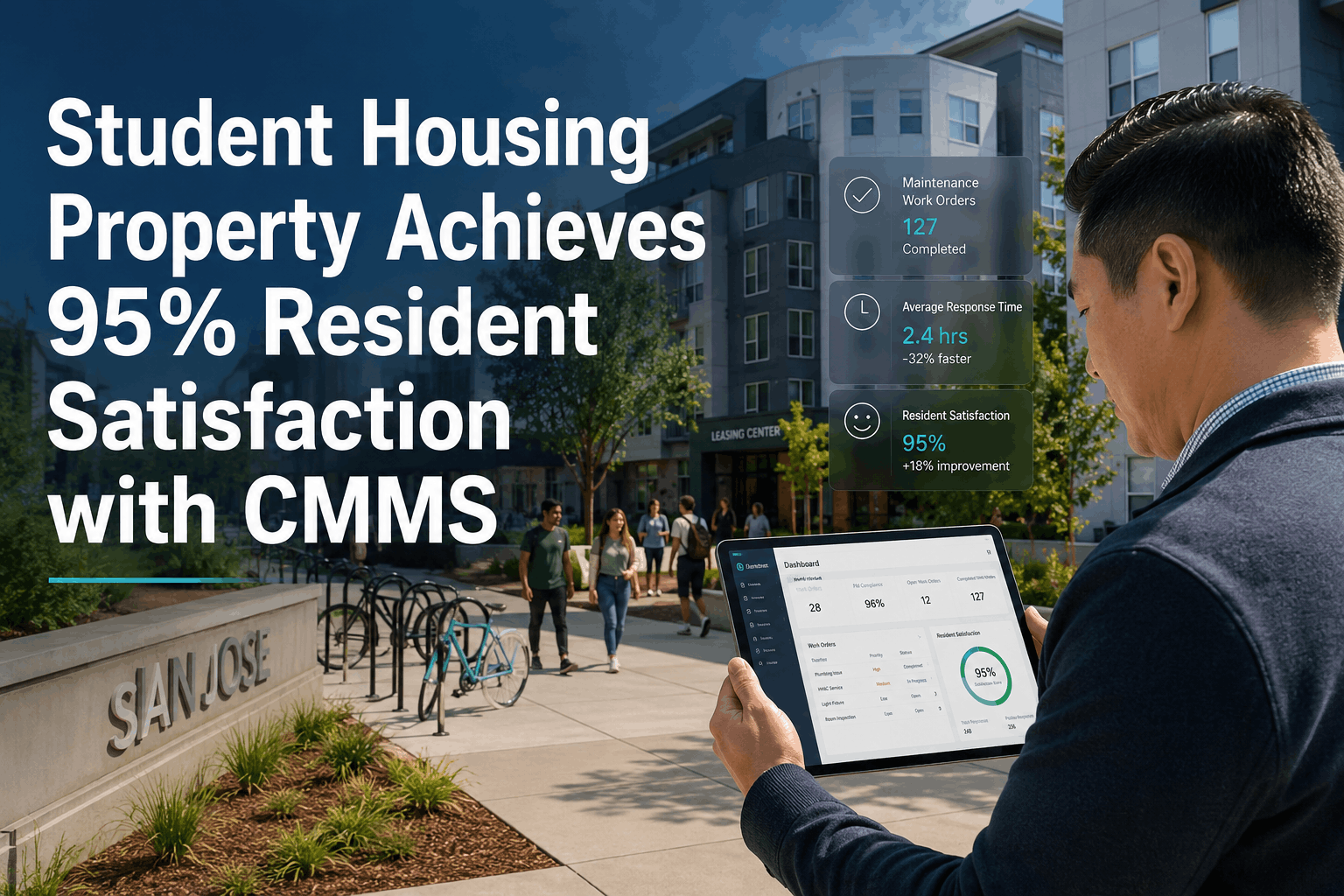
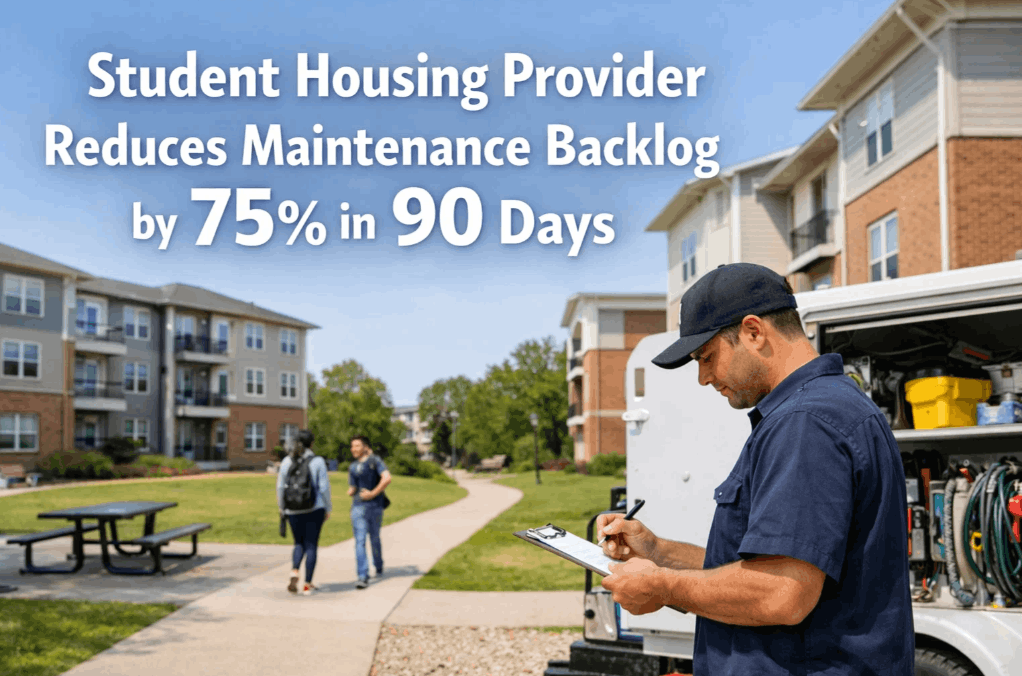
How a Property Manager Eliminated Maintenance Backlog in 90 Days with CMMS
By Alex Jordan on June 22, 2026
A property management company managing 2,800 residential units across 47 buildings faced a maintenance backlog that had grown to 1,700 open work orders — an average of 36 work orders per building, with some properties carrying more than 60 unresolved maintenance issues. The backlog had been accumulating for over a year. Work orders with urgent classification remained open for an average of 6 days. Tenant complaints about unresolved maintenance were increasing 12% month over month. By implementing a CMMS with structured work order prioritization, automated technician assignment, and performance tracking, the company cleared the entire backlog in 90 days — reducing average response time from 6 days to 3 hours and cutting repeat maintenance requests by 42%. Start a free trial with Oxmaint to eliminate your maintenance backlog, or book a demo to see how Oxmaint's work order prioritization module transforms backlog clearance.
Case Study: How a Property Manager Eliminated Maintenance Backlog in 90 Days with CMMS
Backlog clearance through work order prioritization, automated assignment, and performance tracking — a property management success story using CMMS to transform maintenance operations.
1,700Open work orders at backlog peak across 47 buildings
90 daysTime to clear the entire maintenance backlog
42%Reduction in repeat maintenance requests after backlog clearance
6 days → 3 hrsAverage urgent work order response time reduction
The Challenge — An Accumulating Backlog with No Visibility
Before implementing a CMMS-based backlog clearance program, the property management company operated with a fragmented maintenance system. Work orders were tracked across email threads, paper logs, and spreadsheets that were not shared between properties. The true scale of the backlog was unknown until the company conducted a portfolio-wide audit.
The Invisible Backlog
Discovery
The audit revealed 1,700 open work orders — 40% of which were over 30 days old. 78 work orders were classified as urgent but had been open for 3+ days. 220 work orders had no assigned technician.
The Capacity Problem
Resource
The maintenance team of 34 technicians spent 40% of their time on administrative work — finding work orders, confirming assignments, and tracking down parts. Only 60% of their time was spent doing maintenance.
The Re-Request Cycle
Quality
43% of work orders were repeat requests — tenants submitting the same issue again because the first repair was incomplete or the work order was lost. Property managers received an average of 5 follow-up calls per unresolved work order.
The Solution — CMMS Work Order Prioritization and Automated Assignment
The company deployed a CMMS platform that fundamentally restructured how work orders were created, prioritized, assigned, and tracked. The system enabled four core capabilities that transformed backlog clearance from impossible to inevitable.
Capability 1: Work Order Prioritization Matrix
Sort by Consequence
The CMMS assigned every work order a priority score based on urgency (health/safety, critical systems, comfort issues) and impact (number of tenants affected, revenue impact).
Emergency work orders (no heat, water leak, gas smell) flagged for immediate dispatch. Non-urgent items scheduled after all backlogs were cleared.
Capability 2: Automated Technician Assignment
Route to Right Resource
Work orders were automatically routed to the nearest available technician with the right trade skills and certifications. This eliminated the dispatcher bottleneck that had been delaying assignment [citation:3].
Technicians received work orders on mobile devices — no need to return to the office to get new assignments, eliminating lag times in resolving issues [citation:3].
Capability 3: Work-in-Progress Monitoring
Real-Time Visibility
Management could see work-in-progress (WIP) in real time — identifying blockages where specific trades were overcapacity or where work orders were stalled waiting for parts [citation:2].
This visibility allowed the operations director to redeploy resources to clear backlogs and address longer delays in work [citation:2].
Capability 4: Resident Self-Service Portal
Reduce Follow-Up Calls
Residents could submit requests, check status, and view their maintenance history through a portal and mobile app — eliminating the follow-up calls that had been overwhelming property managers [citation:1].
Over 80% of residents adopted digital tools as their primary channel for maintenance requests, helping reduce phone inquiries by 80% [citation:1].
The Strategy — 90-Day Backlog Clearance Plan
The 90-day backlog clearance plan combined systematic backlog reduction with new work order prevention. The strategy was divided into three phases, each with specific targets and tactics.
90-Day Backlog Clearance Strategy — Three Phases
Systematic reduction with new work order prevention
All 1,700 work orders were prioritized in the CMMS. Urgent work orders were assigned immediately; non-urgent were sorted by property. The operations director used WIP monitoring to identify trade-specific blockages and redeployed resources accordingly [citation:2]. 35% of the backlog (595 work orders) was completed in the first 30 days.
2
Phase 2 (Days 31-60): Bulk Clearance & Communication
Prioritized work orders were cleared systematically, with technicians assigned to specific categories by trade. The resident portal automatically updated tenants on work order status, reducing follow-up calls [citation:1]. 40% of the remaining backlog (442 work orders) was completed in this phase.
3
Phase 3 (Days 61-90): Final Clearance & Prevention
Remaining non-urgent work orders were cleared with targeted technician capacity. The team established a zero-backlog maintenance system where new work orders were dispatched daily. The final 273 work orders were completed by day 90.
The Results — Backlog Cleared, Response Times Cut 96%
Within 90 days, the company achieved verified operational improvements across every key performance indicator.
Backlog Clearance
100%
1,700 → 0 open work orders
All open work orders completed within 90 days. Previously 40% of work orders were over 30 days old.
Urgent Response Time
96% Reduction
6 days → 3 hours average
Automated assignment and technician proximity routing eliminated the dispatcher bottleneck [citation:3].
Repeat Requests
42% Reduction
Incomplete repairs eliminated
Previously 43% of work orders were repeat requests. First-call resolution improved dramatically with structured assignment.
Phone Inquiries
80% Reduction
Follow-up calls eliminated
The resident portal automatically updated tenants on work order status, eliminating follow-up calls to property managers [citation:1].
How Work Order Prioritization Works — The Logic Behind Backlog Clearance
The CMMS work order prioritization system was the key enabler of the 90-day clearance. The system used a structured scoring model that ensured urgent issues were addressed first while non-urgent items were tracked systematically without being lost.
Priority Level
Definition
Target Response
% of Backlog
Emergency
No heat in winter, water leak, gas smell, electrical hazard, fire/safety issue
The backlog was suffocating our maintenance team. We had technicians spending 40% of their time on administration — finding work orders, figuring out what to do next, and following up with property managers. The CMMS eliminated that entirely. Within 90 days, we cleared a backlog that had been growing for 18 months. The key was work order prioritization — we could finally see what was urgent and what was not, and assign the right technician to the right job. The resident portal was a game-changer too — tenants could see the status of their work order without calling the office, which eliminated 80% of follow-up calls.
Director of Operations — 2,800-unit Multifamily Portfolio, US Southeast
Maintenance Backlog Benchmarks — What the Data Shows
The 90-day clearance achieved in this case study is consistent with documented benchmarks from property management organizations that have implemented CMMS-based work order management. The key metrics below reflect typical improvements.
Start by conducting a portfolio-wide audit to understand the true scale of the backlog — many property managers are surprised by how many open work orders exist across their properties. Implement a CMMS with work order prioritization that sorts open work orders by urgency and impact. Establish a phased clearance plan with targets for each phase and track progress through WIP monitoring. In this case study, the 90-day clearance plan was executed with 3 phases of 30 days each. Start a free trial to implement structured backlog management.
What is the best way to prioritize work orders?
The most effective prioritization matrix scores work orders on two dimensions: urgency and impact. Urgency considers health/safety risk, critical system impact, and regulatory requirements. Impact considers the number of tenants affected, revenue impact, and brand reputation. Emergency work orders (no heat, water leak, gas smell) should be dispatched immediately. This case study's CMMS assigned every work order a priority score based on these factors, enabling systematic backlog clearance. Book a demo to see Oxmaint's prioritization matrix.
How do I prevent a backlog from forming again?
Preventing future backlogs requires a structured maintenance system with (1) daily work order dispatch so new issues are assigned immediately, (2) work-in-progress monitoring that identifies blockages before they become backlogs, (3) resident self-service portals that reduce administrative overhead [citation:1], and (4) preventive maintenance scheduling that reduces emergency work. In this case study, once the backlog was cleared, the company established a zero-backlog maintenance system where work orders were dispatched daily and WIP was monitored in real time. Use Oxmaint's automated dispatching to maintain zero backlog.
What ROI can I expect from backlog clearance?
Backlog clearance ROI comes from three sources: (1) Reduced administrative overhead — this case study saved 30% of technician time that had been spent on work order management, (2) Reduced repeat requests — 42% reduction in repeat maintenance requests means technicians spend less time revisiting the same issue, and (3) Improved tenant satisfaction — faster resolution reduces tenant complaints and improves renewal rates. The CMMS typically pays for itself within 3–6 months through these efficiency gains. Start free to calculate your potential ROI.
Eliminate Your Maintenance Backlog — Start Your 90-Day Clearance Plan.
Oxmaint's work order prioritization and automated assignment module helps property managers clear backlogs and maintain zero-backlog operations. Free to start.