Furnaces are the beating heart of every steel plant — and also its single largest energy consumer. Electric Arc Furnaces (EAFs) alone account for 60-70% of total electricity consumption in mini-mill operations, while Blast Furnace-Basic Oxygen Furnace (BF-BOF) routes consume 12-14 GJ of energy per ton of hot metal. Yet most steel plants operate their furnaces 8-15% below optimal thermal efficiency due to refractory degradation, poor combustion tuning, suboptimal charging practices, and deferred maintenance on critical auxiliary systems.
That efficiency gap translates directly to millions of dollars in wasted energy every year. A single EAF operating at 420 kWh/ton instead of its optimal 360 kWh/ton wastes over $1.8 million annually at typical electricity rates. The path to closing that gap isn't rebuilding your furnace — it's systematically maintaining it. Oxmaint's furnace-focused maintenance management platform gives steel plants the tools to track, optimize, and sustain peak furnace performance across every heat cycle.
The 8 Critical Factors That Kill Furnace Efficiency
Furnace performance doesn't degrade overnight. It erodes through dozens of small, compounding maintenance failures that individually seem minor but collectively destroy thermal efficiency. Here are the eight factors that matter most and how systematic maintenance management addresses each one:
Refractory Degradation
Worn refractory lining increases heat loss through furnace walls, reduces thermal mass, and creates hot spots that accelerate further deterioration. Every 10mm of lining loss increases shell temperature by 15-25°C.
Electrode Management (EAF)
Electrode breakage, poor positioning, oxidation losses, and incorrect current regulation waste 8-15 kWh per ton. Electrode consumption rates above 1.8 kg/ton signal maintenance issues requiring immediate intervention.
Combustion Inefficiency
Dirty or worn burner nozzles, incorrect air-fuel ratios, and failed O₂ trim controls in reheat and ladle furnaces. Even 1% excess O₂ above optimal increases fuel consumption by 2-3%.
Extended Tap-to-Tap Times
Mechanical delays from faulty tilting systems, slow charging equipment, slag door issues, and roof swing malfunctions extend each heat cycle. Every extra minute per heat in an EAF costs $150-$400 in energy and lost throughput.
Off-Gas System Failures
Leaking ductwork, fouled heat exchangers, failed dampers, and malfunctioning fume extraction systems waste recoverable thermal energy and increase fan power consumption by 20-40%.
Cooling System Degradation
Scaled water panels, blocked spray nozzles, fouled cooling towers, and pump cavitation reduce heat extraction efficiency while increasing electricity consumption of circulating pumps.
Transformer & Power Quality
Loose busbar connections, degraded cable insulation, harmonic distortion, and suboptimal tap changer settings create resistive losses and flicker that reduce delivered power to the arc by 2-5%.
Door & Seal Integrity
Warped furnace doors, degraded gaskets, failed slag door seals, and poorly maintained roof gaps allow cold air infiltration and radiant heat escape, directly increasing specific energy consumption per heat.
Furnace-by-Furnace Optimization Map
Every furnace type in a steel plant has unique efficiency drivers and maintenance requirements. This map breaks down the specific optimization levers for each furnace type and shows where Oxmaint's asset management platform delivers the highest impact:
Electric Arc Furnace (EAF)
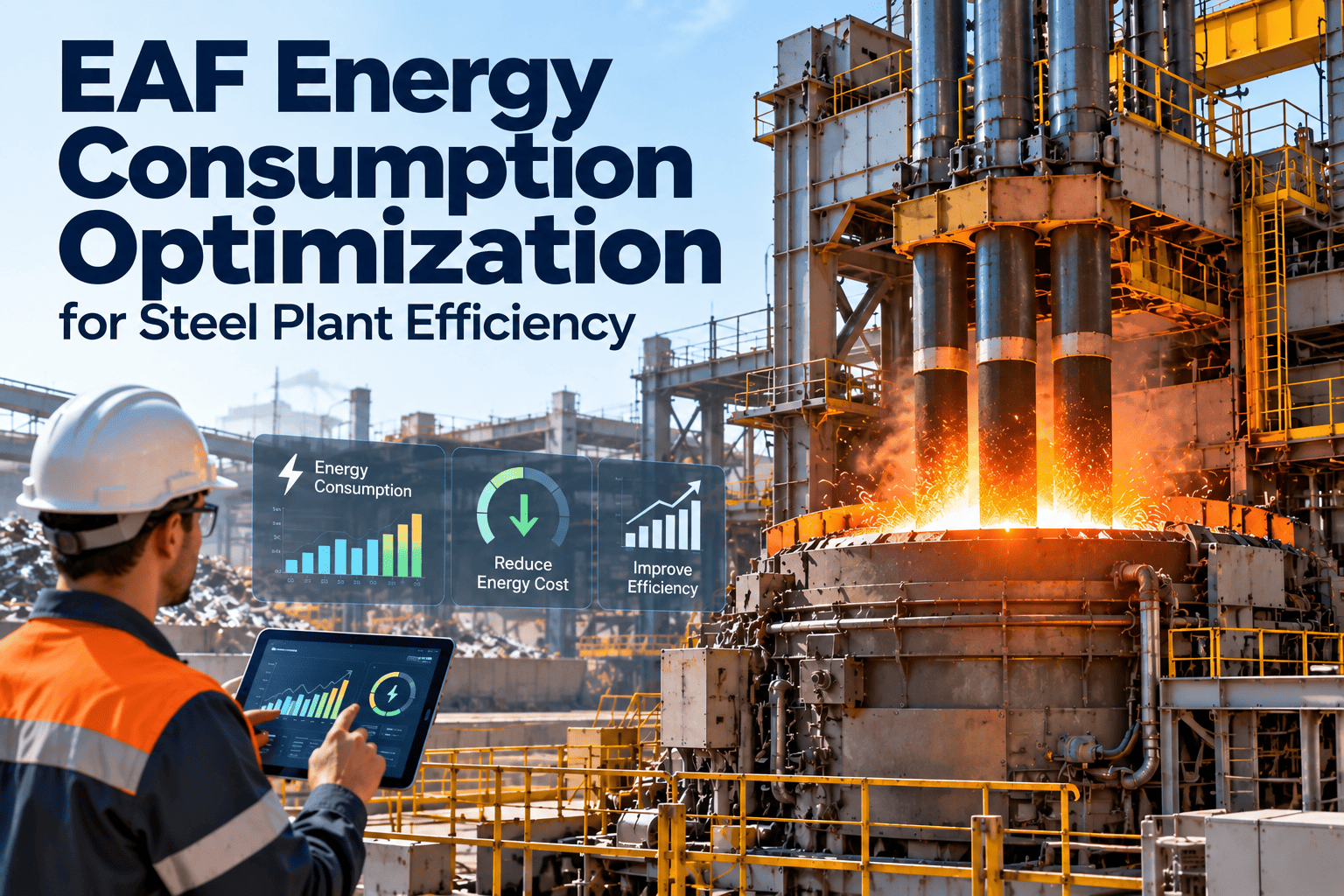
The EAF is the single highest energy consumer in mini-mill operations, converting scrap steel into liquid metal using electric arcs at 1,600°C+. Optimal operation targets 340-380 kWh/ton with tap-to-tap times under 45 minutes.
Reheat Furnace (Walking Beam / Pusher)
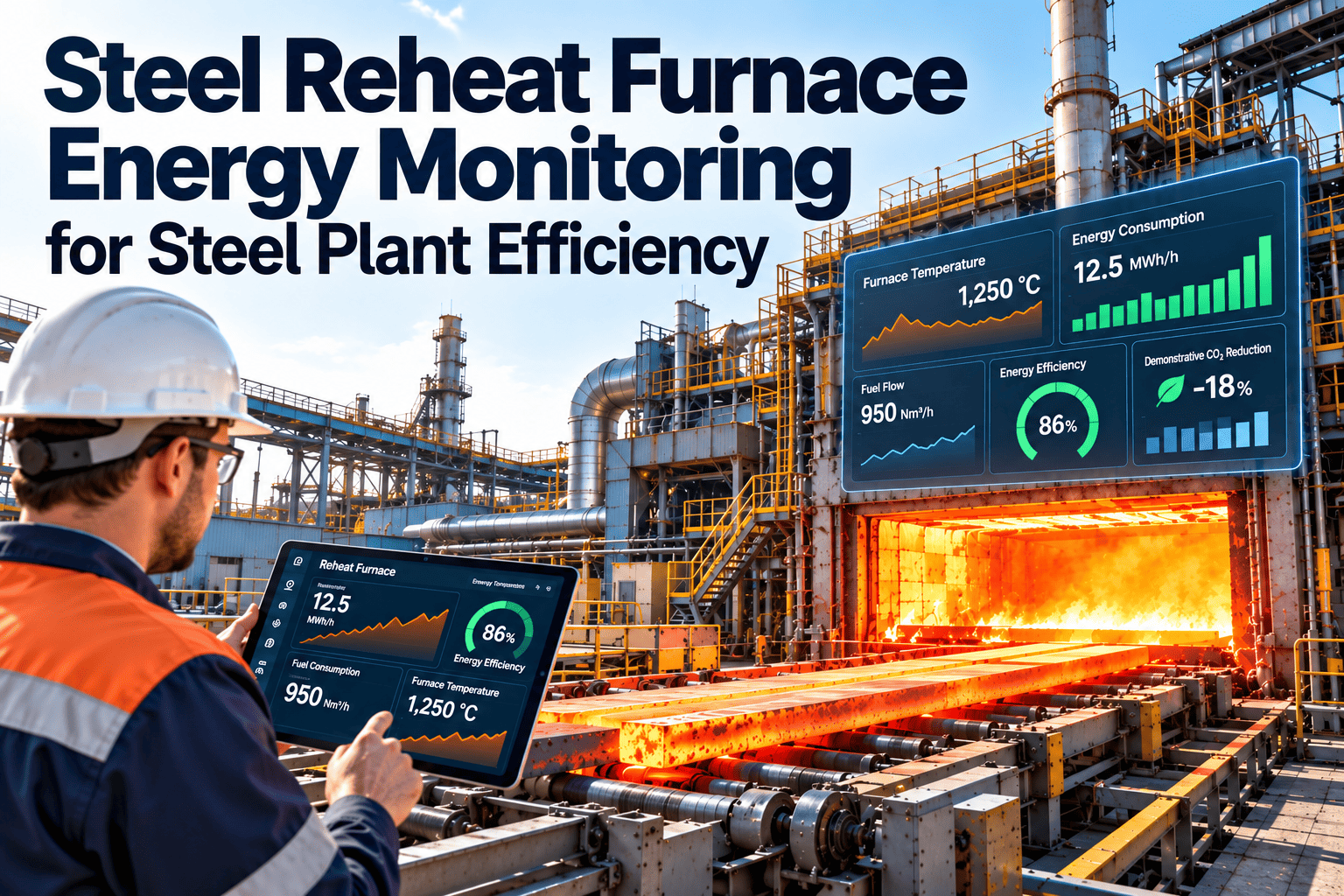
Reheat furnaces consume 1.0-1.8 GJ per ton of steel reheated, preparing billets and slabs for rolling. Gas-fired combustion efficiency is the primary optimization target, with recuperator performance as the secondary lever.
Ladle Furnace (LF)
Ladle furnaces refine liquid steel chemistry and temperature before casting. Energy waste comes from excessive arc times, poor lid sealing, and refractory degradation in ladle linings.
Ladle & Tundish Preheaters
Preheaters prepare refractory-lined vessels before receiving molten steel. Inefficient preheating causes thermal shock, shortens lining life, and wastes fuel through incomplete combustion.
Optimize Every Furnace in Your Plant
Oxmaint tracks refractory wear, electrode consumption, combustion efficiency, and heat cycle times for every furnace type — turning maintenance data into measurable energy savings.
How Oxmaint Drives Furnace Efficiency
Furnace optimization isn't a one-time project — it's a continuous cycle of measurement, maintenance, and improvement. Here's how Oxmaint's CMMS platform embeds efficiency into every furnace-related maintenance workflow:
Refractory Life Tracking
Log every refractory measurement — lining thickness, shell temperature, hot spot locations — against heat count. Oxmaint predicts remaining lining life and schedules relining before efficiency drops below threshold, eliminating both premature replacement waste and dangerous over-extension.
Electrode Consumption Analytics
Track electrode consumption (kg/ton), breakage events, and tip-to-metal distance per heat. Automated alerts when consumption exceeds baseline, enabling immediate corrective action before the pattern becomes embedded waste across hundreds of heats.
Combustion Efficiency Monitoring
For gas-fired furnaces: digital checklists for burner maintenance, O₂ sensor calibration tracking, air-fuel ratio verification, and combustion analyzer readings logged per zone. Drift from optimal combustion is flagged within one inspection cycle.
Heat Cycle Time Optimization
Track tap-to-tap times, power-on times, and delay causes per heat. Oxmaint correlates maintenance events with cycle time performance, identifying which equipment issues (roof swing, tilt hydraulics, charging crane) have the highest time impact.
PM Scheduling by Heat Count
Schedule preventive maintenance not just by calendar date but by actual furnace utilization: heat count, arc hours, tonnage processed. This ensures critical maintenance happens at exactly the right time — not too early (wasting resources) and not too late (wasting energy).
Energy Performance Dashboards
Real-time dashboards showing kWh/ton (EAF), GJ/ton (BF), fuel rate (reheat), and specific energy by shift, crew, and furnace. Correlate energy spikes with maintenance activities, operator changes, and raw material variations to isolate root causes.
Furnace Maintenance Schedule That Maximizes Efficiency
This is the comprehensive PM schedule that high-performing steel plants follow for furnace optimization. Each task directly impacts energy efficiency, and missing any single item can cascade into significant efficiency losses over weeks or months:
Furnace Efficiency Benchmarks: Where Do You Stand?
Use these industry benchmarks to evaluate your furnace performance against world-class standards. Plants in the top quartile consistently achieve these numbers through disciplined, data-driven maintenance programs:
5 Steps to Furnace Optimization with Oxmaint
This implementation roadmap takes your furnace operations from reactive maintenance to data-driven efficiency optimization. Most steel plants see measurable results within the first 30 days through Oxmaint's structured onboarding program:
Furnace Asset Registry & Baseline
Catalog every furnace asset: EAFs, reheat furnaces, ladle furnaces, preheaters, and all auxiliaries (transformers, off-gas systems, cooling circuits). Establish energy performance baselines from historical data and design specifications.
Build Energy-Focused PM Schedules
Configure PM tasks with energy checkpoints for every furnace component: refractory surveys, electrode monitoring, burner maintenance, seal inspections, and cooling system checks. Set triggers by heat count, arc hours, and calendar intervals.
Deploy Digital Inspection Checklists
Roll out mobile checklists to furnace operators and maintenance crews. Every inspection captures energy-relevant data: shell temperatures, electrode measurements, combustion readings, and heat cycle times with mandatory photo evidence.
Activate Variance Monitoring & Alerts
Set energy drift thresholds for every furnace. When kWh/ton, fuel rate, or cycle time exceeds acceptable variance from baseline, the system auto-generates a work order with diagnostic guidance and routes it to the appropriate technician.
Track Savings & Continuously Optimize
Use Oxmaint dashboards to measure actual energy savings per furnace, per maintenance action, and per shift. Monthly optimization reviews with real data drive continuous improvement and justify capital projects with proven ROI.
Maximize Every Furnace in Your Steel Plant
Join steel manufacturers saving millions through maintenance-driven furnace optimization. Your first efficiency gains are just weeks away.
Frequently Asked Questions
How much energy can furnace maintenance optimization actually save?
Documented results show 25-53 kWh/ton savings for EAFs and 11-23% fuel reduction for reheat furnaces through systematic preventive maintenance alone. For a mid-sized steel plant producing 500,000 tons/year, this translates to $1.5-3.2 million in annual energy savings without any capital equipment investment. The key is consistent execution of PM tasks with energy performance checkpoints built into every inspection.
Can Oxmaint track refractory wear and predict relining needs?
Yes. Oxmaint logs refractory thickness measurements, shell temperature readings, and hot spot locations against heat count for every furnace. The system builds a wear curve over time and alerts when remaining lining life approaches the threshold for efficiency loss. This enables planned relining during scheduled outages rather than emergency campaigns, extending average refractory life by 25-35% while maintaining thermal efficiency.
Does the system work for both EAF and BF-BOF route plants?
Oxmaint is designed for all furnace types in steel manufacturing. For EAF operations, it tracks specific energy (kWh/ton), electrode consumption, tap-to-tap times, and arc stability. For BF-BOF routes, it monitors coke rate, hot blast temperature, burden distribution, and tuyere condition. Reheat furnaces, ladle furnaces, and preheaters each have dedicated template libraries with furnace-specific PM checklists and energy KPIs.
How quickly will we see measurable energy improvements?
Most plants see first measurable improvements within 2-4 weeks from quick-win maintenance actions: fixing door seals, cleaning burner nozzles, calibrating O₂ sensors, and addressing identified compressed air leaks in furnace auxiliaries. Full optimization impact builds over 3-6 months as PM compliance reaches 90%+ and energy baseline tracking generates actionable trend data. Typical payback on software investment is under 4 months.
Can furnace technicians use Oxmaint on the shop floor near furnaces?
Oxmaint's mobile interface is built for harsh industrial environments. Technicians complete inspections, log measurements, and report issues from any smartphone with large-button layouts designed for use with heat-resistant gloves. Offline mode captures data in areas with poor connectivity near furnaces, syncing automatically when connection returns. Photo attachments for refractory condition, thermocouple readings, and burner flame patterns are standard.