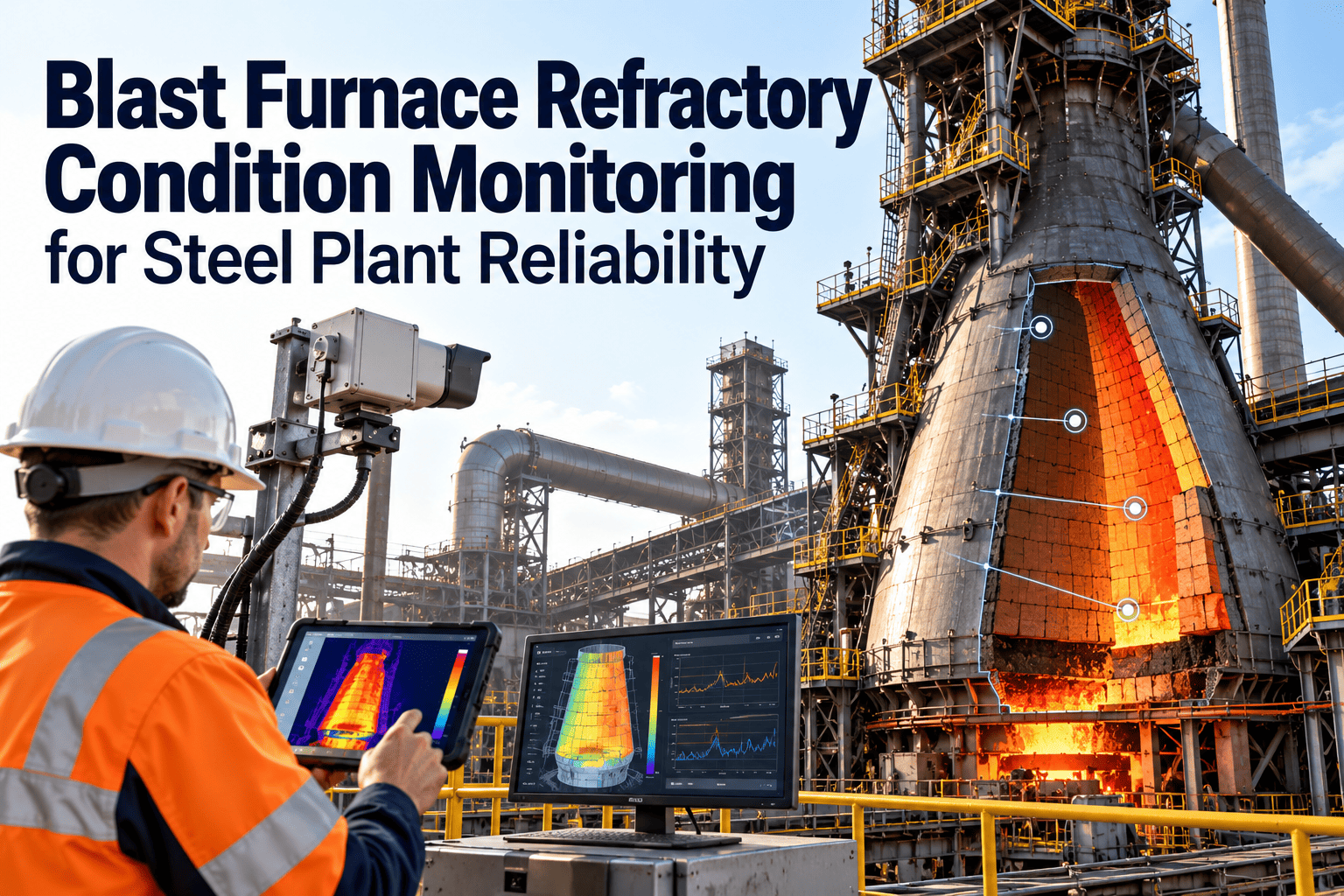
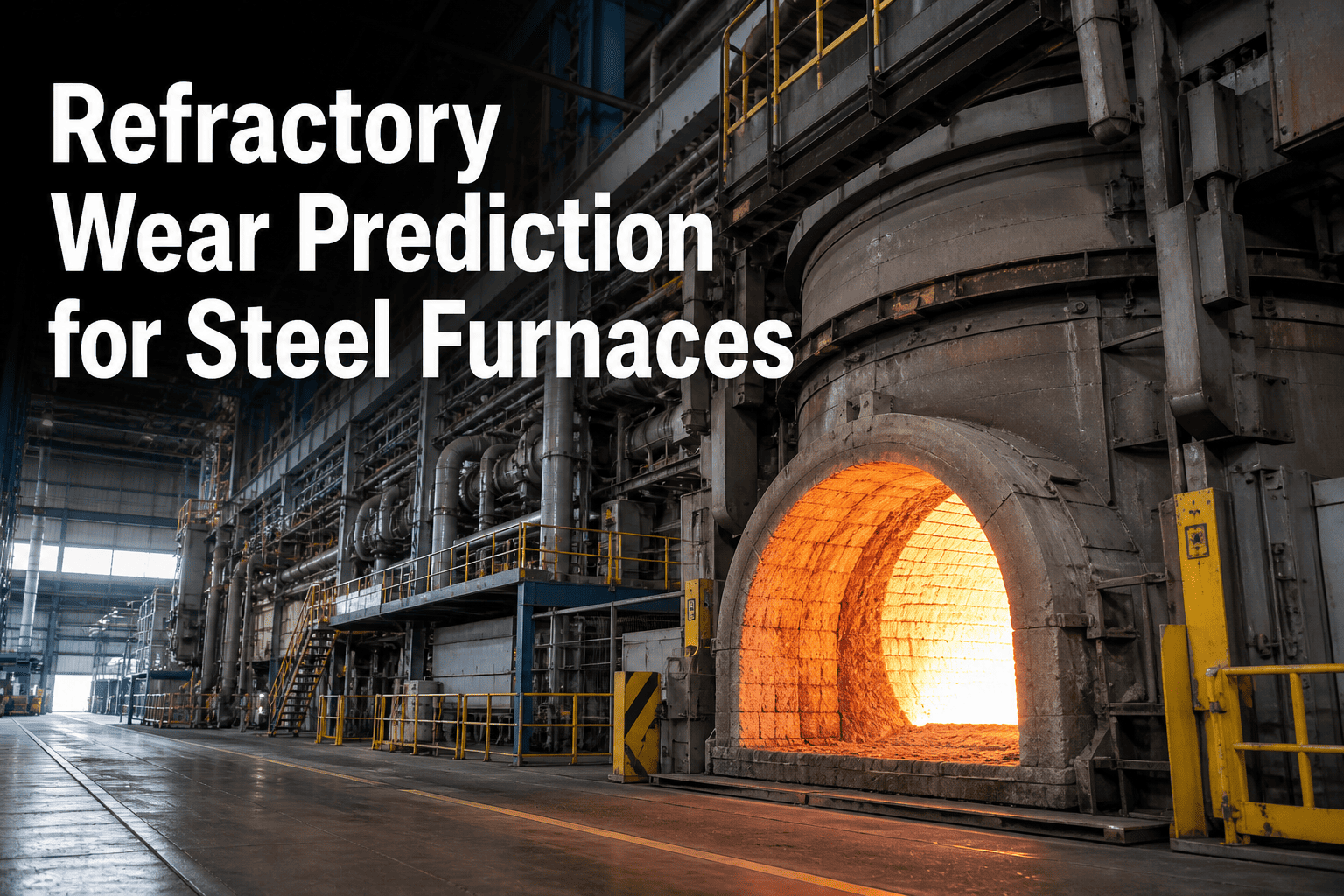
A single day of unplanned blast furnace downtime costs $1.2M–$2.8M in lost production, wasted energy, and potential lining damage. Yet most steel plants still manage their most critical asset with paper logs, spreadsheets, and tribal knowledge locked inside a few senior operators' heads. When those operators retire—and 35% of BF maintenance specialists will within the next five years—the knowledge walks out the door. OXmaint's digital maintenance management platform captures every inspection, trend, and work order across your blast furnace operation, turning scattered data into actionable intelligence that keeps your furnace running at peak performance for the full 15–20 year campaign life.
$1.2–2.8M
Cost per day of unplanned downtime
15–20 yrs
Target campaign life between relines
4,000+
Maintenance tasks per year on a single BF
$45–80M
Total reline cost when campaign ends early
The Seven Critical Systems That Keep a Blast Furnace Alive
A blast furnace isn't one machine—it's seven interdependent systems, each with unique maintenance requirements and failure modes. When one system degrades, it accelerates wear on every other. OXmaint's integrated maintenance platform manages all seven as a connected whole, not isolated silos.
Critical
Refractory Lining
Carbon and ceramic bricks lining the hearth, bosh, belly, and stack. Wear determines campaign life—every millimeter lost accelerates the next millimeter's erosion.
OXmaint tracks: Thermocouple readings at 200+ points, wear rate calculations, remaining lining thickness maps, hot spot alerts
Critical
Cooling System
Staves, copper plates, and water circuits removing 400+ MW of heat. A single blocked cooling channel creates a hot spot that can burn through the shell in days.
OXmaint tracks: Individual stave flow rates, delta-T per circuit, leak detection alerts, water quality parameters
High Priority
Hot Blast System
Stoves, hot blast main, tuyeres, and bustle pipe delivering 1,100–1,300°C air at 4–5 bar. Stove dome cracking and tuyere failures are the most common emergency stops.
OXmaint tracks: Stove cycling schedules, dome temperature profiles, tuyere condition logs, bustle pipe expansion measurements
High Priority
Gas Cleaning Plant
Dust catchers, scrubbers, and electrostatic precipitators processing 5,000–8,000 Nm³/min of BF gas. Fouling reduces top pressure control and energy recovery.
OXmaint tracks: Differential pressure trends, cleaning cycle effectiveness, dust loading, scrubber water chemistry
Medium
Casthouse Equipment
Taphole drills, mud guns, tilting runners, and torpedo ladle handling. Casthouse failures don't stop the furnace—but they create dangerous conditions and production bottlenecks.
OXmaint tracks: Taphole drill bit life, mud gun tip condition, runner refractory wear, cast timing and iron quality
Medium
Charging & Stockhouse
Belt conveyors, skip hoists or bell-less top equipment, weighing systems, and burden distribution. Charging irregularities create gas channeling and uneven descent.
OXmaint tracks: Belt condition, skip hoist wire rope life, bell-less top actuator cycles, burden distribution patterns
Monitoring
Instrumentation & Control
Thermocouples, pressure transducers, gas analyzers, probes, and the Level 2 process control system. Sensor drift causes wrong decisions—often invisible until results deteriorate.
OXmaint tracks: Sensor calibration schedules, probe replacement cycles, control system backup verification, alarm rationalization
The Cost of Getting It Wrong
Blast furnace maintenance failures don't just cost money—they cascade. A missed cooling stave leak leads to a hot spot, which accelerates lining wear, which shortens the campaign by years, which triggers a $45–80M reline years ahead of schedule. OXmaint's platform breaks these cascades by catching the first signal, not the last symptom.
Cooling stave leak (undetected 48 hrs)
$150K
Tuyere failure requiring emergency shutdown
$800K
Hot spot + shell repair (unplanned outage)
$2.5M
BF blower trip (full furnace stop)
$3.5–8M
Hearth sidewall breakthrough
$8–15M
Early campaign end (reline 5 yrs ahead of plan)
$45–80M
Every failure above is preventable with consistent monitoring. OXmaint catches degradation at the $150K stage, not the $80M stage.
Stop Managing Your Most Expensive Asset With Spreadsheets
OXmaint digitizes every aspect of blast furnace maintenance—from thermocouple trends to tuyere changes to stove cycling. One platform, every system, every shift.
Paper vs Digital: What Changes When You Switch
Most blast furnace operations still rely on paper shift logs, individual spreadsheets, and whiteboard tracking. These methods worked when experienced operators stayed 30 years. With accelerating retirements and increasing regulatory demands, digital maintenance management isn't a luxury—it's survival. Plants using OXmaint's CMMS platform see immediate improvements in every measurable category.
Paper / Spreadsheet
OXmaint Digital
Work order tracking
Handwritten logs, lost or incomplete
100% digital, searchable, auditable
Lining condition awareness
Monthly reports, 2–4 week delay
Real-time thermal maps, auto-alerts
Cooling system monitoring
Spot checks, 1–2× per shift
Continuous per-stave flow tracking
Knowledge transfer
Walks out when operators retire
Captured in system permanently
Regulatory compliance
Manual record assembly, days to compile
Instant audit-ready reports
Spare parts management
Over-stock or emergency orders
Usage-based forecasting, auto reorder
Planned vs reactive ratio
40% planned / 60% reactive
75% planned / 25% reactive
Average response time
2–6 hours (shift handover gaps)
15–30 minutes (instant mobile alerts)
The Lining Management Challenge
Your refractory lining is a $45–80M asset that you can't inspect visually, can't shut down to measure, and can't replace without a 3–6 month outage. The only way to understand lining condition is through indirect measurement—thermocouples embedded in the brickwork, cooling water temperatures, and process data correlations. OXmaint transforms these thousands of data points into clear lining health maps that show exactly where wear is accelerating and where the campaign is safe.
Hearth Bottom
High Risk
Carbon brick dissolution by liquid iron. Wear rate: 5–15 mm/year. Digital tracking identifies hot spots 60–90 days before they become emergencies.
OXmaint action: Continuous isothermal mapping, automated TiO₂ injection triggers, trend alerts at configurable thresholds
Hearth Sidewall
High Risk
Elephant foot erosion from iron flow patterns. Most dangerous failure mode—sidewall breakthrough causes plant-wide emergency. Wear rate: 10–30 mm/year at worst points.
OXmaint action: Per-stave thermal tracking, remaining thickness calculation, grouting schedule optimization, automatic shift alerts
Bosh & Belly
Medium Risk
Thermal cycling and chemical attack from slag. Copper stave deformation and joint leaks. Wear rate: 8–20 mm/year depending on cooling effectiveness.
OXmaint action: Cooling water flow balancing, stave temperature differentials, scaffold formation monitoring
Stack & Throat
Lower Risk
Abrasion from burden descent and chemical attack from alkalis. Refractory wear is slower but cumulative. Gas flow channeling accelerates localized erosion.
OXmaint action: Burden distribution analysis, gas temperature profiling, shell temperature surveys, repair scheduling
Campaign Extension Value
$9M–$40M
Each additional year of campaign life defers $45–80M reline cost. Plants using digital lining management average 2–5 years longer campaigns.
Planned Shutdown Optimization
Blast furnace shutdowns are the most expensive, complex maintenance events in steelmaking. A typical mid-campaign repair costs $5–15M and requires 500–2,000 contractor personnel working around the clock for 20–45 days. Every additional day of downtime costs $1.2–2.8M in lost production. OXmaint's shutdown management module has helped plants reduce outage duration by 15–25% through better planning, task sequencing, and real-time progress tracking. Schedule a demo to see how our platform manages complex BF shutdowns.
Traditional Approach
Planning starts 4–6 weeks before shutdown
Task lists in spreadsheets, updated daily
Progress tracked on whiteboards and radios
Contractor coordination via meetings 2×/day
Scope changes communicated verbally
Completion documentation assembled post-outage
Average overrun: 20–35% of planned duration
OXmaint Digital Approach
Rolling 12-month shutdown planning with templates
Live task management with dependencies and critical path
Real-time mobile progress from every work face
Contractor portal with assigned tasks and timelines
Instant scope change approvals with cost tracking
Automatic documentation as work completes
Average overrun: under 5% of planned duration
Typical Savings Per Shutdown
$3.6–8.4M
Based on 3–5 days shorter outage at $1.2–2.8M/day lost production
Plan Shutdowns That Finish Early, Not Late
OXmaint's shutdown management module handles task sequencing, contractor coordination, real-time progress, and automatic documentation—so your team focuses on the work, not the paperwork.
Daily Operations: What OXmaint Manages
Beyond major shutdowns, blast furnace maintenance is a daily discipline of inspections, condition monitoring, preventive tasks, and rapid response to process upsets. OXmaint structures this daily work so nothing falls through the cracks—especially during shift handovers, where most information loss occurs.
06:00
Shift Start: Digital Handover
Incoming shift reviews all open work orders, overnight alerts, and priority tasks on mobile devices. No verbal-only handover gaps.
↓
06:30
Automated Inspection Rounds
Technicians follow GPS-tracked routes with digital checklists. Every reading logged with timestamp, photo, and location.
↓
08:00
Condition Alerts Processed
System flags any thermocouple trends, cooling anomalies, or process deviations. Work orders generated automatically for items exceeding thresholds.
↓
Ongoing
Preventive Tasks Execute
Scheduled PMs for tuyere inspection, stove valve maintenance, cooling water treatment, and casthouse equipment servicing—all tracked to completion.
↓
18:00
Shift End: Automatic Summary
OXmaint generates shift report with completed tasks, outstanding items, trending concerns, and recommended priorities for next shift.
Proven Results
Steel plants using OXmaint's digital maintenance platform for blast furnace management report consistent improvements across every performance metric. These results come from better data, faster response, and the elimination of information gaps that cause most maintenance failures.
42%↓
Unplanned Downtime
From 18 to 10.5 days/year
2–5 yrs
Campaign Extension
Through better lining management
25%↓
Shutdown Duration
Better planning, fewer surprises
$8.2M
Annual Savings
Average per furnace
75%
Planned Work Ratio
Up from 40% pre-digital
90 days
Time to Full Value
ROI from first prevented event
Implementation: 90 Days to Full Operation
Days 1–21
Foundation
✓ Equipment hierarchy setup (all 7 systems)
✓ Historical data migration
✓ PM schedule configuration
✓ Sensor integration (thermocouples, cooling)
Days 22–45
Training & Parallel Run
✓ Operator and technician training
✓ Mobile app deployment
✓ Digital + paper parallel operation
✓ Alert threshold calibration
Days 46–70
Go-Live
✓ Full digital work order management
✓ Condition monitoring dashboards live
✓ Shift handover digitized
✓ Paper processes retired
Days 71–90
Optimization
✓ KPI dashboards configured
✓ Reporting automation
✓ Continuous improvement cycle started
✓ ROI measurement baseline set
OXmaint's implementation team includes blast furnace maintenance specialists who understand the unique challenges of BF operations—from the 24/7 nature of the process to the extreme conditions that limit access windows. Our platform connects to your existing sensors, historian systems, and process control infrastructure without requiring new hardware in most cases. Learn how OXmaint's integrated maintenance platform manages blast furnace operations, or explore how AI-powered failure detection adds predictive capability to your BF monitoring, how contractor management tools streamline shutdown execution, and how spare parts supply chain integration ensures critical BF components are always available.
Your Blast Furnace Deserves Better Than Paper Logs
Join steel plants using OXmaint to extend campaign life, reduce unplanned downtime by 42%, and save $8M+ annually per furnace. 90-day implementation. ROI from the first prevented event.
Frequently Asked Questions
Can OXmaint integrate with our existing BF process control and historian systems?
Yes. OXmaint connects to standard industrial protocols including OPC-UA, Modbus, and historian APIs (OSIsoft PI, Honeywell PHD, etc.). Thermocouple data, cooling water flows, and process parameters feed directly into the maintenance platform without requiring new sensors in most cases.
How does OXmaint handle the 24/7 shift structure of blast furnace operations?
The platform is built for continuous operations. Digital shift handovers capture every open task, alert, and priority. Mobile alerts reach the right technician on the right shift instantly. Work orders carry full context across shift boundaries—no more verbal-only handovers losing critical information.
What ROI should we expect from digital BF maintenance management?
Plants typically see $5–12M annual savings per furnace from reduced unplanned downtime, shorter shutdowns, extended campaign life, and better spare parts management. Most achieve positive ROI within 90 days from the first prevented unplanned event.
How does OXmaint help with the knowledge transfer problem as experienced operators retire?
Every inspection, decision, repair outcome, and operating condition is captured digitally and permanently. New operators access the full maintenance history of every component, along with decision context from experienced colleagues. The institutional knowledge stays in the system, not in people's heads.
Can OXmaint manage shutdown planning and contractor coordination?
Yes—the shutdown module handles task sequencing, critical path tracking, contractor portal access, real-time progress from every work face, scope change management, and automatic documentation. Plants using this module average 15–25% shorter outage durations.