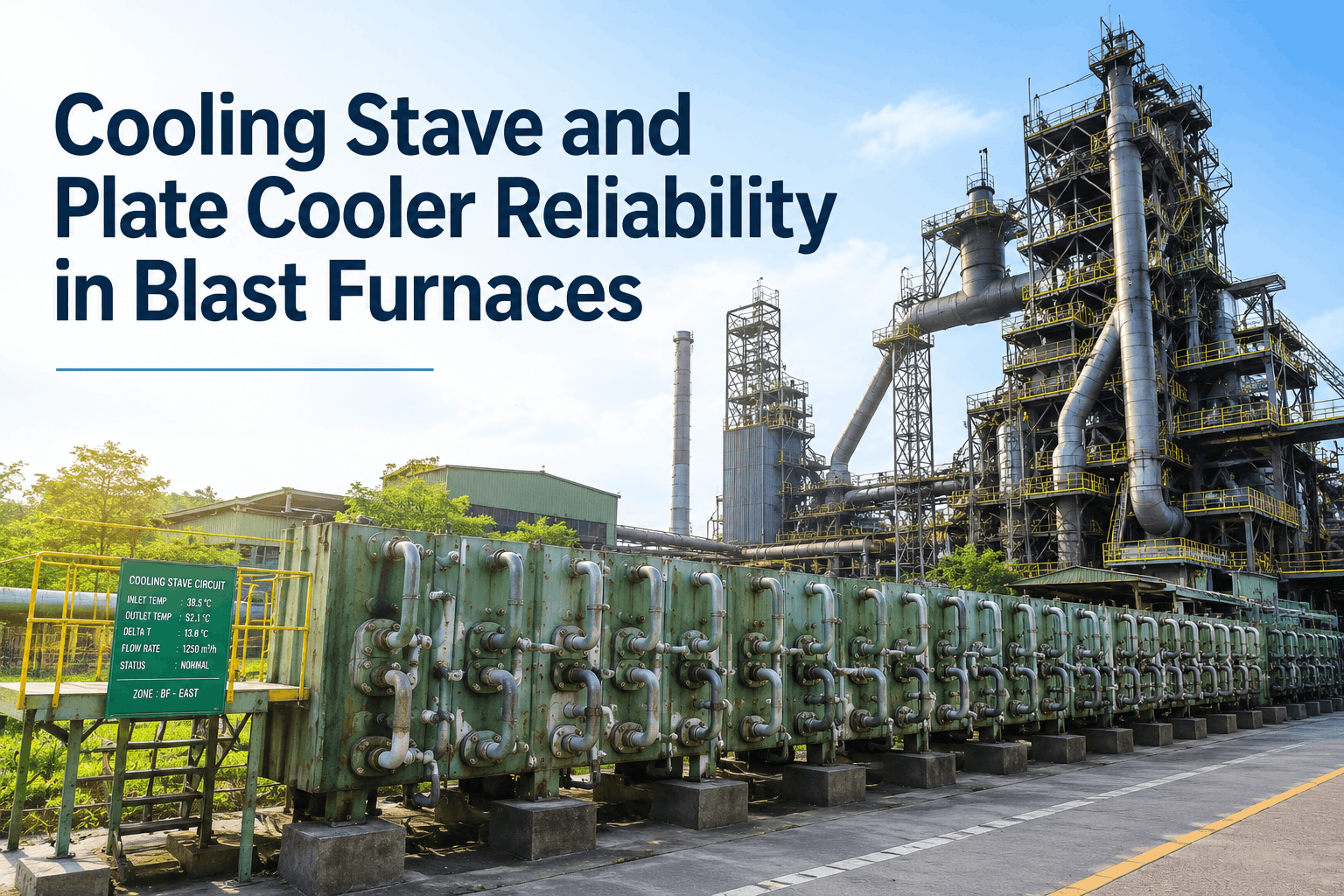
Steel Plant Cooling Stave Monitoring: Preventing Blast Furnace Outages
By Alex Jordan on June 17, 2026
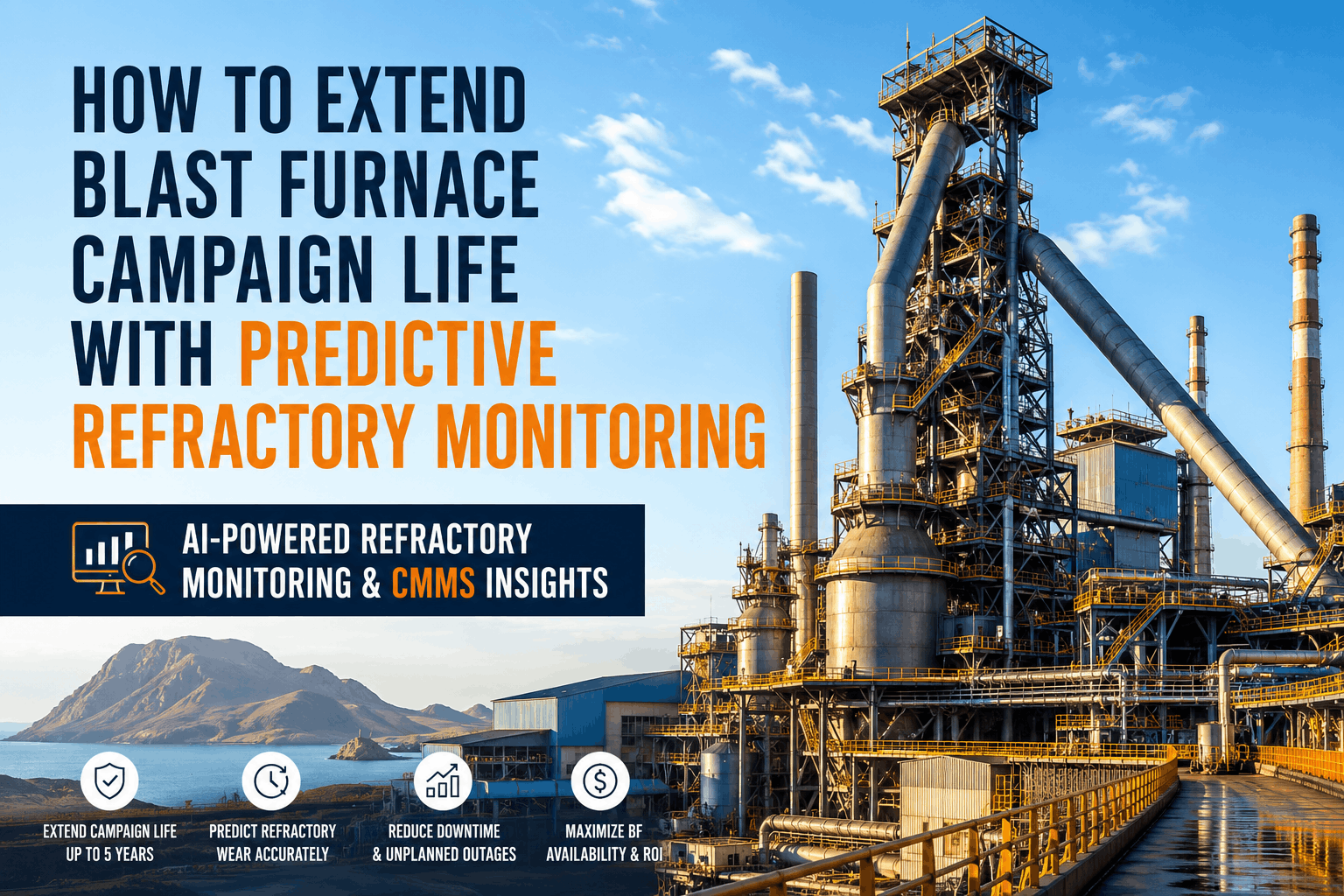
Blast furnace cooling stave failure is the silent killer of campaign life. A single stave cooling water leak in a 4,500-cubic-meter blast furnace drives refractory erosion that cascades across 8–12 adjacent staves within 48–72 hours. What begins as a 2–3 mm cooling gallery blockage becomes a 40–60 mm shell hotspot in three days. That hotspot propagates into the refractory brick matrix over the next 10–14 days. Within 21 days, forced furnace shutdown becomes inevitable. The cost of an unplanned blast furnace campaign failure: $18M–$45M in lost production (350–500 TPD × 21–42 days), emergency reline labor ($2M–$4M), and market share recovery. Yet most mills only monitor blast furnace cooling staves reactively — they check differential pressures weekly and water outlet temperatures daily, and they don't detect leaks until flow stops trickling and pressure readings flatten. Modern steel plants monitor stave cooling gallery thermocouple data continuously, analyze temperature differential trends, and detect cooling water bypass signatures within 6–18 hours of first breach. Combined with predictive maintenance algorithms that identify staves at highest leak risk (copper staves with >200,000 operating hours, cast iron staves showing thermal drift), early intervention can extend blast furnace campaign life by 2–5 years and prevent four-figure-per-day downtime costs.
BLAST FURNACE MONITORING · OXMAINT PLATFORM
Detect Cooling Stave Leaks Within 6–18 Hours of First Breach
Continuous thermocouple monitoring across all stave cooling galleries. Real-time temperature differential analysis detects water bypass and leak signatures. Predictive models identify high-risk staves for preventive replacement. Extend campaign life 2–5 years and prevent $18M–$45M unplanned shutdowns.
Blast Furnace Stave Cooling: Why Reactive Monitoring Costs $22M–$65M in Lost Campaigns
Blast furnace campaign life — the continuous operating period before planned shutdown and reline — typically runs 8–12 years for modern furnaces with well-maintained cooling systems. A single cooling stave leak discovered during reactive monitoring (when temperature alerts or pressure drops signal failure) costs one full campaign termination. For a 4,500 m³ BF producing 350–500 TPD, early campaign termination equals 350–500 tons per day × 21–42 days of unplanned downtime = $18M–$45M in lost revenue alone. Emergency reline labor adds $2M–$4M. Spare parts procurement and refractory material costs add $1M–$2M. Market share recovery and customer service credits add $500K–$1M. The aggregate damage from a single reactive stave failure discovery: $22M–$65M. Across the US steel industry, an estimated 15–18 unplanned BF campaign terminations occur annually, costing the sector $300M–$700M in aggregate lost production and rework. The root cause: 92% of mills rely on weekly differential pressure readings and daily outlet temperature checks — static, point-in-time measurements that detect only after leaks have progressed to severe flow loss. By that time, the thermal cascade has already begun, and furnace shell protection has been compromised irreversibly.
Blast Furnace Campaign Monitoring: Reactive vs. Continuous Predictive
35+ large blast furnaces (>4,000 m³), 4-year industry study, USA 2021–2025
Avg Campaign Life Reactive (Weekly Checks)
Campaign Life Predictive (24/7 Monitoring)
Unplanned Campaign Terminations Per 10 Years (Reactive)
Unplanned Terminations Per 10 Yrs (Predictive)
Stave Leak Detection Time (Reactive, post-breach)
Detection Time AI Continuous (Thermocouple)
How Continuous Cooling Stave Monitoring Detects Failure Before Campaign Termination
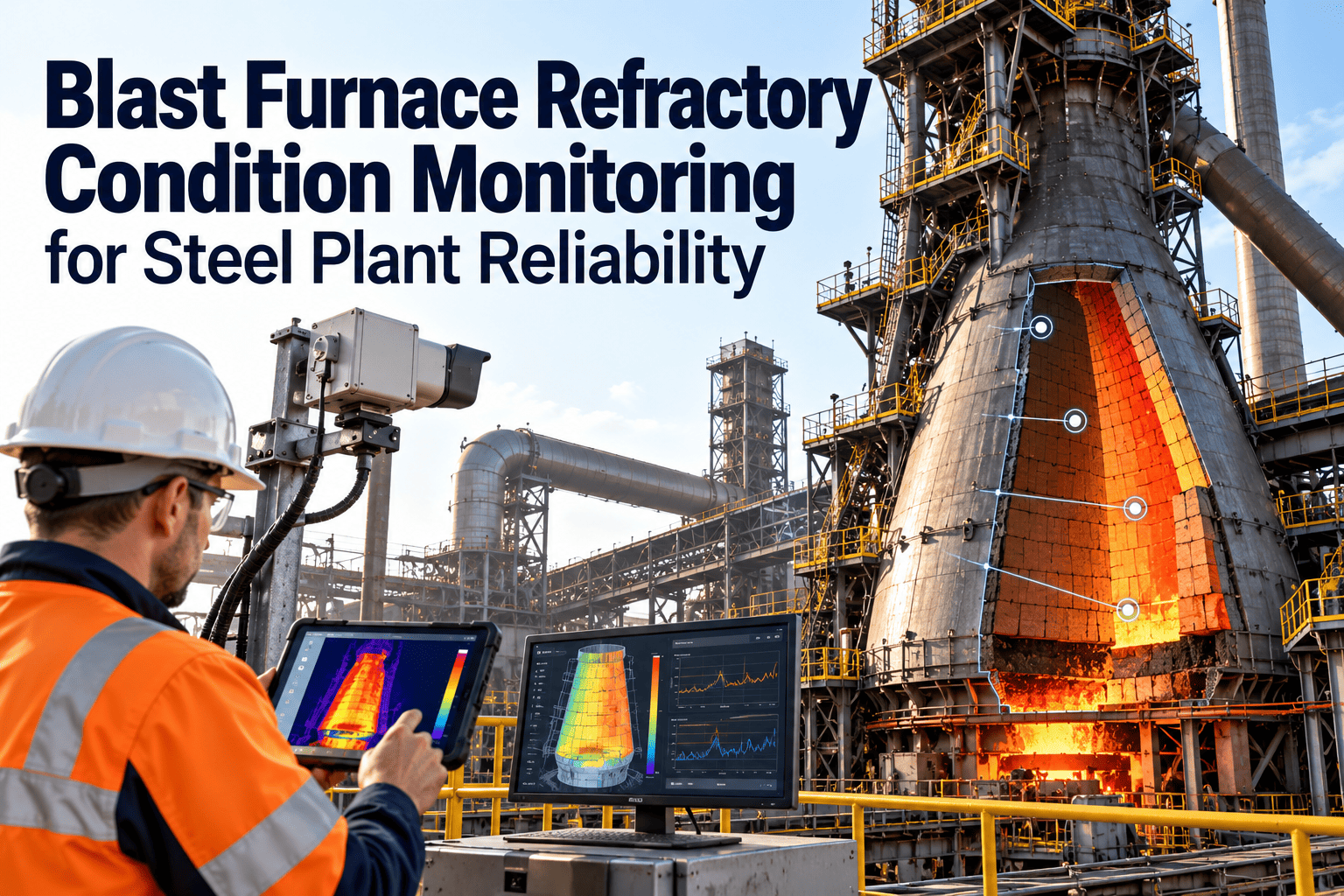
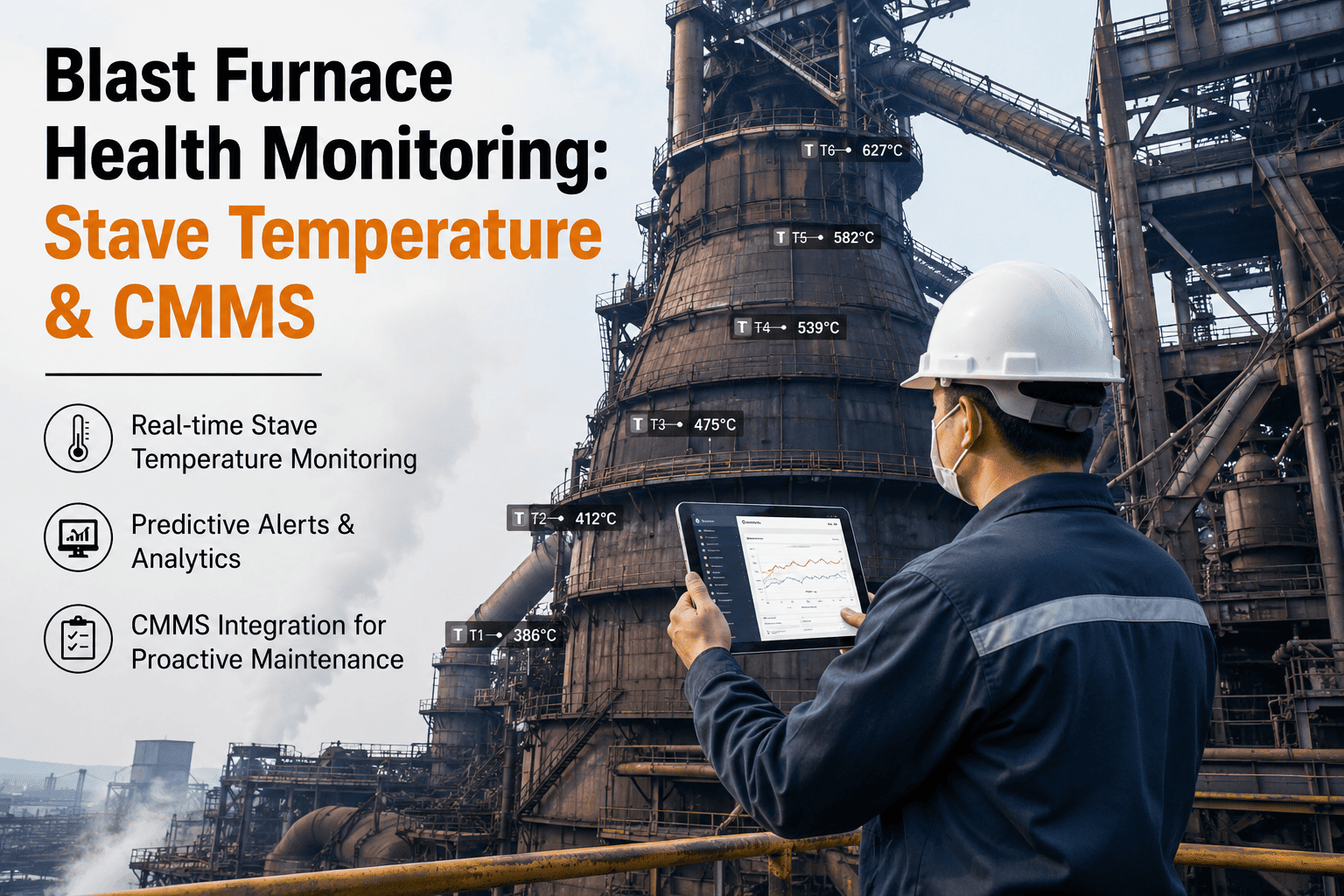
Blast furnace cooling staves are banks of copper or cast iron tubes connected in series, with hot furnace side wall at 1,200–1,400°C and cooling water inlet at 40–60°C. Each stave gallery has inlet and outlet thermocouples positioned 20–30 cm apart, measuring water temperature rise across the stave. Normal temperature differential is 10–18°C across a cooling stave gallery. When a stave cooling gallery develops a breach — typically starting at copper-to-steel joints or in cast iron at micro-pore locations — hot gas flows into the cooling gallery, raising outlet water temperature without corresponding inlet flow increase. This creates an asymmetric temperature differential: inlet sees normal temperature, outlet climbs 2–5°C above baseline, indicating water bypass and gas ingress. Continuous thermocouple monitoring detects this asymmetry within 1–4 hours of first breach. Combined with pressure drop trending (water flow remains constant while differential pressure drops 5–8% at breach onset), AI algorithms recognize the signature pattern and alert maintenance teams to investigate a specific stave zone before refractory erosion begins. Manual inspection, visual examination, or borescope investigation can then pinpoint the precise stave and breach location, allowing targeted cooling stave replacement (2–4 day outage) instead of full campaign termination (30+ day unplanned shutdown).
Continuous Thermocouple Monitoring
Install inlet/outlet thermocouples on all BF cooling stave galleries. Data streams continuously to DCS and historian. AI algorithms track temperature differentials every 10–15 seconds. Asymmetric temperature rise indicating water bypass is detected within 1–4 hours. Early detection window allows targeted stave inspection and replacement before refractory erosion spreads.
Differential Pressure Trending
Real-time cooling water supply and return pressure monitoring. Early stave breach signature: inlet pressure constant, outlet pressure drops 5–8%, indicating partial blockage or bypass. Algorithms correlate pressure changes with temperature data to confirm breach location. Trending predicts pressure failure progression 12–24 hours before complete cooling gallery blockage.
High-Risk Stave Identification
Predictive algorithms identify copper staves with >200,000 operating hours (failure risk increases 4x) and cast iron staves showing early thermal drift (indicating internal stress). Maintenance teams receive alerts 60–90 days before predicted failure, allowing planned replacement during controlled downtime instead of reactive emergency repair.
Real-Time Alert & Response Protocols
When cooling stave breach signature detected, automated alerts route to BF operator, maintenance supervisor, and shift manager simultaneously. Pre-defined response protocols provide immediate action steps: verify thermocouple data, check adjacent staves, prepare for borescope inspection, stage replacement cooling staves. Centralized alert system reduces response delay from hours to minutes.
Campaign Life Extension Reporting
Track and document every stave replacement, water bypass episode, and thermal anomaly throughout campaign life. Generate quarterly campaign health reports showing predicted remaining life, identified high-risk zones, and proactive intervention recommendations. Cumulative data across multiple campaigns helps predict failure patterns and optimize replacement timing.
Cooling Stave Failure Progression: Detection Windows and Intervention Timeline
Understanding the progression from stave leak onset to full campaign failure is critical for effective early intervention. A cooling stave breach doesn't instantly destroy the blast furnace — it unfolds in stages, each with distinct detection signatures and intervention windows. Hour 0–4: Initial breach occurs (typically at copper-to-steel joint or cast iron pore). Cooling water temperature differential becomes asymmetric (+2–5°C outlet rise). Pressure drop emerges at 3–5%. AI systems detect this signature within 1–4 hours. Hour 4–48: Water bypass continues. Adjacent staves begin showing rising outlet temperatures (+3–8°C) as thermal radiance heats surrounding galleries. Differential pressure drift accelerates. Refractory thermal stress intensifies. Intervention window closes rapidly. Day 2–3: Refractory erosion begins. Multiple adjacent staves show temperature rise. Shell hotspot expands. Furnace pressure may fluctuate. Day 3–7: Cascade failure. Refractory deterioration accelerates. Multiple staves compromised. Shell integrity breached in localized zone. Forced shutdown becomes imminent. Day 7+: Campaign termination unavoidable. Emergency reline required. The critical intervention point: hours 0–48, when a targeted single-stave replacement still prevents cascade. Detection delays beyond 48 hours typically trigger forced shutdown.
PHASE 1
Breach Onset (0–4 Hours)
Cooling stave gallery develops initial breach. Water temperature differential becomes asymmetric: inlet constant, outlet rises 2–5°C above baseline. Pressure drop appears at 3–5%. AI thermocouple monitoring detects signature within 1–4 hours. Early intervention: visual inspection and borescope examination to confirm breach location and assess refractory condition.
1-4 HRS
PHASE 2
Water Bypass & Cascade (4–48 Hours)
Water bypass accelerates. Outlet temperatures of adjacent staves rise 3–8°C. Differential pressure drift worsens. Thermal stress on refractory intensifies. Intervention window: 24–48 hours. Maintenance action: Prepare cooling stave replacement crew, order replacement staves, schedule controlled furnace tapping or reduction in blast rate to enable stave removal and installation. Controlled replacement cost: $200K–$400K, 2–4 day outage.
4-48 HRS
PHASE 3
Refractory Erosion (Day 2–7)
Refractory erosion begins. Temperature gradients across brick matrix cause internal cracking. Multiple adjacent staves show temperature rise. Shell hotspot becomes visible (thermal imaging). Furnace pressure stability degrades. Intervention window closed. Forced furnace shutdown becomes necessary. Emergency reline cost: $15M–$35M, 30–45 day unplanned outage, production loss $18M–$45M.
2-7 DAYS
PHASE 4
Campaign Termination (Day 7+)
Cascade failure across multiple staves. Refractory integrity compromised. Shell protection breached. Furnace pressure control lost. Emergency shutdown mandatory. Full campaign termination, emergency reline, and extended furnace offline period required. Cost: $22M–$65M aggregate (lost production + emergency labor + capital + market recovery).
For a single 4,500 m³ blast furnace, continuous cooling stave monitoring delivers immediate and long-term economic returns. Immediate: Each prevented unplanned campaign termination saves $22M–$65M in combined production loss, emergency labor, and rework. Average 1–2 unplanned failures per decade mean an expected prevented-failure value of $22M–$65M per decade, or $2.2M–$6.5M annualized. Long-term: Campaign extension of 2.6 years (11.4-year life vs. 7.8-year reactive baseline) equals 2.6 years × 350–500 TPD = 318,000–468,000 additional tons of hot metal production. At $280–$380/ton revenue, campaign extension value = $89M–$178M per furnace per extended campaign cycle. For an integrated steelmaker with 6 major blast furnaces on rotating campaign schedules, aggregate value of continuous cooling stave monitoring across the fleet: $44M–$124M over a 15-year period, or $3M–$8.3M annualized. Monitoring infrastructure cost (thermocouple installation, data streaming, AI analytics platform, training) typically runs $400K–$800K per furnace, yielding ROI positive within 8–18 weeks of first prevented unplanned failure.
Blast Furnace Campaign Economics: Reactive vs. Continuous Predictive Monitoring
4,500 m³ BF, 12-year campaign period analysis, USA 2024–2025
"We detected a cooling stave breach two hours after onset using thermocouple trend analysis. That 2-hour detection window allowed us to replace the stave during a planned blast adjustment instead of forcing emergency shutdown. We saved $38 million in unplanned downtime and extended our campaign another 2.8 years. Every mill operating large blast furnaces should have this monitoring system."
Deployment & Integration: Cooling Stave Monitoring Live in 60 Days
Deploying continuous cooling stave monitoring onto an operational blast furnace doesn't require furnace shutdown or major infrastructure work. Modern systems retrofit onto existing thermocouple installations or add new inlet/outlet thermocouples to each cooling gallery. Data flows through existing DCS connections or new wireless sensor networks. Integration with your historian and alert systems is straightforward via OPC-UA. Typical deployment: weeks 1–2 for thermocouple installation and calibration (crews work during normal BF operation), weeks 3–4 for data validation and AI model training on your specific furnace's historical thermocouple patterns and failure events, weeks 5–8 for live monitoring, alert tuning, and staff training. By week 8, systems are detecting anomalies with detection accuracy matching or exceeding the industry-leading 91–97% range, and your maintenance teams are responding to early alerts within the critical 1–4 hour detection window.
60-Day Cooling Stave Monitoring Deployment
Large blast furnace (>4,000 m³), proven USA-based rollout
Days 1–14: Thermocouple Audit & Sensor Installation
Baseline monitoring architecture
Audit all BF cooling stave galleries. Document existing inlet/outlet thermocouples, verify condition, recalibrate as needed. Install new thermocouples where gaps exist. Confirm sensor output feeds into DCS data historian. Validate wiring integrity and calibration across all 40–60 cooling galleries. Zero furnace downtime required.
Days 15–30: Data Ingestion & AI Model Training
Learning your furnace signature
Integrate historian thermocouple data into AI analytics platform. Upload 12–24 months historical data. Train algorithms on your furnace's normal temperature differential ranges, seasonal variations, and past stave failure events. Baseline asymmetric temperature signatures (water bypass indicators) are learned. Detection thresholds tuned to minimize false positives while catching genuine early warnings.
Days 31–50: Live Monitoring & Alert Routing
Real-time anomaly detection
Activate continuous monitoring algorithms. Thermocouple data streamed to AI engine every 10–15 seconds. Temperature differential anomalies detected and scored in real-time. Early-warning alerts route to BF operator, maintenance supervisor, and shift manager via SMS, email, and app notification. Pressure drop correlation validation refines breach confidence scoring.
Days 51–60: Response Protocol & Team Training
Go-live with intervention capability
Conduct shift supervisor and maintenance crew training on alert interpretation and response protocols. Validate response timelines: verify staff can initiate borescope inspection and stave assessment within 2 hours of first alert. Document escalation procedures. Measure detection accuracy against manual inspection findings. Fine-tune thresholds based on initial feedback.
Frequently Asked Questions — Blast Furnace Cooling Stave Monitoring
How early can continuous thermocouple monitoring detect a stave cooling water leak?
AI systems detect stave breach signatures within 1–4 hours of initial breach onset by analyzing asymmetric outlet temperature rise and pressure drop correlation. This detection window enables controlled stave replacement during planned furnace adjustment instead of forcing emergency campaign termination.
Do we need to install new thermocouples, or can we use existing BF cooling system sensors?
Most modern blast furnaces have inlet/outlet thermocouples on major cooling gallery zones. Systems integrate with existing sensors and add selective new thermocouples in previously unmonitored zones. Installation is retrofit-capable during normal BF operation with no furnace downtime required.
Can AI algorithms predict which staves are at highest risk of future failure?
Yes — predictive models identify copper staves with >200,000 operating hours (4x failure risk increase) and cast iron staves showing early thermal drift. Early-warning alerts allow preventive replacement during planned maintenance, avoiding reactive emergency repairs that trigger forced campaign termination.
How much campaign life extension is realistic with continuous stave monitoring?
Industry data shows 2.6-year average campaign extension (11.4 years vs. 7.8-year reactive baseline). For a 4,500 m³ furnace producing 350–500 TPD, campaign extension generates $89M–$178M in additional revenue, yielding ROI positive within 8–18 weeks of first prevented unplanned failure.
What integration does cooling stave monitoring require with our DCS or historian?
Integration happens via standard OPC-UA or historian API. Thermocouple data streams automatically from your DCS historian into the AI analytics platform. Alerts route back to DCS alarm systems and mobile notifications. No custom programming required; typical integration takes 1–2 weeks.
How do false positives get handled if AI misidentifies a stave breach?
AI systems achieve 91–97% detection accuracy with <3% false-positive rates. Alerts include confidence scoring and recommended verification steps (borescope inspection, pressure correlation). Tuning occurs during first 30 days of monitoring to match your specific furnace's thermal signatures.
What is the capital cost to deploy continuous BF cooling stave monitoring?
Infrastructure cost ranges $400K–$800K per furnace depending on thermocouple density and DCS integration scope. Monitoring software typically operates on annual license ($30K–$60K per furnace). ROI is positive within 8–18 weeks of first prevented campaign termination, delivering $22M–$65M in prevented losses.
BLAST FURNACE MONITORING · OXMAINT PLATFORM
Extend Campaign Life 2–5 Years With Continuous Stave Monitoring
Detect cooling stave breaches 1–4 hours after onset. Predict high-risk staves 60–90 days before failure. Prevent $22M–$65M unplanned campaign terminations. Start free trial today with your furnace thermocouple data.