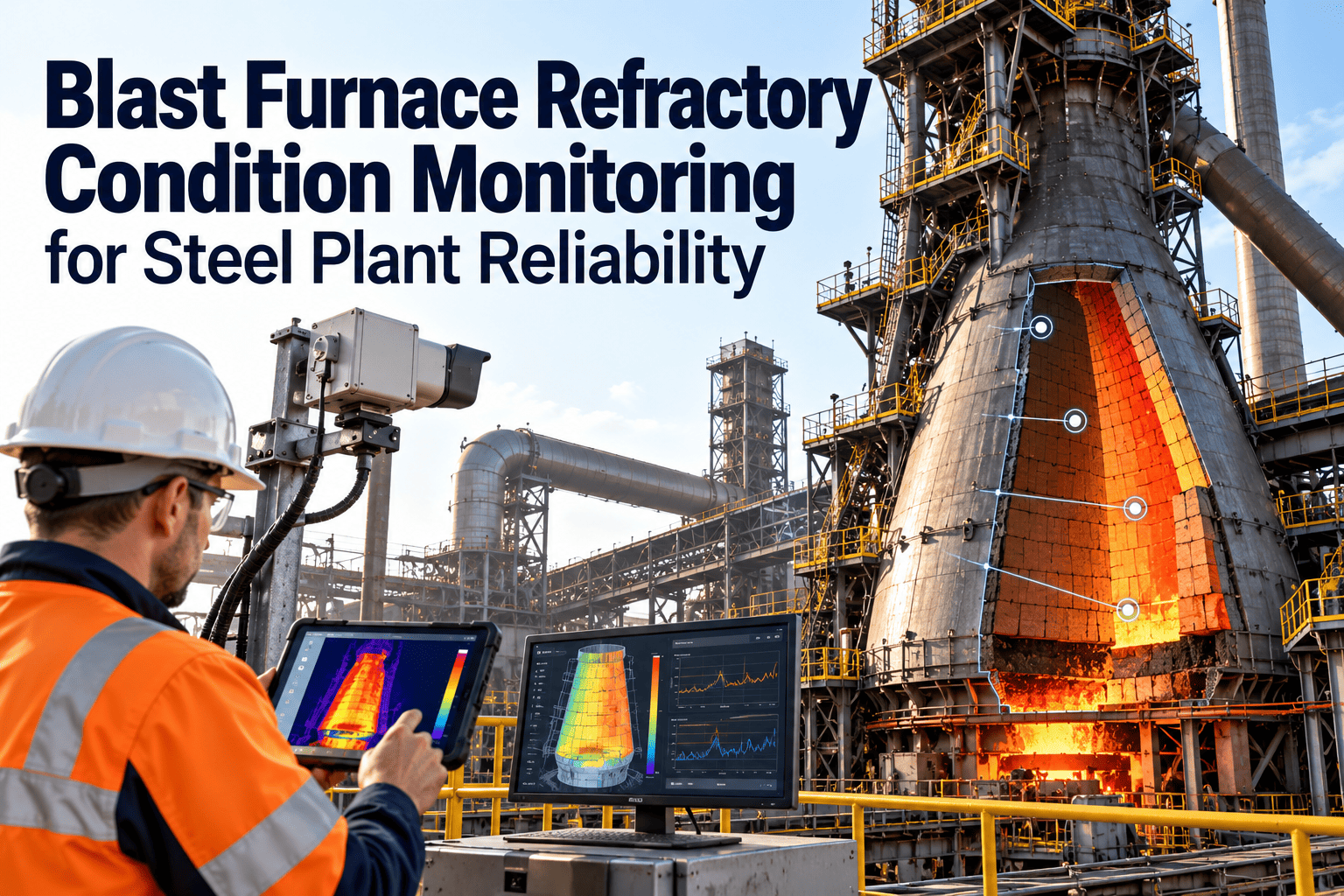
A blast furnace reline costs between $50M and $120M and takes your ironmaking capacity offline for weeks. The difference between a planned reline and an emergency shutdown almost always comes down to whether your maintenance team had visibility into cooling stave heat flux trends, refractory lining wear rates, and gas cleaning system pressure drops — months before those numbers crossed a critical threshold. Start tracking blast furnace health with Oxmaint before the next unplanned shutdown resets your production quarter.
How AI-powered CMMS tracks cooling stave heat flux, refractory lining wear, and BF gas cleaning system health to predict $2–5M failures before they force an emergency reline or shutdown in your ironmaking operation.
Ironmaking operations that track BF cooling stave temperatures, refractory wear profiles, and gas system pressure differentials in a centralized maintenance management platform don't just catch failures earlier — they plan relines strategically, reduce emergency parts procurement, and keep blast furnace campaigns running 15–20% longer than industry averages. Book a demo to see Oxmaint's BF tracking module live.
Cooling Stave Monitoring: Catching Heat Flux Anomalies Before Burnthrough
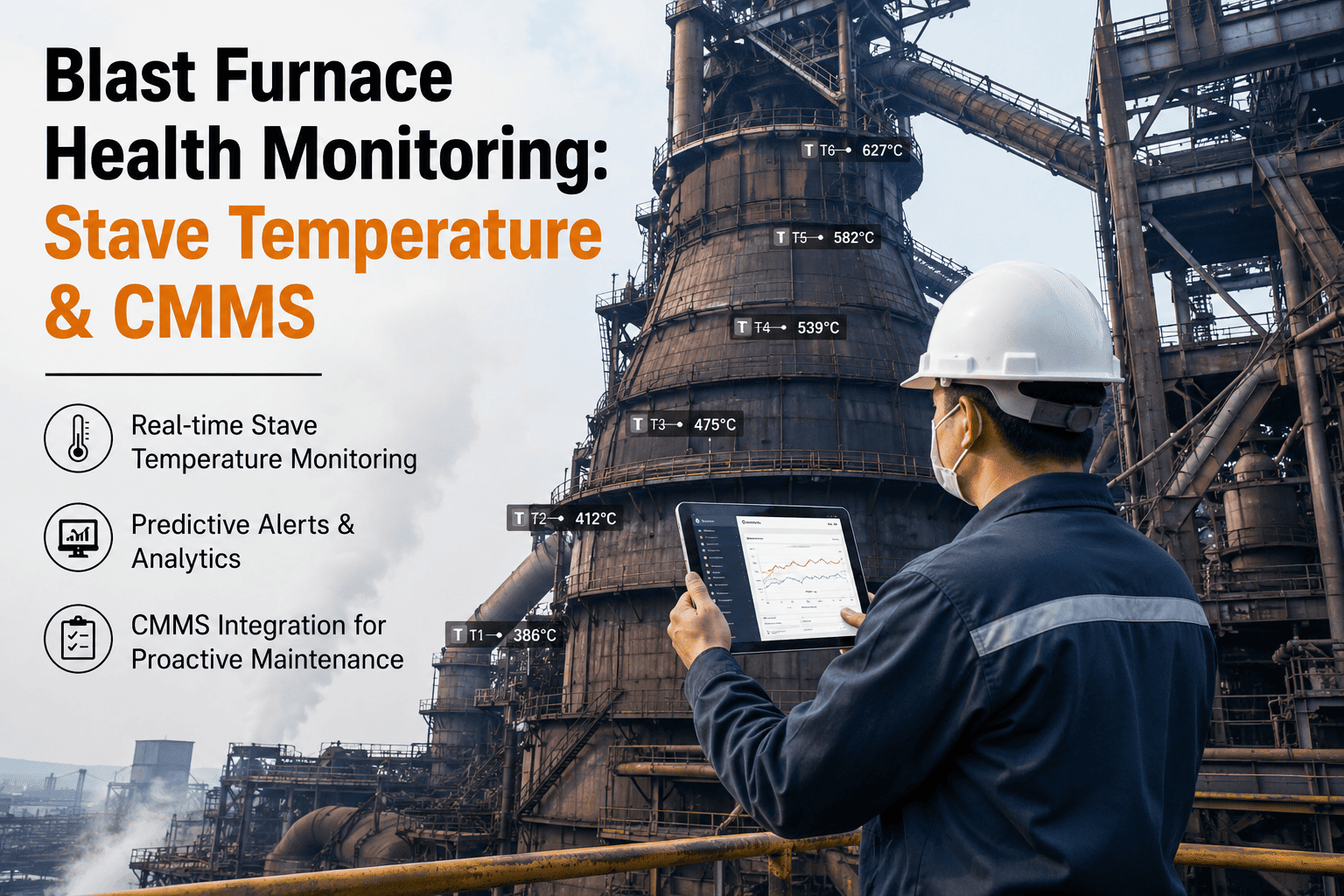
Cooling stave burnthrough is the most catastrophic failure mode in blast furnace operation. Water-cooled copper or cast iron staves regulate the thermal load of the furnace wall — and once a stave begins to fail, the progression from elevated heat flux to burnthrough can happen in days. The challenge is that most ironmaking teams track stave temperatures in a separate SCADA system with no connection to maintenance work order history, making it nearly impossible to correlate temperature trends with PM compliance gaps until after the failure.
Oxmaint's BF cooling module aggregates stave temperature data, heat flux readings, and coolant flow rates alongside maintenance records in a single dashboard. When flux deviation crosses configurable alert thresholds, a corrective work order is generated automatically and assigned to the responsible maintenance team — with the stave zone location, last inspection date, and thermal trend chart attached to the work order. Start monitoring your BF cooling staves with Oxmaint and eliminate the gap between your process control system and your maintenance team.
Stave burnthrough events that reach the shell cause immediate emergency shutdown and can result in molten iron contact with the cooling water system — a severe safety and structural risk that requires full campaign termination.
-
Heat Flux Trend Alerting per Stave ZoneConfigurable flux deviation thresholds per stave zone trigger work orders before temperatures reach structural risk levels — typically 3–6 weeks before visible shell hotspot formation.
-
Coolant Flow Rate vs Temperature CorrelationTracks the relationship between coolant inlet/outlet temperature differentials and flow rates to identify staves with internal fouling, scale buildup, or partial blockages before cooling capacity degrades.
-
Stave Replacement History TrackingComplete replacement and repair history per stave panel with age-weighted risk scoring that automatically elevates alert sensitivity on staves approaching expected service life limits.
-
Multi-Campaign Comparative TrendingCompare stave thermal performance curves across current and previous blast furnace campaigns to identify zones that consistently degrade faster and prioritize them for the next scheduled reline scope.
- Stave zones with accelerating heat flux deviation indicating early-stage skull loss or lining erosion behind the stave
- PM inspection gaps on high-risk stave panels that elevate burnthrough probability without any process-side temperature alarm
Refractory Lining Tracking: Extending Campaign Life with Wear Data
Refractory wear in the hearth, bosh, and belly zones of a blast furnace follows predictable but nonlinear patterns. Without systematic wear tracking across multiple measurement points and maintenance interventions, ironmaking teams default to conservative reline decisions — scheduling shutdowns earlier than necessary to avoid the risk of a breakout, and leaving significant campaign life on the table. Oxmaint's refractory trending module changes that calculus by giving your metallurgical engineering team a live view of lining thickness profiles informed by both measurement data and maintenance history.
Teams using systematic wear tracking data in reline planning consistently extend campaign life by 8–14% compared to teams relying on fixed-interval reline schedules — translating directly to millions in additional iron production before the next shutdown window.
-
Wear Profile Logging by Furnace ZoneSystematic logging of refractory lining measurements per zone — hearth floor, hearth walls, tuyere belt, bosh, belly, and stack — with date-stamped entries and technician attribution for audit trail integrity.
-
Wear Rate Trend CalculationCalculates mm-per-month wear rates across hearth lining measurement points and projects remaining lining life at current wear velocity, giving campaign management teams data-driven reline timing recommendations.
-
Grouting and Repair Work Order TrackingLinks all refractory repair interventions — grouting, gunite patching, carbon ramming mix applications — to specific lining zones so wear progression post-repair can be accurately isolated from base degradation trends.
-
Critical Thickness Threshold AlertsConfigurable minimum lining thickness thresholds per zone trigger escalation alerts to the campaign manager and metallurgical team when refractory approaches safe operating minimums for breakout prevention.
- Accelerating wear rates in hearth corner zones — the most common breakout initiation point in iron and steel blast furnaces
- Grouting repairs that are not achieving the expected wear rate reduction, indicating more aggressive intervention is required before the next scheduled maintenance window
BF Gas Cleaning System Maintenance: Preventing Dirty Gas Losses
The blast furnace top gas cleaning system — comprising the dry or wet dust catcher, bag filters or scrubbers, and the gas distribution network — represents one of the most maintenance-intensive subsystems in ironmaking. Unplanned downtime in the gas cleaning system doesn't just affect BF operation: it disrupts the entire gas balance of your steel plant, forcing combustion on costly substitute fuels and reducing hot metal production rates. Track your BF gas cleaning PM schedule with Oxmaint to keep your ironmaking gas balance intact through every production campaign.
-
Pressure Drop Trending Across Filter SectionsTracks differential pressure across bag filter sections, scrubber circuits, and ESP fields over time to detect progressive fouling before it causes bypass events or unplanned cleaning shutdowns.
-
Dust Discharge MonitoringTracks dust discharge volumes and quality from the primary dust catcher and secondary cleaning stages, flagging abnormal values that indicate changes in furnace burden distribution or charging practice impacting gas quality.
-
Gas Valve and Bleeder PM SchedulingAutomated PM scheduling for top gas valves, bleeder valves, and pressure relief systems based on operating cycles and hours rather than fixed calendar intervals that ignore actual service conditions.
- Progressive filter fouling trends that precede bag blinding events and forced cleaning shutdowns in dry gas cleaning systems
- Gas quality deterioration patterns in scrubber systems that indicate spray nozzle wear, demister fouling, or liquor chemistry imbalance requiring corrective maintenance
Hot Blast Stove Maintenance: Protecting Preheat Capability
Hot blast stoves are critical to blast furnace thermal efficiency — delivering preheated air at 1100–1300°C to the tuyere level significantly reduces coke consumption rates. Stove dome temperatures, checkerwork condition, combustion valve seal integrity, and burner performance are all failure vectors that degrade hot blast temperature and ultimately increase iron production costs per tonne. Systematic PM tracking in Oxmaint ensures your stove fleet stays in the operating envelope required to maintain campaign efficiency targets. Book a demo to see hot blast stove tracking in Oxmaint.
-
Stove Dome Temperature Trending per UnitTrack dome temperature achievement per blast stove across every blast cycle, identifying stoves with deteriorating heat absorption that indicate checkerwork degradation requiring maintenance intervention.
-
Combustion Valve and Seal PM TrackingScheduled inspection and replacement tracking for hot blast, cold blast, and gas valves including seal integrity checks that, if missed, result in cross-mixing of BF gas and blast air — a serious safety and efficiency event.
-
Burner Performance and Combustion Efficiency LoggingRecords burner inspection findings, combustion air-to-gas ratio adjustments, and flame impingement observations alongside stove temperature performance to correlate burner condition with heating efficiency outcomes.
- Stoves with declining dome temperature achievement that indicate checkerwork silica creep or spalling — detectable 4–8 months before hot blast temperature compliance is compromised
- Valve seal degradation patterns across the stove fleet that precede major unplanned maintenance events requiring cold blast emergency diversion
One Platform for All BF Maintenance Systems
Connect cooling stave data, refractory wear logs, gas cleaning PM schedules, and hot blast stove history in a single CMMS built for ironmaking operations.
Oxmaint BF Maintenance Software Capabilities
Purpose-built features for ironmaking maintenance teams managing the operational complexity of blast furnace campaigns.
We had been running cooling stave inspections on a fixed 90-day cycle regardless of process conditions. After implementing Oxmaint's BF monitoring module, we caught a stave zone in the bosh showing flux deviation trending two months before it would have triggered our SCADA alarm. We made the repair during the next scheduled tap interval. That repair avoided what our team estimates would have been a $3.4M emergency event.
Frequently Asked Questions
Common questions from blast furnace maintenance and campaign management teams evaluating CMMS software for ironmaking operations.
Yes. Oxmaint integrates with OSIsoft PI Historian, Honeywell PHD, Aspen InfoPlus, and other common process data historians via REST API and OPC-UA connections. Cooling stave temperatures, heat flux values, and gas system pressure readings can be pulled directly into maintenance records without manual data entry. Try it free and connect your historian in the first week of onboarding.
Oxmaint maintains a permanent wear profile history per furnace zone across campaigns. When a new campaign begins after reline, a new measurement baseline is established while prior campaign data is retained for cross-campaign comparison. This enables your metallurgical team to benchmark wear rates against previous campaigns and improve reline scope decisions over time.
Yes. Oxmaint supports PM templates for dry bag filter systems, wet scrubber circuits, and electrostatic precipitator configurations. Cleaning frequency, bag inspection intervals, nozzle replacement schedules, and pressure drop thresholds are all configurable to match your specific gas cleaning system design. Book a demo to configure your BF gas cleaning template live.
Yes. Oxmaint supports multi-site and multi-asset environments with full data separation between furnace units. Corporate and plant-level maintenance teams can view aggregated dashboards across all furnaces while each BF team manages their own work order queues, PM schedules, and asset data within their designated environment.
Most blast furnace teams complete stave monitoring configuration — including zone mapping, threshold calibration, and historian data connection — within 2–3 weeks of onboarding. Oxmaint's onboarding team includes industrial maintenance specialists who guide the BF-specific setup process. Start your free trial to begin setup today.
Yes. Oxmaint covers the full hot blast system including stove dome temperature trending, combustion valve PM scheduling, burner inspection logging, and checkerwork condition tracking. Stove performance data is linked to work order history so your engineering team can correlate maintenance execution gaps with efficiency drops in the hot blast temperature record.
Predict Your Next BF Failure Before It Costs Millions
Give your ironmaking maintenance team a live view of cooling stave health, refractory wear progression, and gas system PM compliance — all in one CMMS built for blast furnace operations.