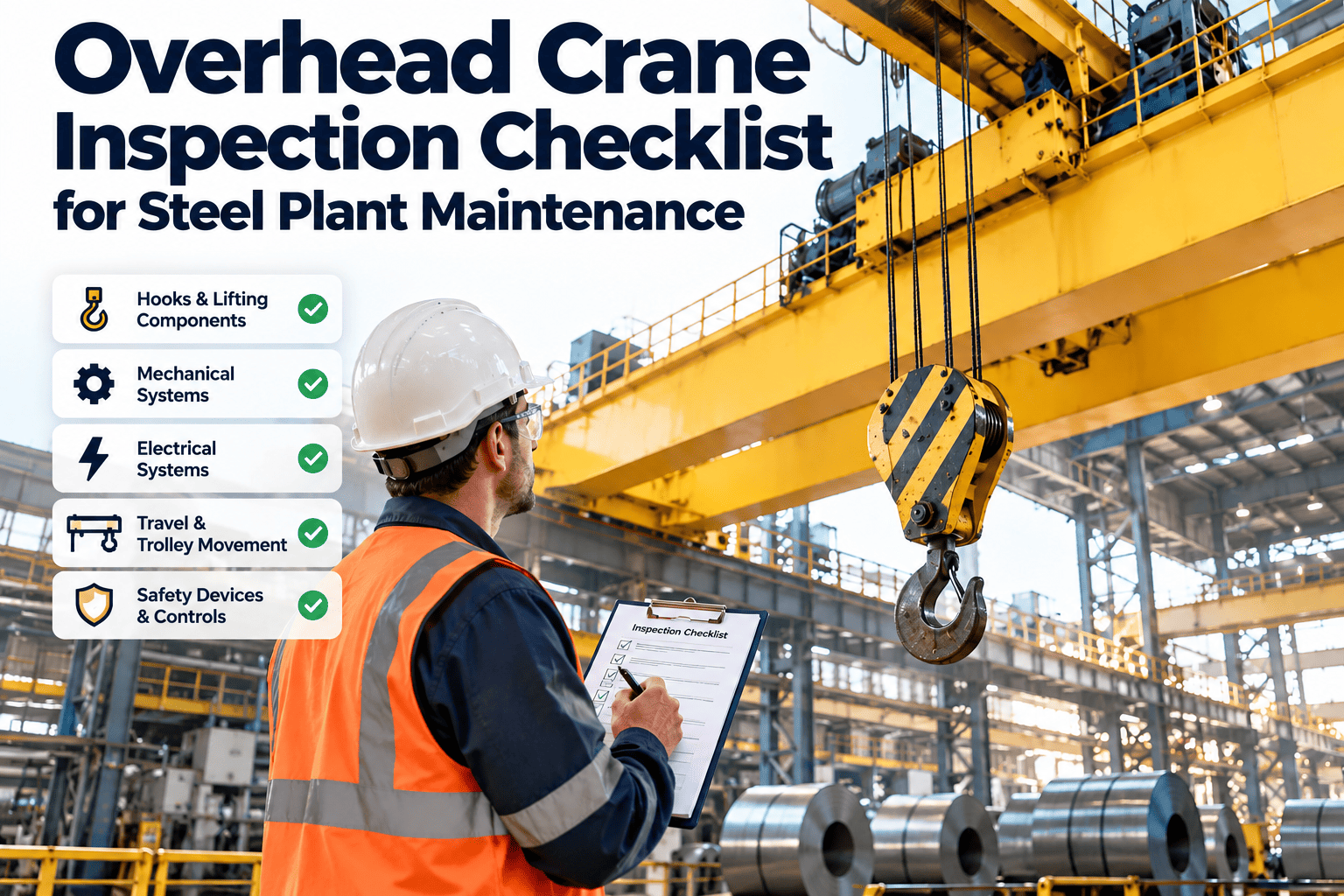
Overhead cranes are silent killers in steel plants — they carry hundreds of tons across production areas where workers stand unaware of the danger overhead. A single failed component during material transfer can drop loads on workers below, cause equipment damage worth millions, or collapse entire sections of facility infrastructure. OSHA 29 CFR 1910.179 and ASME B30.2 mandate daily pre-start inspections performed by qualified operators before each shift. Steel plants performing daily crane inspections report 73% fewer load-drop incidents, eliminate catastrophic hook failures, and achieve sub-2-minute incident response times when combined with rapid lockout protocols. Oxmaint's EOT crane management system ensures every operator performs required daily checks digitally — with photo documentation of wire rope condition, hook integrity, brake function, and limit switch operation — creating an auditable compliance record that demonstrates OSHA readiness and eliminates the margin for error that causes crane fatalities.
Prevent Crane Failures Before They HappenDaily pre-use inspections tracked digitally with photo documentation ensure every crane component is certified before lifting begins.
Wire rope is the crane's lifeline — a single strand failure reduces breaking strength by 5-10%, and cumulative failures become catastrophic. Daily visual inspection catches developing problems weeks before rope failure occurs, preventing load drops and worker injuries.
2. Hook, Brake & Control System Functional Testing
Hooks fail silently until load drops. Brakes wear gradually until they stop working. Controls fail unexpectedly under load. Daily testing catches all three failure modes before they cause incidents.
3. Bridge, Trolley & Structural System Verification
Cranes operate on rails, beams, and mechanical systems subject to vibration, misalignment, and wear. Daily structural checks ensure the crane frame and travel systems are safe for another day of operation.
4. Electrical Safety & Operational Readiness Final Verification
Electrical systems power cranes but can also fail silently. Operators must verify power is available, safety interlocks function, and emergency protocols are in place before lifting begins.
Make Daily Crane Inspections Foolproof & AuditableOxmaint's digital daily checklist ensures every operator verifies every component, documents findings, and receives supervisor authorization before lifting — creating OSHA-ready compliance records automatically.
1. What is the OSHA requirement for overhead crane daily inspections?
OSHA 29 CFR 1910.179 requires frequent (daily) visual inspections of operating mechanisms, hoist chains/ropes, hooks, and other items before use. Monthly documented inspections and annual comprehensive inspections by qualified persons are also required.
2. How many broken wires in a wire rope mean the rope must be replaced?
ASME B30.2 standard: 6 broken wires in 1 rope lay or 3 broken wires in 1 strand requires replacement. Exceeding these limits means rope strength is compromised and rope must be removed from service immediately.
3. What does "brake slip" mean and why is it critical for daily testing?
Brake slip occurs when raised load slowly descends even though hoist control is released. This indicates brake friction is insufficient to hold load, creating catastrophic drop risk. Any brake slip requires immediate removal from service.
4. Can a hook with a crack be welded and reused?
No. Hooks with cracks must be replaced. Welding a hook alters metallurgy and creates stress concentration points that lead to re-cracking under load. Cracked hooks are out of service permanently.
5. What is a "limit switch" and what happens if it fails?
Limit switches stop hoist when load block reaches maximum safe height. Failed limit switches allow hoist to over-travel, causing load block to hit frame (two-block) which can collapse hoist or drop load. Daily testing is critical.
6. Who is qualified to perform daily crane inspections?
Crane operators or designated qualified persons trained in equipment hazard recognition can perform daily pre-start inspections. Competent persons (with formal training and certification) are required for monthly and annual comprehensive inspections.
7. What should be done if a crane fails daily inspection — can it be repaired quickly and put back in service?
Any failed items must be corrected before crane returns to service. Critical failures (brake slip, cracked hook, limit switch inoperative) require maintenance before ANY lifting. Tag crane "out of service" and notify maintenance. Do not operate until repairs are complete.
8. How long should a daily pre-use crane inspection take and how often must it be documented?
Daily pre-use inspection typically takes 15–25 minutes and must be performed at the beginning of each shift per OSHA requirements. Documentation must be maintained for compliance audits and incident investigations.
"Our integration of Oxmaint's daily crane inspection system has fundamentally changed how we manage overhead equipment. Operators used to skip checks or do them casually — now every check is digital with photo documentation. We caught a developing wire rope failure that would have caused a load drop worth $2M in equipment and potentially worker injuries. The system paid for itself in the first incident it prevented." — Maintenance Director, Large Steel Producer
Robert Chen, Maintenance Director | Republic Steel Holdings, Ohio
Transform Crane Safety from Casual Checks to System ComplianceDigital daily inspections with supervisor authorization create an unbreakable safety chain that prevents load drops, hook failures, and catastrophic incidents.