In the financial boardroom of a North American steel mill, the difference between an approved $10M capital project and a "deferral" often comes down to the quality of the data defense. When a reheat furnace reaches its demographic limit—suffering from chronic refractory spalling, burner inefficiency, and structural warping—the maintenance team must move beyond "gut feel" to provide a data-backed business case. In 2026, the gap between mobile-first and desktop CMMS platforms has never mattered more to manufacturing plants. As technicians spend 80% of their shift on the floor — not at a desk — the best CMMS mobile app for manufacturing is no longer a convenience but a competitive differentiator. The solution is a Capital Project Defense Strategy built on granular CMMS records. By aggregating three years of repair history, gas consumption trends, and unplanned downtime events, reliability leaders can build an irrefutable narrative for a full furnace rebuild. OxMaint provides the reporting depth needed to calculate NPV and ROI directly from floor-level maintenance activity. Sign Up Free to start building your capital defense dashboard. Book a CAPEX Justification Demo
Capital Project Defense: Justifying a Reheat Furnace Rebuild With CMMS Data
Lifecycle Cost Analysis · Asset Health Indexing · Unplanned Downtime Correlation · Refractory Wear Analytics · NPV/ROI Narrative Construction · Audit-Ready Repair Archives
Why Manufacturing Plants Are Going Mobile-First in 2026
The Shift from Desktop to Mobile CMMS in Industrial Maintenance
The Anatomy of a Capital Project Defense
Getting a reheat furnace rebuild approved requires speaking the language of finance. Reliability leaders must translate technical failures—like skid pipe leaks and burner tuning issues—into the language of Net Present Value (NPV) and Risk Mitigation.
Historical Spend Analysis
Export three years of 'Emergency Repair' costs from OxMaint. Highlighting the 'Whack-a-Mole' nature of band-aid repairs proves that rebuilding is the cheaper long-term option.
Remaining Useful Life (RUL)
Use inspection data to calculate the 'End of Life' date for refractory and hearth components. Defense is strongest when you show that failure is a 'When,' not an 'If.'
Opportunity Cost of Downtime
Correlate furnace downtime events with mill production losses. Showing the Finance Committee the $200k/hr 'Bleed' is the most powerful justification tool available.
Reheat Furnace Health Index: Mapping the Risk
A comprehensive health index provides a visual representation of the furnace's condition, making it easy for non-technical stakeholders to understand the urgency of a rebuild. This guide breaks down real-world performance differences between mobile CMMS and desktop CMMS.
Refractory & Hearth Condition
Mobile photo logs of spalling, heat loss through the shell, and hearth wear provide 'Visceral Proof' of the deteriorating condition.
Burner & Control Efficiency
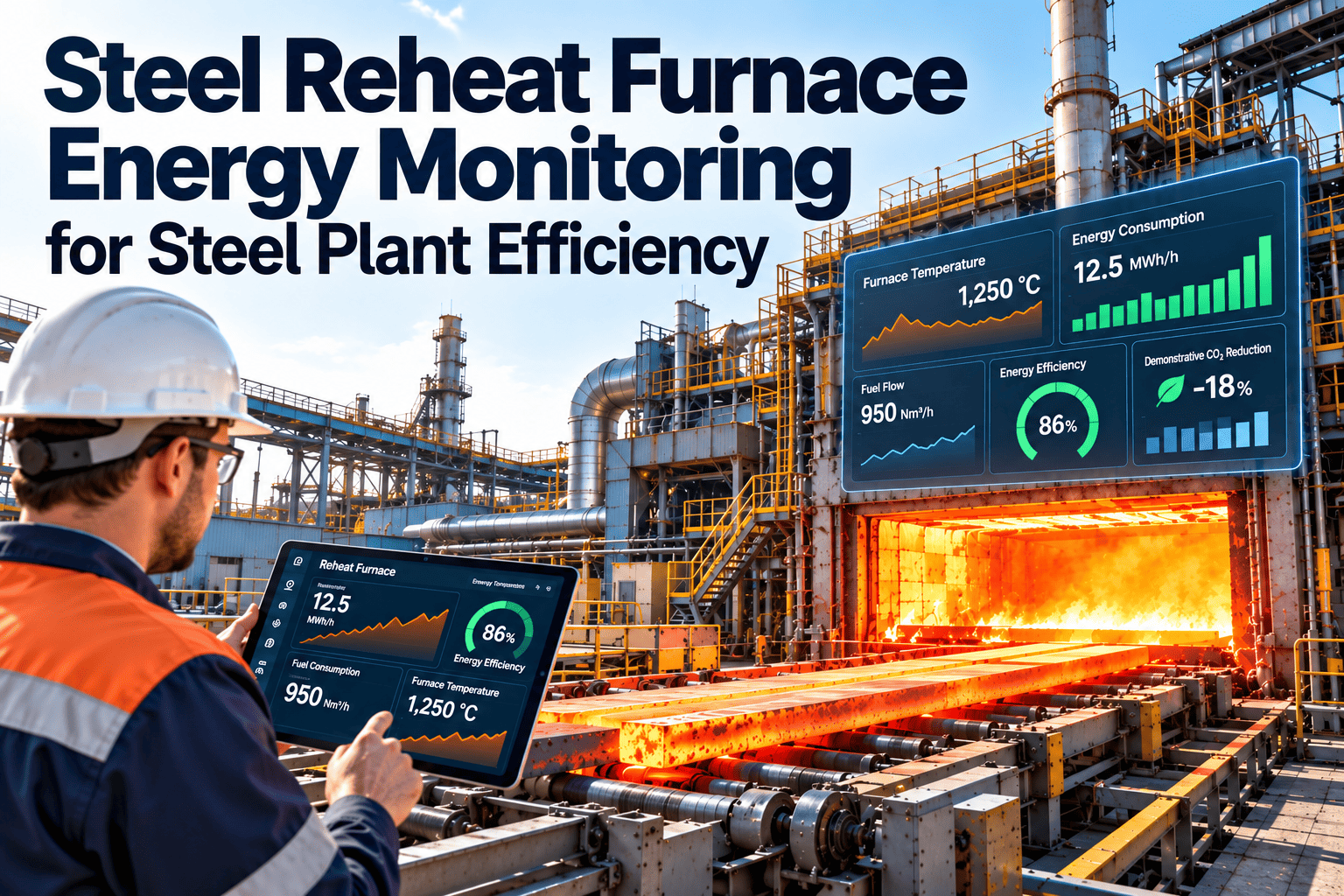
Analyze gas-to-ton ratios. Modern regenerative burners can pay for themselves in fuel savings alone within 18 months.
Structural & Mechanical Integrity
Log structural warping, discharge door failures, and skid pipe leaks. These mechanical 'Nuisance' issues are precursors to major outages.
CMMS Mobile App vs Desktop: Head-to-Head Comparison
Feature-by-Feature Breakdown for Manufacturing Plant Maintenance Teams
| Capability | Mobile CMMS App | Desktop CMMS | Impact for Manufacturing |
|---|---|---|---|
| Work Order Creation Speed | On-floor, real-time | Office/terminal-bound | Mobile reduces lag from fault detection to repair start |
| Offline Functionality | Full offline mode | Requires network connection | Critical for basement plant rooms and signal-dead zones |
| Technician Adoption Rate | High — familiar UX | Moderate — training required | Faster rollout, lower resistance from floor-level staff |
| Photo/Video Documentation | Instant capture | Manual upload only | Richer fault records; faster root cause analysis |
| QR Code Asset Scanning | Native camera scan | Not practical | Eliminates manual asset ID errors at point of service |
| Push Notifications / Alerts | Instant delivery | Email / dashboard only | Reduces response time for critical machine faults |
| Dashboard & Reporting | Summary view | Full analytics suite | Desktop preferred for management KPI reviews |
| Multi-Site Portfolio View | Available on leading platforms | Standard | Desktop preferred for portfolio-level oversight |
CAPEX Justification Matrix: Finance vs. Maintenance
The strongest capital proposals align the needs of the mill floor with the goals of the corporate office. Use this matrix to structure your rebuild defense.
| Proposal Pillar | Maintenance Driver | Financial Driver | Justification Data Source |
|---|---|---|---|
| Refractory Reline | Stop Emergency Leakage | Protect $10M Hearth Asset | Mobile Shell Temp Inspection Logs |
| Burner Retrofit | Reliable Ignition/Uniformity | -15% Natural Gas Intensity | Fuel-to-Steel Ratio Trends |
| PLC/Control Update | Reduce Intermittent Faults | Eliminate High-Cost Recovery | Unplanned DT Frequency Reports |
| Skid System Upgrade | Stop Water Leaks/Scale | Improve Surface Quality | Scrap Loss & Repair Labor Hours |
| Door/Structural Fix | Mechanical Safety/Seal | Reduce Heat Loss/OSHA Risk | Compliance & LOTO Incident Logs |
Key CMMS Mobile App Features Manufacturing Plants Need in 2026
What Separates a Functional Mobile CMMS from a Floor-Ready Maintenance Platform
Defend Your CAPEX With Data. Don't Just Ask—Prove It.
Success in a reheat furnace rebuild project starts months before the proposal. OxMaint provides the high-density data required to build a financial business case that corporate cannot ignore. Stop begging for budget and start defending your mill's reliability with data-backed narratives. Start Your Free Data Capture Pilot
CMMS Mobile App ROI: What Manufacturing Plants Measure
Quantifying the Financial Return of Mobile Maintenance Management
"For three years, I tried to get a $12M Reheat Furnace rebuild approved. Each year, corporate deferred it because we didn't have the 'Hard Math' to justify the risk. Once we moved to OxMaint, we spent six months meticulously logging every hearth patch, every burner tuning hour, and every ton lost to structural warping. When I presented the next proposal, I had a 30-page data narrative showing that we were spending $1.2M annually on 'emergency band-aids' that didn't stop the 15% fuel inefficiency. The project was approved in 15 minutes. Data didn't just win the argument; it eliminated the debate."
Frequently Asked Questions
What are the primary indicators that a Reheat Furnace needs a rebuild?
Frequent refractory spalling, high natural gas intensity (fuel-to-steel ratio), burner ignition failures, and structural warping.
When emergency repair costs exceed 15% of the total asset value annually, a capital rebuild becomes financially superior to maintenance.
How does CMMS data support an NPV (Net Present Value) calculation?
CMMS provides the 'Cash Outflow' data—the actual cost of labor, parts, and downtime associated with keeping the old asset alive.
Comparing these historical costs against the projected fuel and maintenance savings of a new furnace provides the core math for NPV.
Can mobile photo logs really help get a multi-million dollar project approved?
Yes, financial stakeholders often lack technical context; high-resolution photos of spalled hearths and warped skid pipes provide 'Visceral Proof' of risk.
Visual evidence in a CMMS creates an undeniable narrative that supplements the spreadsheets and ROI calculations.
What is the ROI on upgrading to regenerative burners during a rebuild?
Modern regenerative burners can reduce natural gas consumption by 10-15% while improving temperature uniformity across the hearth.
In a high-production mill, the fuel savings alone can achieve a full payback on the burner upgrade within 14 to 20 months.
How do we calculate the 'Cost of Deferral' in a steel mill?
The Cost of Deferral is the sum of emergency repair spend, increased energy intensity, and the 'Risk Premium' of an unplanned catastrophic failure.
By tracking these in OxMaint, you can show corporate that 'Doing Nothing' is often the most expensive option on the table.
Can we use CMMS data to justify a structural 'Shell' rebuild?
Yes, by logging shell temperature inspection data and warping measurements, you can prove that thermal integrity is compromised.
This data justifies the structural work needed to seal the furnace, reduce heat loss, and protect the internal refractory from premature failure.
How does CMMS help with post-rebuild 'Success Verification'?
After the project is complete, you use OxMaint to track the NEW baseline of repair costs and energy intensity.
This allows you to prove to corporate that the promised ROI was achieved, building 'Reliability Credibility' for future capital requests.
What is the role of 'Remaining Useful Life' (RUL) in project defense?
RUL provides the 'Deadline'—it tells the finance committee when the asset is statistically likely to suffer a mission-critical failure.
Defending a project based on RUL moves the conversation from 'Why now?' to 'Why we can't afford to wait any longer.'



-justification-template.png)