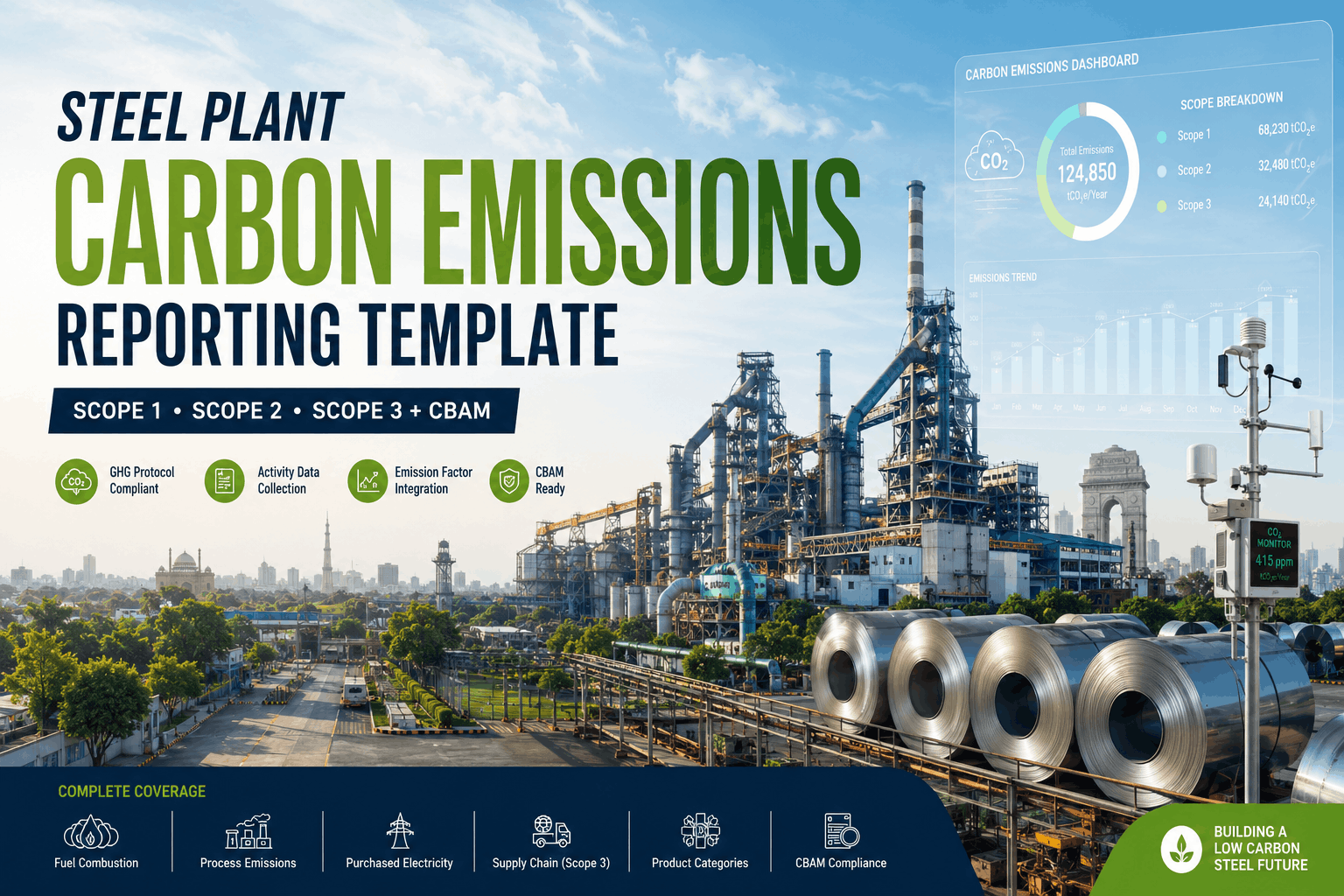
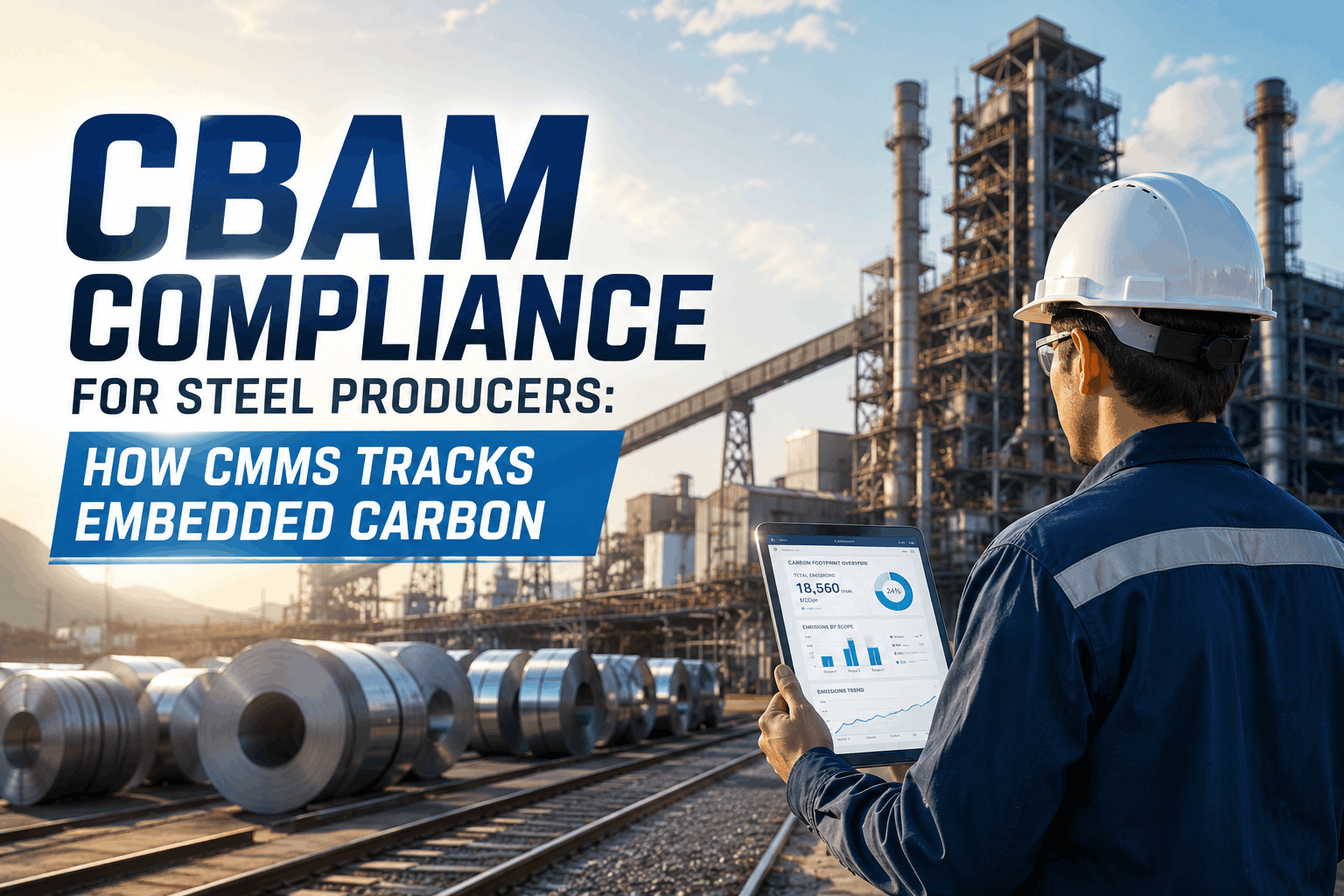
Steel production accounts for roughly 8% of global CO₂ emissions — and a significant portion of that is preventable through smarter maintenance decisions. When a ladle car runs degraded, when a furnace operates with fouled burners, or when a rolling mill vibrates beyond spec, energy waste and carbon emissions spike in parallel. The Carbon and Maintenance Correlation Engine on Oxmaint links every maintenance record to your actual carbon-per-ton output, giving steel operators the data they need for ESG reporting, CBAM compliance, and green steel certification. This case study shows how leading steel plants are quantifying — and cutting — the emissions hidden inside their maintenance backlog. Start your free trial or book a specialist session to see your plant's carbon-maintenance profile.
The Core Problem
Why Carbon Data and Maintenance Data Are Kept Apart — and Why That's Expensive
Most steel plants track maintenance in one system and energy/emissions in another. The result: nobody can prove whether a furnace repair reduced carbon output, or quantify the emissions cost of a delayed PM. ESG reporting becomes guesswork. Green steel premiums stay out of reach.
01
Deferred Maintenance = Hidden Carbon
Every week a degraded burner, worn seal, or misaligned conveyor runs, it burns more energy per ton of steel produced. Without correlation data, this waste is invisible to sustainability teams and ESG auditors.
02
CBAM Requires Per-Product Emissions Data
The EU Carbon Border Adjustment Mechanism requires embedded carbon reporting at the product level. Plants without maintenance-linked emissions tracking cannot produce defensible CBAM declarations — and face premium penalties or market exclusion.
03
Green Steel Customers Are Asking for Proof
Automotive and construction customers paying green steel premiums increasingly require third-party-verifiable carbon-per-ton data. Maintenance records are the evidence layer that turns energy meter readings into credible emissions claims.
How It Works
The Correlation Engine: Linking Every Repair to Carbon Output
1
Maintenance Event Capture
Every work order — planned or reactive — is recorded against the specific asset, shift, and production run. Failure mode, repair action, and parts used are all structured and searchable.
2
Energy & Emissions Mapping
Oxmaint pulls energy meter data and process sensor readings from your historian or DCS and aligns them to maintenance windows. Anomalous energy consumption is flagged against the maintenance timeline.
3
Carbon-per-Ton Calculation
The platform calculates carbon intensity (CO₂/ton) by heat, by shift, and by asset — breaking down what fraction is attributable to equipment condition versus production volume or input mix.
4
ESG-Ready Reporting
Reports are structured for GHG Protocol Scope 1 disclosure, CBAM declarations, and internal ESG dashboards. Audit trail is complete — timestamped, asset-linked, and export-ready.
Carbon Impact Data
Maintenance Actions That Move the Carbon Needle
| Asset / Maintenance Action |
Energy Waste When Deferred |
Typical Carbon Impact |
Detection Lead Time |
| EAF Electrode Alignment |
+4–8% kWh/ton |
+18–35 kg CO₂/ton |
2–4 weeks |
| Furnace Burner Fouling |
+6–12% gas consumption |
+22–48 kg CO₂/ton |
3–6 weeks |
| Compressed Air Leak Repair |
+3–7% auxiliary power |
+8–20 kg CO₂/ton |
Continuous |
| Rolling Mill Drive Alignment |
+2–5% motor consumption |
+6–15 kg CO₂/ton |
4–8 weeks |
| Cooling System Maintenance |
+5–9% heat rejection energy |
+12–28 kg CO₂/ton |
3–5 weeks |
Case Study Results
Real Steel Plant Outcomes
Integrated Steel Plant — 3.2M ton/year Capacity
–14%
Reduction in carbon intensity (kg CO₂/ton) after 12 months of maintenance-correlated energy management. Equivalent to removing 28,000 tons of CO₂ annually from Scope 1 reporting.
CBAM documentation time–85%
Energy waste from deferred PM–31%
Green steel premium qualified+$18/ton
Mini-Mill — EAF Operations
6 Months
Time to first full CBAM-compliant carbon declaration. Previously estimated at 18+ months with manual data collection. ESG audit cost reduced by 60%.
Flat Steel Producer — ESG Reporting
$2.4M
Annual value of green steel premium contracts unlocked after implementing verified carbon-per-ton reporting. Previously unable to meet customer documentation requirements.
See Your Plant's Carbon Profile
Connect your maintenance and energy data in one session — we'll show you where your highest-carbon maintenance gaps are right now.
Our steel plant specialists will map your asset portfolio, identify the top 5 maintenance actions driving carbon waste, and show how Oxmaint generates CBAM-ready reports from your existing historian data.
Expert Review
Industry Perspective on Carbon-Maintenance Integration
The steel industry's carbon challenge is fundamentally a data challenge. Plants that can demonstrate the maintenance-to-emissions link at the asset level will not only satisfy CBAM and ESG requirements — they'll have a systematic method to reduce carbon intensity year-over-year. The correlation engine approach converts maintenance records from a compliance burden into a competitive advantage for green steel markets. Operators who build this data infrastructure now will be 3–5 years ahead of peers still doing manual energy attribution.
Industrial Sustainability Director, European Steel Operations
Reviewed against 2023–2024 CBAM pilot program data and GHG Protocol Scope 1 guidance for primary steel production
FAQs
Common Questions
Does Oxmaint integrate with our existing historian and energy management systems?
Yes. Oxmaint connects to OSIsoft PI, Aveva, Wonderware, and most major DCS historians via OPC-UA and REST APIs. Energy meter data, process sensor readings, and shift production records are pulled automatically — no manual data entry required. For plants running legacy SCADA systems, connector configuration typically takes 2–5 days.
Book a demo to review your specific integration stack and confirm compatibility before any commitment.
Can the platform generate CBAM-compliant carbon declarations directly?
Oxmaint generates structured carbon-per-ton reports aligned to the EU CBAM reporting methodology, including embedded emissions by production batch, asset contribution breakdowns, and audit trail documentation. Reports are export-ready in the formats required for CBAM declarant submissions. For ISO 14064 or Science Based Targets verification, the complete timestamped maintenance-to-emissions data chain is available for third-party auditor review.
Start free to see the reporting interface.
How accurate is the carbon attribution per maintenance event?
Attribution accuracy depends on sensor granularity and data integration depth. Plants with sub-metered energy data at the asset level achieve attribution accuracy of ±3–5% per heat. Plants using zone-level metering typically achieve ±8–12%, which is sufficient for CBAM declarations and most ESG frameworks. Oxmaint's AI models continuously refine attribution as more maintenance-to-energy correlations are observed, with typical accuracy improving 15–20% in the first 6 months of operation.
Book a demo to review what's achievable with your current sensor infrastructure.
What is the ROI timeline for implementing the correlation engine?
Most steel plants see measurable ROI within 3–6 months through two parallel streams: direct energy savings from faster detection and repair of high-consumption equipment faults (typically $200K–$800K annually for a 1M+ ton plant), and commercial value from green steel premium qualification or CBAM penalty avoidance. The documentation efficiency gains alone — reducing manual ESG reporting effort by 60–80% — typically justify the platform cost within the first quarter of operation.
Green Steel Starts With Maintenance Data
Link Your Maintenance Records to Carbon Output — And Turn ESG Compliance Into a Competitive Edge
Every deferred repair is a hidden carbon cost. Every undocumented fix is a missed CBAM declaration. Oxmaint makes the connection visible, auditable, and actionable — from the shop floor to the sustainability report. Start free or speak with a steel plant specialist today.