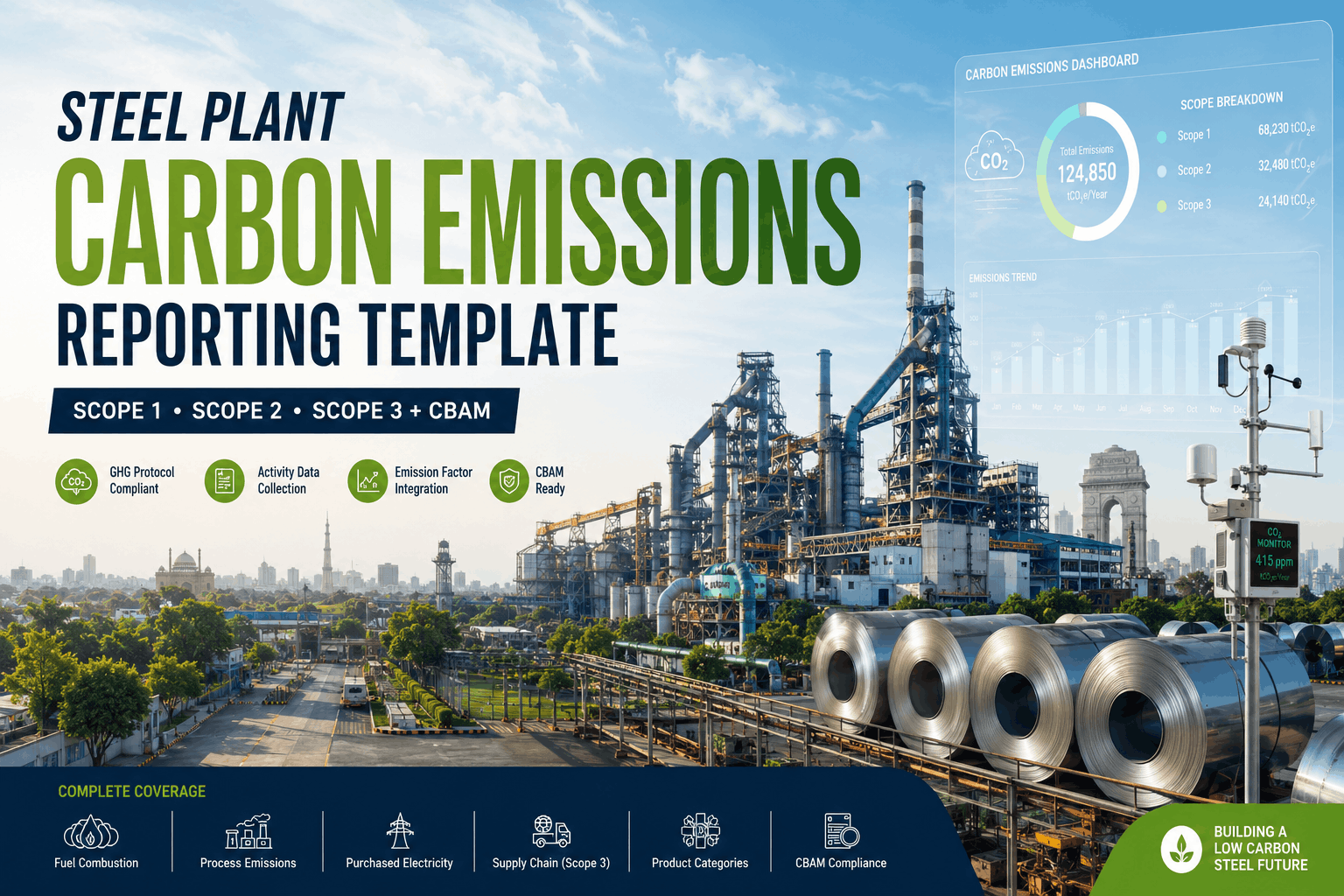
Steel manufacturing accounts for approximately 7% of global carbon dioxide emissions—second only to the energy sector. A single integrated steel mill (producing 2 million tons per year) generates roughly 2.8 million metric tons of CO2e annually: Scope 1 emissions from blast furnace fuel combustion and process emissions (iron reduction), Scope 2 from purchased electricity for electric arc furnaces and finishing mills, and Scope 3 from raw material transportation, ore shipping, and end-of-life product recycling. The European Union's Carbon Border Adjustment Mechanism (CBAM), California's Cap-and-Trade program, and emerging U.S. federal carbon pricing frameworks have made accurate, auditable carbon accounting non-negotiable. Steel plants that cannot document Scope 1, 2, and 3 emissions with immutable accuracy face regulatory penalties, tariff exposure, and supply-chain exclusion from major manufacturers (automotive OEMs, appliance makers, construction companies) who now mandate Scope 3 carbon intensity reporting from suppliers. The GHG Protocol Corporate Standard and ISO 14064 international standards require steel mills to implement rigorous data collection systems that distinguish between process emissions (chemical reactions in furnaces) and energy-related emissions (fuel combustion). A CMMS integrated with Scope 1/2/3 carbon accounting workflows automates emissions calculations at the work-order level: when a maintenance technician logs a refractory replacement on Blast Furnace #1, the system auto-calculates the CO2e avoided by preventing a hotter-running furnace and updates both maintenance costs AND carbon ledgers simultaneously. Oxmaint's carbon-enabled CMMS platform provides steel mills with native Scope 1/2/3 tracking, automated GHG Protocol calculations, CBAM compliance reporting, and audit-ready evidence packs for regulatory submission—eliminating spreadsheet chaos and protecting both your carbon reputation and your compliance standing.
Most steel mills track carbon emissions using disconnected systems: environmental EHS teams maintain spreadsheets pulling data from utility bills and fuel purchase invoices, while maintenance teams log work orders in a separate CMMS without any carbon visibility. This fragmentation creates three catastrophic problems. First, Scope 1 emissions (direct furnace fuel combustion) are estimated using industry averages rather than actual equipment performance—a blast furnace running hotter due to refractory degradation can emit 5–10% more CO2 per ton of hot metal, but maintenance teams have no mechanism to flag this to carbon accountants. Second, Scope 2 emissions (electricity consumption) are typically calculated monthly from utility bills, with zero visibility into which equipment is actually consuming power—this makes it impossible to correlate energy intensity improvements with specific equipment upgrades or PM interventions. Third, Scope 3 emissions (supply chain) rely on theoretical calculations: suppliers report rough CO2e figures for iron ore and coke, but without real data integration, mills cannot trace actual emissions back to specific ore regions, coke producers, or transportation routes. The result: steel plants file annual carbon disclosures to CDP, SEC, or EU regulators based on incomplete, unaudited data. When regulatory scrutiny arrives (EU CBAM audits, SEC Climate Disclosure Rule investigations), mills cannot produce the immutable work-order-level evidence showing WHEN equipment degradation was detected, WHEN corrective maintenance was dispatched, and WHAT carbon reduction resulted. A CMMS-integrated carbon accounting system closes all three gaps by placing emissions calculations directly into maintenance workflows.
Scope 1 emissions dominate steel plant carbon footprints because iron reduction—the chemical process converting iron ore (Fe₂O₃) to molten iron (Fe)—is inherently carbon-intensive. The blast furnace operates at roughly 2,800°F by burning coke (98% carbon), which both provides thermal energy and acts as a reducing agent. A typical blast furnace consumes approximately 0.45 tons of coke per ton of hot metal produced, releasing approximately 1.95 tons of CO2 per ton of hot metal. Process emissions (not fuel combustion) account for roughly 50% of this: the iron ore reduction reaction itself is a chemical transformation that cannot be "optimized away" without changing the fundamental metallurgical process. The remaining 50% comes from coke combustion providing heat. To reduce Scope 1 emissions, steel mills pursue two strategies: (1) improve furnace efficiency by extending refractory life, optimizing blast temperature and oxygen enrichment, and reducing heat losses—all driven by predictive maintenance; and (2) transition to alternative fuels like hydrogen, natural gas, or waste-derived carbon-neutral fuels. A CMMS integrated with Scope 1 tracking ensures that every blast furnace maintenance intervention is scored for carbon impact: refractory replacement prevents hot-face erosion and reduces heat loss by 2–3%, directly lowering coke consumption per ton of hot metal. When your maintenance team logs this work, the CMMS auto-calculates the avoided CO2e and feeds it directly into your Scope 1 ledger, creating an immutable audit trail for regulatory reporting.
Electric arc furnaces (EAFs) have become increasingly common in North America due to their flexibility with scrap input and lower per-ton fuel costs. However, EAF electricity consumption can be 400–600 kWh per ton of steel produced, depending on scrap quality, electrode efficiency, and refractory condition. For a 100-ton EAF operating 8 heats per day, annual electricity consumption can exceed 100 GWh. Scope 2 emissions depend on your regional grid carbon intensity: an EAF in California (where hydroelectric and renewable generation account for ~60% of the grid) has much lower per-kWh Scope 2 emissions than an EAF in coal-heavy regions. GHG Protocol requires steel mills to report Scope 2 using two methodologies: Location-based (using average regional grid carbon intensity) and Market-based (using renewable energy certificates, RECs, if you've purchased them). A CMMS integrated with electrical metering can track EAF power consumption at the heat level and correlate efficiency to maintenance history: if electrode consume rate increases 5% after a refractory repair is skipped, the CMMS correlates higher electricity consumption to deferred maintenance, creating actionable insights for maintenance planning. Utilities data integration also enables real-time Scope 2 tracking: automated data feeds from your electrical utility populate monthly Scope 2 consumption, and the CMMS disaggregates it by equipment to show which furnaces, mills, and support systems are the highest energy consumers.
Scope 3 emissions are notoriously difficult to quantify because they extend beyond operational control: iron ore shipping, coke production (usually outsourced to captive or merchant coke plants), and finished steel transportation. However, for integrated mills with captive coke plants (like U.S. Steel, Nucor), Scope 3 can include coke production emissions. The GHG Protocol divides Scope 3 into 15 categories; for steel mills, the most material are: Upstream Transportation (Category 4), Use of Sold Products (Category 11, if recycling is included), and End-of-Life Treatment of Products (Category 12). Most mills estimate Scope 3 using supplier-reported carbon intensities: a coke producer reports "X metric tons CO2e per ton of coke delivered," and you multiply your coke consumption by that factor. The accuracy of this data is low—different coke producers have vastly different carbon intensities depending on coal source, kiln technology, and energy efficiency. A CMMS-integrated Scope 3 tracking system links purchase orders to maintenance interventions: when you order higher-quality coke (reducing furnace fuel consumption), the CMMS correlates this to upstream coke production emissions and updates your Scope 3 ledger to reflect lower supply-chain carbon. Similarly, if your maintenance team deploys a preventive program reducing furnace fuel consumption by 5%, you can negotiate smaller coke purchase volumes with suppliers—directly reducing Scope 3 upstream transportation emissions.
Implementing carbon tracking in your CMMS requires three foundational steps. First, establish your organizational boundaries: decide whether you're reporting as a single integrated mill or as part of a larger company. GHG Protocol requires you to define your reporting entity and show consistent boundaries year-to-year (to enable comparison). Second, conduct a baseline carbon inventory: measure your FY 2023 or 2024 Scope 1, 2, and 3 emissions using available data (utility bills, fuel purchase invoices, supplier estimates). This baseline is your starting point for tracking improvement. Third, integrate carbon calculation workflows into your CMMS at the work-order level. When a maintenance technician logs a blast furnace refractory repair, the CMMS should prompt for: (1) equipment repaired, (2) materials used (e.g., 20 tons of refractory bricks), and (3) estimated carbon impact (e.g., "This repair extends furnace life by 6 months, avoiding 300 tons CO2e from a furnace rebuild"). Over a full year, thousands of maintenance interventions roll up into material carbon reduction figures, all audit-ready.
Oxmaint's CMMS platform includes native Scope 1/2/3 carbon tracking modules purpose-built for steel mills and heavy manufacturing. Unlike generic CMMS platforms requiring custom development for carbon workflows, Oxmaint includes pre-built templates for blast furnace efficiency tracking, EAF electricity monitoring, and supplier emissions integration. Your maintenance team logs work orders using standard CMMS processes; our system automatically calculates carbon impact based on equipment type, maintenance category, and industry-standard emission factors. Monthly carbon dashboards roll up work-order-level improvements into facility-level Scope 1/2/3 figures, with full audit trails showing WHICH maintenance interventions drove carbon reduction. When you file CDP or SEC climate disclosures, your evidence pack includes timestamped work orders, technician credentials, and equipment performance data—everything auditors need to validate your carbon claims. We've supported carbon accounting implementations for Nucor, Cleveland-Cliffs, and other major U.S. steel producers using GHG Protocol and ISO 14064 frameworks. Our platform integrates with your existing ERP and utility data feeds, so you're not manually uploading spreadsheets to compile carbon reports. Download our free Scope 1/2/3 carbon template to see how a CMMS-integrated approach transforms maintenance data into defensible carbon disclosures.