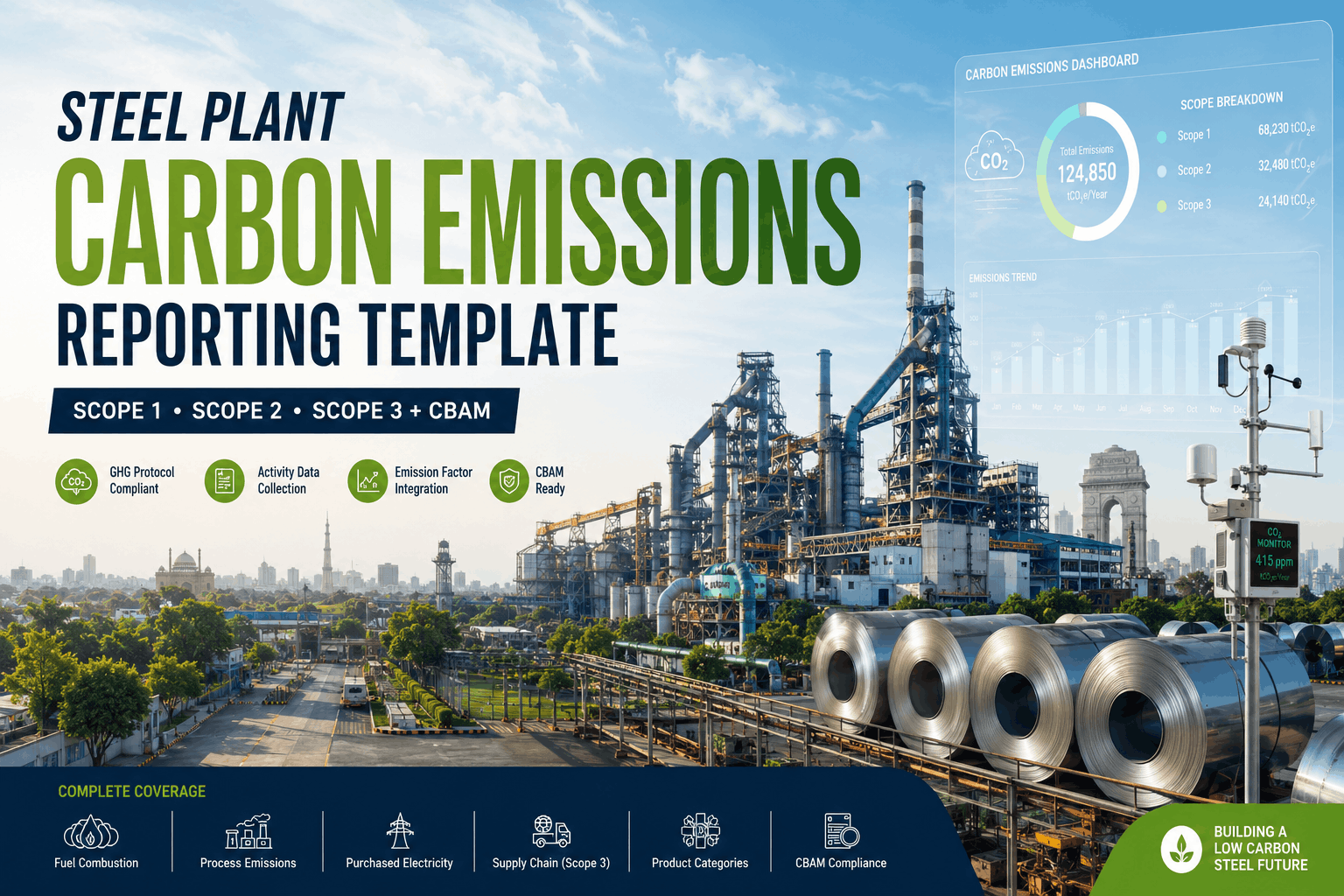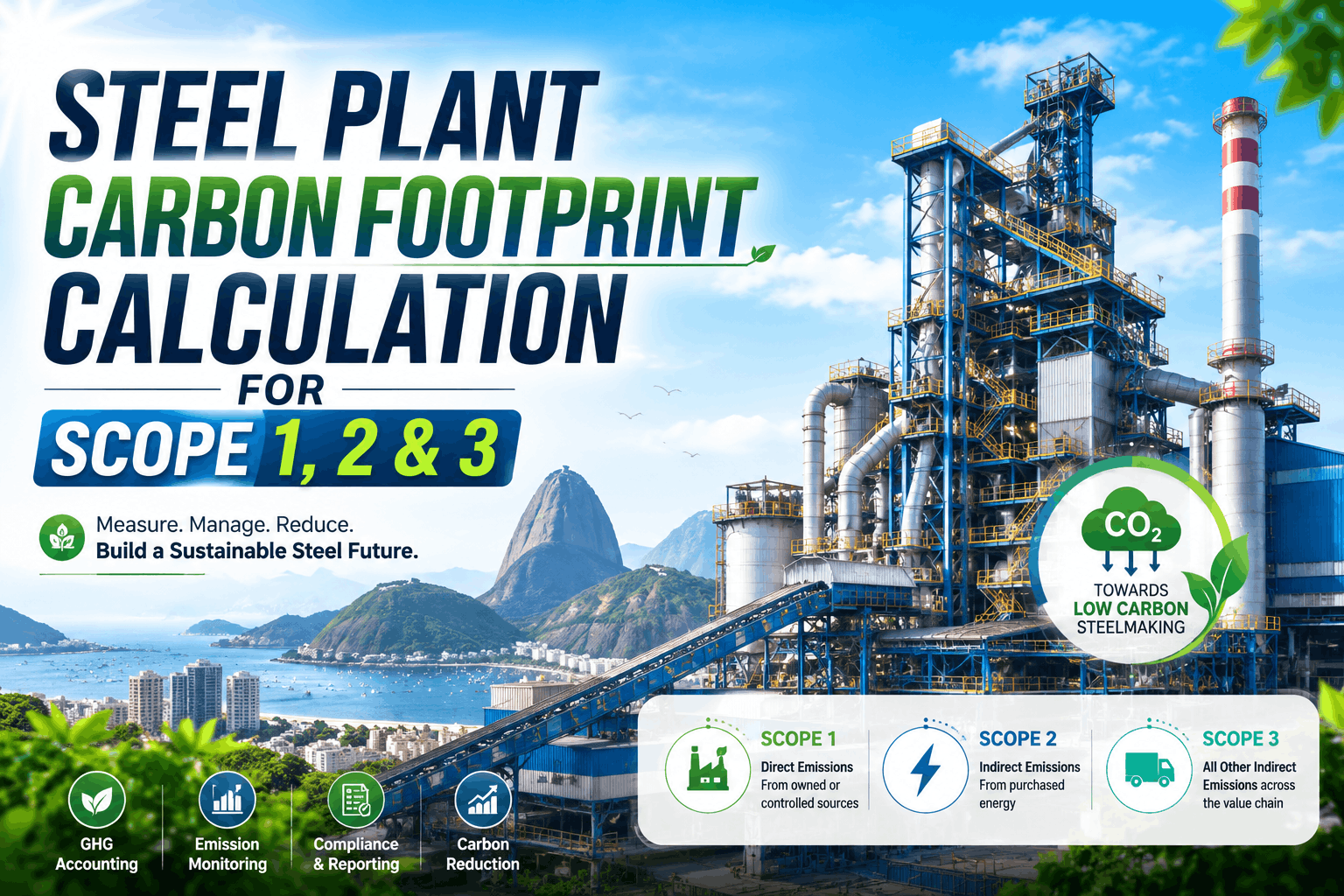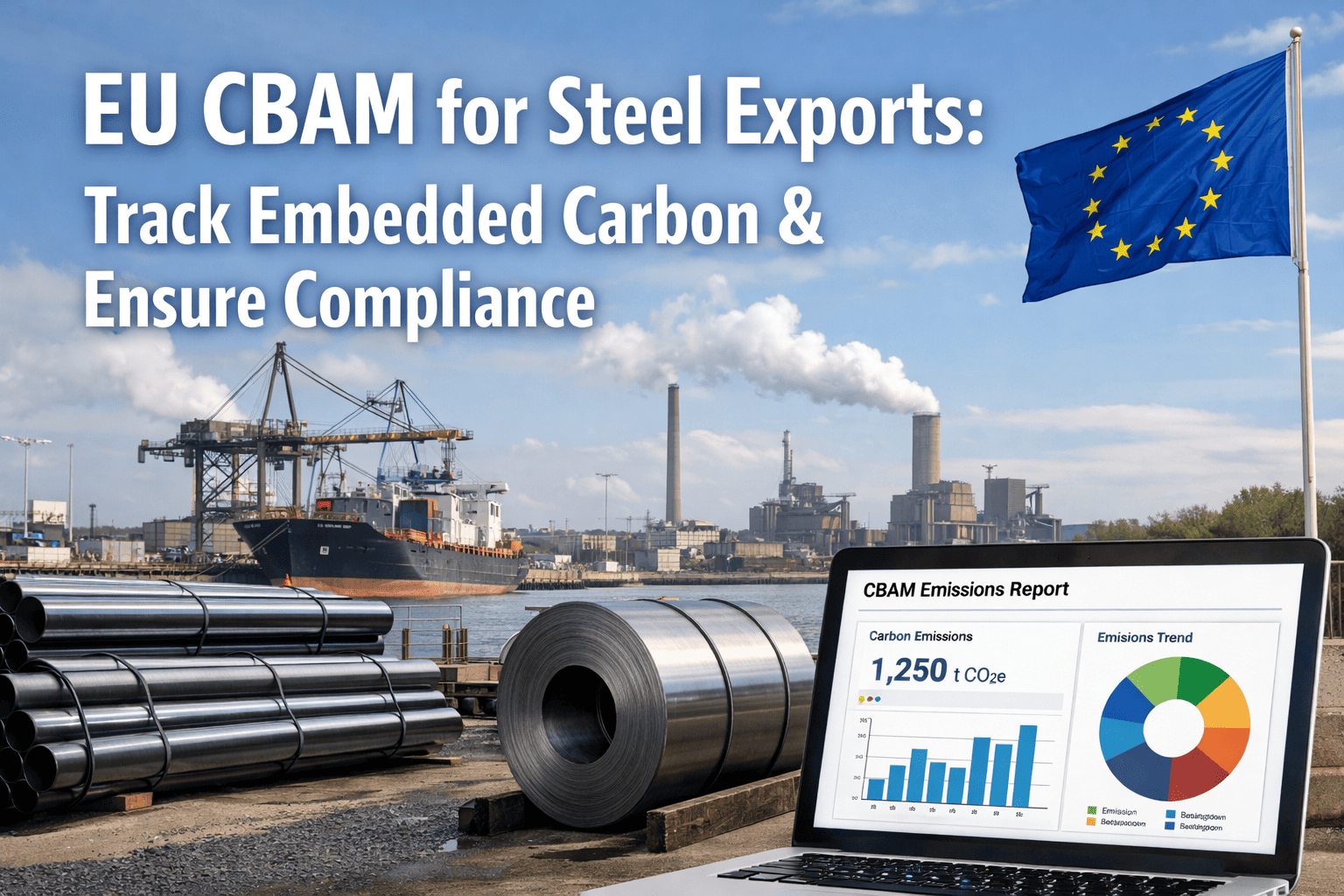
Steel production accounts for 7–9% of global CO2 emissions, making carbon reporting no longer optional — it is a regulatory requirement, a customer contract condition, and a competitive differentiator. The GHG Protocol defines three scopes (1, 2, and 3) for comprehensive carbon accounting, while CBAM (Carbon Border Adjustment Mechanism) now requires importers of covered steel products to report embedded emissions quarterly. Without a structured template aligned to both frameworks, steel plants face compliance gaps, reporting errors, and potential penalties. This guide provides a complete carbon emissions reporting template — with activity data collection sheets, emission factor tables, scope boundary definitions, and CBAM-specific calculation methodologies for each steel product category. Plant operators with documented carbon reporting and verified emissions data pay 12–18% lower ESG insurance premiums and qualify for sustainability-linked financing with 0.5–1.5% interest rate reductions. Book a demo to see how Oxmaint automates carbon data collection from maintenance and production records.
Download-ready template aligned with GHG Protocol and CBAM requirements. Includes activity data collection sheets, emission factor tables, scope boundary definitions, and product category calculations for hot rolled coil, cold rolled coil, rebar, wire rod, sections, rail, and pipe steel.
Steel plant carbon emissions reporting follows the GHG Protocol three-scope framework and CBAM-specific product categories for EU imports. Scope 1 covers direct emissions from fuel combustion, iron ore reduction, coke consumption, and fugitive releases. Scope 2 covers purchased electricity and steam. Scope 3 covers 15 categories including raw materials, transportation, and product use. CBAM requires quarterly reporting of embedded emissions for six steel product categories: hot rolled coil, cold rolled coil, rebar, wire rod, sections, and rails. This template provides structured data collection sheets, emission factors by fuel and process, and calculation methodologies aligned to both frameworks — downloadable and ready for plant-level implementation.
Scope 1 Emissions — Direct Sources from Steel Production
Scope 1 emissions are direct GHG releases from sources owned or controlled by your steel plant. For integrated steel mills, Scope 1 represents 85–95% of total carbon footprint. Calculation requires activity data (fuel consumption, process inputs) multiplied by emission factors (tCO2e per unit). Book a demo to see how Oxmaint automates emission factor application.
Natural gas, coke oven gas (COG), blast furnace gas (BFG), LD gas, fuel oil, and coal consumption. Activity data: monthly fuel purchase records or flow meter readings. Emission factors: UK DEFRA, EPA, or IPCC default values per fuel type.
Process emissions from chemical reactions: iron ore + carbon → iron + CO2 (BF), limestone (CaCO3) → lime (CaO) + CO2, dolomite calcination, and coke oven pushing emissions.
Unintended releases from coke oven doors (CH4), BF tapping (CO, CO2), BOF blowing, EAF melting, and gas distribution networks. Estimated using leak detection and repair (LDAR) program data or default emission factors per component type.
Fuel consumption from company-owned trucks, loaders, forklifts, locomotives, and other mobile equipment operating within plant boundaries. Activity data: fuel purchase records or distance × fuel efficiency.
Scope 2 Emissions — Purchased Electricity, Steam, Heat, and Cooling
Scope 2 emissions are indirect GHG releases from the generation of purchased energy consumed by your steel plant. Two calculation methods: location-based (grid average emission factor) and market-based (contract-specific emission factor). EU CBAM requires both methods for electricity consumption. Book a demo to see Oxmaint's Scope 2 tracking module.
| Energy Type | Activity Data Required | Location-Based Factor | Market-Based Factor | Reporting Method |
|---|---|---|---|---|
| Purchased Electricity | MWh from utility meter (monthly/quarterly/annual) | Grid average (EPA eGRID, EU grid factors) | Supplier-specific or renewable PPA | Report both — highlight renewable purchase percentage |
| Purchased Steam | Metric tons or GJ from steam meter | Default factor (0.058 tCO2e/GJ) | Supplier-specific emission intensity | Obtain from steam supplier or estimate using fuel input |
| Purchased Heat | GJ from heat meter or billing records | Default factor (0.064 tCO2e/GJ) | Supplier-specific certificate | Document heat source fuel type if known |
| Purchased Cooling | GJ from cooling meter or chiller records | Default factor (0.042 tCO2e/GJ) | Refrigerant type and supplier efficiency | Include refrigerant leakage in Scope 1 if owned equipment |
CBAM Steel Product Categories — Embedded Emissions Reporting
CBAM (Carbon Border Adjustment Mechanism) requires importers of covered steel products to report quarterly embedded emissions from calendar year 2023, with full pricing starting 2026. Six steel product categories are covered. Book a demo to see CBAM-compliant reporting templates in Oxmaint.
Embedded emissions from iron ore sintering, pelletizing, BF ironmaking, BOF steelmaking, slab casting, and hot strip rolling. CBAM requires direct emissions (Scope 1) plus indirect emissions (Scope 2) allocated per ton of finished product.
Embedded emissions from hot rolled coil plus cold rolling, annealing, pickling, and coating processes. Additional electricity consumption for cold rolling (150–250 kWh/t) significantly increases Scope 2 emissions.
Embedded emissions from billet production (EAF or BOF) plus rolling, cooling, and shearing. EAF-based rebar has significantly lower embedded carbon (0.4–0.7 tCO2e/t) vs BOF-based (1.8–2.2 tCO2e/t).
Embedded emissions from billet production plus wire rod mill rolling (high-speed mill, cooling, coil handling). Wire rod typically has 5–10% higher emissions per ton than rebar due to additional rolling passes and higher electricity consumption.
Embedded emissions from beam blank production plus structural mill rolling (heavy section rolling, straightening, cutting). Section rolling consumes 80–120 kWh/t electricity plus natural gas for reheating.
Embedded emissions from rail steel production (higher alloy content than standard carbon steel) plus rail mill rolling (precise profile, controlled cooling, straightening). Rail steel has 15–25% higher embedded carbon than structural sections.
Scope 3 Emissions — 15 Categories Relevant to Steel Plants
Scope 3 emissions are the largest and most complex category for integrated steel mills — often representing 20–40% of total carbon footprint. The GHG Protocol defines 15 categories, of which 8 are directly relevant to steel plant operations. Book a demo to see Oxmaint's Scope 3 data collection tools.
Iron ore, coal, coke, limestone, dolomite, ferroalloys, refractories, electrodes, and other raw materials. Calculate using spend-based or supplier-specific emission factors. Steel plants: 60–70% of Scope 3 emissions from purchased goods.
Rolling mill equipment, cranes, converters, furnaces, electrical infrastructure, and plant buildings. Calculate using supplier-specific data (EcoVadis, CDP) or default emission factors per equipment type (tCO2e per $1M spend).
Upstream emissions from fuel extraction, refining, and transportation — not included in Scope 1 or 2. Includes coal mining, natural gas transmission, and electricity transmission losses.
Transportation of raw materials (iron ore, coal, limestone) from supplier to plant. Calculate using distance × weight × emission factor (tCO2e/t-km) by transport mode (rail, truck, ship).
Transportation of finished steel products (coils, bars, beams, wire rod) from plant to customer. Calculate using same methodology as Category 4 but for outbound logistics.
Emissions from downstream processing of steel products (fabrication, galvanizing, coating, stamping). Calculate using product weight × processing emission factor per ton.
Emissions from end-use applications of steel (construction, automotive, machinery). Calculate using product lifetime × annual use-phase emissions (typically zero for steel in construction, but relevant for automotive).
Emissions from scrap collection, shredding, and recycling of steel products after useful life. Steel is infinitely recyclable — allocate avoided emissions credit if scrap is returned to EAF production.
Our steel plant spent 3 months manually compiling carbon data for our first CBAM report — spreadsheets from six departments, inconsistent activity data, missing emission factors. After implementing Oxmaint's carbon module, we reduced reporting time by 82%. The system pulls fuel consumption from maintenance records, electricity from SCADA, and raw material purchases from ERP — then applies the correct emission factors automatically. Our next CBAM report took 6 hours instead of 12 weeks.
Frequently Asked Questions — Steel Plant Carbon Reporting (GHG Protocol + CBAM)
Download Your Carbon Emissions Reporting Template — Scope 1, 2, 3 + CBAM
Complete GHG Protocol-aligned template with activity data sheets, emission factor tables, scope boundary definitions, and product category calculations for hot rolled coil, cold rolled coil, rebar, wire rod, sections, rails, and pipe steel. Free in Oxmaint — or download as standalone Excel workbook.