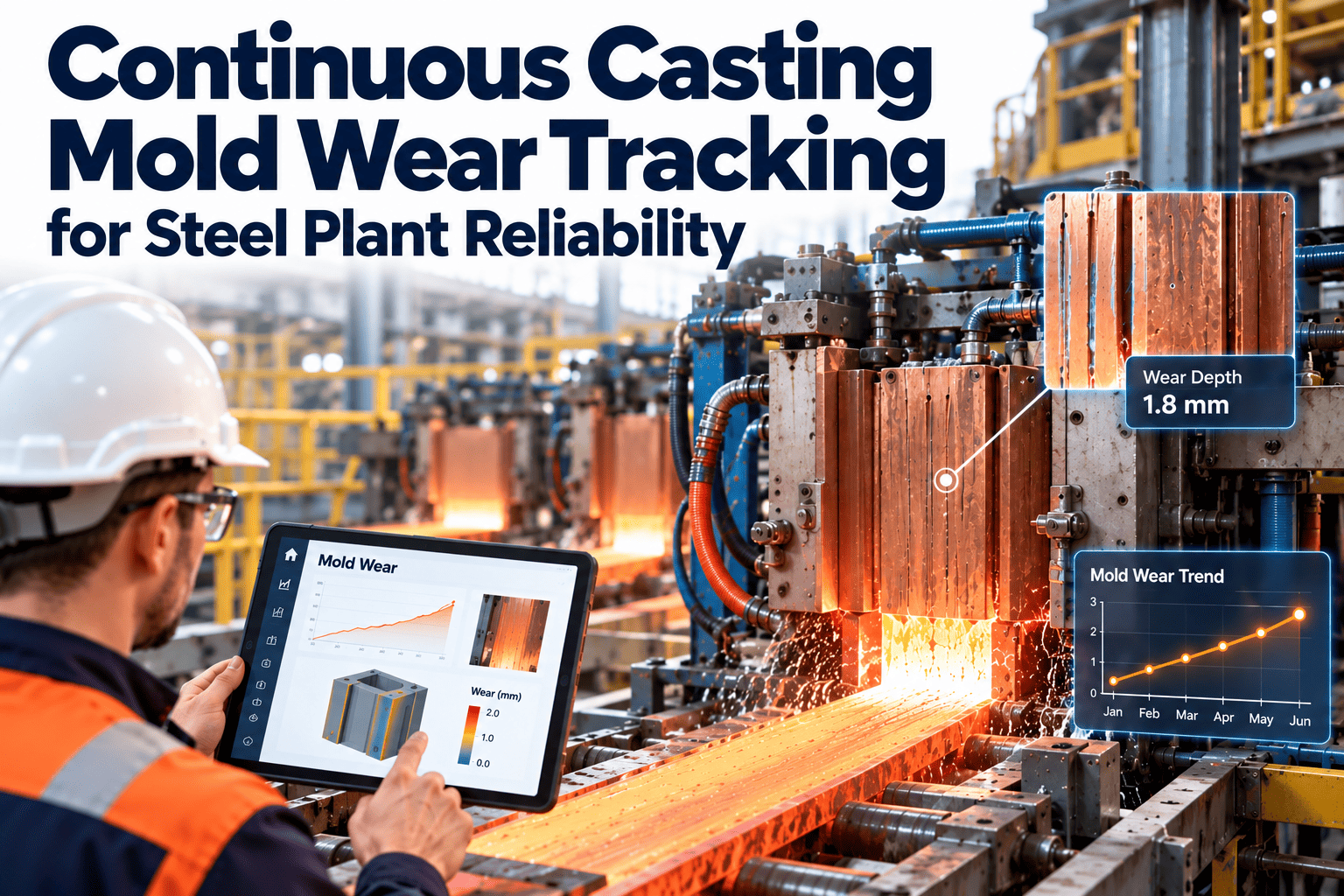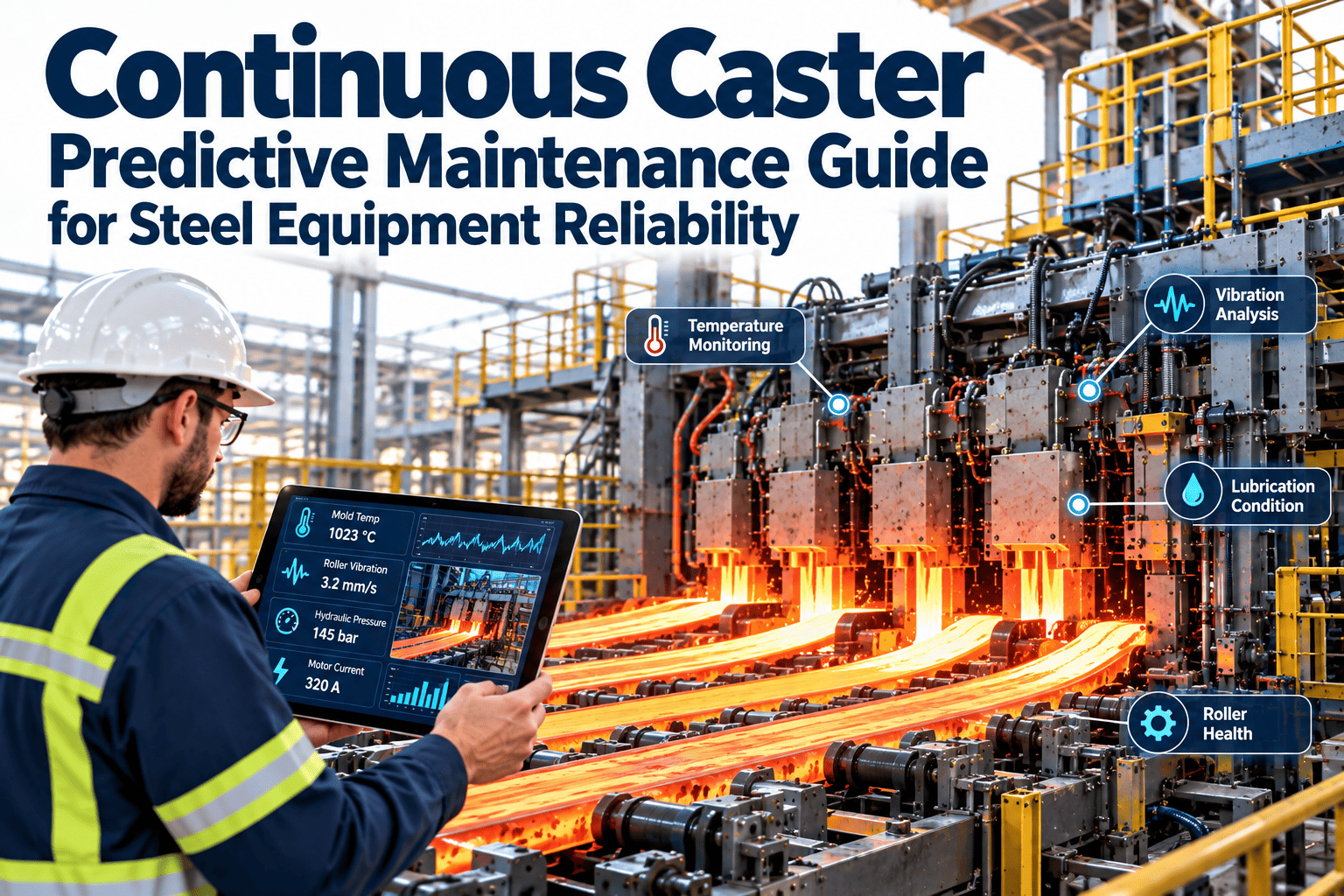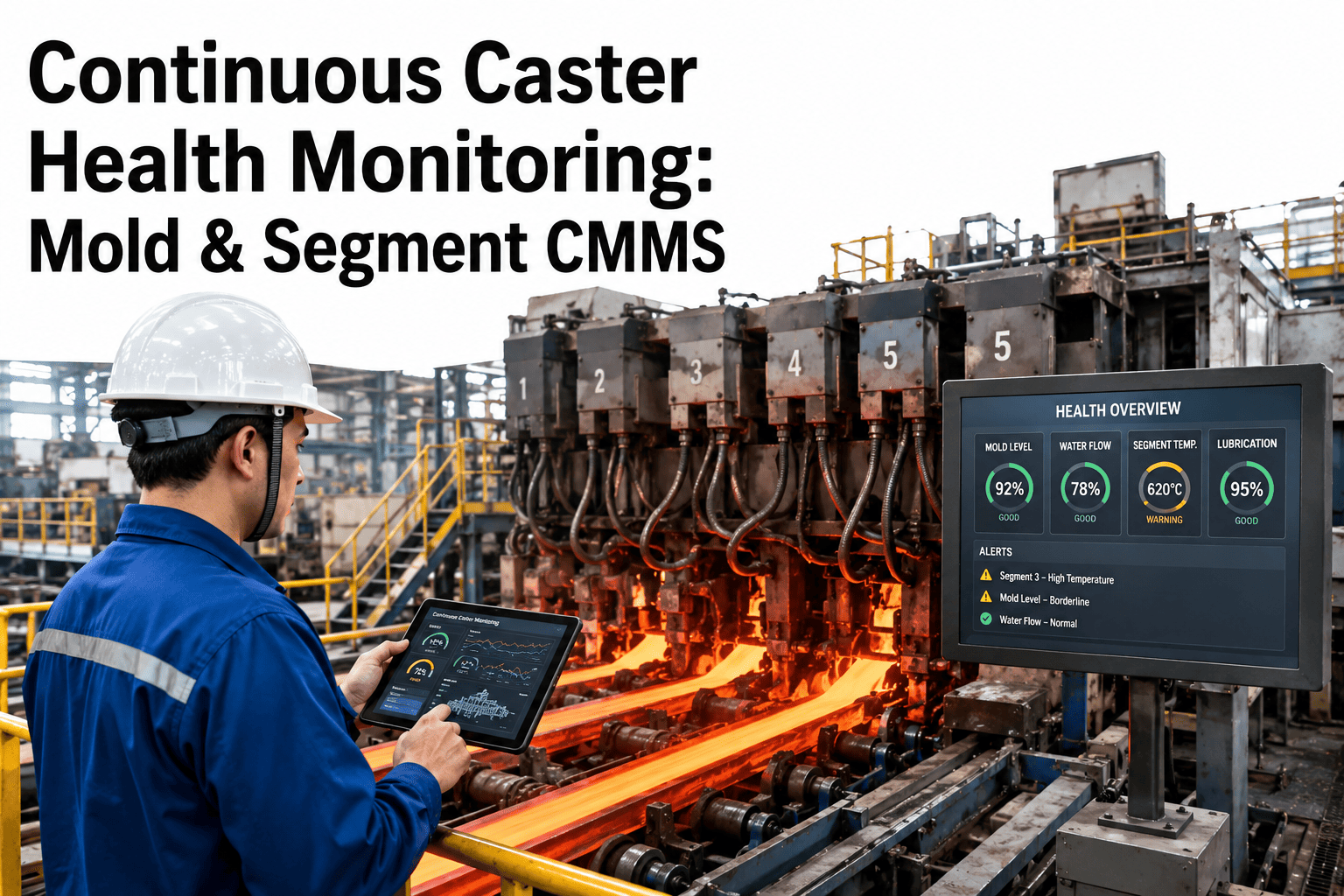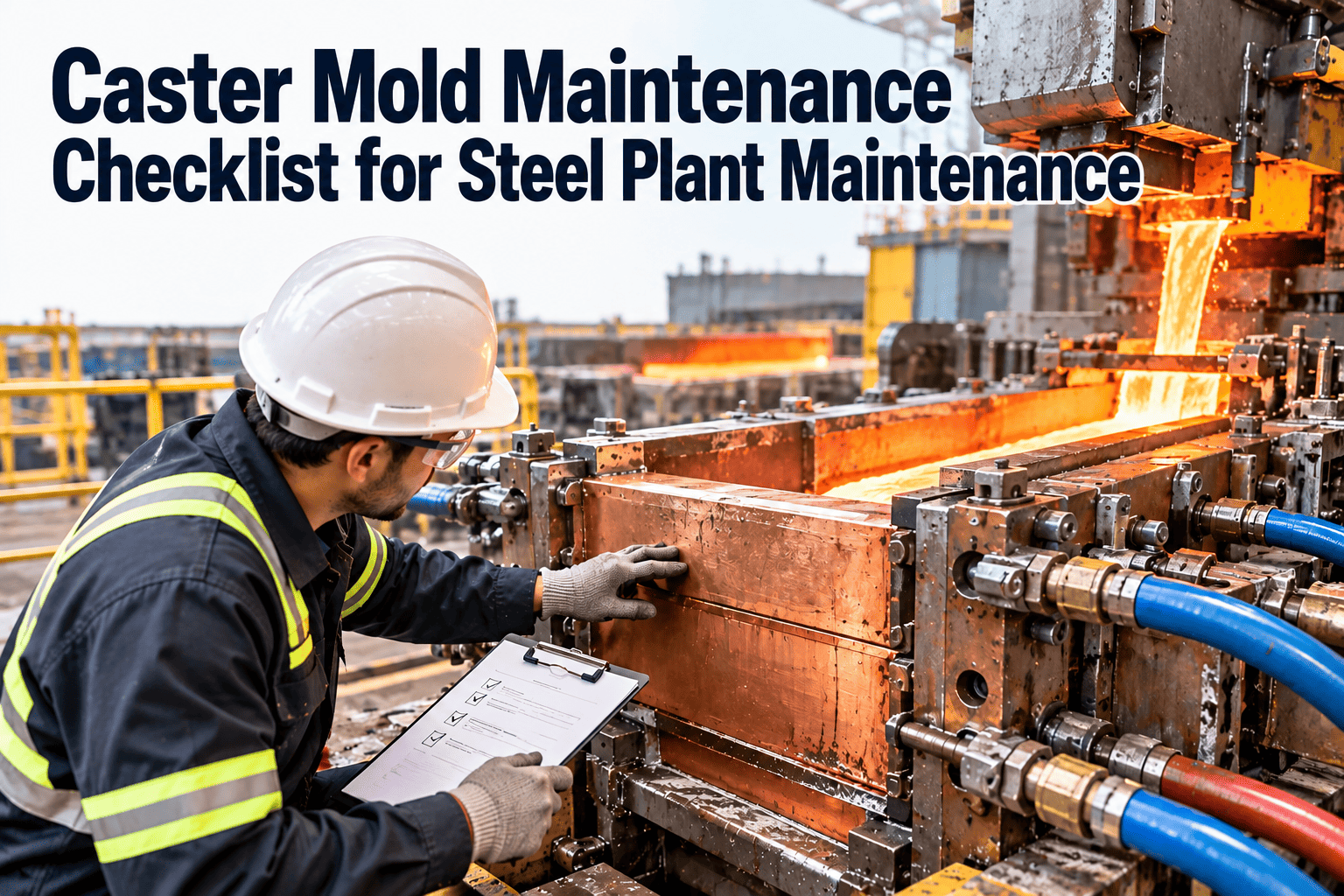
The mold is where liquid steel first becomes a solid shell, and it controls surface quality, casting speed and breakout risk. Worn copper, blocked water slots, drifting oscillation or poor lubrication all show up downstream as defects or, worse, a breakout. This caster mold maintenance checklist helps steel plant teams inspect copper condition, cooling circuits, oscillation, alignment and mold history in a fixed sequence. Records can be kept per mold in steel mill maintenance software so every heat and refurbishment is traceable.
Continuous Casting / Steel Plant Maintenance
Caster Mold Maintenance Checklist for Steel Plant Maintenance
Inspect mold copper, cooling water, oscillation, lubrication, wear and alignment with a checklist that ties every finding to a specific mold and cast history.
Water InFlow and inlet temperature
Copper Plates and Coating
Steel meniscus, powder layer, shell formation
Oscillation Table
Stroke, frequency, smooth motion
Water OutTemperature rise and pressure
What Goes Wrong Inside a Mold
Copper wearWear at the meniscus zone and narrow faces changes taper, heat transfer and shell contact.
Coating damageCracked or lost coating exposes copper and can leave localised wear and surface defects.
Cooling restrictionScale or debris in water slots creates hot spots that stress copper and thin the shell.
Oscillation driftWorn bearings or hydraulic issues disturb lubrication and can create deeper oscillation marks.
Alignment errorPoor mold to segment alignment strains the strand and speeds up wear.
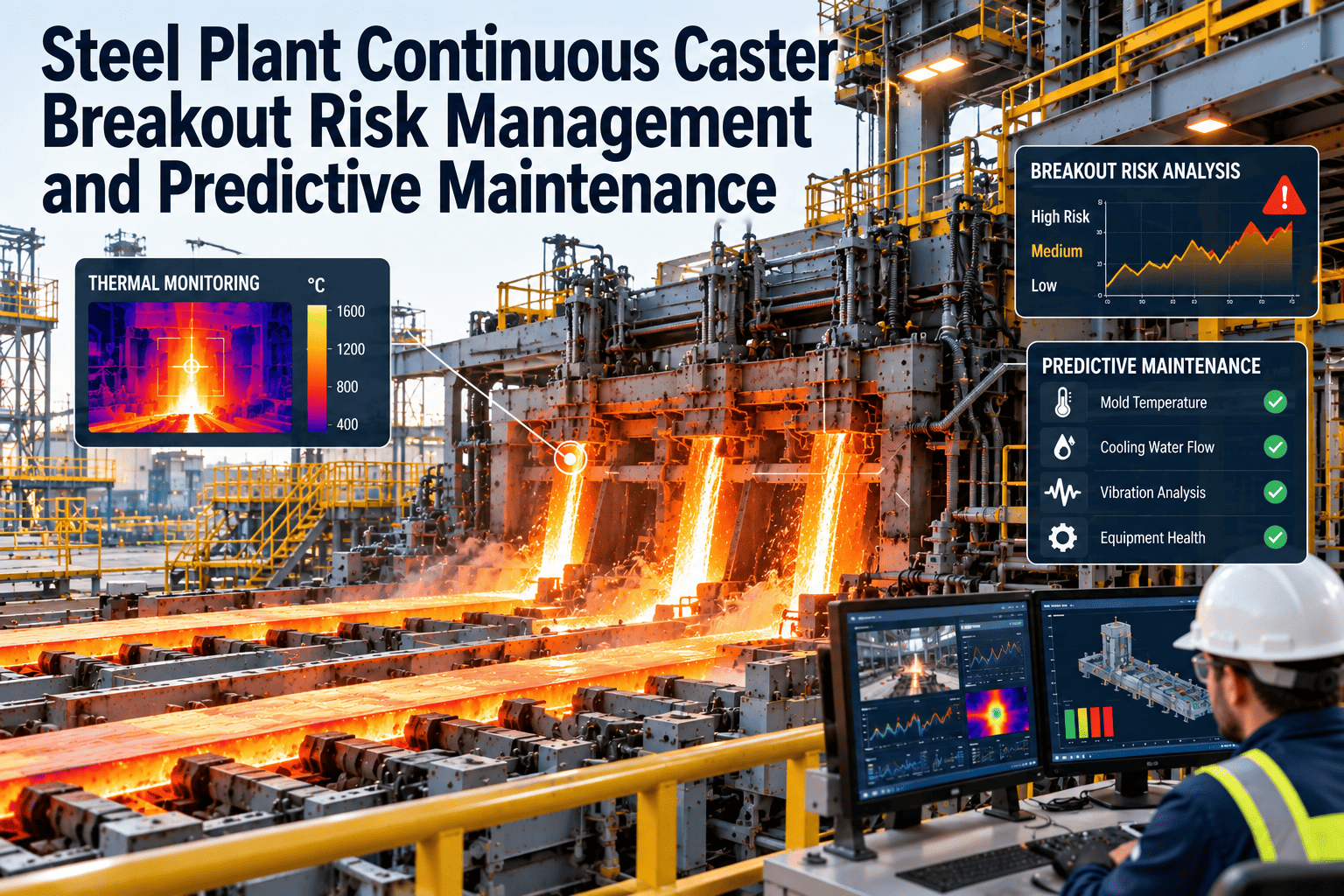
Breakout Risk Chain
ACooling or lubrication weakens
BShell grows thin or sticks
CThermocouples show a hot spot
DBreakout or emergency slowdown
Give Every Mold a Complete Maintenance History
Track inspections, refurbishments and cast performance per mold so decisions rely on records, not memory.
Checklist by Maintenance Moment
Before Casting
- Confirm the mold ID, cast count and last refurbishment date match the record.
- Inspect copper faces for scratches, cracks, dents, coating loss and discolouration.
- Check taper, gaps and corner fit on assembled molds against specification.
- Verify water connections, seals and flow direction after mold change.
- Run a water flow and pressure test, and check for leaks at joints and hoses.
- Check oscillation table movement, stroke and frequency before the strand starts.
- Confirm thermocouples, level sensors and breakout alarms respond correctly.
During Casting
- Watch water flow, inlet temperature and temperature rise, and log any drift.
- Monitor mold level control stability and stopper or slide gate behaviour.
- Review oscillation motion and drive current for changes in noise or load.
- Check powder feed and layer condition at the meniscus.
- Note breakout alerts, sticker warnings and any change in heat flux patterns.
- Observe strand surface for repeated marks that point to the mold or oscillation.
Between Sequences
- Inspect copper for fresh wear, scoring or coating damage after each sequence.
- Check the foot roll and upper segment alignment against mold position.
- Clean spray, powder and scale from oscillation parts and sensors.
- Inspect hoses, quick couplings and mounting hardware for wear.
- Record findings and photos in the mold file before the next start.
At Mold Change
- Record tonnage, heats cast and reason for removal.
- Measure wear and taper, and decide whether to resurface, recoat or scrap.
- Flush and inspect water slots for scale and blockage.
- Replace seals, fasteners and thermocouples that show age or damage.
- Log refurbishment work and release the mold only after final inspection.
Oscillation and Lubrication Checks
| Check | Look For | Action |
|---|---|---|
| Table movement | Jerky motion, noise or vibration | Inspect guides, bearings, springs and actuators |
| Stroke and frequency | Values that differ from the casting practice | Verify settings and sensor calibration |
| Hydraulic condition | Slow response, leaks, oil temperature rise | Check servo valves, filters and oil quality |
| Mold powder | Uneven feed or poor melting | Check feeders and powder handling |
| Strand surface | Repeated oscillation marks or cracks | Compare to mold and oscillation history |
What a Good Mold Record Contains
IdentityMold ID, strand, type, copper and coating specification.
Service LifeHeats, tonnes cast, speed range and steel grades.
InspectionsWear readings, photos, water test results and findings.
RepairsResurfacing, recoating, parts replaced and sign-off.
EventsBreakouts, stickers, alarms and removal reasons.
Trends Changing Caster Maintenance
Mold monitoringThermocouple and heat flux data help detect sticking and uneven cooling earlier.
Water quality controlFiltration and treatment records reduce scale that restricts mold cooling.
Condition-based refurbishmentMeasured wear history helps decide the removal point instead of a fixed count.
Caster Mold KPIs
| KPI | Purpose |
|---|---|
| Breakouts per period | Measures the direct outcome of mold and process control |
| Mold life in tonnes or heats | Shows wear rate and refurbishment effectiveness |
| Cooling water deviation events | Highlights blockages and system problems |
| Oscillation-related defects | Links surface quality to equipment condition |
| Inspection completion rate | Confirms every mold is checked before release |
| Unplanned strand stops | Tracks equipment impact on casting availability |
How Oxmaint Supports Continuous Casting Maintenance
1Register each mold and oscillator as an asset with its own maintenance history.
2Schedule pre-cast, between-sequence and mold change inspections as recurring tasks.
3Capture readings and photos on mobile, then flag failed checks immediately.
4Create work orders for refurbishment or repair, with spare parts linked from inventory.
5Report on mold life, repeat defects and overdue work to plan the next outage.
Caster Mold FAQs
How often should caster molds be inspected?
Inspect before each start, between sequences and at every removal. Set the routine in preventive maintenance schedules.
What causes mold copper wear?
Contact with the strand, thermal cycling, poor lubrication and coating damage all contribute. Wear records show where it concentrates.
Why does mold cooling water matter?
Steady flow and clean slots keep heat transfer even. Blockages create hot spots that raise breakout and defect risk.
Should molds be replaced by count or condition?
Many plants combine both, using measured wear, defects and history to set the removal point.
Can Oxmaint track each mold separately?
Yes. Book a demo to see mold records, inspections and work orders set up for your strands.
Protect Casting Quality With Better Mold Records
Use one system for mold inspections, oscillation checks, refurbishment work and reporting across your continuous casters.