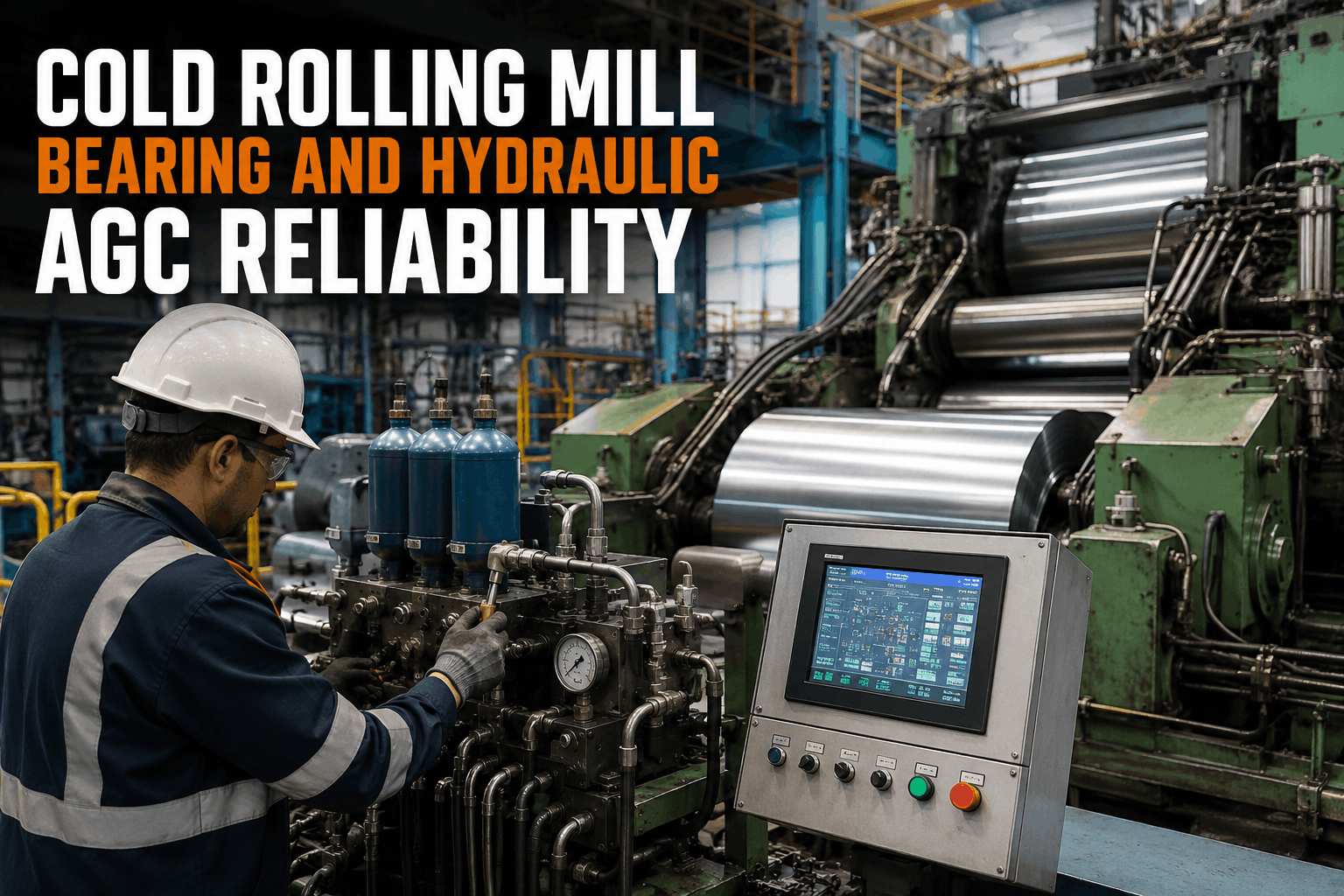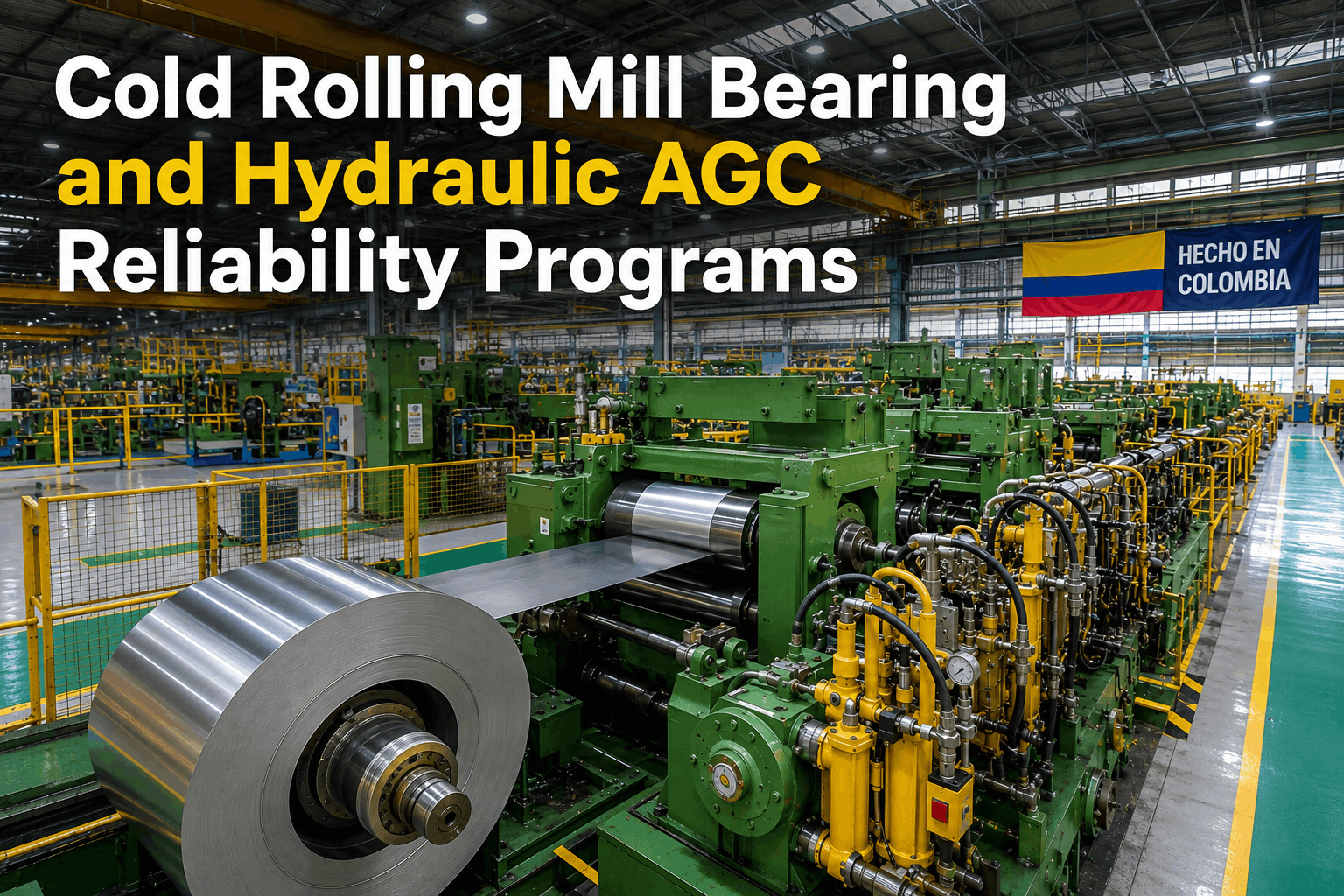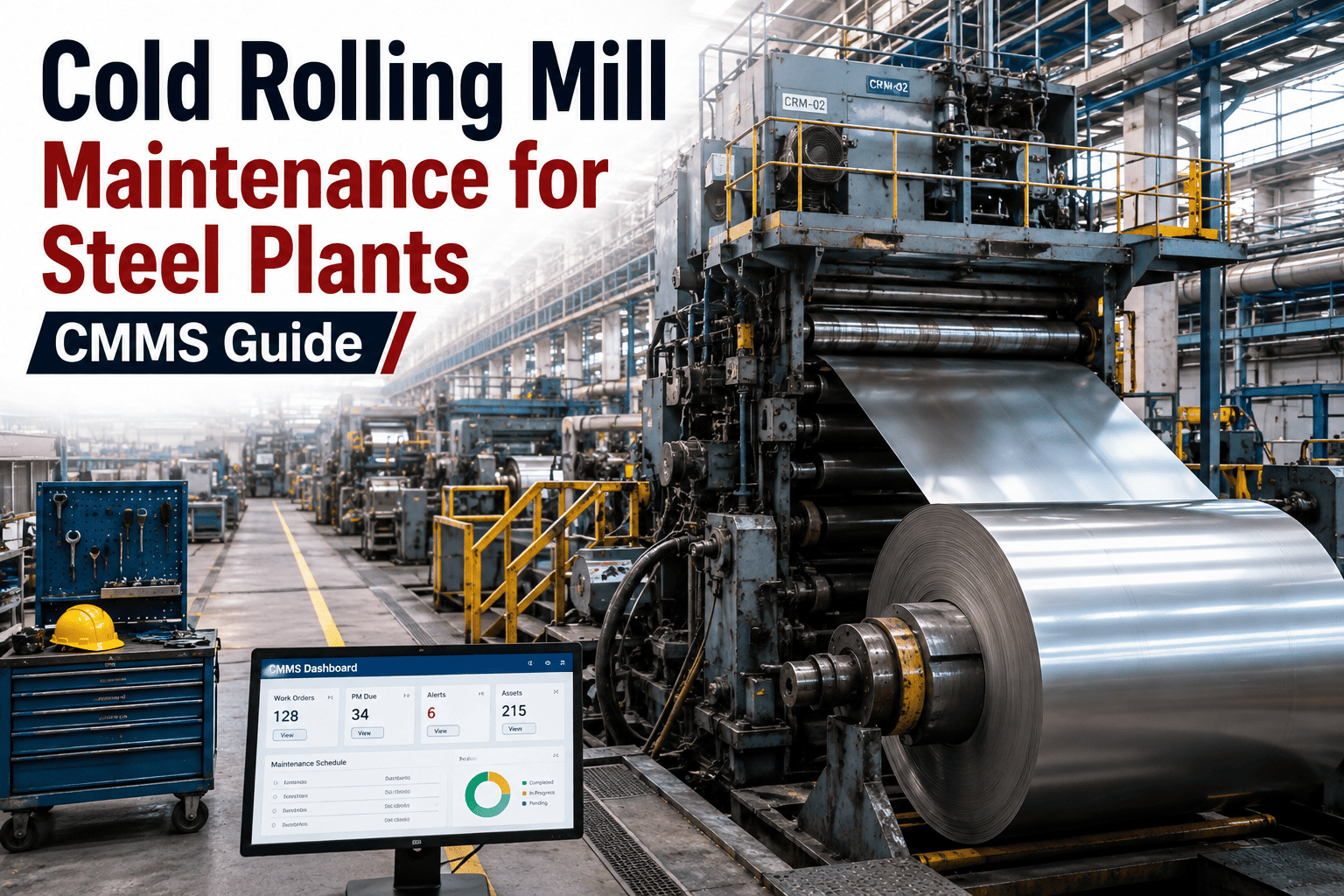
Cold rolling mills operate at tolerances measured in microns, where a worn work roll bearing or a hydraulic pressure drift of a few bar can turn a full coil run into scrap. Plants running these lines find that gauge deviations, shape defects, and surface marking rarely trace back to one dramatic failure — they build up from small lapses in roll changeover, emulsion filtration, or tension reel alignment that go unnoticed for weeks. Off-spec coil is often not caught until the customer inspection stage, long after the maintenance window that could have prevented it has closed. Coordinating work roll and backup roll PM, bearing lubrication, hydraulic system checks, and tension reel maintenance inside one CMMS gives teams the visibility to catch drift before it reaches the coil. Plants centralizing this data are shifting from roll-change firefighting to scheduled precision maintenance. Teams building this kind of program can start free with Oxmaint and bring roll, bearing, hydraulic, and emulsion PM into a single schedule.
Cold Rolling Mill Maintenance: Where Micron-Level Precision Meets CMMS Discipline
Work roll and backup roll management, bearing lubrication, hydraulic precision, tension reel PM, and emulsion system control — coordinated in one schedule so gauge, shape, and surface stay in spec.
Why Small Lapses Show Up as Big Quality Losses
A cold mill has almost no tolerance for maintenance drift. A backup roll bearing running a few degrees warmer than baseline changes roll crown behavior before anyone notices vibration. A hydraulic accumulator losing precharge pressure shows up first as a shape defect on the coil, not as an alarm on the panel. Emulsion filtration that falls behind schedule leaves fine iron particles embedded in the strip surface, and by the time a customer flags it, the coil is already shipped. Because these failure modes are quiet, plants without a coordinated schedule tend to discover them through rework claims rather than work orders. The fix is not more inspection — it is linking roll data, hydraulic trending, and lubrication history into one place so a small deviation in one system is checked against the others before it reaches the strip.
The pattern repeats across shifts too. A day-shift roll change crew logs a slightly higher-than-normal roughness reading and moves on because the mill is running within spec that hour. Three shifts later, a different crew sees a shape complaint and has no way of connecting it back to that earlier reading, because the two events sit in different logs, maintained by different people, on different systems. Centralizing roll condition, bearing temperature, hydraulic trend, and emulsion quality in one CMMS closes that gap — the next shift sees the same history the previous one did, and a pattern that would take weeks to notice by memory becomes visible in minutes.
Each of these five systems fails quietly on its own, but they rarely fail in isolation. A hydraulic pressure drift changes roll gap, which changes the load the backup roll bearing carries, which accelerates thermal wear — one root cause, three symptoms. Reviewing all five together during a single weekly maintenance meeting, instead of five separate craft reports, is what lets a team catch the root cause instead of chasing the symptom that happened to trigger the complaint.
PM Intervals by Component — What Slips First When Schedules Get Compressed
When production pressure compresses maintenance windows, these are typically the first PM tasks pushed out — and the ones most correlated with quality claims when they are. Tracking interval, method, and the cost of a missed cycle side by side makes the trade-off visible before a shift supervisor decides to skip it.
| Component | PM Interval | Inspection Method | Cost of a Missed Cycle |
|---|---|---|---|
| Work roll surface | Every 2–4 coils | Roughness gauge, visual | Surface defect rework or scrap |
| Backup roll bearing | 30 days | Thermal check, vibration | Crown deviation, gauge variation |
| Hydraulic accumulator | 60 days | Precharge pressure test | Shape defects, edge wave |
| Tension reel mandrel | 90 days | Alignment check | Telescoping, coil set damage |
| Emulsion filtration | 7 days | Concentration & particulate test | Surface staining, roll marking |
| Roll neck coupling | 60 days | Torque check, wear gauge | Roll gap instability, chatter marks |
| Strip guide rollers | 14 days | Visual, bearing play check | Edge damage, tracking drift |
Stop Chasing Coil Defects Back to a Missed PM Cycle
Put roll, bearing, hydraulic, tension reel, and emulsion PM on one calendar so a deviation in one system gets caught before it reaches the strip.
Our roll shop, our hydraulics team, and our tension reel mechanics used to keep three separate logs. Nobody connected a warm backup roll bearing to a shape complaint two weeks later. Once everything sat in one schedule, our roll change planner could see it, and we started catching drift a full coil run before it ever reached a customer.
Daily, Weekly, and Monthly Checks That Protect Coil Quality
Frequently Asked Questions — Cold Rolling Mill Maintenance
Bring Roll, Bearing, Hydraulic, and Emulsion PM Into One Schedule
Protect gauge, shape, and surface finish with coordinated cold mill maintenance built for steel plant precision.