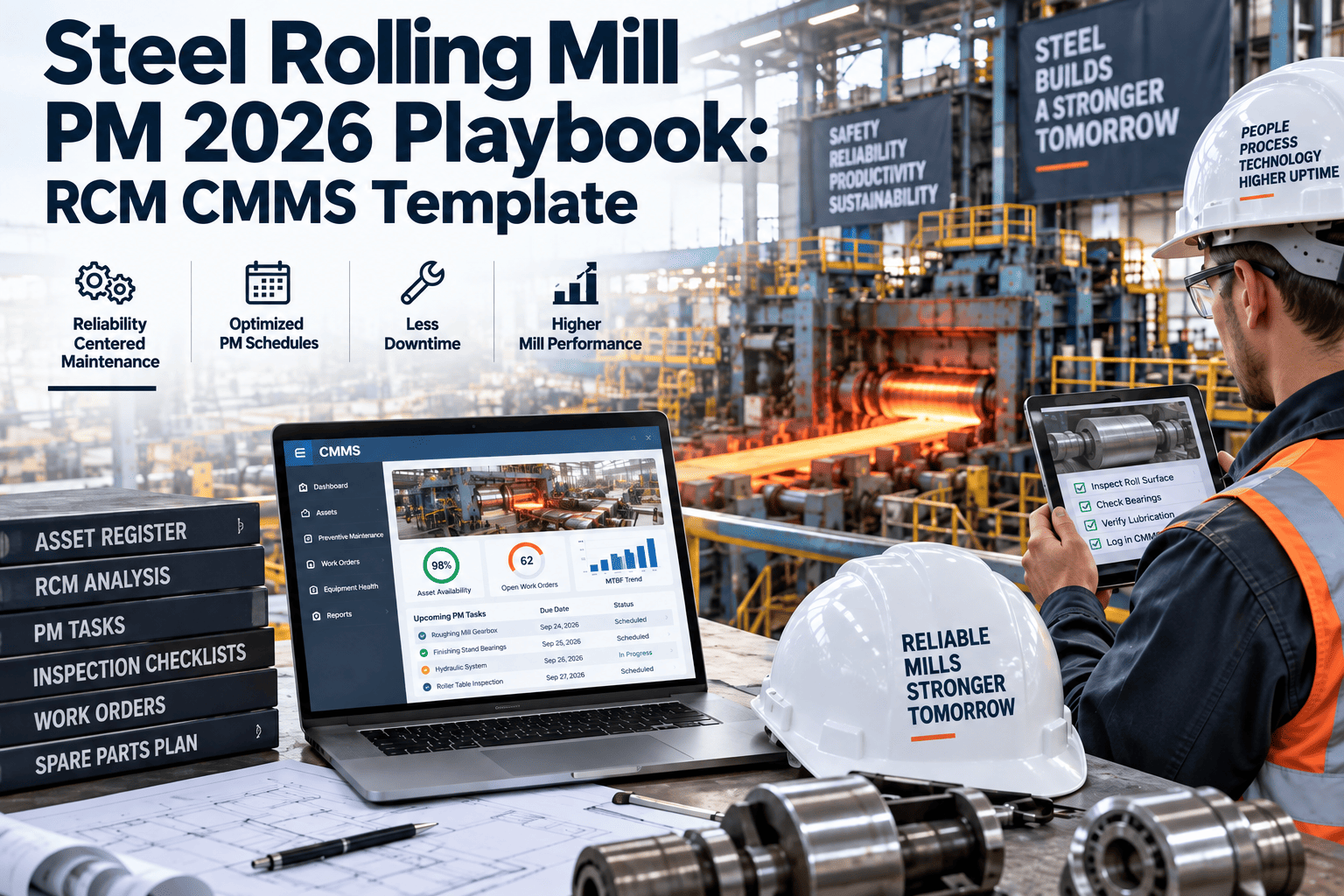
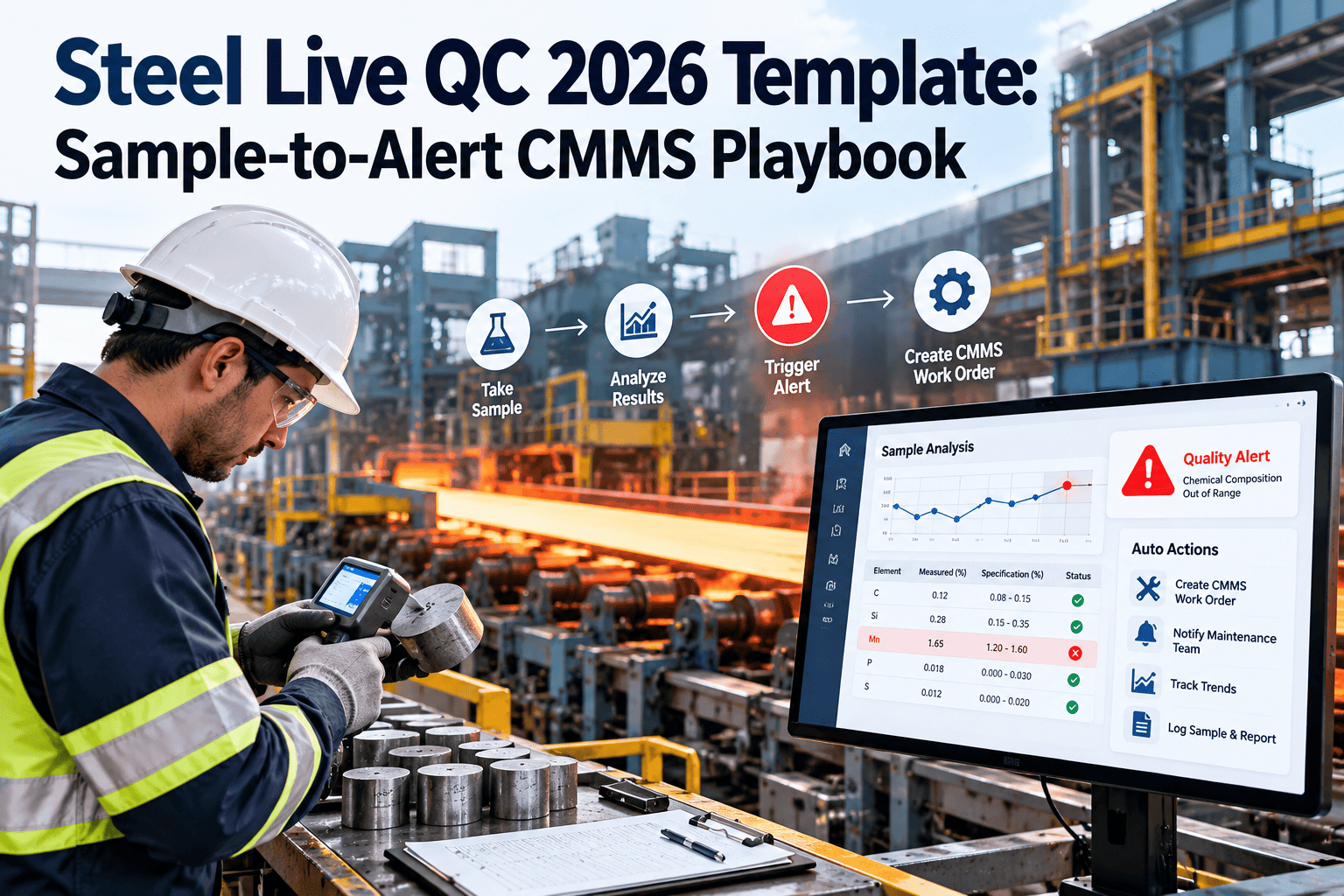
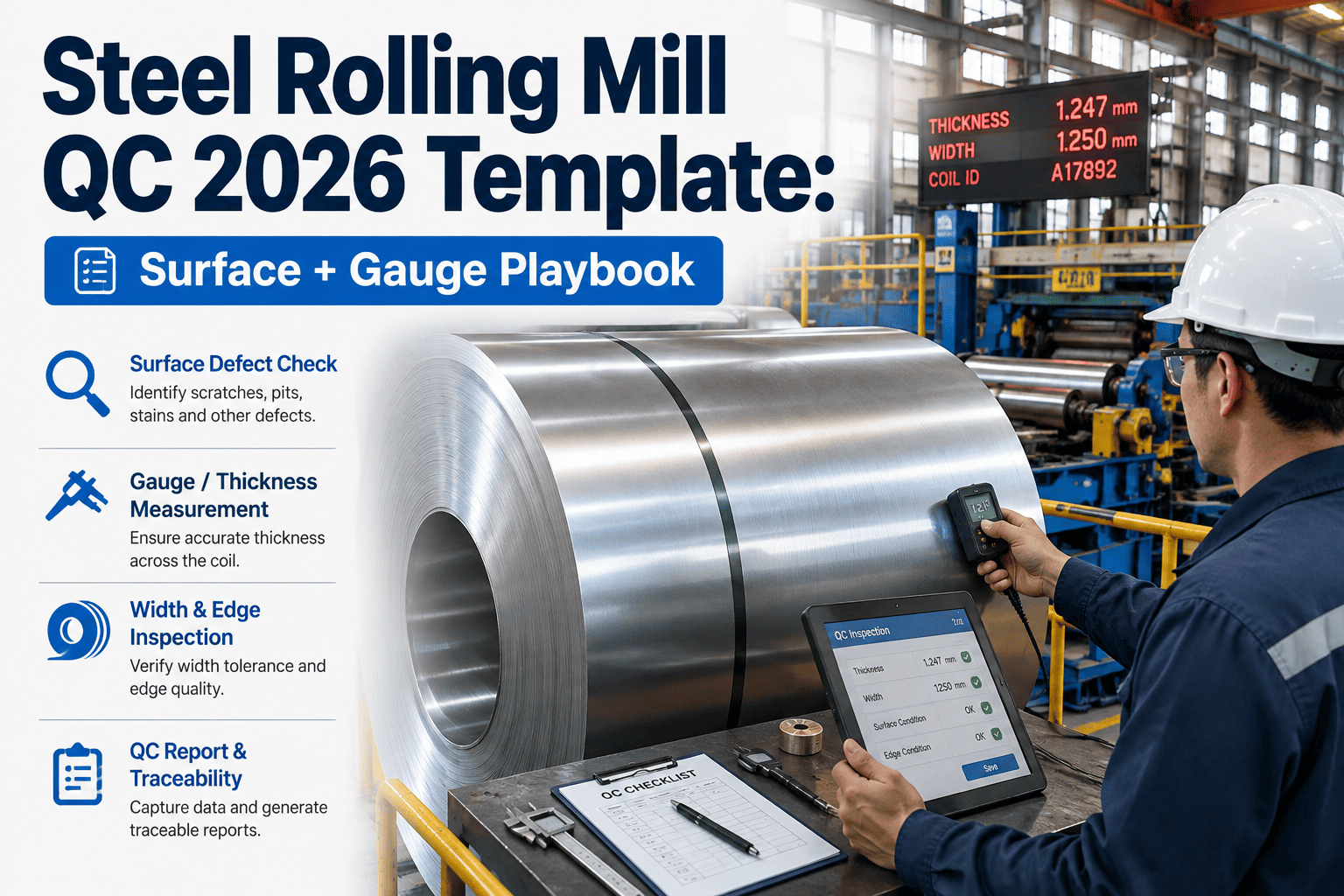
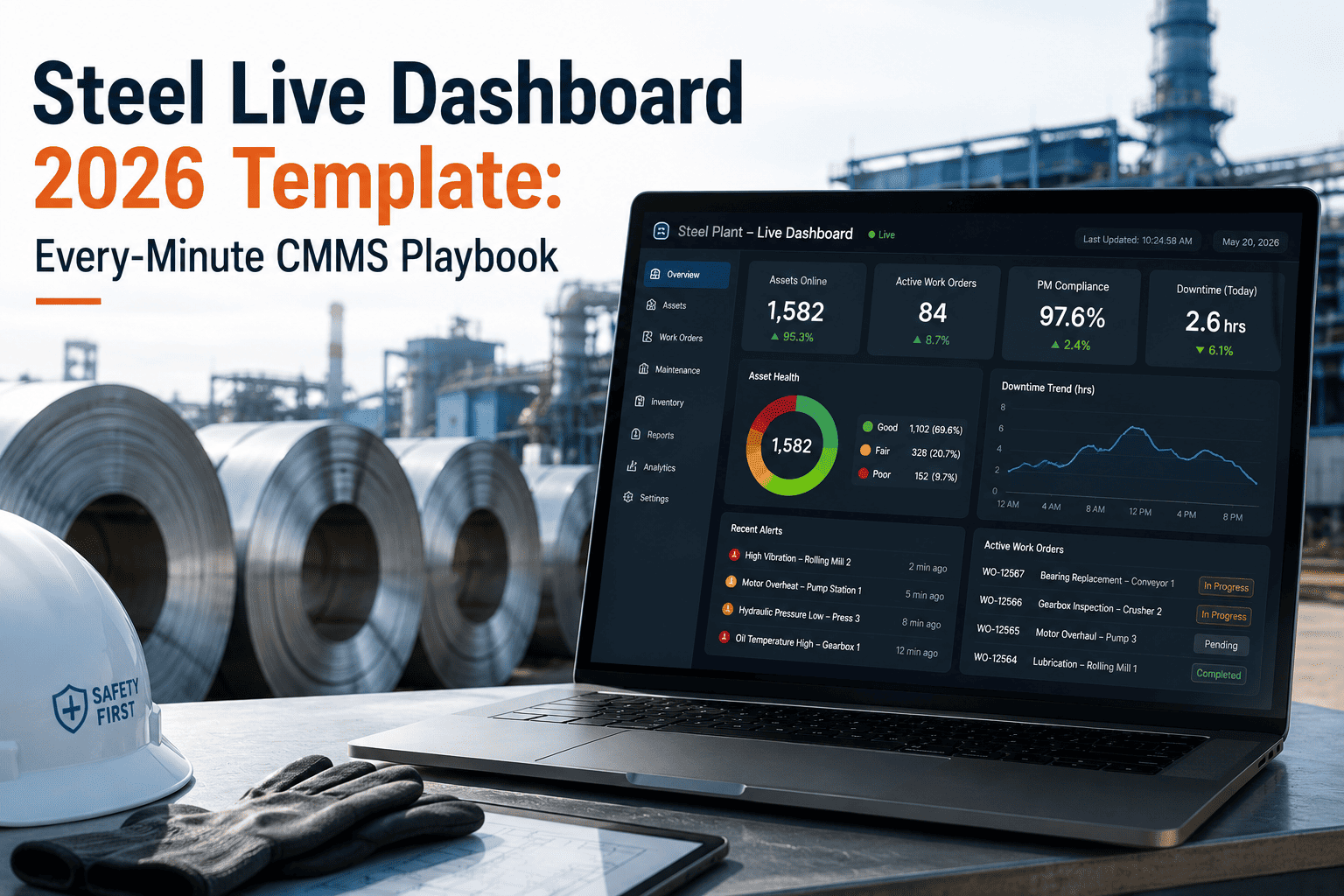
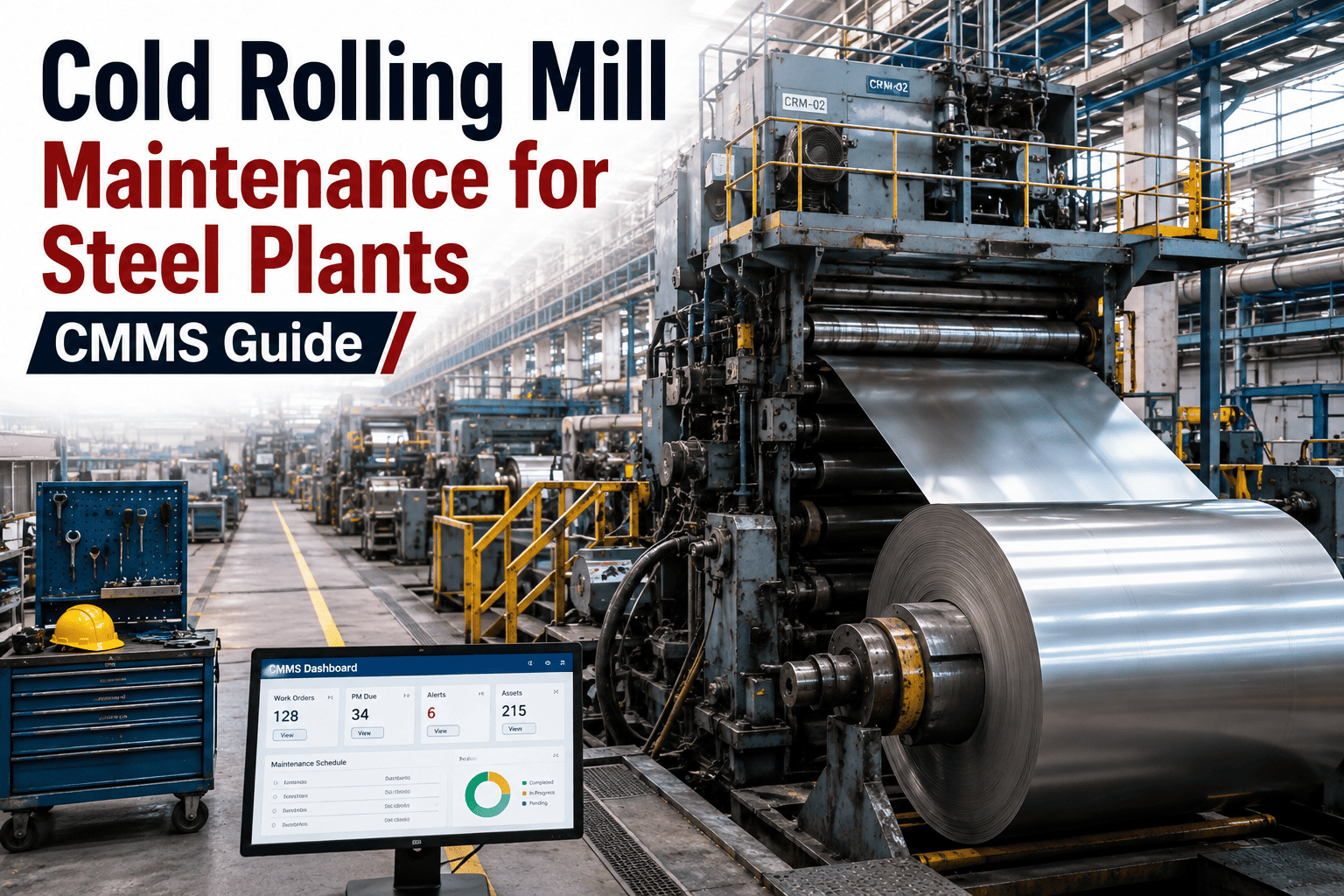
A rolling mill PM program only works when technicians know exactly what to check, what a good result looks like, and what to do when a result is bad. This checklist playbook gives you that for the five systems behind most rolling mill downtime: bearings, gearboxes, motors and drives, hydraulics, and lubrication. Every item is grouped by trigger, from every shift to planned shutdown, and each one traces back to a failure mode using reliability-centered maintenance logic. Use it on paper, or load it into Oxmaint preventive maintenance software as recurring digital checklists.
Free rolling mill PM checklist, 2026 edition
Steel Rolling Mill PM 2026 Playbook: RCM CMMS Template
Seven ready-to-use checklists, from shift rounds to shutdown inspections, with acceptance criteria, escalation rules, and a sign-off sheet your team can run on paper or mobile.
Finishing stand F3: monthly checklist
In progress
Vibration route: pinion stand and reducerOK
Gear oil sample taken and labelledOK
Hydraulic oil cleanliness to ISO 4406Not OK
Hose inspection at bending blocksOpen
Every shift
Daily
Weekly
Roll change
Monthly
Quarterly
Shutdown
How to use this rolling mill PM checklist
Each checklist is built for one trigger. Run the whole sheet in one visit, record a result for every item, and never close a sheet with an item left blank.
- Pick the triggerShift, daily, weekly, roll change, monthly, quarterly, or planned shutdown.
- Check each itemFollow the check method and compare the result with the acceptance criteria.
- Record the resultMark OK, Not OK, or N/A, and write down any reading you took.
- Escalate failuresEvery Not OK needs a follow-up action under the escalation rules below.
Task type codes used in the checklists
CB Condition-based: measure a warning signal
SR Scheduled restoration or replacement
FF Failure-finding: test a hidden protective function
OC Operator or visual check
Acceptance criteria refer to your OEM limits, site targets, and baseline trends. This checklist does not replace equipment-specific limits, so add your values when you set up each sheet.
Checklist 1: every shift round
A short round by operators or shift technicians that catches lubrication, temperature, and leakage problems early, when they are cheapest to fix.
Every shift
Owner: shift operator or technician. Scope: all stands and auxiliaries.
Review chock and roll bearing temperatures on the HMI or with a handheld sensorPass: within normal trend, no sudden rise
CBOK / Not OK / N/ACheck central lube oil tank levelPass: inside the marked operating band
OCOK / Not OK / N/ACheck lube supply pressure, flow, and temperature at stand headersPass: at normal operating values, no low-flow alarms
CBOK / Not OK / N/ACheck hydraulic power unit tank level and oil temperaturePass: inside operating band
OCOK / Not OK / N/ALook for leaks at AGC cylinders, bending blocks, and manifoldsPass: no active leaks or oil pooling
OCOK / Not OK / N/AListen at pinion stand and main reducersPass: no new noise, knocking, or whine
OCOK / Not OK / N/ACheck main drive alarms and cooling fan statusPass: no active alarms, all cooling fans running
OCOK / Not OK / N/A
Checklist 2: daily checks
Daily tasks focus on contamination and filtration, the two conditions that quietly shorten bearing and servo valve life in a rolling mill.
Daily
Owner: maintenance technician. Scope: lube and hydraulic systems.
Sample oil-film bearing oil and check appearance and water contentPass: clear oil, no free water or emulsion, water within site limit
CBOK / Not OK / N/ARead hydraulic and lube filter differential pressure indicatorsPass: below change-out indication; value logged
CBOK / Not OK / N/ACheck grease system reservoir level and pump cyclePass: above minimum, last cycle completed
OCOK / Not OK / N/ACheck oil-air lubrication air pressure and oil deliveryPass: at normal values, no blocked lines
CBOK / Not OK / N/AConfirm chock and housing drain lines are clearPass: drains flowing, no build-up of scale
OCOK / Not OK / N/AReview the last 24 hours of alarms and trend deviations for bearings, drives, and hydraulicsPass: every deviation has an owner or an open work order
CBOK / Not OK / N/A
Checklist 3: weekly checks
Weekly tasks protect gearboxes and motors from moisture, dirt, and overheating, which are the most common slow-building causes of failure.
Weekly
Owner: mechanical and electrical technicians. Scope: drive train and drive rooms.
Inspect gearbox breathers and desiccant conditionPass: breather clean, desiccant not saturated
OCOK / Not OK / N/ACheck gearbox oil level and shaft sealsPass: at level mark, no leakage at seals or joints
OCOK / Not OK / N/AInspect motor cooling air filters, blowers, and ductsPass: filters clean, airflow unrestricted
SROK / Not OK / N/ACheck drive cabinet filters, fans, and room coolingPass: fans running, filters clean, room within design temperature
OCOK / Not OK / N/AConfirm lube oil water removal equipment is runningPass: dehydrator or centrifuge operating; water removed is recorded
CBOK / Not OK / N/ACheck coupling guards and guard fastenersPass: all guards in place and secure
OCOK / Not OK / N/A
Checklist 4: every roll change
Roll changes are the best inspection window a rolling mill has. These checks are triggered by the event, not the calendar, so they follow your actual rolling schedule.
Every roll change
Owner: roll change crew with mechanical technician. Scope: stand being changed.
Inspect chock seals on removed and incoming chocksPass: no cuts, hardening, or displacement
OCOK / Not OK / N/ACheck removed chocks for water, scale ingress, or discoloured greasePass: none found; findings sent to the roll shop with the chock
CBOK / Not OK / N/AClean and inspect chock faces, liners, and housing windowsPass: clean, liners within wear limit
OCOK / Not OK / N/AInspect spindle slipper pads, wear plates, and lubricationPass: within wear limit, lubricated, no cracks
CBOK / Not OK / N/AConfirm grease distributors cycle and deliver at key pointsPass: grease visible at each checked point
FFOK / Not OK / N/AInspect bending and balance cylinder hoses and quick connectorsPass: no leaks, chafing, or damaged couplings
OCOK / Not OK / N/ARecord the roll change in the CMMSPass: roll change logged so counter-based tasks update
OCOK / Not OK / N/A
Run these checklists on mobile, not clipboards
Set up each sheet once and Oxmaint schedules it on the right trigger for every stand. Technicians record results at the equipment, and failed items become follow-up work.
Checklist 5: monthly condition monitoring
Monthly tasks are mostly measurements. Their value comes from trending, so always record the reading, not just OK.
Monthly
Owner: condition monitoring or reliability technician. Scope: all main drive trains and auxiliaries.
Run vibration route on table rolls, pinion stand, reducers, and motorsPass: below alert level and stable against baseline
CBOK / Not OK / N/ATake gear oil sample for viscosity, water, wear metals, and particle countPass: results within limits, trend stable
CBOK / Not OK / N/ATake hydraulic oil sample for particle count to ISO 4406Pass: at or cleaner than the target code for servo systems
CBOK / Not OK / N/AInspect all hydraulic hoses for abrasion, heat damage, and agePass: no damage; hoses within replacement age
SROK / Not OK / N/AInspect DC motor brushes and commutatorPass: brush length above minimum, even commutator film
CBOK / Not OK / N/ACheck oil coolers and heaters on lube systemsPass: no fouling, temperature control working
OCOK / Not OK / N/ATest standby lube pump automatic changeoverPass: standby starts on demand and holds pressure
FFOK / Not OK / N/ATest low-pressure and low-level lube alarms and interlocksPass: alarm and interlock operate as designed
FFOK / Not OK / N/A
Checklist 6: quarterly checks
Quarterly tasks cover electrical hot spots, hydraulic stored energy, and a review of whether the checklists themselves are working.
Quarterly
Owner: electrical technician, hydraulic technician, and reliability engineer.
Thermography survey of motor terminal boxes, drive panels, and MCCs under loadPass: no hot spots compared with similar phases or components
CBOK / Not OK / N/ACheck accumulator nitrogen precharge with the system safely isolatedPass: precharge within the specified range
CBOK / Not OK / N/ACheck hydraulic pump performance and case drain flow where measurablePass: within normal range for the pump
CBOK / Not OK / N/AFull oil analysis on central lube and oil-film bearing systemsPass: oil fit for continued service
CBOK / Not OK / N/AReview checklist findings, repeat failures, and missed itemsPass: interval or content changes agreed and recorded
OCOK / Not OK / N/A
Checklist 7: planned shutdown
Shutdown tasks are intrusive and need isolation, so plan them early, reserve the spares, and use condition data to decide which items are really needed.
Planned shutdown
Owner: shutdown planner with area teams. Scope: items selected from condition findings.
Main motor insulation resistance and polarization index testsPass: results acceptable under IEEE 43 practice and stable against history
CBOK / Not OK / N/AGearbox internal inspection by borescope or cover removalPass: normal tooth contact, no pitting or cracks
CBOK / Not OK / N/AAGC cylinder leakage test and position transducer verificationPass: leakage within limit, position reading matches reference
CBOK / Not OK / N/AServo valve exchange or bench test where condition data points to itPass: valve response within specification
SROK / Not OK / N/AMain drive coupling alignment checkPass: within OEM alignment tolerance
CBOK / Not OK / N/ALube and hydraulic tank inspection and cleaning as condition requiresPass: no sludge, water, or debris
SROK / Not OK / N/ACheck mill housing, gearbox, and motor foundation fastenersPass: fasteners secure, no cracks in grout or base
OCOK / Not OK / N/A
Escalation rules for failed checklist items
A checklist without clear escalation just records problems. Agree these three levels with operations so every Not OK leads to the right action.
Observe
When: within limits but trending worse
Record the reading, add a comment, and shorten the check interval until the trend is understood.
Plan a correction
When: alert limit exceeded, action limit not reached
Raise a corrective work order, reserve parts, and schedule it for the next roll change or planned stop.
Act now
When: action limit exceeded or safety risk present
Notify the shift supervisor, follow mill procedures for isolation, and raise a priority work order immediately.
Checklist sign-off sheet
Every completed checklist should close with the same sign-off fields. This keeps records auditable and makes findings easy to trace later.
Asset and functional location
Checklist and trigger
Date and shift
Completed by
Items Not OK
Follow-up work order reference
Findings and comments
Reviewed by supervisor
Review date
RCM traceability: why each check is on the list
Every item earns its place by addressing a real failure mode. Keeping this link visible helps reviews decide which checks to keep, change, or remove.
| Checklist item | Failure mode addressed | Type | Consequence if missed |
|---|
| Oil-film bearing oil water check | Water contamination reducing film strength | CB | Backup roll bearing damage and extended stand outage |
| Chock seal inspection at roll change | Water and scale ingress into bearings | OC | Premature chock bearing failure |
| Hydraulic oil cleanliness sampling | Servo valve sticking and wear | CB | Gauge control problems and downgraded product |
| Gear oil analysis and vibration | Tooth wear, pitting, and bearing damage | CB | Unplanned gearbox failure with long repair time |
| Standby lube pump test | Hidden failure of backup protection | FF | Lube loss if the duty pump trips |
| Motor cooling filter check | Blocked cooling air path | SR | Winding overheating and insulation damage |
| Thermography of terminations | Loose or degraded connections | CB | Electrical fault or fire in the drive system |
Turning the checklist into a CMMS template
To run the playbook in a CMMS, set up each checklist as a recurring preventive maintenance task. These fields make every sheet clear and traceable.
Asset and locationStand, system, and component the sheet applies to
TriggerCalendar interval, running hours, tonnage, or roll change event
Checklist itemsThe items above, with a result required for each
Acceptance criteriaYour OEM limits and site targets written into each item
ReadingsNumeric fields for temperatures, pressures, and oil results so they can be trended
Safety and isolationLockout points and permits for work near rolls, hydraulics, and energized drives
Parts and toolsFilters, seals, sample bottles, and instruments needed for the visit
Follow-up ruleEvery Not OK creates or links to a corrective work order
Checklist review: questions to ask every quarter
Checklists drift out of date as equipment, products, and people change. Use these questions in the quarterly review to keep the playbook lean.
- Which items found real problems, and which only ever return OK?
- Did any failure happen that a checklist item should have caught?
- Are any items skipped often because they are unclear or impractical?
- Do intervals give enough warning to plan repairs before failure?
- Are readings being recorded and trended, or just ticked?
- Do new equipment or modifications need new items?
How Oxmaint runs the rolling mill checklists
Oxmaint gives rolling mill teams one place to schedule, complete, and review every checklist in this playbook.
Preventive maintenance scheduling
Recurring checklists on calendar and usage-based triggers for every stand and line.
Mobile digital checklists
Technicians record results, readings, and photos at the equipment.
Corrective work orders
Failed items lead to follow-up work so findings are acted on.
Asset history
Every completed checklist is stored against the asset for reviews and audits.
Spare parts inventory
Track filters, seals, bearings, and servo valves needed for planned work.
Dashboards and reports
See checklist compliance, open findings, and backlog by area.
Rolling mill PM checklist FAQs
What should a rolling mill PM checklist include?
Checks for bearings, gearboxes, motors, hydraulics, and lubrication, grouped by trigger, each with acceptance criteria and a clear follow-up rule.
Can I use this checklist as it is?
Use it as a starting template. Add your OEM limits, site targets, and equipment names, and adjust intervals based on your failure history.
Why are some checks triggered by roll change?
Roll changes give direct access to chocks, seals, and spindles. Event triggers match your rolling schedule better than calendar dates.
How do I move paper checklists into a CMMS?
Set each checklist up as a recurring PM with items, limits, and triggers. You can build them in Oxmaint and start with one stand.
How often should the checklists be reviewed?
Review findings every quarter and after any major failure. Book a demo to see how reviews work in Oxmaint.
Put the full rolling mill checklist playbook to work
Load all seven checklists, set their triggers, and give your team a single record of every result and follow-up. See how it fits your stands, drives, and lube systems.