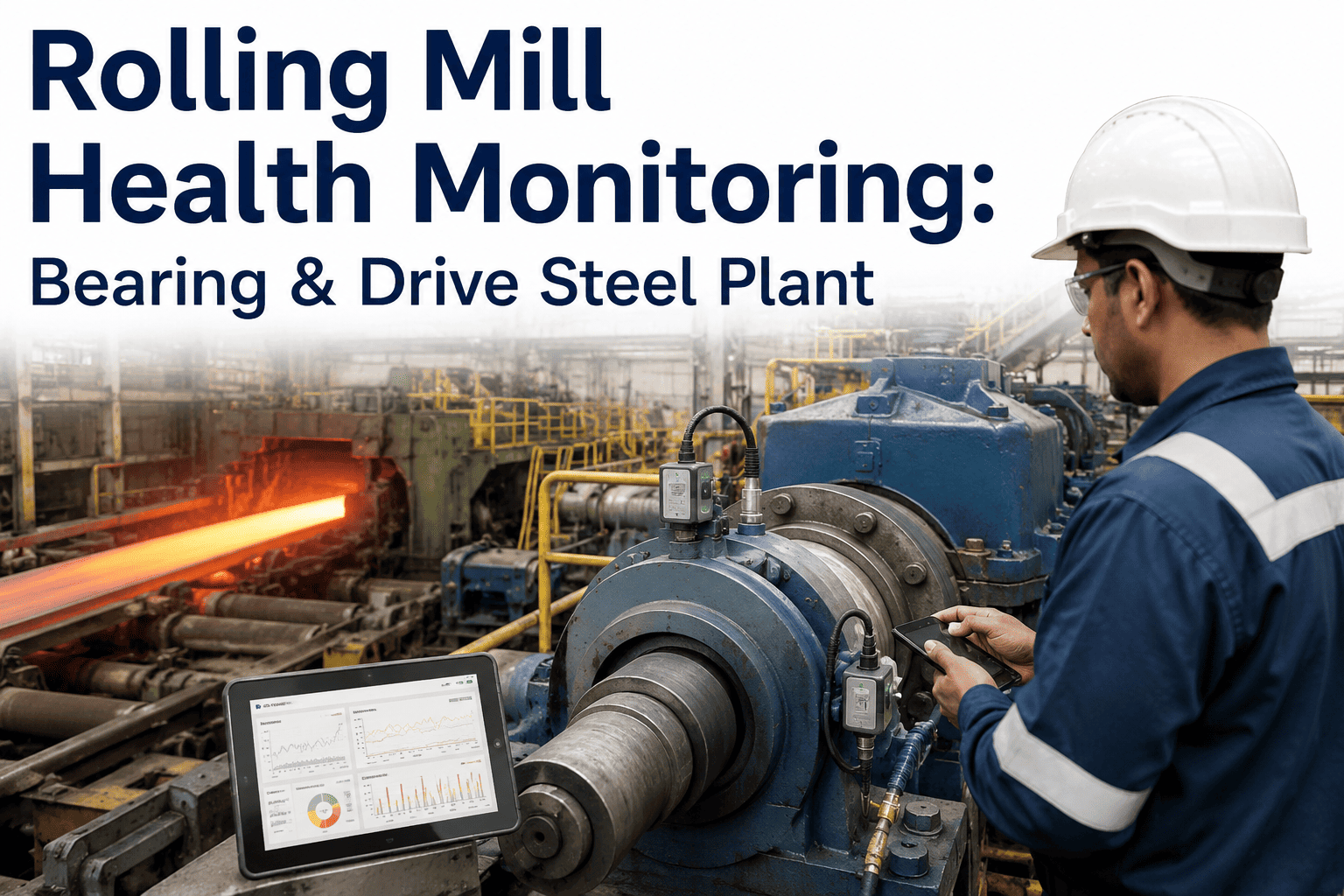
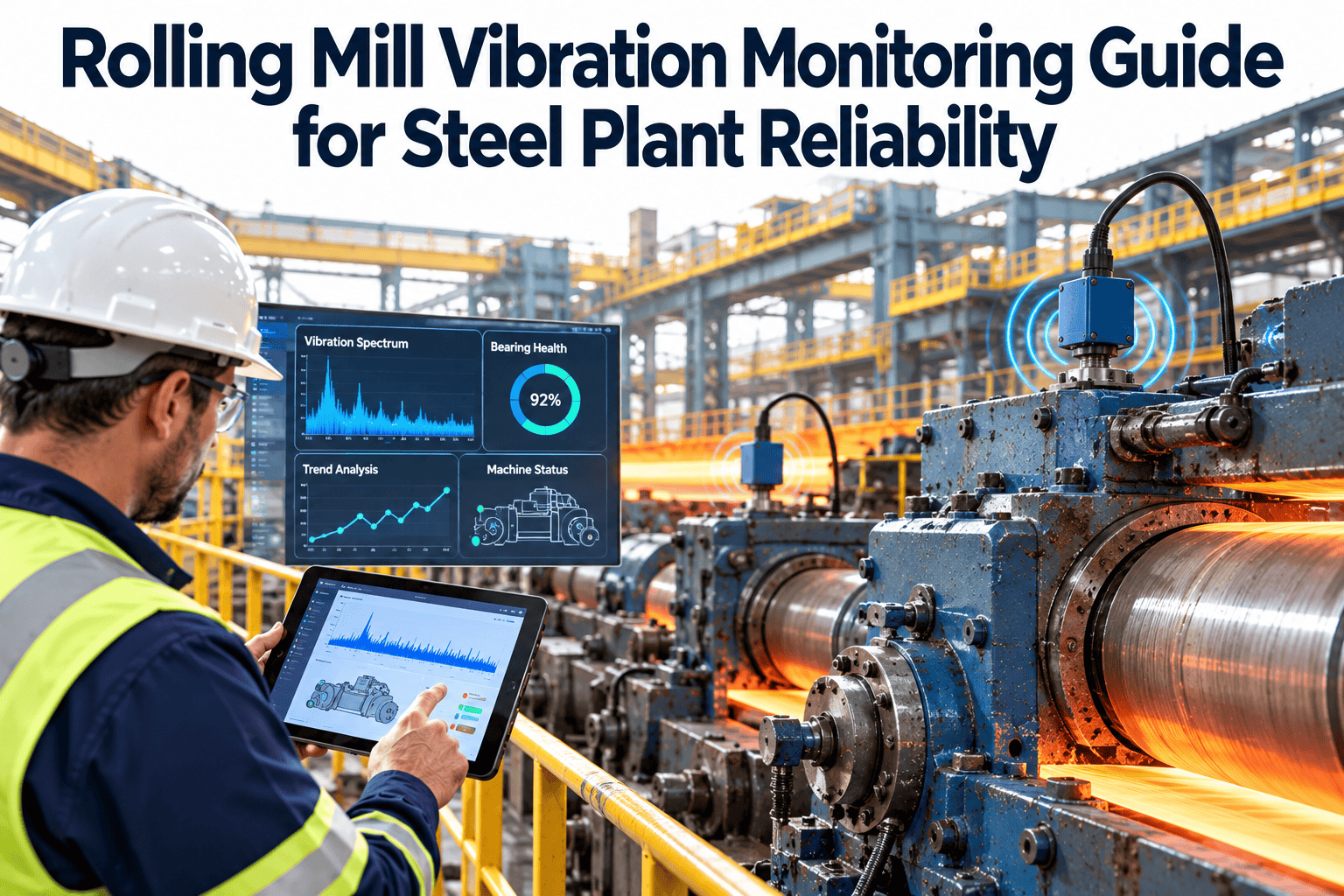
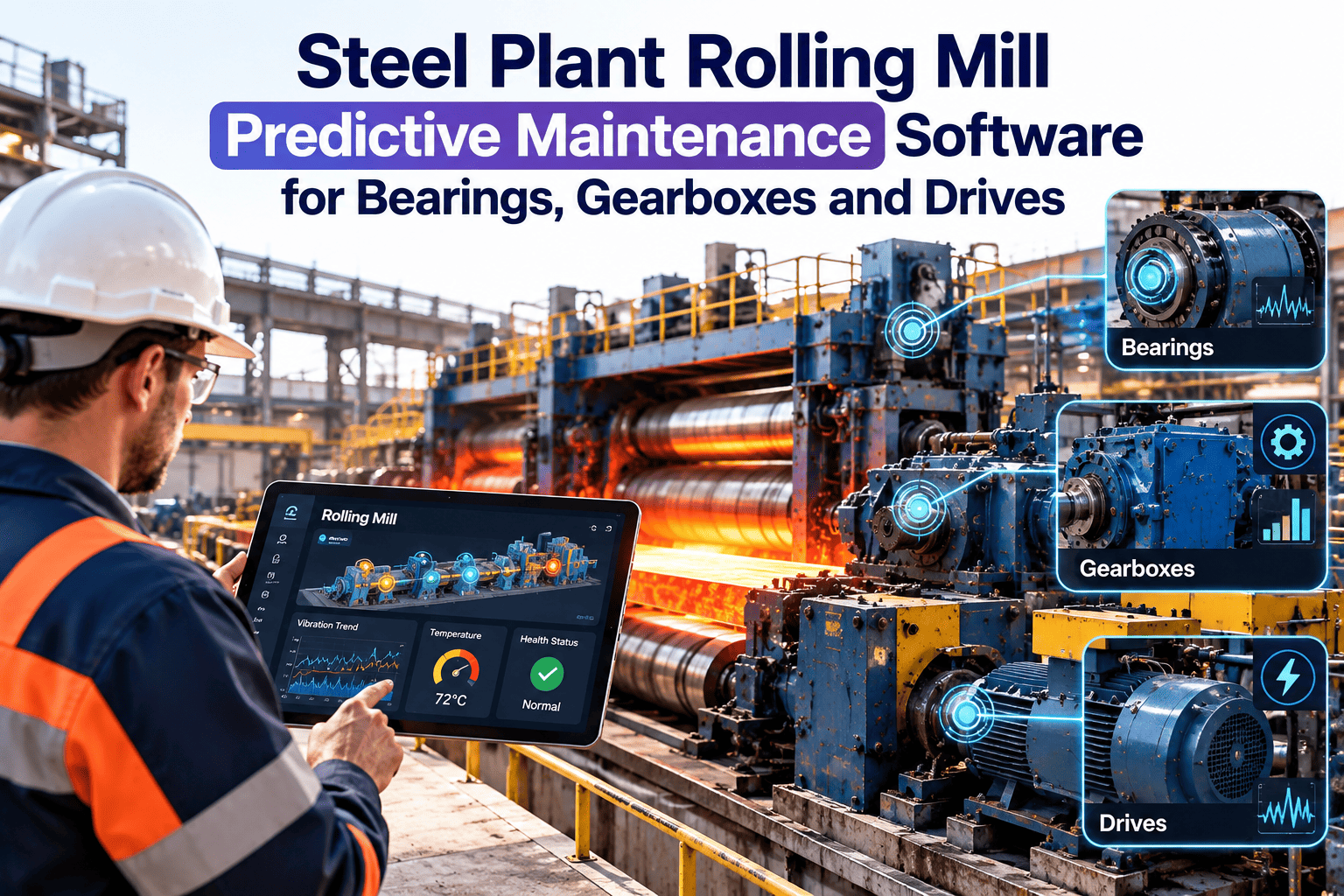
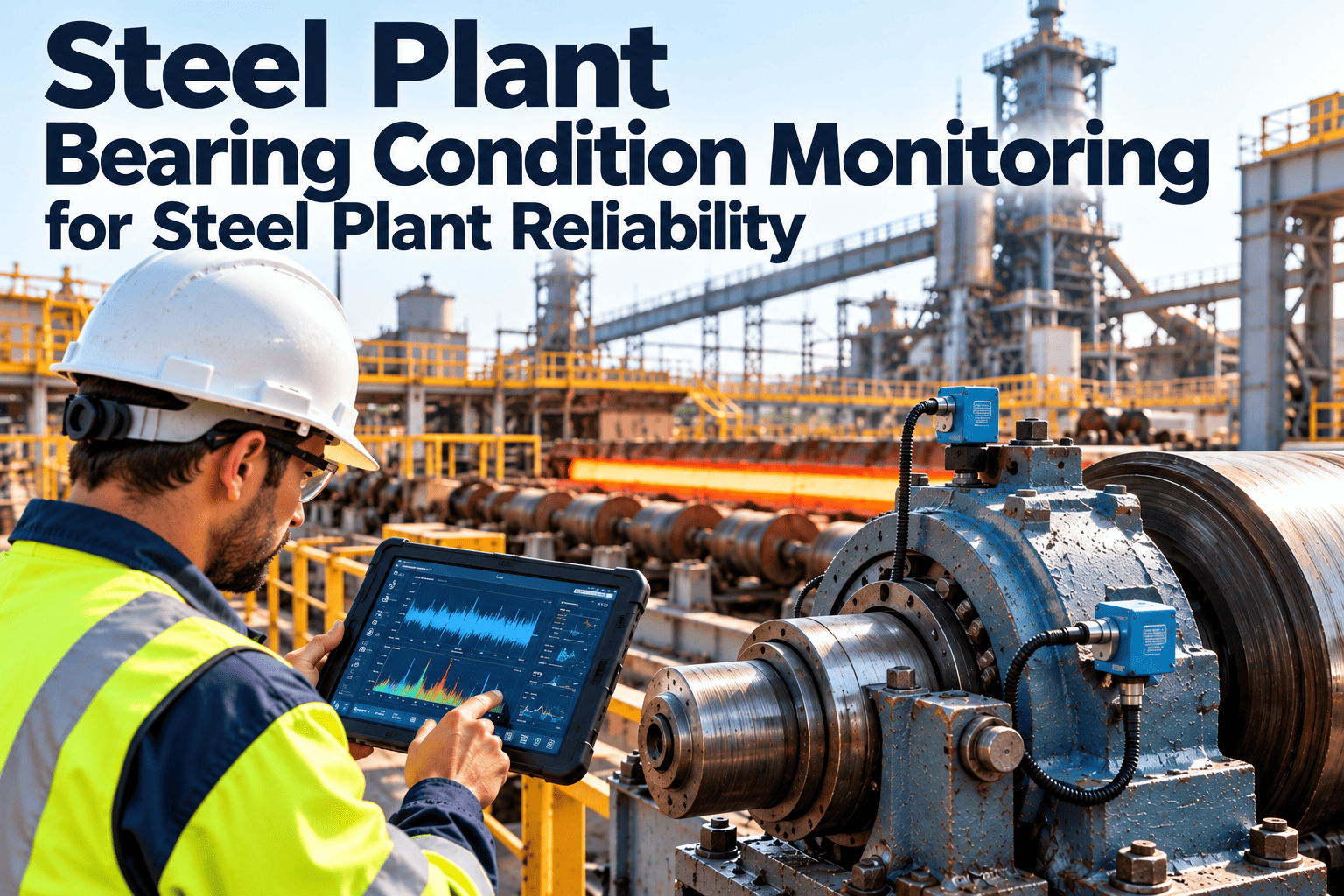
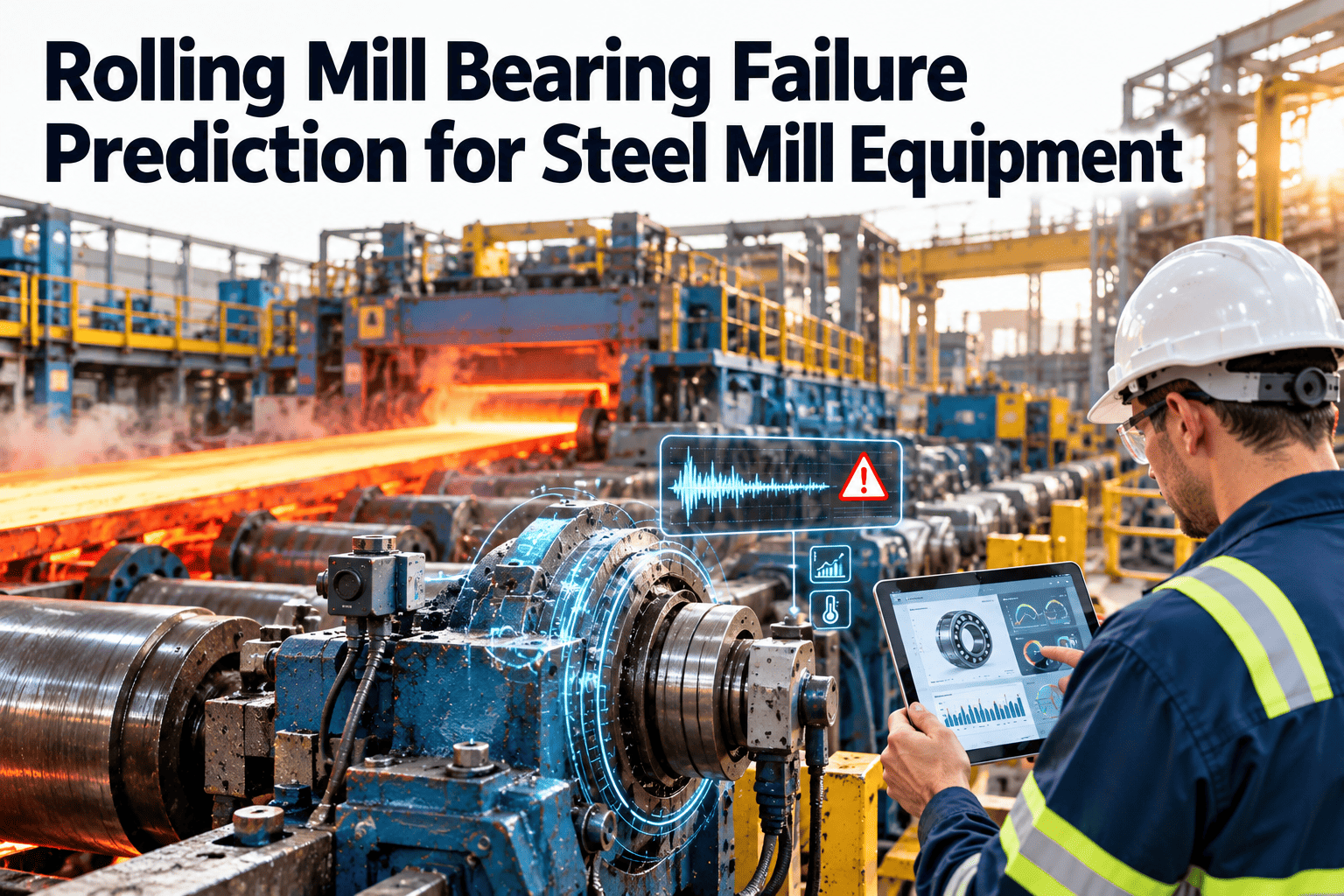
A rolling mill stand rarely fails without warning — it whispers first. A bearing race developing a hairline defect generates a faint vibration frequency weeks before it becomes audible. A drive motor with a cracked rotor bar draws a slightly distorted current long before it trips. An AGC hydraulic cylinder losing accumulator pressure drifts out of position in microns before it ever shows up as gauge variation in the strip. None of these whispers are visible to the naked eye or a walk-by inspection, yet each one is sitting in data the mill already generates every second. Start a free trial of Oxmaint to see how a CMMS turns bearing vibration, drive current, and hydraulic pressure into work orders before the mill stops on its own.
BEARING VIBRATION · DRIVE CURRENT · HYDRAULIC HEALTH · CHATTER DETECTION
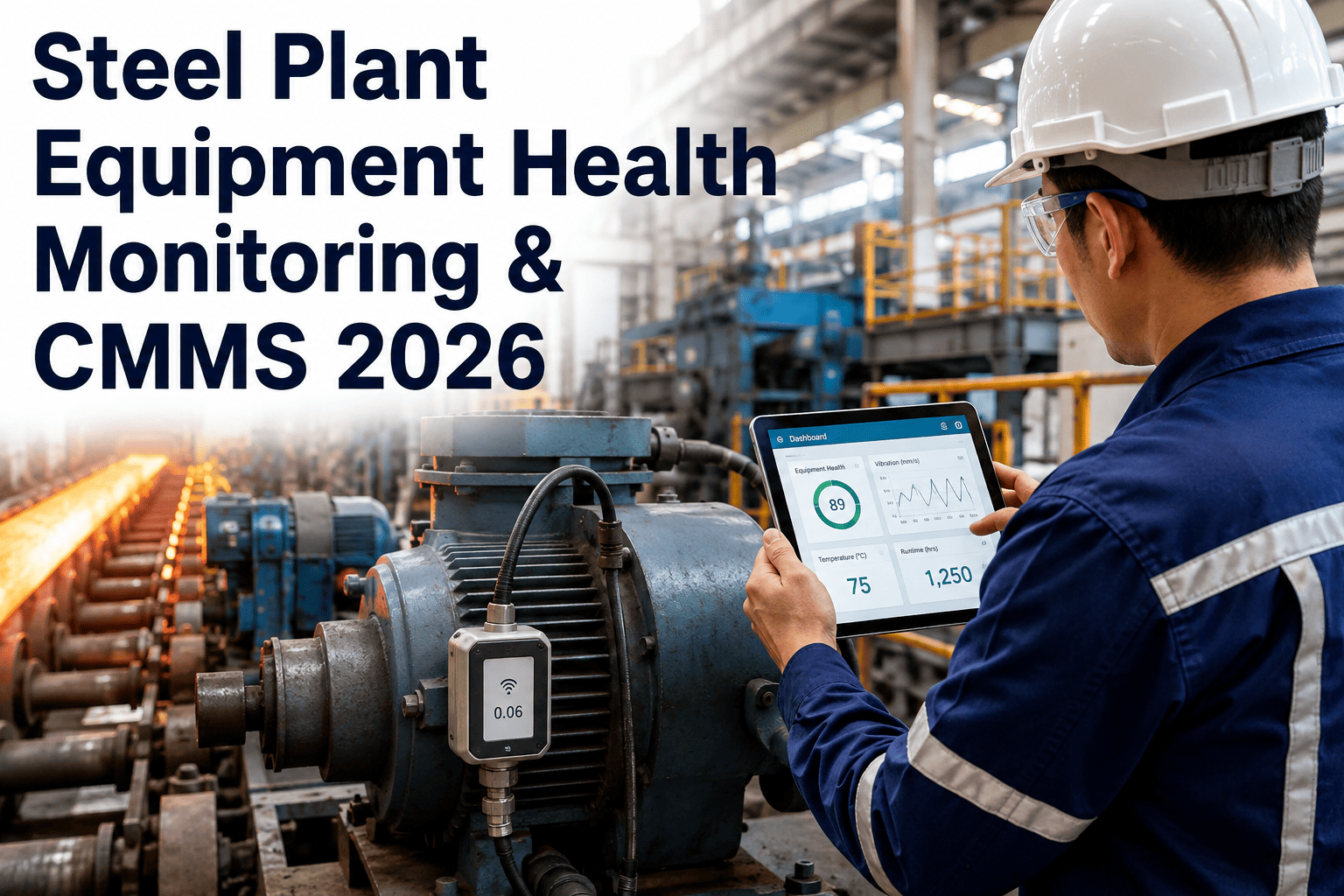
Rolling Mill Health Monitoring for Bearings and Drives
Track mill stand bearing condition, drive motor current signatures, and AGC hydraulic performance in one CMMS, and catch the fault weeks before it becomes an unplanned mill stoppage.
The Four Signals a Rolling Mill Is Already Sending You
Vibration is the signal most mills monitor, but it is only one of four data streams already available at every stand. Combined, these four signals catch a wider range of faults earlier and with far fewer false alarms than vibration alone.
Bearing Vibration Monitoring
High-speed and slow-speed roll neck bearings
Accelerometers on bearing chocks pick up outer-race and inner-race defect frequencies (BPFO/BPFI) long before the defect is audible or measurable by hand.
Drive Motor Current Signature
Main drive and auxiliary motors
Motor current signature analysis reuses the current sensor already installed for speed control to flag broken rotor bars, eccentricity, and winding faults.
AGC Hydraulic Cylinder Health
Automatic gauge control cylinders
Tracking cylinder position lag against the command signal and accumulator pressure trend catches seal wear before it shows up as strip gauge variation.
Stand Temperature Trending
Chocks, gearboxes, and spindle couplings
Slow, steady temperature rise at a chock or coupling over several shifts often precedes the vibration signature of a developing bearing or lubrication fault.
$150K-$600KTypical cost of a single unplanned hot mill stoppage in lost production and repair
BPFO/BPFIDistinct bearing defect frequencies that appear in vibration data weeks before failure
2X / 3XRotational harmonic signature that reveals drive spindle and coupling misalignment early
ZeroExtra sensors needed for motor current signature analysis on most existing drives
What Each Rolling Mill Fault Actually Looks Like in the Data
Every common mill stand fault has a recognizable signature, which is what makes trend-based monitoring so much more reliable than reacting to a stoppage.
| Fault | Signal Signature | Typical Cause | Recommended Action |
|---|
| Mill Chatter | Regenerative vibration at a distinct resonant frequency | Roll slip between twin drives or excessive chock clearance | Correlate with roll gap and speed, then correct bearing clearance or drive tuning |
| Bearing Race Defect | BPFO or BPFI frequency peak in vibration spectrum | Fatigue spalling on inner or outer raceway | Schedule bearing replacement at the next planned stoppage, not after it fails |
| Spindle Misalignment | 2X and 3X rotational frequency harmonics | Coupling wear or drift after roll change | Generate an alignment work order before it progresses to spindle failure |
| Rotor Bar Defect | Sideband peaks in motor current spectrum | Cracked or broken rotor bar in drive motor | Plan motor rewind or replacement during scheduled downtime |
| Chock Looseness | Subharmonic and broadband vibration | Worn preload or housing window wear | Inspect and re-shim chocks before it escalates to a roll-dropping event |
Sensor Placement Checklist for Mill Stand Monitoring
Where a sensor is mounted matters almost as much as which signal it measures — a poorly placed accelerometer buries the fault signature in noise from the rest of the stand.
High-Speed Bearing Chocks
Mount accelerometers directly on entry and exit side chocks where BPFO/BPFI frequencies are clearest.
Chatter-Prone Stands
Place a sensor on the backup roll pressure cylinder rather than the chock itself to avoid damage during roll changes.
Drive Motor Terminals
Tap current signature analysis from the existing speed-control current sensor instead of adding new hardware.
AGC Cylinder Feedback
Log position feedback against command signal continuously, not just during setup or calibration checks.
Spindle Couplings
Track harmonic trend after every roll change, since alignment drift is most common right after reassembly.
Slow-Speed Roll Necks
Use temperature trending as a lead indicator here, since vibration amplitude at low RPM is often too weak to isolate.
Turn Mill Stand Signals Into Scheduled Work Orders
Bearing vibration, drive current, and hydraulic pressure trends flow into one dashboard, so the next fault becomes a planned repair instead of a mill stoppage.
Rolling Mill Health Benchmarks Worth Tracking
Turning raw sensor data into a small set of thresholds is what lets a maintenance planner act with confidence instead of guessing.
Bearing Vibration Severity
Poor: alarm-zone velocity sustained
Acceptable: trending upward within limits
Excellent: stable, near baseline
A steadily rising trend toward the alarm zone matters more than any single reading, since baselines vary stand to stand.
Motor Current Unbalance
Poor: repeated sideband growth
Acceptable: minor, stable sidebands
Excellent: clean current spectrum
Growing sideband amplitude around line frequency is the earliest sign of a developing rotor bar defect.
AGC Cylinder Response Lag
Poor: lag increasing shift over shift
Acceptable: stable, within tolerance
Excellent: response matches command tightly
Growing lag between command and actual position usually points to seal wear or accumulator precharge loss.
Unplanned Stoppage Rate
Poor: reactive repairs after failure
Acceptable: some early warnings acted on
Excellent: faults resolved at planned stops
The real measure of a health monitoring program is how many faults get fixed during planned downtime instead of unplanned stoppages.
Frequently Asked Questions About Rolling Mill Health Monitoring
How early can bearing vibration monitoring actually catch a defect?
Outer and inner race defect frequencies typically appear in the vibration spectrum weeks before the defect becomes audible or produces a noticeable temperature rise, giving enough lead time to plan a replacement.
Do we need new sensors for motor current signature analysis?
Usually not. Most mill drives already have current sensors installed for speed control, and that same signal can be analyzed for rotor bar and winding faults without adding hardware.
What causes mill chatter, and can it be predicted before it appears in the strip?
Chatter is a regenerative vibration instability, often from roll slip or excess chock clearance, and it has a distinct resonant signature that shows up in vibration data before it visibly affects strip surface or gauge.
How does AGC hydraulic monitoring prevent gauge variation?
Tracking cylinder position lag and accumulator pressure trend catches seal wear or precharge loss while the deviation is still in microns, well before it becomes a measurable gauge defect in the coil.
Can a CMMS turn these signals into work orders automatically?
Oxmaint's CMMS connects vibration, current, and hydraulic trend data to automatic work order generation, and a
quick demo is the fastest way to see it mapped to your own mill stands.
Catch the Next Mill Fault Before It Stops Production
Bring bearing vibration, drive current, and hydraulic health into one CMMS built for steel plant rolling mills.